
The World’s Largest Secondhand Market: Introducing the Made In Kanta Series
Every week, 15 million garments arrive in Kantamanto Market Accra. Cast-offs from Western wardrobes, packed into dense bales, they travel thousands of miles before landing in the market, where it’s someone’s job to decide whether they are worth anything at all.
In Ghana, this flood of secondhand clothing has a name: Obroni Wawu. Translated from Twi, it means "dead white man's clothes," a phrase born from early assumptions that only the deceased would give away so much. The name holds cultural distance and a quiet unease about receiving a stranger's unwanted life in a bag.
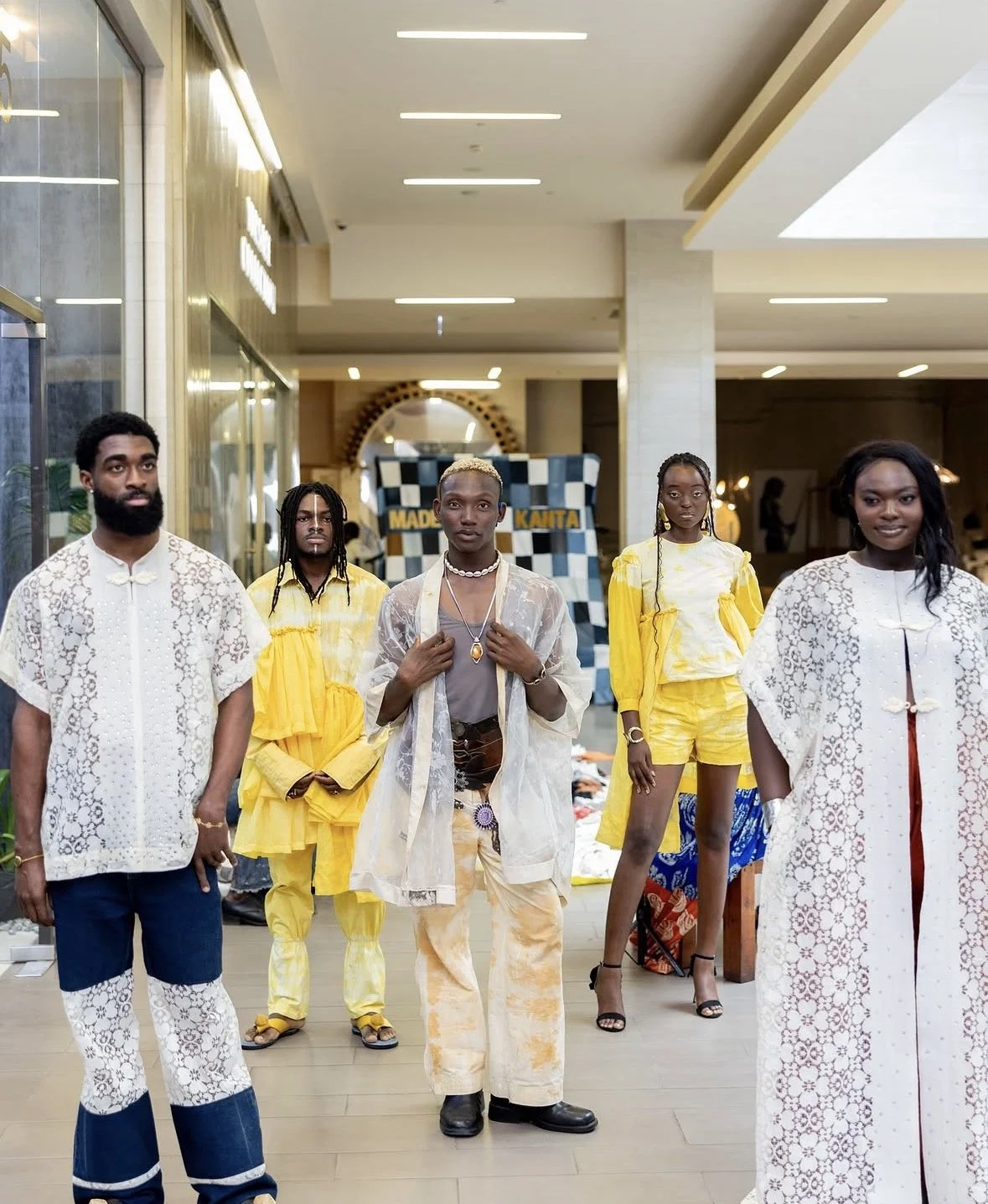
Kantamanto brand Calcul fashion show for the Upcycled Fashion Presentation by Style Lounge platform. Courtesy of the Or Foundation
“A significant portion of what arrives is never sold. There is simply more clothing than can be absorbed. The excess ends up on streets, in waterways, in landfills surrounding the market. The environmental and public health consequences fall on a community that did not contribute to the problem. ”
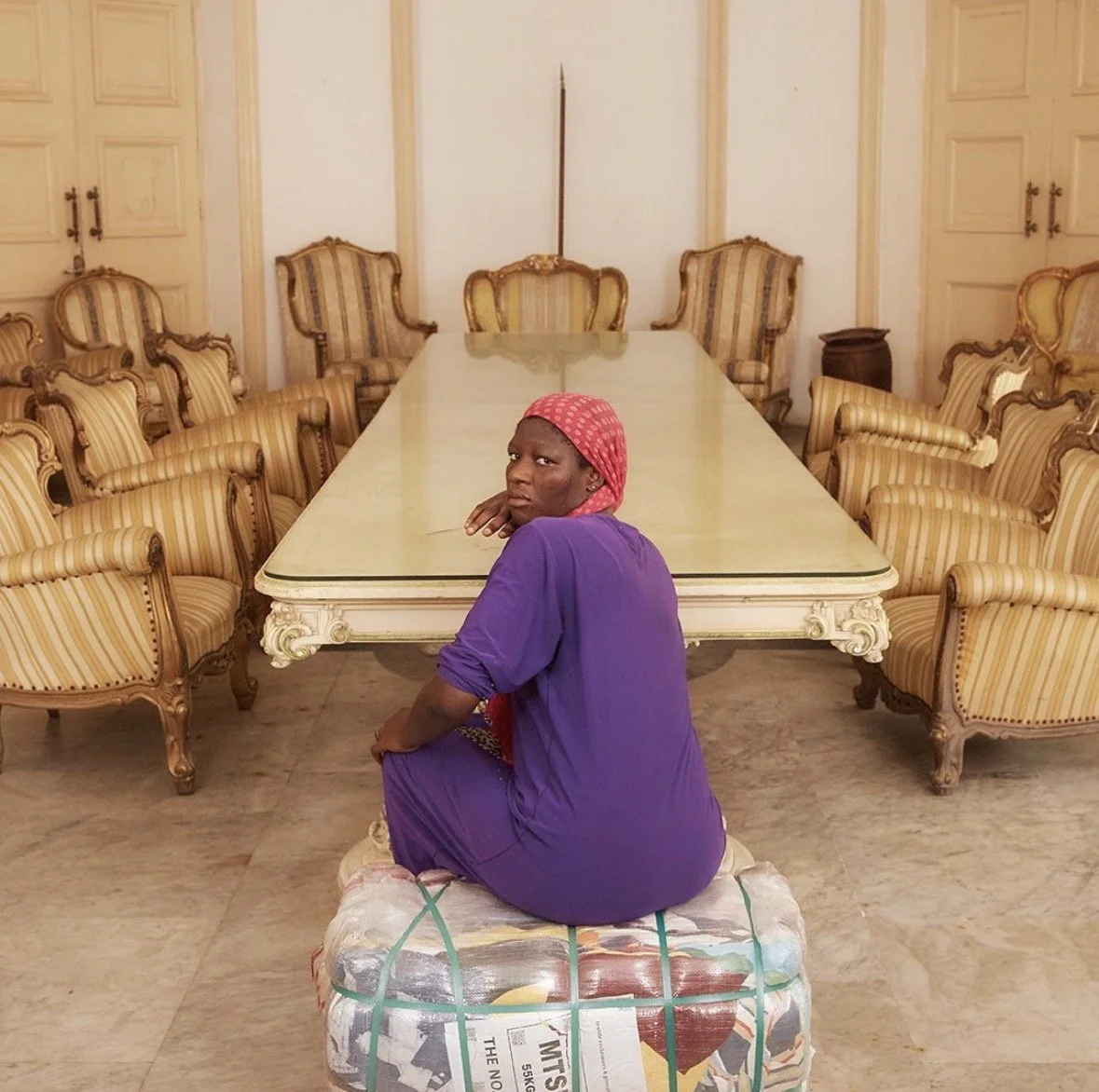
Kayayo (female head porter) Asana photographed by Charlie Engman in Osu Castle for Atmos in 2019. Asana sits at the table where Kwame Nkrumah signed the independence documents that were meant to liberate Ghana from colonial rule. Courtesy of the Or Foundation
Thirty Years of Overflow
Kantamanto has been absorbing this overflow since the early 1990s, when Ghana's trade liberalisation policies opened the country to large-scale clothing imports from Europe and North America. What began as a functioning secondhand economy, with traders reselling imported garments to a domestic market, has grown into something far more layered. The market now spans over 42 acres in the heart of Accra and supports more than 30,000 traders. It is widely known as one of the world's largest secondhand clothing markets.
But the economics have shifted. Over the past two decades, the quality of incoming clothing has fallen sharply while volumes have kept climbing. More garments arrive damaged, stained or simply unsellable. The cost of doing business has risen accordingly. To survive, traders and tailors have had to fundamentally rethink what value looks like here.
Invention at the Bales
What has emerged is something closer to an ecosystem. Tailors work among the bales, cutting without tables, measuring by eye, mending and reconstructing at a pace that mirrors the speed of fast fashion itself, only here the logic is inverted. Value is being rebuilt, not extracted. Upcyclers and designers take what the market cannot sell and transform it: dyed, deconstructed, reimagined. It is skilled, often quietly extraordinary work rooted in a country with a deep tradition of textile craftsmanship. The same precision woven into Kente cloth, the same knowledge naturally passed between generations, is alive and working in Kantamanto every day.
Yet a significant portion of what arrives is never sold. There is simply more clothing than can be absorbed. The excess ends up on streets, in waterways, in landfills surrounding the market. The environmental and public health consequences fall on a community that did not contribute to the problem. There is a name for this. Waste colonialism describes what happens when the costs of overproduction are moved to the places least able to refuse them, and Kantamanto sits at the end of that line.
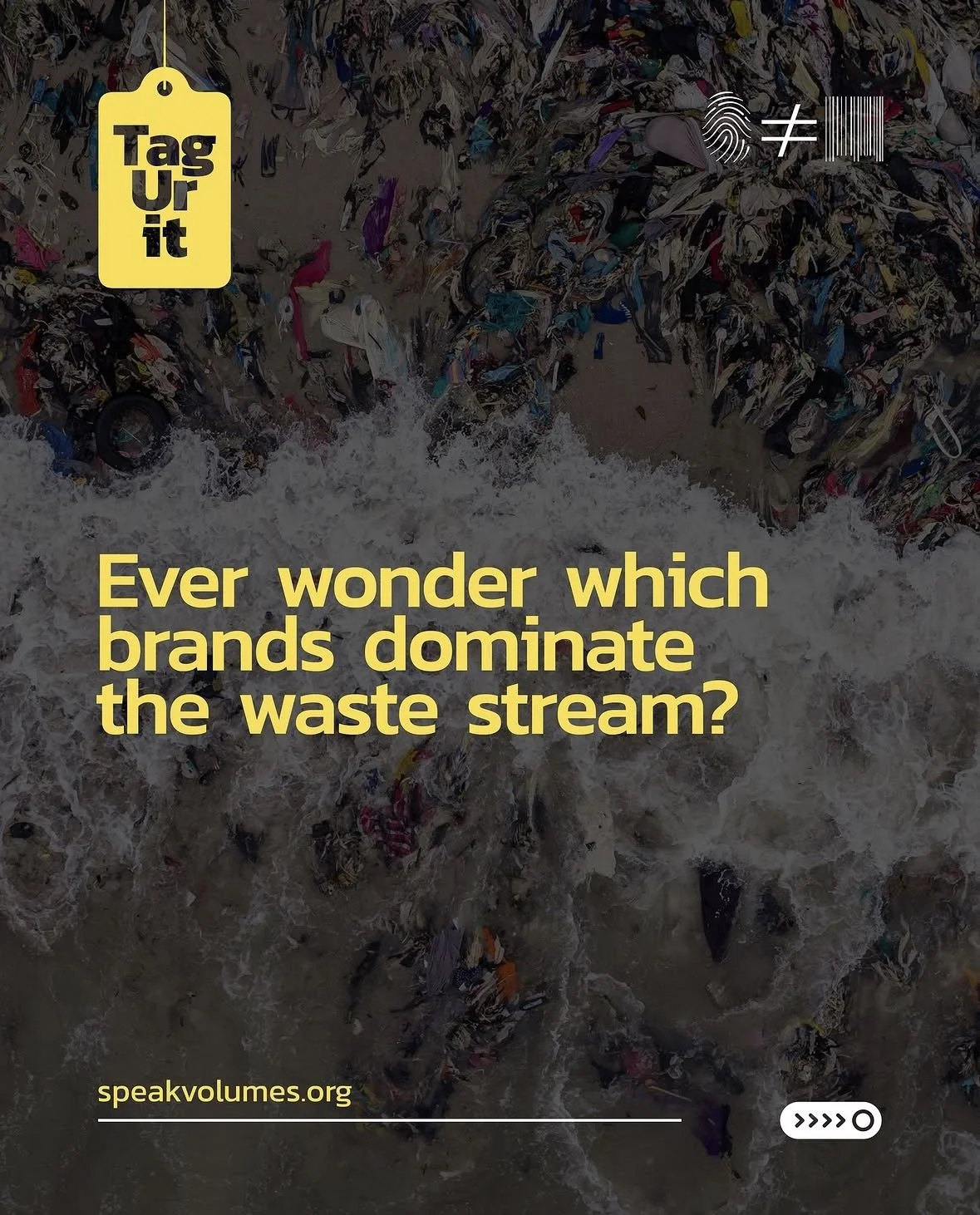
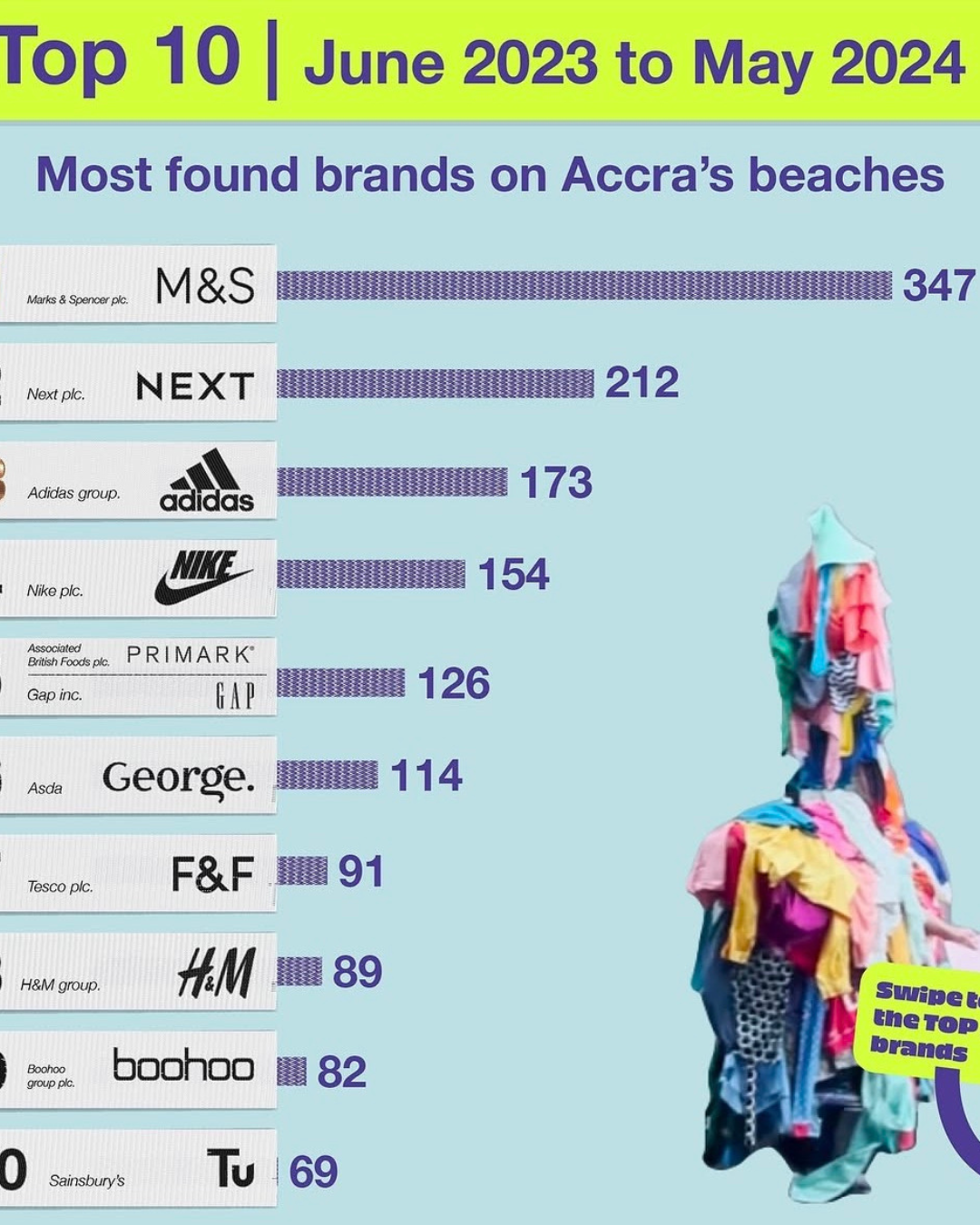
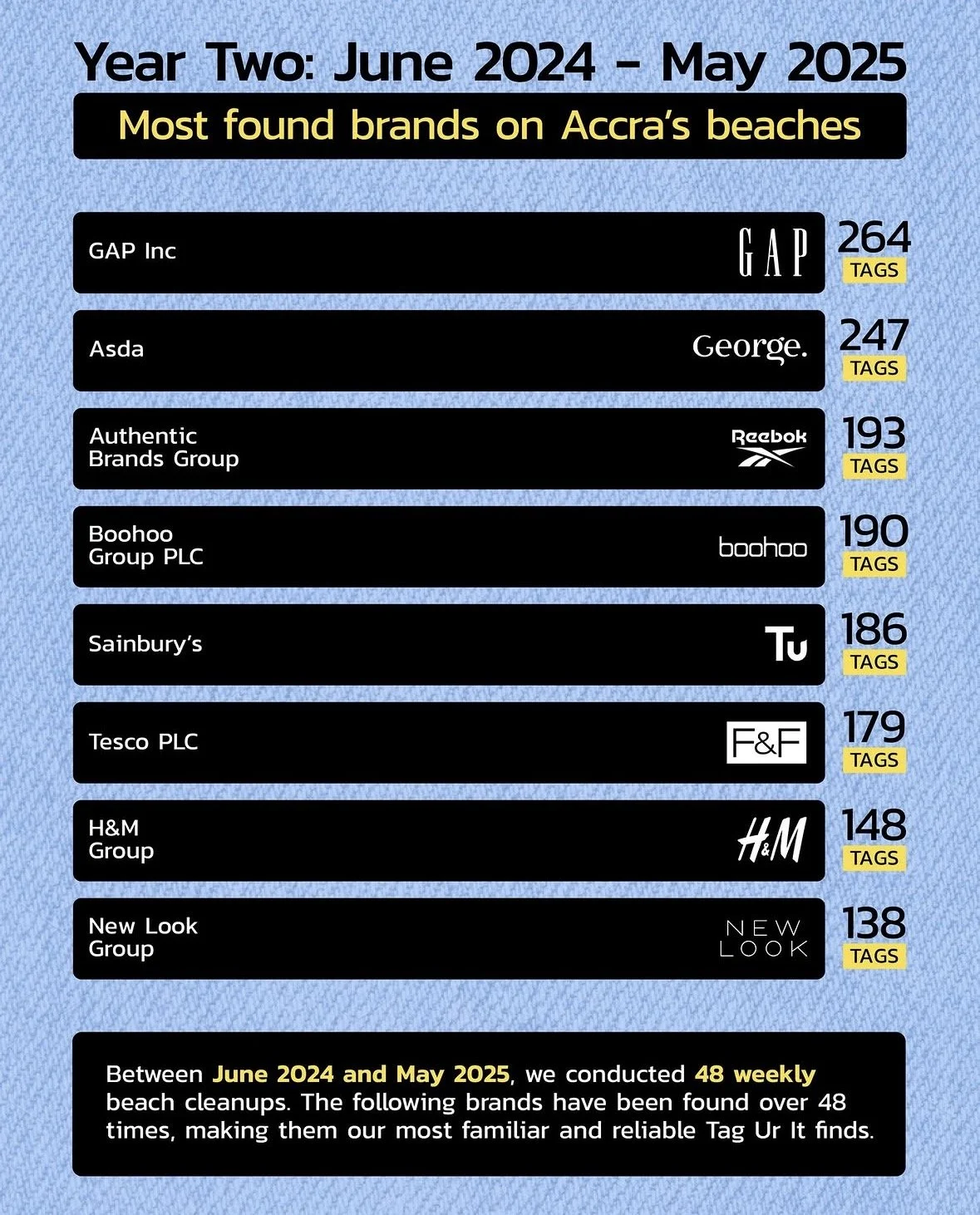
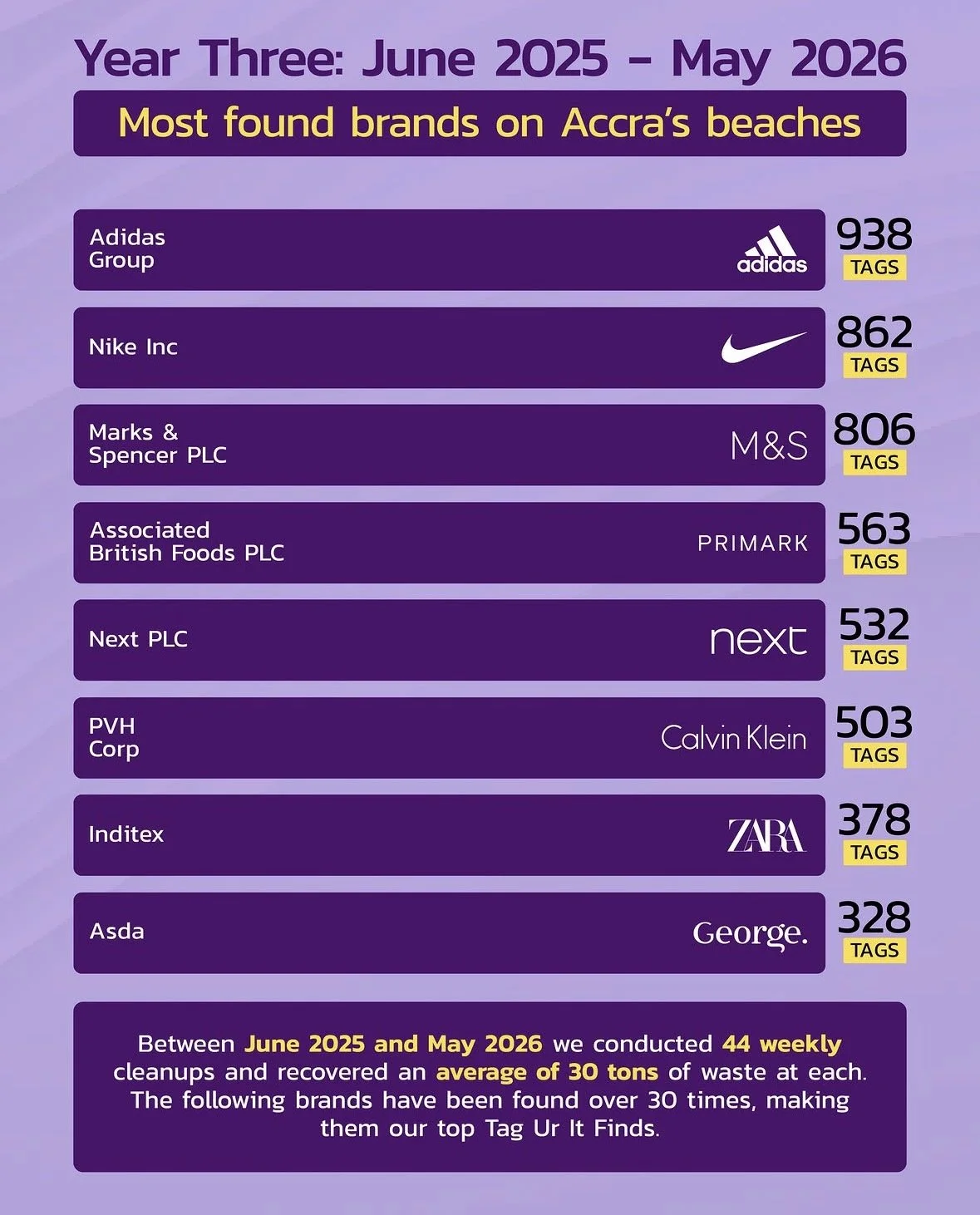
Speak Volumes reports. The Or Foundation has organised this call for transparency and accountability across the fashion industry since 2023 as part of their Stop Waste Colonialism campaign in order to make the publication of production volumes an industry standard. Courtesy of the Or Foundation
The Weight of Someone Else's Waste
This is where accountability becomes the sharpest question. Labels found most frequently in those landfills include Marks & Spencer, Nike and Inditex. The distance between what these companies say about sustainability and what ends up in Accra's waterways is not a gap, it is a policy. Organisations like The OR Foundation and The Revival have spent years working inside the market, supporting traders, collecting data and pressing global brands to take responsibility for where their products end up. Fashion activists and researchers around the world are building the same case: reduce overproduction, stop offloading waste and engage with repair and reuse ecosystems not as charity, but as a basic matter of accountability.
Ghana's response to all of this goes beyond simple endurance. It is invention.
MADE IN KANTA: The Designers of Kantamanto
In this series, NDAANE speaks directly with the upcyclers and designers working inside Kantamanto through me. How they got here, what drives them, what they want the world to understand about the market that quietly processes its excess.
It begins with three of them. Nii Teiko, who works as Bone Bwoy, founder of KALA BLAQ KINTSUGI. Charles Dozia, known in the market as The Bhabi, founder of XTREET GUIDANCE. Rebecca Mensah, founder of NAKOI.
These are not stories about resilience as spectacle. They are conversations about craft, community and the creativity that sustains the market today.
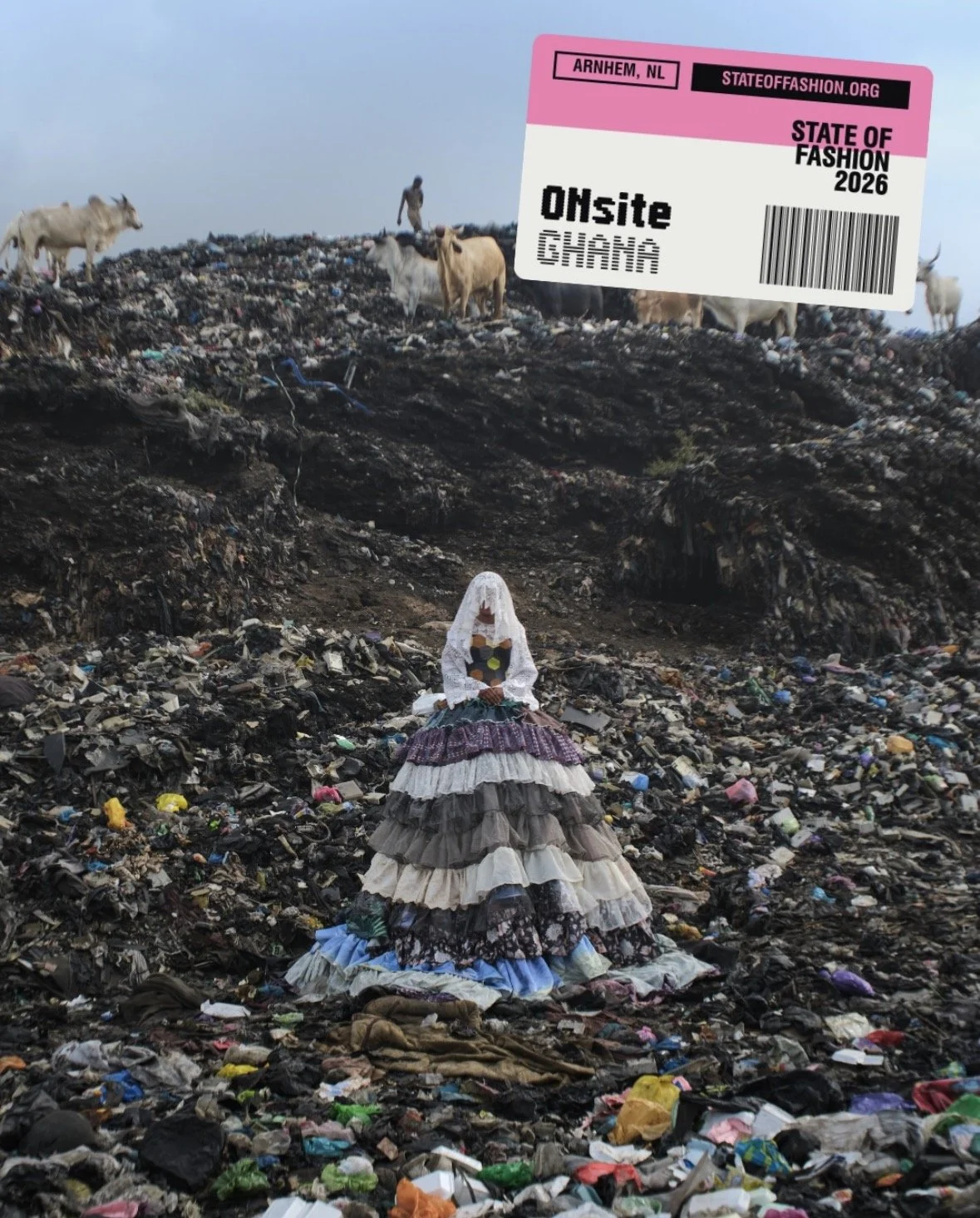
ONsite Ghana project developed by THE REVIVAL in collaboration with ARTLIFE Matters presented at the State of Fashion Biennale 2026 in the Netherlands. Courtesy of THE REVIVAL