
MADE IN KANTA: All the clothes have wounds
MADE IN KANTA is a NDAANE series on the designers and upcyclers rebuilding value from the clothing the world sends to Kantamanto market in Accra. Each episode is a conversation with one of them about craft, community and what they want the world to understand about the market.
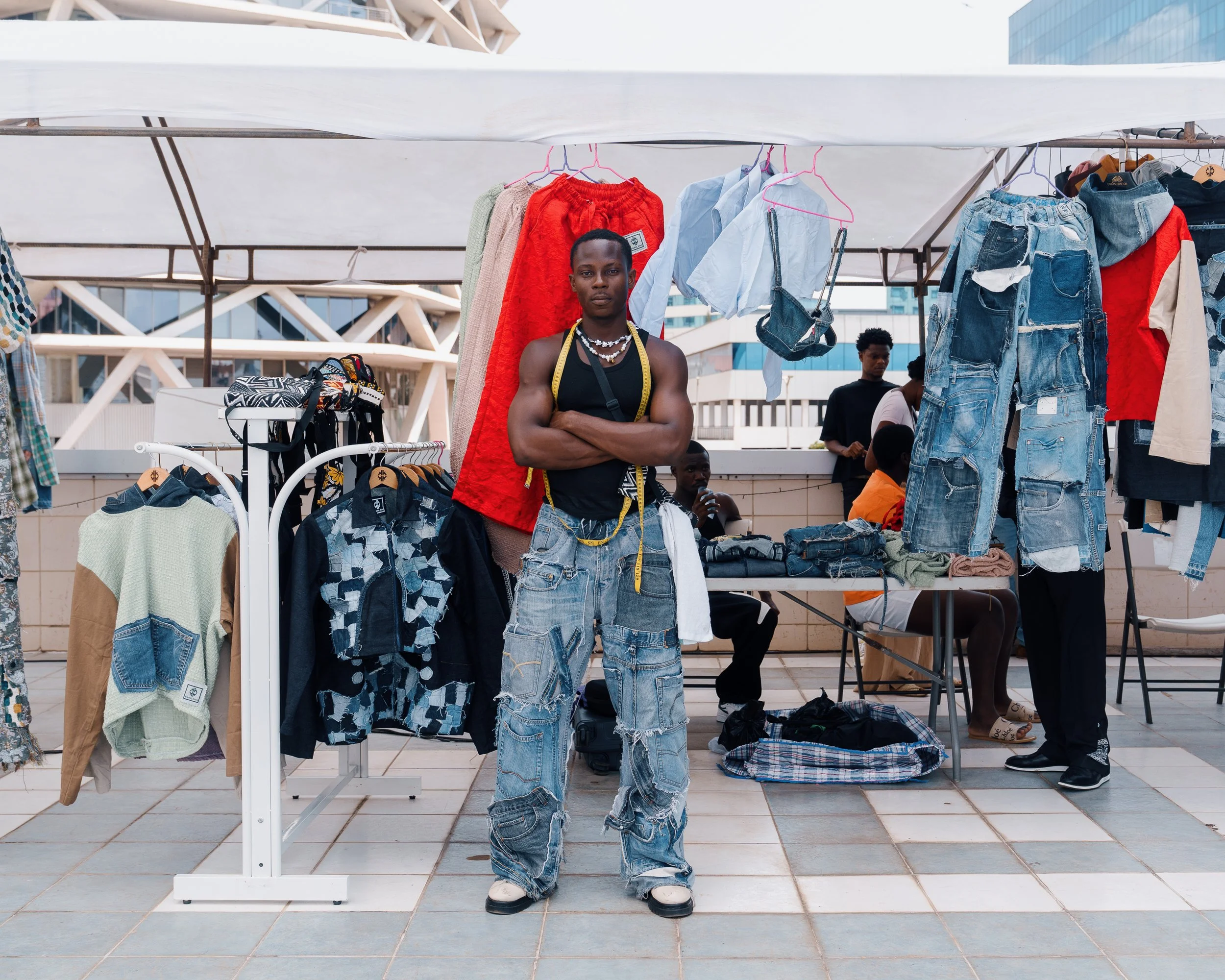
Nii Teiko, also known as Bone, founder of KALA BLAQ KINTSUGI
Nii Teiko, known as Bone Bwoy, is the founder and designer behind the brand KALA BLAQ KINTSUGI. He is sitting in front of a huge mountain of used clothing at his home in Accra, Ghana. In the pile are shirts marked by time, complete with stains and holes, pieces that have been sitting, waiting for years. “I don’t rush,” he tells me.
In Kantamanto, where 15 million garments arrive every week, waiting is not common. But for Teiko, upcycling is not just about making something new. It is about recognising how a used garment can find its value again. This is something that requires creativity, testing, failing, and, above all, time to figure out the right way.
Origin of the brand
Teiko grew up surrounded by fabric. His father sewed suits and political attire, while his mother specialised in bridal wear and wedding gowns. She also worked on joining together the offcuts from African print fabrics to create entirely new textiles, which she would then sew into garments. They each had their own shop, focused on making clothing ethically and with intention. As he got older, Teiko began to explore beyond his immediate family’s projects and spent more and more time at the Old Fadama landfill.
Old Fadama is a community of at least 80,000 people located less than two miles from Kantamanto market and it is one of the largest dumping sites for clothing waste the market cannot sell or process. Mountains of discarded, largely synthetic garments spill into local waterways and block them. The garments wash up along the nearby coast, forming what are now known as textile beaches. This is where the true cost of Western textile exports is in plain sight.
It was when he started to join the beach cleanups arranged by locals and The Or Foundation, a non-profit organisation working with the Kantamanto community, that he started to understand how much textile waste exists as a result of secondhand clothing exports from the West. Inspired by his parents’ work with mending and by the effects of the secondhand clothing influx, he saw an opportunity to bring value back to some of these textiles and started his own clothing brand in 2018.
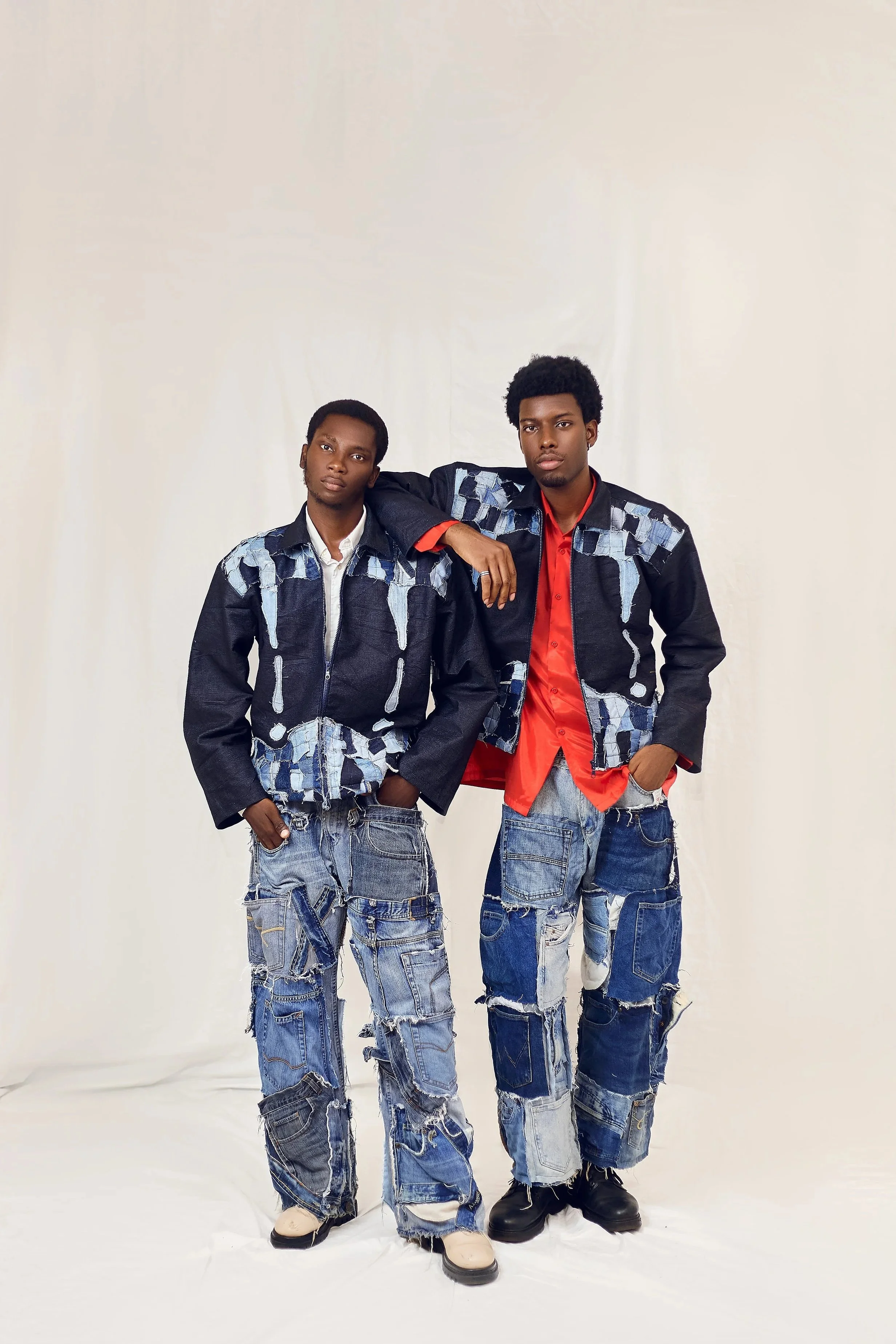
KALA BLAQ KINTSUGI. Courtesy of Nii Teiko
“There are organisations like the OR Foundation and The Revival that work closely with the Kantamanto community, offering resources and education.”
KALA BLAQ KINTSUGI, an intentional brand name
The brand name is carefully chosen, with a meaningful message behind it. One of the missions is to empower the Black community, and because of Ghana’s well-known football team’s nickname, “the Black Stars,” Black became a key part of the name. For Teiko, the engagement to empower the Black community around him came from personal experience. Growing up, he saw how common it was for people in his community to believe that White people could do anything, while Black people were somehow limited. It was a mindset he encountered from those around him, one that was deeply embedded in many African communities as a lasting effect of colonialism and one he wanted his brand to push back against. Even within his own family, not everyone believed in what he was doing; his mother was not initially excited about upcycling, and questioned whether it was a strong enough foundation to build a business on, while his father supported him from the beginning and saw the potential. “Imagine if both parents were discouraging me,” he says. “I would not have had the resources or enough courage and momentum to start.”
Kintsugi is a Japanese word that describes a philosophy meaning “joining with gold”. Rather than hiding damage, this Japanese technique highlights cracks and damage to celebrate an object’s history and imperfections. It transforms broken pieces into something unique, beautiful, and valuable. That’s the philosophy he wanted his clothes to reflect.
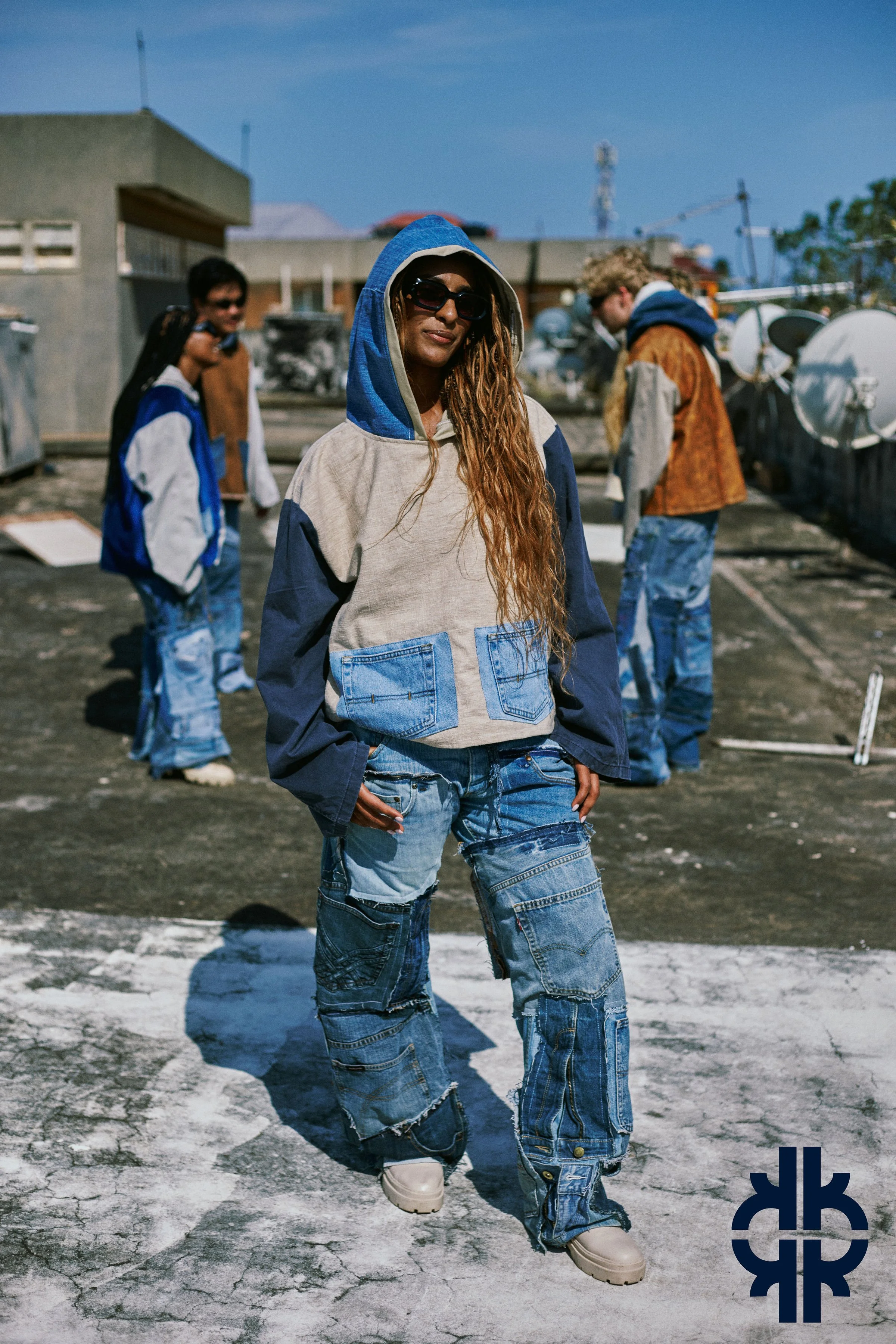
KALA BLAQ KINTSUGI. Courtesy of Nii Teiko
Obroni Wawu and the clothes that are not dead
Among the community in Ghana, the clothes from the West are called “Obroni Wawu,” which translates from Twi to “dead white man’s clothes”. People were once led to believe that these garments were donated because their white owners had died. For Teiko, these garments are not “dead clothes.” He sees them as broken, damaged pieces that have the potential to regain their value through the work of people like him.
“All the clothes have wounds,” he explains. “They need stitches.” Through his work, the damage on the textiles he sources is transformed into marks of beauty and patches, something that carries a garment’s past and its renewal. The more damaged a piece is, the more meaningful the process becomes. What others might discard, he approaches as a possibility, an opportunity to restore value through time, care and creativity.
For Teiko, it is a privilege to work with upcycling. No challenge is too big for him to take on.
Denim, damage and patience
When it comes to design choices, there are some unique challenges that come with upcycling. You never really know what you will get. He has learned a lot through his own practice since he started: to think outside the box and be creative and solution-oriented.
Teiko’s design process usually starts with sourcing garments from the Kantamanto market. He is particularly drawn to denim, which he says nothing can wear out: “Nothing can break it down.” The pile of clothes behind him includes hundreds of stained items. He tells me they have been sitting there for about a year, as he wants to find the best possible solution before turning them into something new. His inspirations are varied. Ideas often come to him suddenly. He writes them down and then starts the process, cutting, mending and putting the garments together, before finally washing them.
“While upcycling is becoming more visible in Ghana,
Teiko points out that understanding is still limited.”
What the Kantamanto community actually needs
Kantamanto market, and others like it, are largely left alone with the responsibility of dealing with the huge amounts of textiles coming across borders. This raises serious questions about responsibility. I asked Teiko what kind of support is needed for these communities, and what support is already in place.
There are organisations like The Or Foundation and The Revival that work closely with the Kantamanto community, offering resources and education. Teiko tells me that he has learned a lot from participating in their workshops and training: finance, business management and more. This is the kind of support he believes the community needs more of to build more secure and sustainable businesses.
“Most people who work in Kantamanto are working for survival first and foremost, not for impact,” he says. However, he believes it is important to educate the community about the impact they are already having and to help them build their businesses around that, so they can become more stable over time.
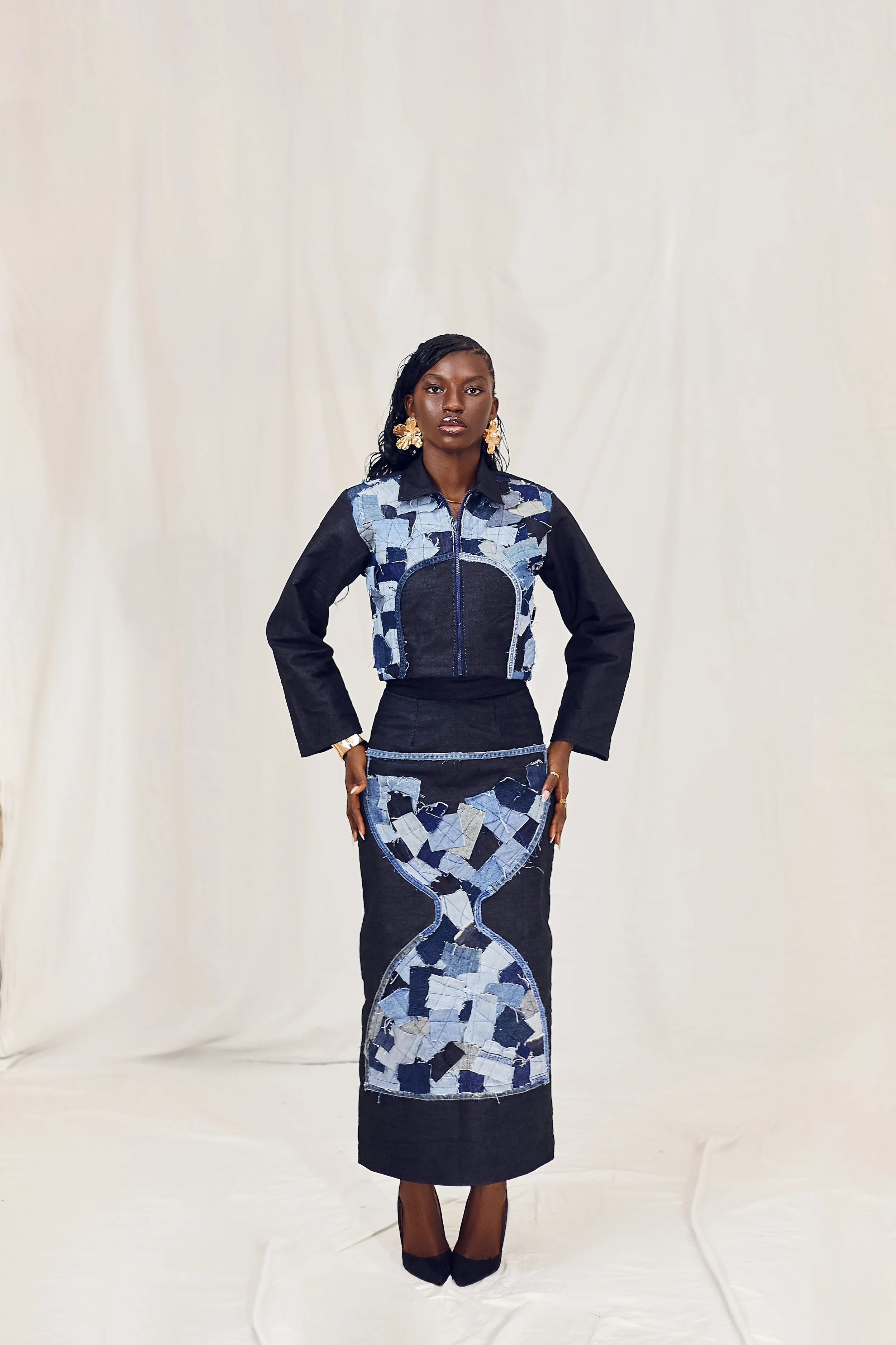
KALA BLAQ KINTSUGI. Courtesy of Nii Teiko
While upcycling is becoming more visible in Ghana, Teiko points out that understanding is still limited. Many people see his work as customised clothing, without knowing where it comes from, the history, or the conditions behind it. Because of this, he is not targeting a specific audience for his brand; he wants to reach everyone, including people who are unaware of the waste crisis. Raising awareness, both online and within the community, is a central part of the work.
Beyond his design work, Teiko has initiated a project that reflects the wider mission behind KALA BLAQ KINTSUGI. Carry Your Future began from something he witnessed firsthand when he attended public school. Students arriving without bags, carrying their books in their hands or tucked into a friend’s bag. He saw how this small difference could mark a child out, leaving them vulnerable to bullying from peers and dismissal from teachers.
The response he built is rooted in the same philosophy as his clothing. He upcycles bags that are distributed to students in marginalised communities with the aim of restoring their dignity. The idea is that something preloved still carries value, and that a child carrying it can feel that too.
“The truth about everything I am doing is not mainly because I want to make money,” he says. “It’s because I want to be a change maker and leave a legacy.”
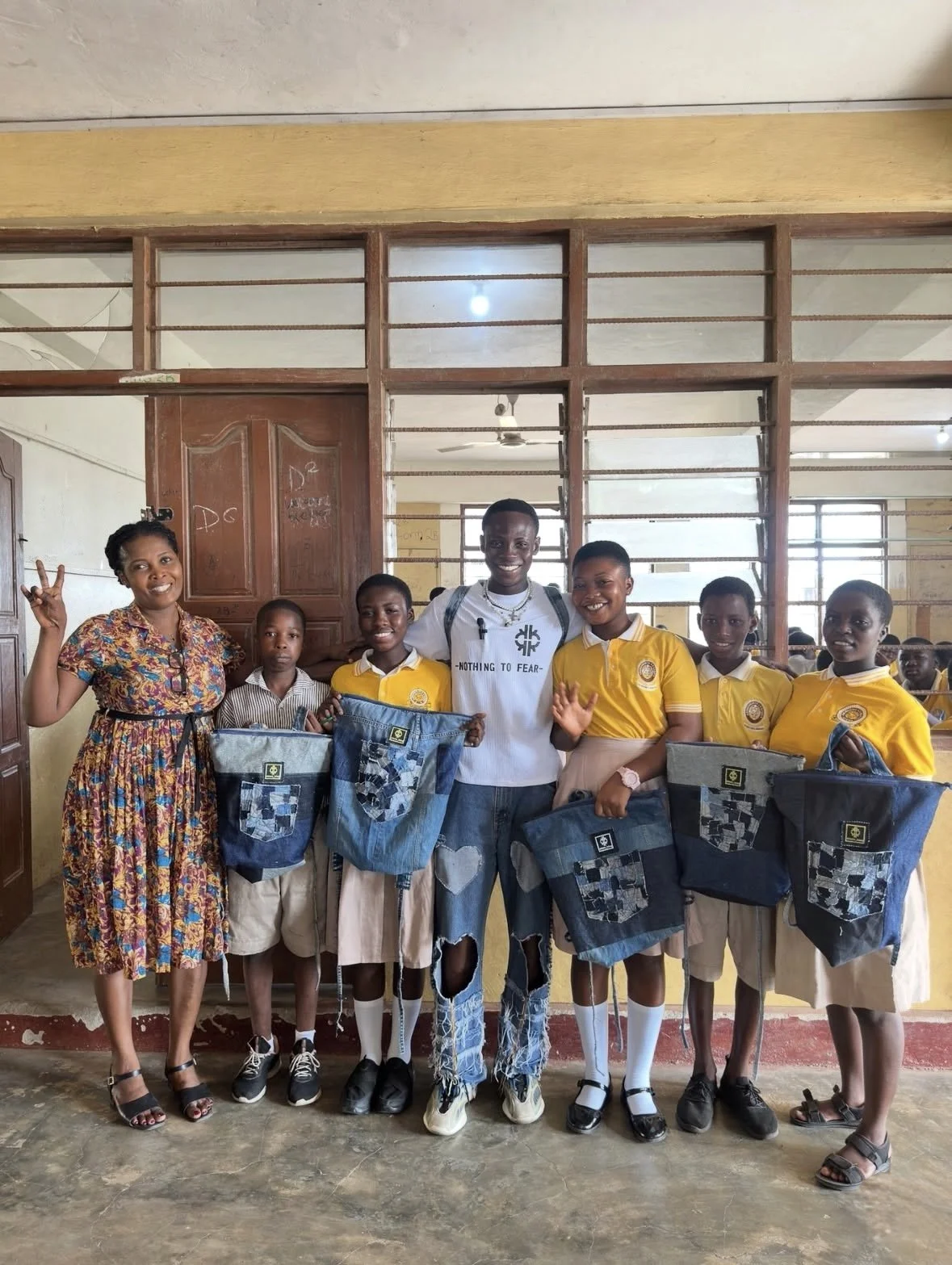
Students with Carry Your Future bags, made from the same salvaged material. Courtesy of Nii Teiko
Who carries the weight
In a system where clothing is so easily discarded in the West, the work happening in Kantamanto asks for a different kind of attention. Ghana does not have the privilege of shipping the problem somewhere else. What arrives has already travelled a global chain, each stop siphoning off the best pieces, until what is left lands here, and stays here.
And yet, from that pressure, something remarkable has grown. Ghanaians have been living with the weight of Western secondhand exports since the 1980s, when structural adjustment policies opened the country to large-scale imports, long enough for it to become not just a burden but a way of life, a trade and a craft. The knowledge and creativity that has emerged from Kantamanto did not come from opportunity. It came from necessity. There is no limit to what people can create when survival depends on it.
But necessity should not be mistaken for a solution. The ingenuity of people like Teiko is extraordinary, but it is not enough. The problem is too big for the Kantamanto community to carry alone. Until countries sending their discarded clothing across borders take responsibility for what they throw away, the weight will always land in the same place.
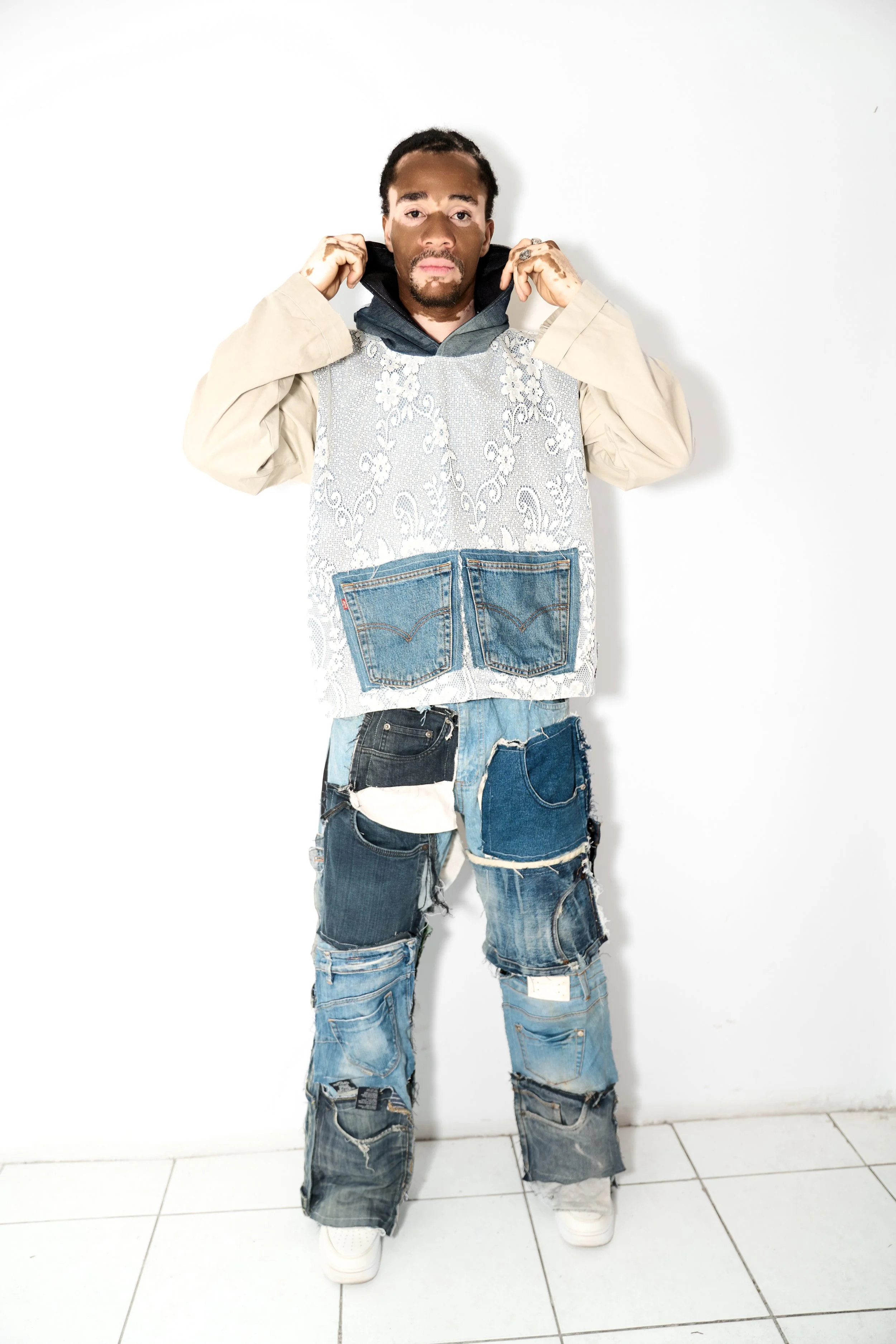
KALA BLAQ KINTSUGI. Courtesy of Nii Teiko
This article is based on an interview with Nii Teiko, founder of KALA BLAQ KINTSUGI, conducted by Frida Nakarma Lidbom in February 2026.
Where to find the work
KALA BLAQ KINTSUGI: @kala_blaq. Pieces are sold directly. Order by DM, with worldwide delivery.
Nii Teiko: @bone_bwoy
Carry Your Future: @carryyourfuture.global
About the writer
Frida Nakarma Lidbom is a writer and visual storyteller working on circular fashion and textile waste. She directed The Threads of Resilience (2024). Read her NDAANE CURATORS portrait.
Sources
The Or Foundation, theor.org/work
The Revival, therevival.earth
Greenpeace Africa, Return to Sender: Why Africa Doesn’t Need Any More of Your Clothes
Greenpeace Africa and Greenpeace Germany, Fast Fashion, Slow Poison: The Toxic Textile Crisis in Ghana, 2024
New Lines Magazine, The Dirty Secrets of the Global North’s Old Clothes
The Guardian, How Ghana became fast fashion’s dumping ground, 2023
The Guardian, Discarded clothes from UK brands dumped in protected Ghana wetlands, 2025
BBC Travel, Kintsugi: Japan’s ancient art of embracing imperfection
The Threads of Resilience, documentary directed by Frida Nakarma Lidbom, 2024
In brief
Nii Teiko, who works as Bone Bwoy, founded the upcycling label KALA BLAQ KINTSUGI in Accra, Ghana, in 2018, and builds his pieces from the garments Kantamanto market cannot sell. The Or Foundation estimates that around 40 per cent of the clothing arriving at Kantamanto leaves the market as waste.
The label takes its method from kintsugi, the Japanese practice of repairing broken objects with gold so the repair stays visible, which is why Teiko treats a stain or a tear as the start of a design rather than a flaw to conceal.
Teiko says most people working in Kantamanto are there for survival rather than impact, and that the community should be helped to recognise the impact it is already having and to build businesses around it.
The support Teiko names as most useful is finance and business management, learned through workshops run by The Or Foundation and The Revival, rather than further training in making.
Teiko says many people read his work as customised clothing without knowing its material or its history, which is why he does not aim the brand at a particular audience and treats raising awareness as part of the work.
MADE IN KANTA continues. The series opened with a look at the market itself, in The World’s Largest Secondhand Market, and the designers who like Teiko walk Kantamanto aisleswith a different background. Elsewhere on NDAANE, Peter Toni-Basengula started building FARE around the same question of what a garment is worth after its first life, and the African Fashion Coalition has put the argument to the industry directly in its blueprint for a regenerative future.
For the designers of Kantamanto, and the conversations shaping fashion across the continent, join the NDAANE newsletter.