
MADE IN KANTA: Fashion Has Become My Voice
MADE IN KANTA is a NDAANE series on the designers and upcyclers rebuilding value from the clothing the world sends to Kantamanto market in Accra. Each episode is a conversation with one of them about craft, community and what they want the world to understand about the market.
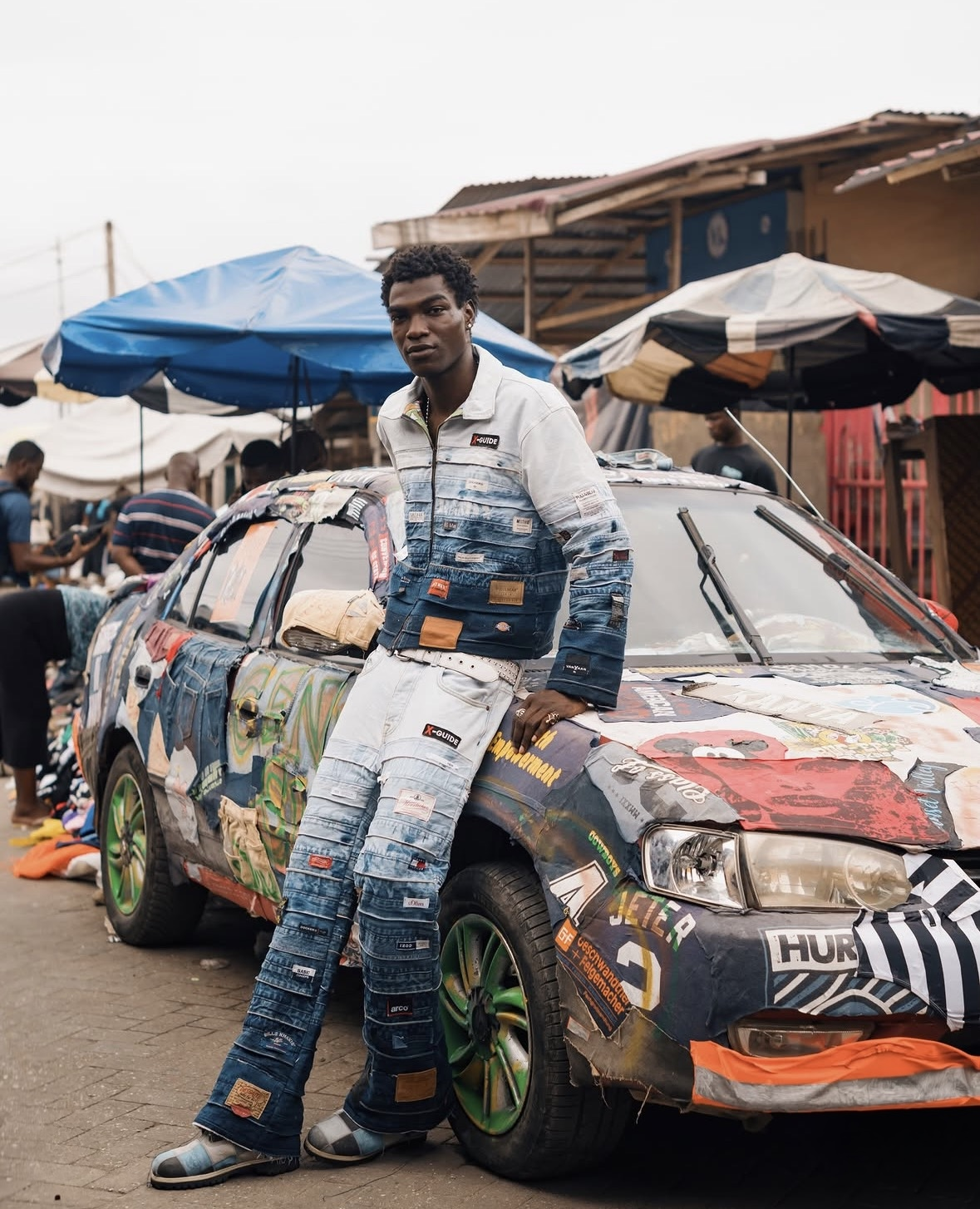
XTREET GUIDANCE. Courtesy of Charles Dozia
In the centre of Accra, the capital of Ghana, lies what is considered one of the world's largest secondhand clothing markets. Through global trade, bale after bale of used clothing from the West arrives on Ghana's shores. Each bale is full of surprises. A trader may buy three bales to sell, hoping to find good-quality garments inside, perhaps some vintage Levi's or Wrangler denim. But there are no guarantees. The bales may just be filled with damaged, stained pieces that have been discarded. The trader does not know what is inside until they have bought the bale and opened it.
This is how Kantamanto has grown into a vast ecosystem of more than 30,000 traders, menders, tailors, designers and entrepreneurs. While some garments are sold as they arrive, damaged pieces are repaired, redesigned or upcycled into new products. For many, the market is not only a source of income but a place where skills are shared, careers are built and second chances are found. For Bhabi, it became all of those things at once.
Self-taught, from a belt stall to patchwork denim
Charles Dozia (The Bhabi) is a 26-year-old designer based in Kantamanto. He is one of many young people who have come to the market looking to support themselves financially. Both of his parents passed away while he was finishing junior high school, leaving him unable to continue his education. Originally from Obuasi, around a six-hour drive from Accra, he moved to the capital to help his uncle sell belts in Kantamanto. Like many young people arriving in Kantamanto, he entered the market through trade rather than fashion, working long days selling belts while trying to figure out what his future could look like.
Bhabi has always been a creative mind. Since he was young, he loved drawing. He sees himself as a quiet person, someone who enjoys keeping to himself. Therefore, expressing himself through art has always been his way of communicating his thoughts and feelings.
“On a personal level, my work is the main way I express myself. I am naturally a quiet person who enjoys being alone, and fashion has become my voice. Through my designs, I communicate my experiences, emotions and ideas in ways that words sometimes cannot.“
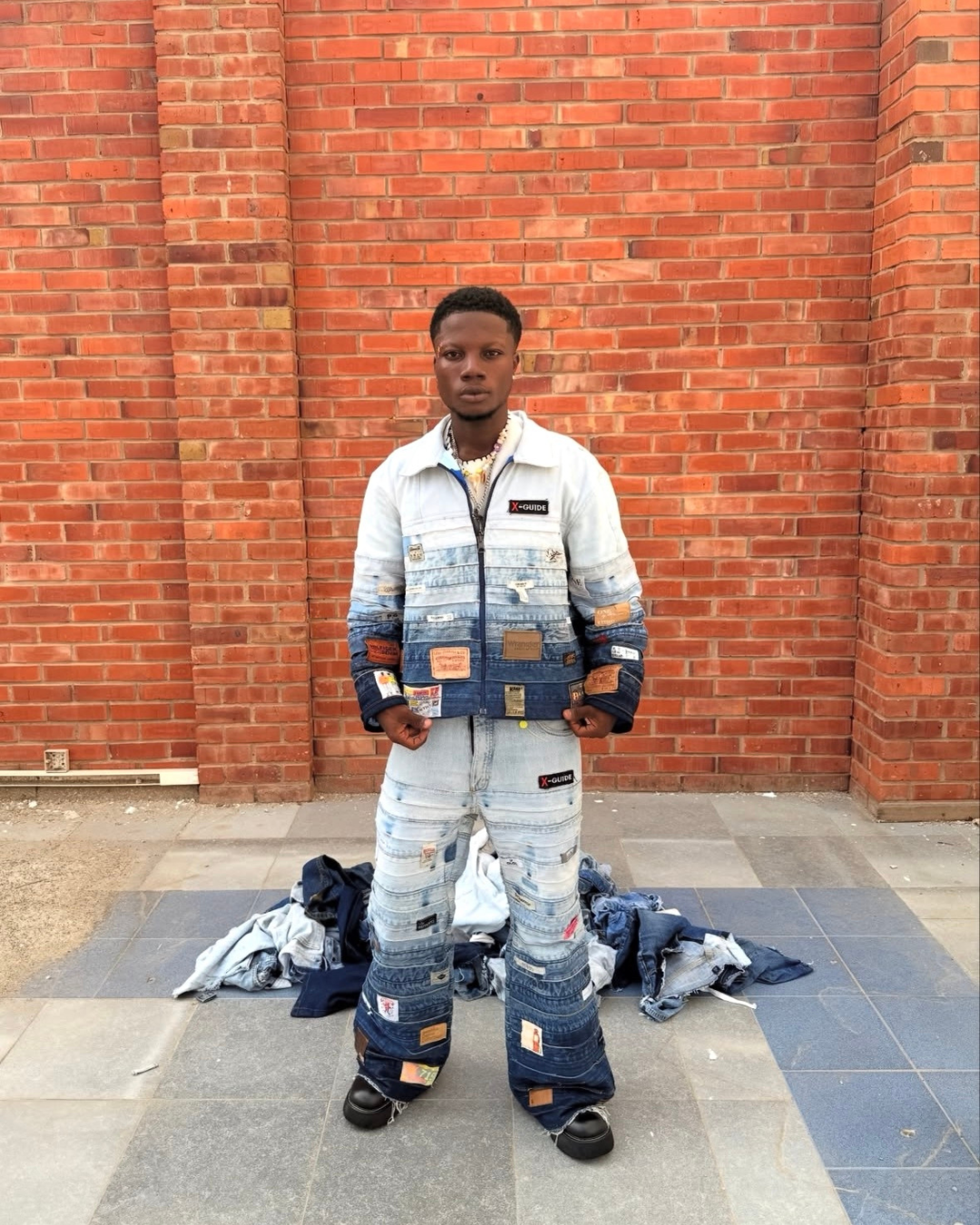
Charles Dozia, also known as the Bhaby, founder of XTREET GUIDANCE
Bhabi used to spend a lot of his time in Kantamanto trading with his uncle, Monday to Saturday, 6am to 6pm. One day, while working, he noticed a pair of hand-painted jeans being sold in the market. The design immediately caught his attention and inspired him to try something similar for himself. After tracking down the materials, he began experimenting. What started as curiosity quickly became the beginning of his journey as a designer.
When Bhabi started out, there were only a couple of people painting on jeans in Kantamanto, but it soon became increasingly popular. That is why he decided to pivot towards patchwork denim designs, watching videos and studying designs online to recreate them in his own way.
“Xtreet Guidance is more than clothing; it is about turning waste into something meaningful, expressing myself through fashion, and showing that you can create something from what others might overlook.”
Part of something bigger
After working alongside his uncle for four years and doing some upcycling on the side, Bhabi was introduced to The Or Foundation by another upcycling designer in Kantamanto, Lucky Bless. The foundation is a non-profit organisation working in Kantamanto to support circular fashion, environmental justice and the livelihoods of the market’s workers. It also organises Obroni Wawu October (OWO), an annual fashion festival celebrating upcycling and circular fashion in the market.
At the time, many of Kantamanto's upcyclers gathered in the same tailoring space to mend and produce their garments, creating a small but growing creative community within the market.
Through The Or Foundation, Bhabi joined a programme that provided financial support for emerging designers to start creating and selling their work. He later won one of the organisation's online upcycling challenges and eventually became part of a six-month training programme that culminated in showcasing his work at OWO.
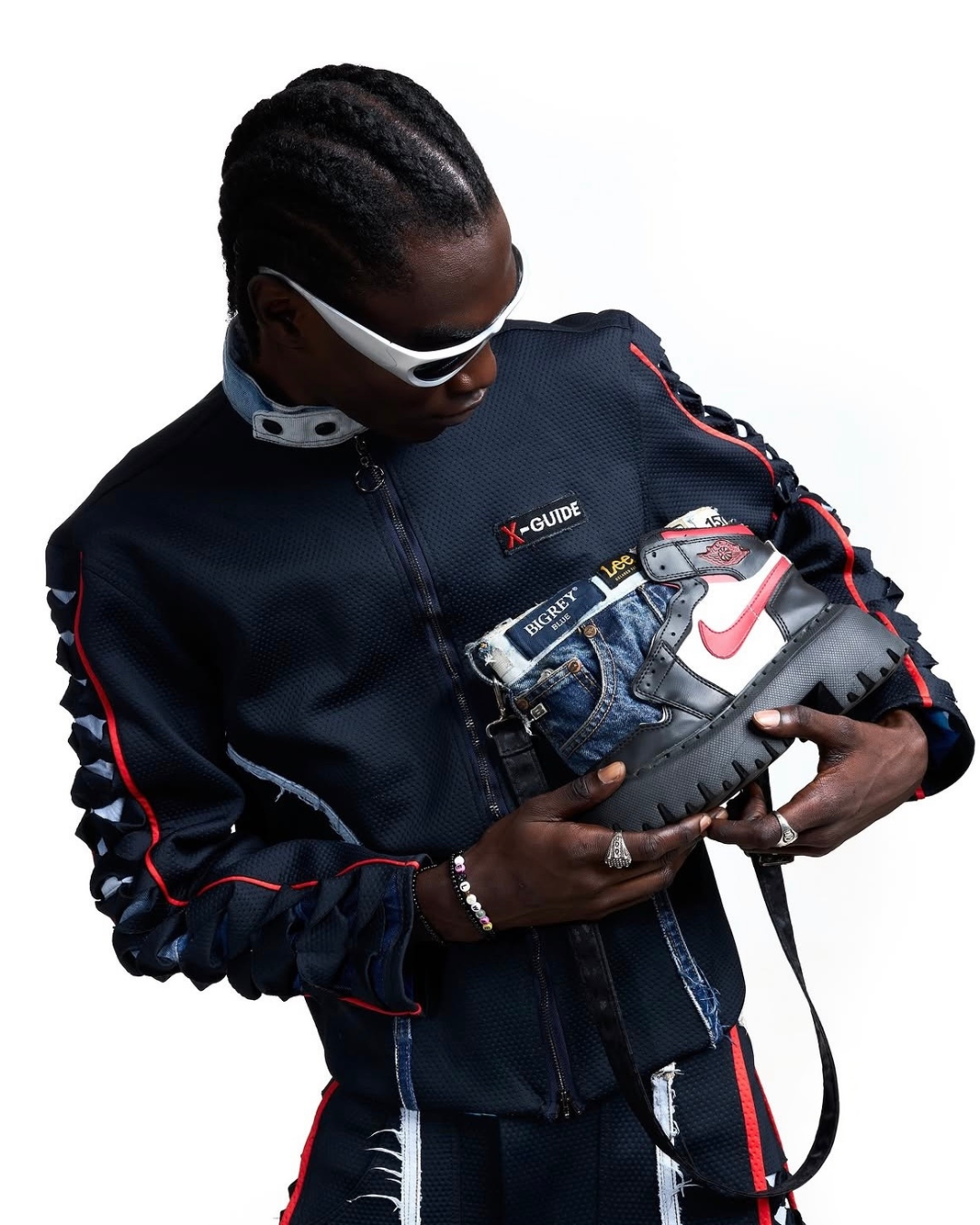
XTREET GUIDANCE. Courtesy of Charles Dozia
Before joining The Or Foundation, he simply wanted to create. Looking back, he says it was through the organisation's programmes and education that he began to understand that his designs were part of something much bigger than just himself.
"Before I met the Or Foundation, I had no idea about sustainable fashion."
There have been many challenges for Bhabi. The Or Foundation eventually awarded him a grant to help him open his own shop. But at the time, he was doing everything alone, paying rent, covering his living expenses, and paying the tailors who helped bring his designs to life, with no family to fall back on if things went wrong. Out of fear of getting stuck with nothing, he made the difficult decision to use the money differently. He invested in expanding his collection and tried Instagram promotions to reach more people. He gave pieces to influencers. Some never posted them. Sales were slow. Some weeks he sold only one or two pieces, just enough to cover his basic expenses.
"A lot of things happened in my life during these times," he says. "And sometimes I feel like they were life lessons."
Upcycled streetwear from what others overlook
Today, he sees upcycling as something more than just the environmental impact. It is about creating something valuable from materials that others have discarded and inspiring people to see potential where they once saw waste. He enjoys the work and finds it very rewarding. But at the same time, he finds it is very hard to sell his designs in Ghana.
Many Ghanaians still do not understand all the work that goes into upcycling design. Bhabi is a designer who specialises in creating high-quality, wearable art, something that requires both time and craftsmanship. It can take him around a month to complete a single outfit. However, because many people do not understand the process and resources that go into making these pieces, they are often unwilling to pay the price or wait for the design to be finished. They admire the garments, but they do not always see the work behind them. Sometimes he sold pieces at a loss just to keep going; it could cost him $100 to make something and he would sell it for $70.
For Bhabi, the work goes beyond creating clothes. Through upcycling, he wants to challenge the way people think about secondhand clothing, not as waste, but as a resource full of potential. In his eyes, his brand carries stories of resilience, creativity, and innovation from Kantamanto, demonstrating that solutions to some of fashion's biggest environmental challenges can emerge from local communities.
“Bhabi hopes to represent Kantamanto on a global stage by building a brand that can be recognised and sold around the world. Through his work, he wants to show that creativity and innovation can come from places like Kantamanto and have an international impact.”
His brand, Xtreet Guidance, officially began in 2024, though he had already been recycling and experimenting with old clothes long before then.
"The name ‘Xtreet’ comes from the streets, culture and environment that shaped me, and ‘Guidance’ because I believe in creating my own direction while inspiring others to find theirs," he explains. "For me, Xtreet Guidance is more than clothing; it is about turning waste into something meaningful, expressing myself through fashion, and showing that you can create something from what others might overlook."
The brand carries clear inspirations from American street style. One of its standout pieces is an upcycled bag, patched together from used Jordans and other materials like secondhand denim. Each one is unique depending on what materials are available. Denim remains central to his work, but he also upcycles sneakers and sandals, turning worn-out footwear into new, wearable pieces.
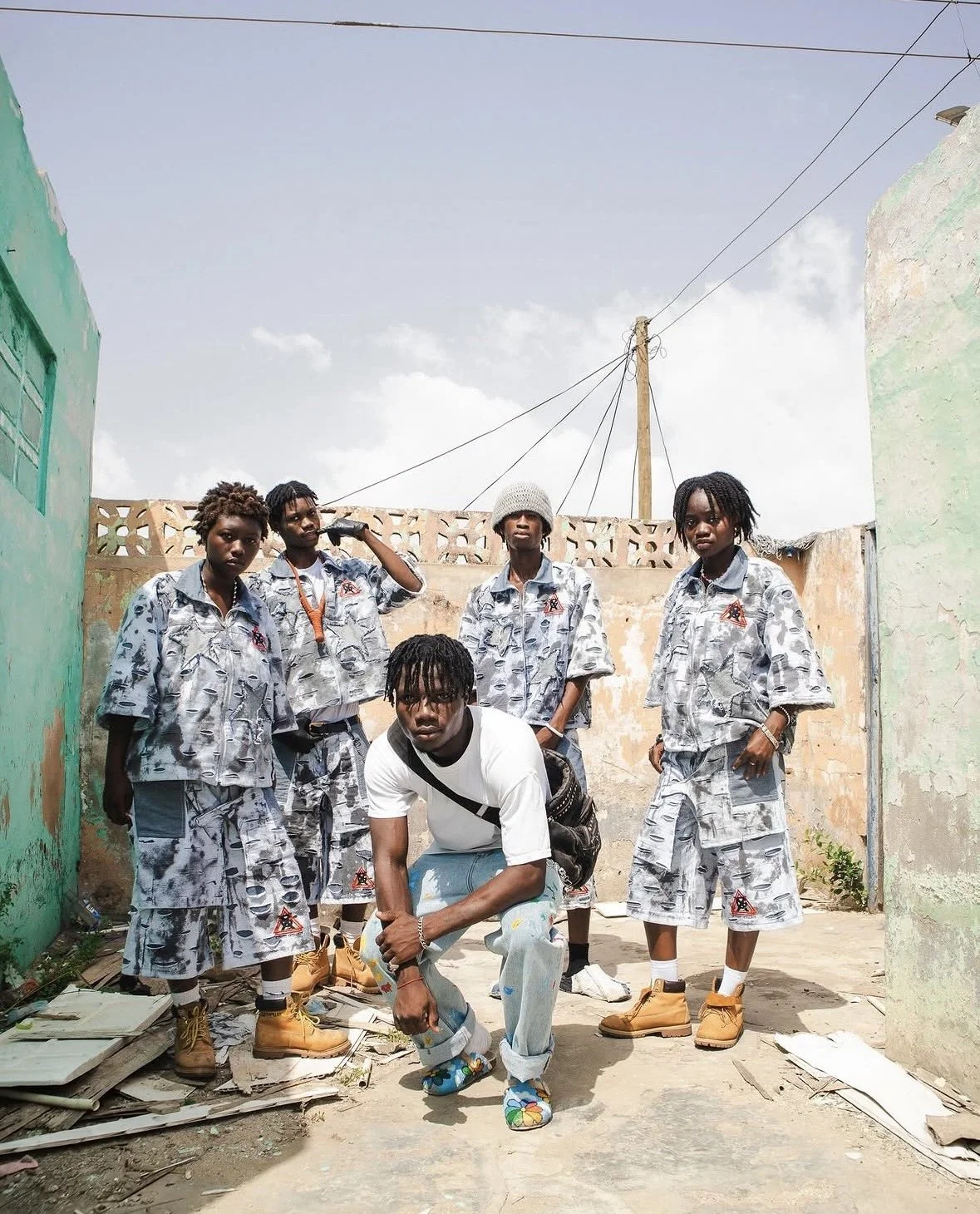
XTREET GUIDANCE. Courtesy of Charles Dozia
Taking Kantamanto to a global stage
Bhabi believes his work can also transform perspectives. As an upcycling designer, he feels he has inspired many other creatives in Kantamanto. Over the years, he has seen other designers recreate or take inspiration from his work, something he sees as a positive sign that the community is continuing to grow and evolve. His brand also creates opportunities for others, as he works closely with tailors in Kantamanto who help bring his ideas to life.
The support from those around him has also played an important role. His friends believe in his ambitions, and through social media, he has received encouragement from people who genuinely appreciate his work.
"Every struggle I go through, the impact of my work is what keeps me motivated. I want to inspire others not to give up."
Looking ahead, Bhabi hopes to represent Kantamanto on a global stage by building a brand that can be recognised and sold around the world. Through his work, he wants to show that creativity and innovation can come from places like Kantamanto and have an international impact.
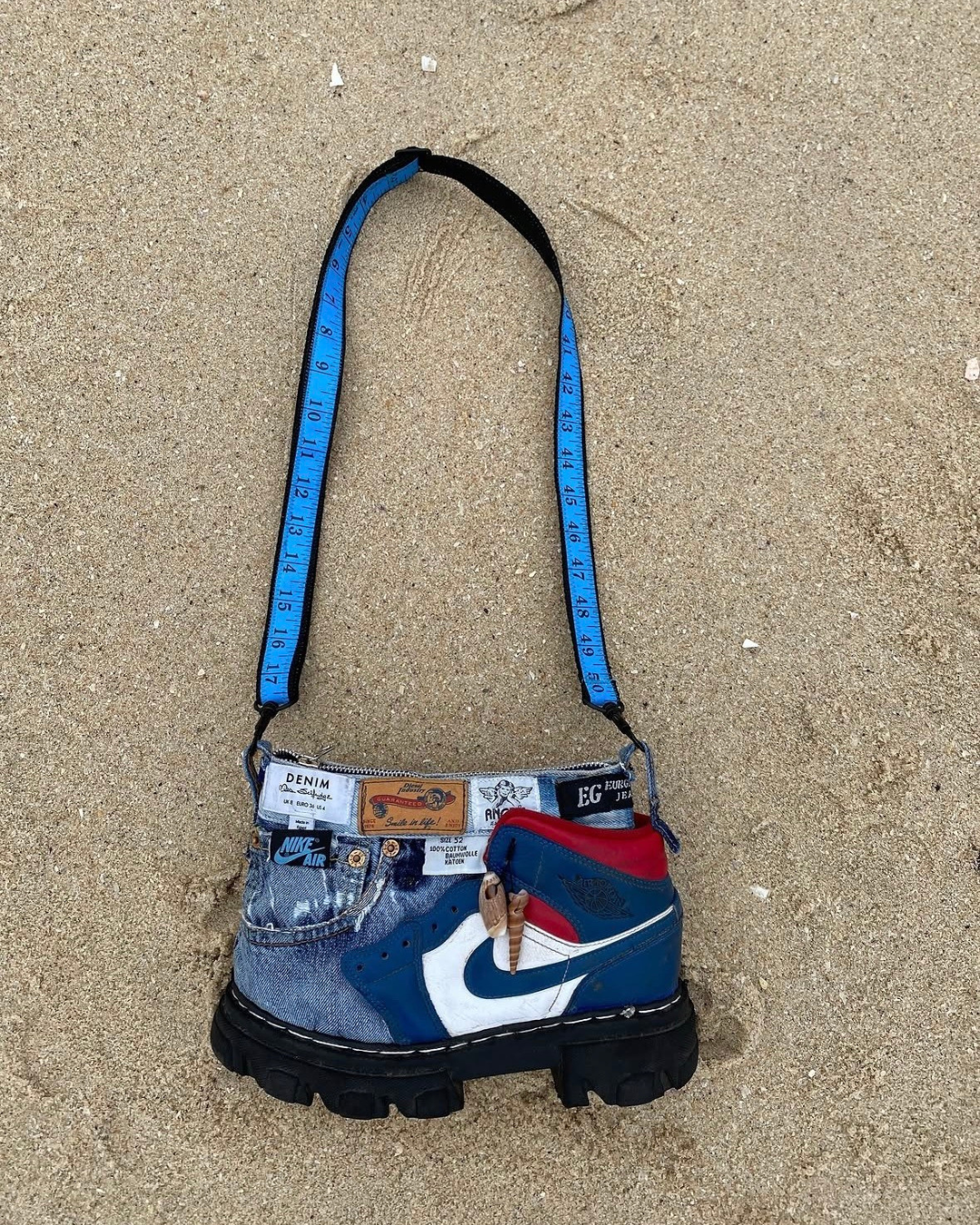
XTREET GUIDANCE. Courtesy of Charles Dozia
His ambitions extend beyond building a successful business. He hopes to create opportunities for young creatives who, like him, have faced difficult circumstances and lacked support. Through his own experiences, he has come to understand how easily people can lose hope and end up in bad situations when opportunities are limited. By mentoring and training others, he wants to show that with support, determination, and creativity, it is possible to build a different future for yourself.
Despite the creativity and environmental value of the work taking place in Kantamanto, upcycling is still largely undervalued within Ghana. Many people see the garments simply as secondhand clothing, without recognising the craftsmanship, time and innovation behind their transformation.
Over time, by working together and building on each other's skills, the designers, tailors, traders and menders of Kantamanto have formed their own local supply chain, where collaboration and shared knowledge allow creativity to flourish. The market is an example of how community can create opportunities for people facing difficult circumstances, offering not only a source of income but also a sense of purpose and belonging. In the same way that Bhabi found his own path through the Kantamanto community and his brand, he now hopes to create opportunities for others who find themselves in similar situations.
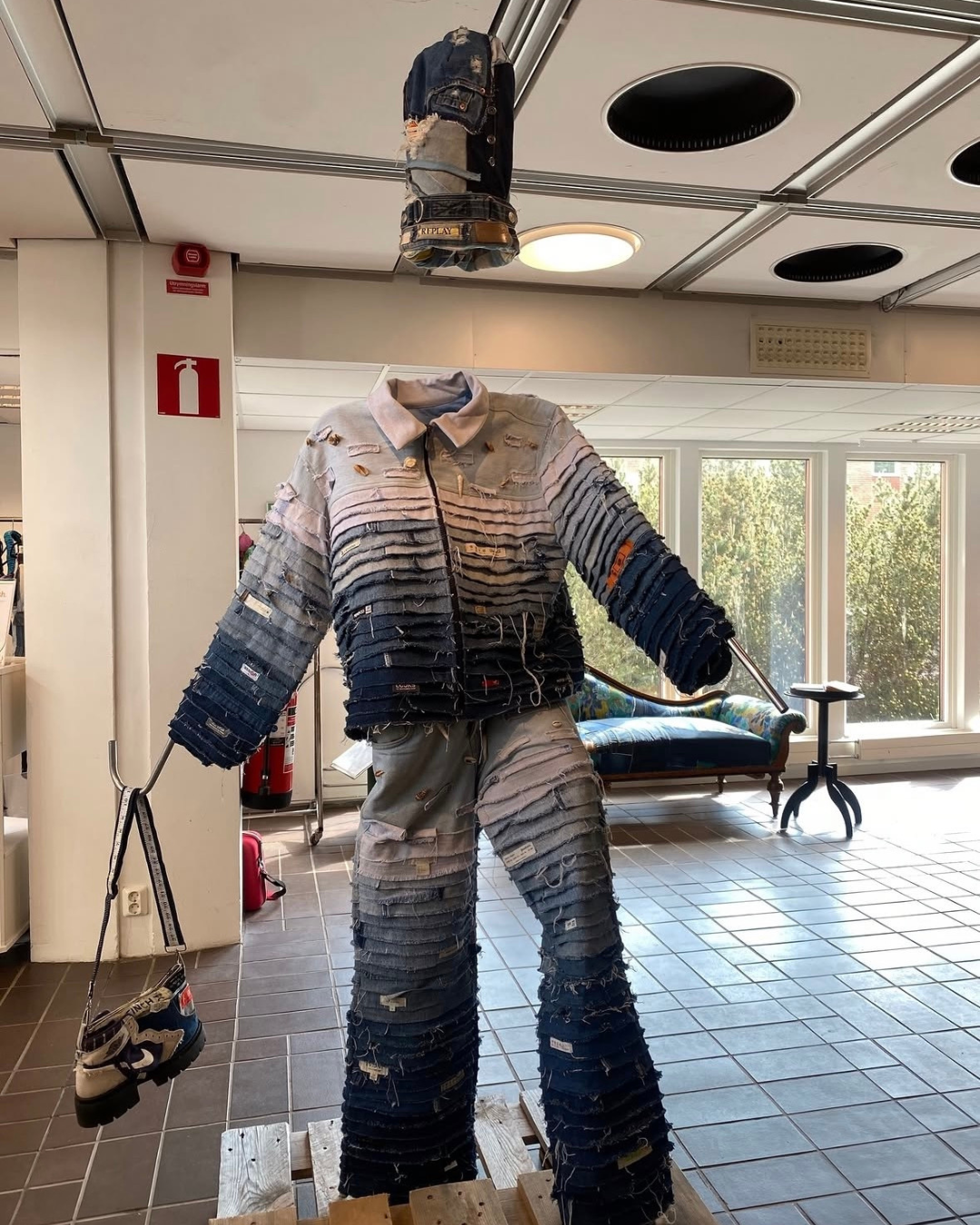
XTREET GUIDANCE pieces exhibited at the cultural centre Kulturcentrum Sandviken in Sweden in June 2026. Courtesy of Charles Dozia
This article is based on an interview with Bhabi (Charles Dozia), founder of Xtreet Guidance, conducted by Frida Nakarma Lidbom by call in May 2026.
Where to find the work
XTREET GUIDANCE: @xtreetguidance. Pieces are sold directly. Order by DM, with worldwide delivery.
Charles Dozia: @the.bhaby
Sources
The trader figure is taken from the MADE IN KANTA series introduction, The World's Largest Secondhand Market, on NDAANE.
Programme and festival details: The Or Foundation.
About the writer
Frida Nakarma Lidbom is a writer and visual storyteller working on circular fashion and textile waste. She directed The Threads of Resilience (2024). Read her NDAANE CURATORS portrait.
In brief
Charles Dozia, known as Bhabi, is a self-taught upcycling designer in Kantamanto market in Accra, Ghana, who learned by watching videos and studying designs online. He founded the streetwear label Xtreet Guidance in 2024.
Through The Or Foundation's programmes for emerging designers, which led to a showcase at Obroni Wawu October, Bhabi came to see his designs as part of something much bigger than himself.
Xtreet Guidance treats secondhand clothing as a resource rather than waste, upcycling denim, sneakers and sandals with clear cues from American street style, including a bag patched together from used Jordans and secondhand denim.
Kantamanto's designers, tailors, traders and menders have formed their own local supply chain, and Bhabi works with the market's tailors to bring Xtreet Guidance designs to life.
Bhabi wants Xtreet Guidance to be recognised and sold around the world, carrying the stories of Kntamanto. He believes solutions to some of fashion's biggest environmental challenges can come from local communities like Kantamanto and hopes to train young creatives who have faced difficult circumstances without support.
Bhabi believes answers to some of fashion's biggest environmental challenges can come from the communities closest to them. MADE IN KANTA meets those communities ahead of Obroni Wawu October 2026. Start with our introduction to the world's largest secondhand clothing market, then read episode one, in which Nii Teiko of KALA BLAQ KINTSUGI explains why he goes looking for the most damaged garments. For more on waste and materials, read our SPOTLIGHT on FARE and sustainable fashion in Benin.
Subscribe to the NDAANE newsletter to stay across every conversation.