
MADE IN KANTA: From a Seat at the Table to Leading the Narrative
MADE IN KANTA is a NDAANE series on the designers and upcyclers rebuilding value from the clothing the world sends to Kantamanto market in Accra. Each episode is a conversation with one of them about craft, community and what they want the world to understand about the market.
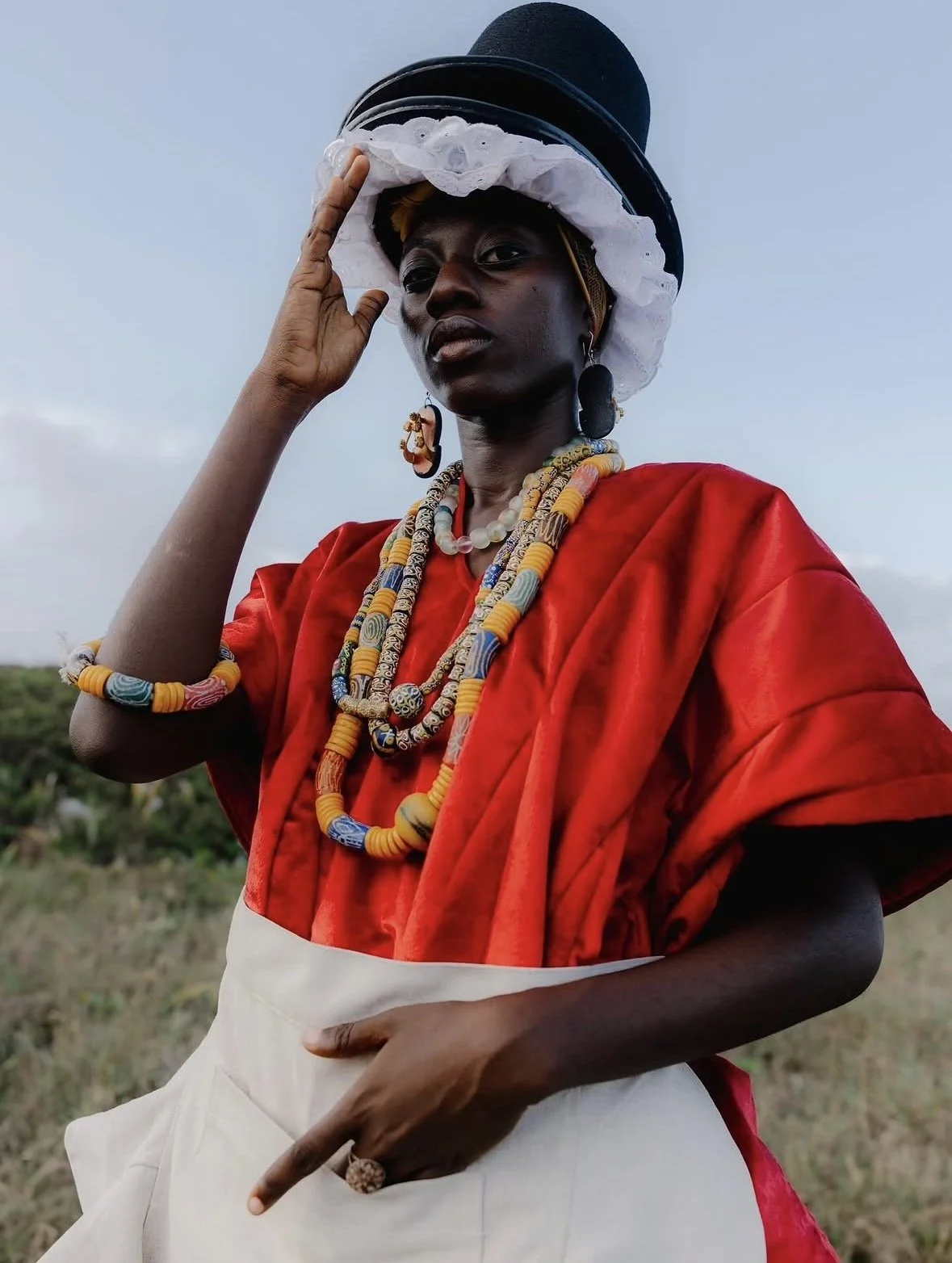
Ophelia Dos Santos x NAKOI, A dialogue between heritage and identity. Courtesy of Rebeccah Mensah
Empowering womanhood through storytelling and creativity
Her pieces look like unique art that highlight the power of women; art that you can carry on your body. Rebecca Naa Korkor Mensah is a 26-year-old creative director and founder of Nakoi, a designer who pours her life experiences into her designs.
"For me, upcycling is my canvas, upcycling is my poem, upcycling is my story; it's my platform."
Proving her worth
Her designs look more like paintings on canvas than actual clothing. She explains that she has always had a creative outlet; even before primary school, she used to sketch a lot. That's how it started. Since she was very young, she has always had an eye for fashion, but there have been many challenges to overcome since then. As a darkskinned, plus-size woman, she has often felt overlooked, her talents and skills not taken seriously. There were years of trying to prove her worth to others. Regardless of this, she always believed in her own talents and was eager to pursue what interested her. This led to her eventually, in senior high, doing visual arts before studying fashion and textiles at the tertiary level.
Throughout her education, she did multiple apprenticeships to learn more and get hands-on experience. Through all of this, she still felt like something was missing. She had questions about the traditional fashion system that she couldn't get answers to, despite her studies. Sometimes she would feel discouraged by the way some of her managers in her apprenticeships would just talk about the fashion industry as a linear system.
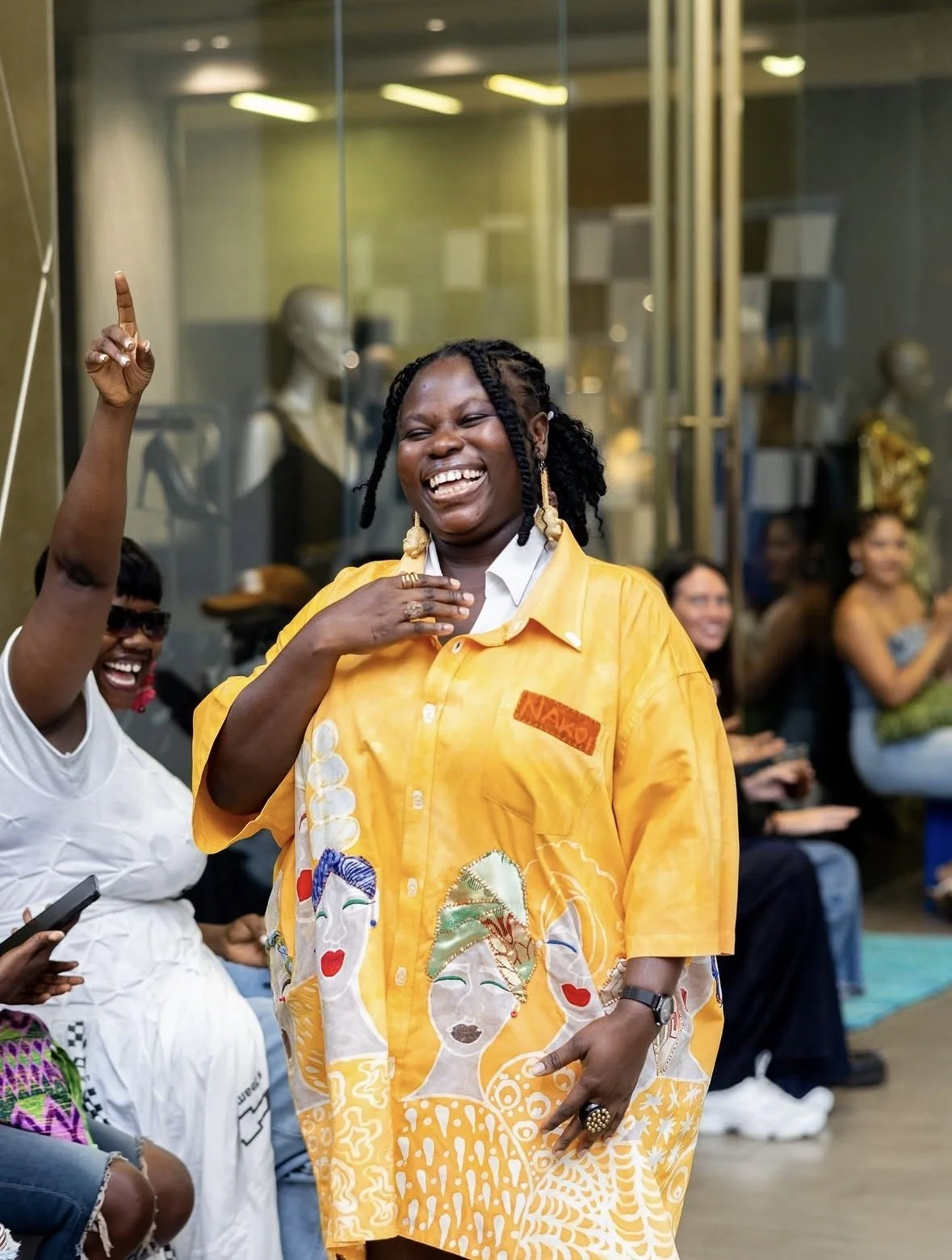
Rebeccah Naa Korkor Mensah, founder of NAKOI
Upcycling before she had the word
As it is considered the world's biggest secondhand market, most people come to Kantamanto to make a living, but for Rebecca it was the other way around; Kantamanto found her. Through one of her apprenticeships, she volunteered at a recycling institution called McKingTorch Africa. This was the first time she was introduced to more sustainable fashion, circular models and upcycling. At the institution, she assisted with creating artworks. They also invited her to her first sustainability event. The introduction to upcycling felt familiar to Rebecca, as she realised that a lot of her work was, in fact, upcycling; she just hadn't known it at the time.
At the sustainability event, she met Thomas Baba, who was there specifically to connect with female textile upcyclers. They made contact, and through him she was introduced to Kantamanto and The Or Foundation, a non-profit organisation working at the intersection of environmental justice, education and fashion development, based in Accra and the USA. She applied for their accelerator program and was selected.
Even though she grew up in the Accra region, she was not too familiar with Kantamanto; she only had some memories of going there with her parents as kids to get supplies. After years of formal training and apprenticeships, the questions she'd had since school still hadn't been answered. When she got introduced to Kantamanto through The Or Foundation, that all changed.
“That was when I realised that this is what I have been looking for. Kantamanto gave me individuality and exclusivity, the things I could never put in words.”
“I really enjoy upcycling. It has been one of the tools to express how I am feeling. I’ve had so many experiences growing up, as a plus-size woman and an African woman, as a godchild, as the eldest daughter, as a sister, as a friend. I’ve had a lot of experiences. There are a lot of stories I want to tell, and I want to do this exclusively and individually, but collectively at the same time.”
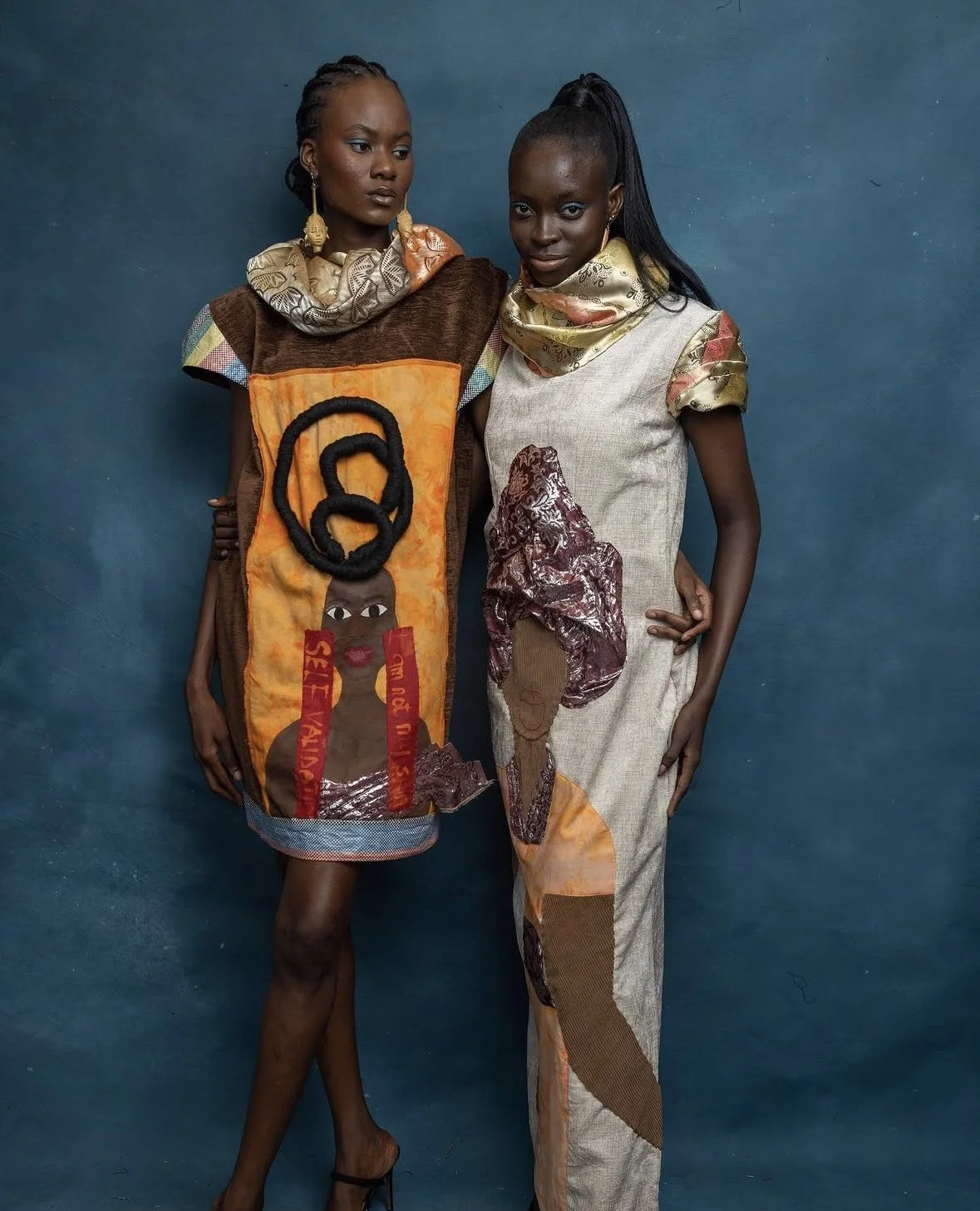
NAKOI at Lagos Fashion Week. Courtesy of Rebecca Mensah
Launching Nakoi in Kantamanto
Working in Kantamanto led her to see her work more as a business than a hobby, and shortly after joining the market in 2024, she launched her brand, Nakoi. Through her business, she has experienced how healing it is to tell her story. It has helped her realise that she is not alone and that there are many people out there, especially girls, who can relate. When she makes her designs, she connects with people, and it gives a collective experience of the stories.
"I really enjoy upcycling. It has been one of the tools to express how I am feeling. I've had so many experiences growing up, as a plus-size woman and an African woman, as a godchild, as the eldest daughter, as a sister, as a friend. I've had a lot of experiences. There are a lot of stories I want to tell, and I want to do this exclusively and individually, but collectively at the same time."
Telling her story
When asked what the biggest inspiration for her designs is, she replies quickly and firmly:
"Woman, the body of woman, the experiences of woman, the versatility, the wonder of the creation called 'woman.'"
One example of this is the Nakoi "Sakora" Collection, created in partnership with Adorn Me Treasures. Each piece begins as a reclaimed men's shirt, transformed by hand through tie-dyeing and painting into a garment. The name "Sakora" refers to a shaved or bald head, a look that, for women in Ghana, can still invite judgment and laughter. Through the collection, Rebecca celebrates the women who wear it anyway: bold, unapologetic and confident in an identity that society doesn't always make space for.
With her experiences from childhood, then going into Kantamanto where most of the designers are men, empowering women through her brand has been very important, and it is dominant in her designs. Rebecca feels deeply honoured to be one of the few women in the space. She feels encouraged by seeing other girls like her who come to her for advice and guidance, where she can help them find their own talents. Rebecca has a long-term dream, a guiding goal: to be a stepping stone and a shoulder to allow other women to thrive. Not just to be visible, but to make the path easier for whoever comes next. Culture runs through all of it too. For Rebecca, her designs are never separate from where she comes from; they are rooted in who she is and her community is.
“The conversations happening in the Global North often use Kantamanto as evidence, as data, as imagery, but the people inside it are rarely in the room where decisions are made. Inclusion has to go beyond storytelling. Being featured in an article or a documentary is not the same as having a seat at the table where policy, funding and the direction of the industry are decided. What needs to change is who gets to define the terms.”
Never quite knowing how a piece will turn out
Part of what keeps Rebecca enjoying upcycling is the unpredictability of it. She brainstorms constantly, generating many ideas, but with upcycled materials there's rarely a way to know exactly how a piece will turn out until it's finished. Sometimes she is unsatisfied with some of the final work, but then she gets positive responses from people who relate to them and love the pieces. Through her designs, she finds people who can relate to her and the stories that she tells through the designs, and this slowly grows a community of women around her. There is a lot of power in that. Her feelings towards the designs don't really matter when the reactions she gets are more powerful; it is something bigger than just her.
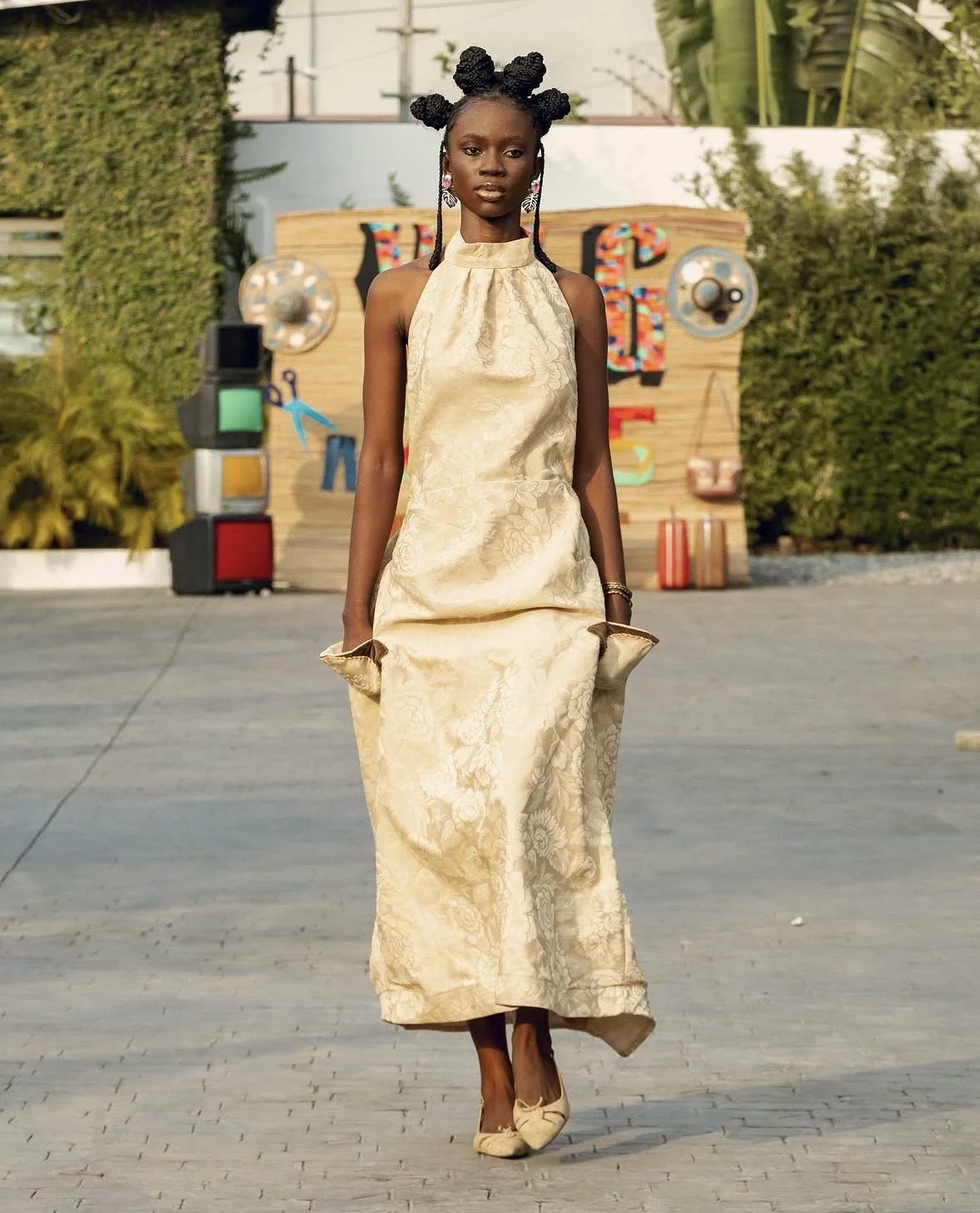
NAKOI at Vintage Up Ghana Festival. Courtesy of Rebecca Mensah
Fast fashion's afterlife or Obroni Wawu
Kantamanto means something different depending on where you stand. Globally, it has become a symbol of fast fashion's afterlife. Locally, it is still sometimes seen as Obroni Wawu, meaning ‘dead white man's clothes’ in Twi. It takes time for the locals to see it as something creative and innovative with huge potential.
For Rebecca, the growing global attention on Kantamanto is welcome, but it comes with a responsibility the Global North has yet to live up to. She points to the whole ecosystem of work that happens there, the retailing, the upcycling, the ironing and washing, an entire system built to keep clothes alive and give them a second chance. Behind all of it are real people, and she believes the world needs to reckon with that when decisions are made about the secondhand clothing trade, and the importance of remembering that real humans are working with their discarded clothing.
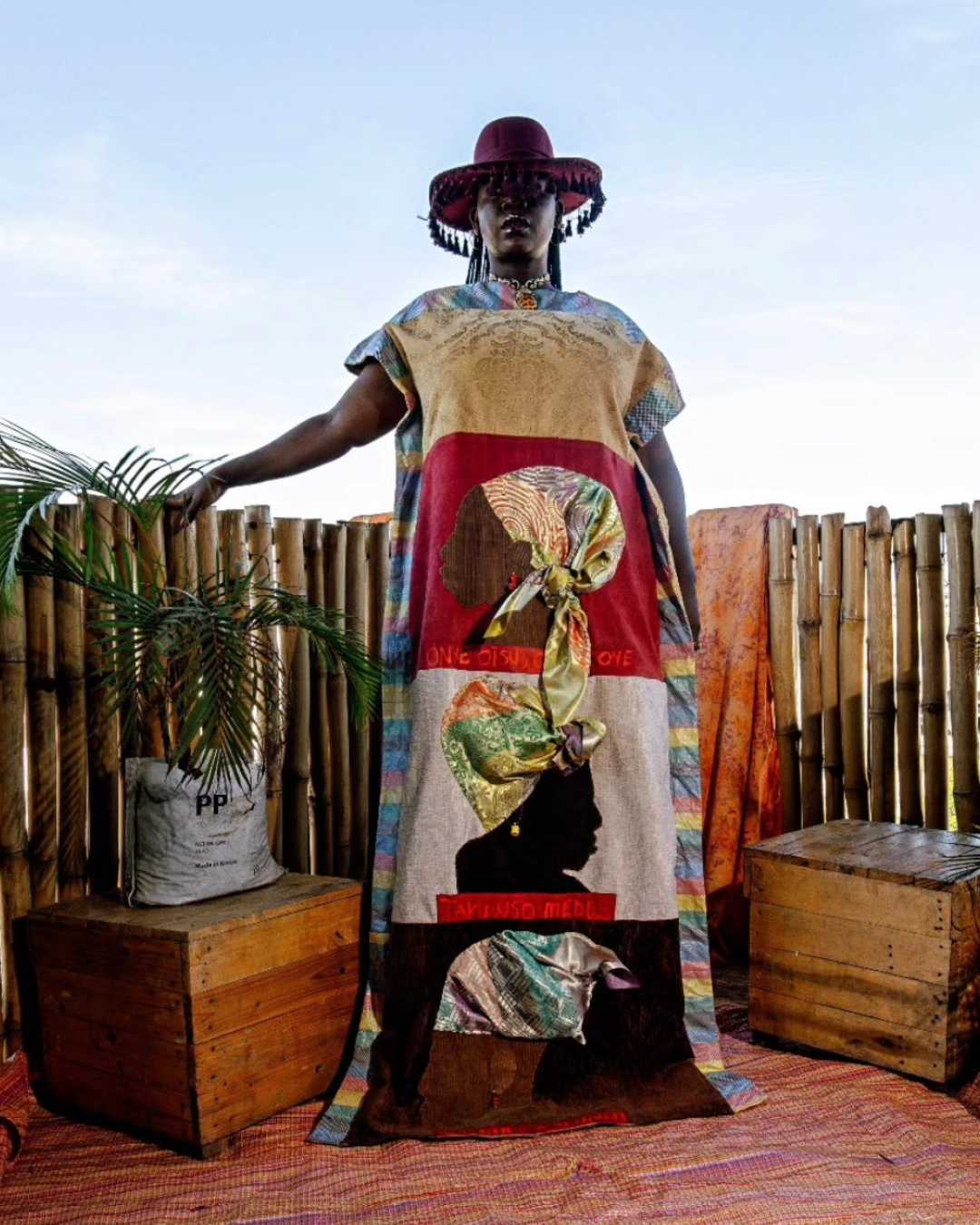
NAKOI. Courtesy of Rebecca Mensah
A seat at the table
Being seen is not the same as being included, Rebecca states. Kantamanto is often used as a reference point in conversations about sustainability and textile waste, but it is rarely a participant in them.
"The conversations happening in the Global North often use Kantamanto as evidence, as data, as imagery, but the people inside it are rarely in the room where decisions are made. Inclusion has to go beyond storytelling. Being featured in an article or a documentary is not the same as having a seat at the table where policy, funding and the direction of the industry are decided. What needs to change is who gets to define the terms."
Since it started, Nakoi has been included in initiatives like Lagos Fashion Week’s show or Woven Threads showcase, and ministry-level policy discussions. To be invited into the conversations globally and get Nakoi visibility is particularly important as it also shifts the locals' perspective on her work. This is part of why she is invested in the Kantamanto Upcyclers Association (KUA), which is an effort to build collective infrastructure so upcyclers and makers can be strengthened and speak with one voice, rather than depending on outside recognition to be heard. For Rebecca, real inclusion means investment that flows back into the community, not just visibility; it means also investing in resources and platforms owned by the people doing the work.
Towards a showroom of her own
As for Nakoi specifically, she believes the next steps for the brand are a proper structure, a dedicated space to create and meet clients and the resources to properly host interviews, with a showroom she can show her work in. What she is working towards, and what she dreams about for Nakoi, is a proper debut show, one where Nakoi's voice is fully visible, and the designs can be seen and touched. From there, she wants to keep building a community that has a seat (with open seats) at the table when it comes to conversations about secondhand clothing and sustainable fashion.
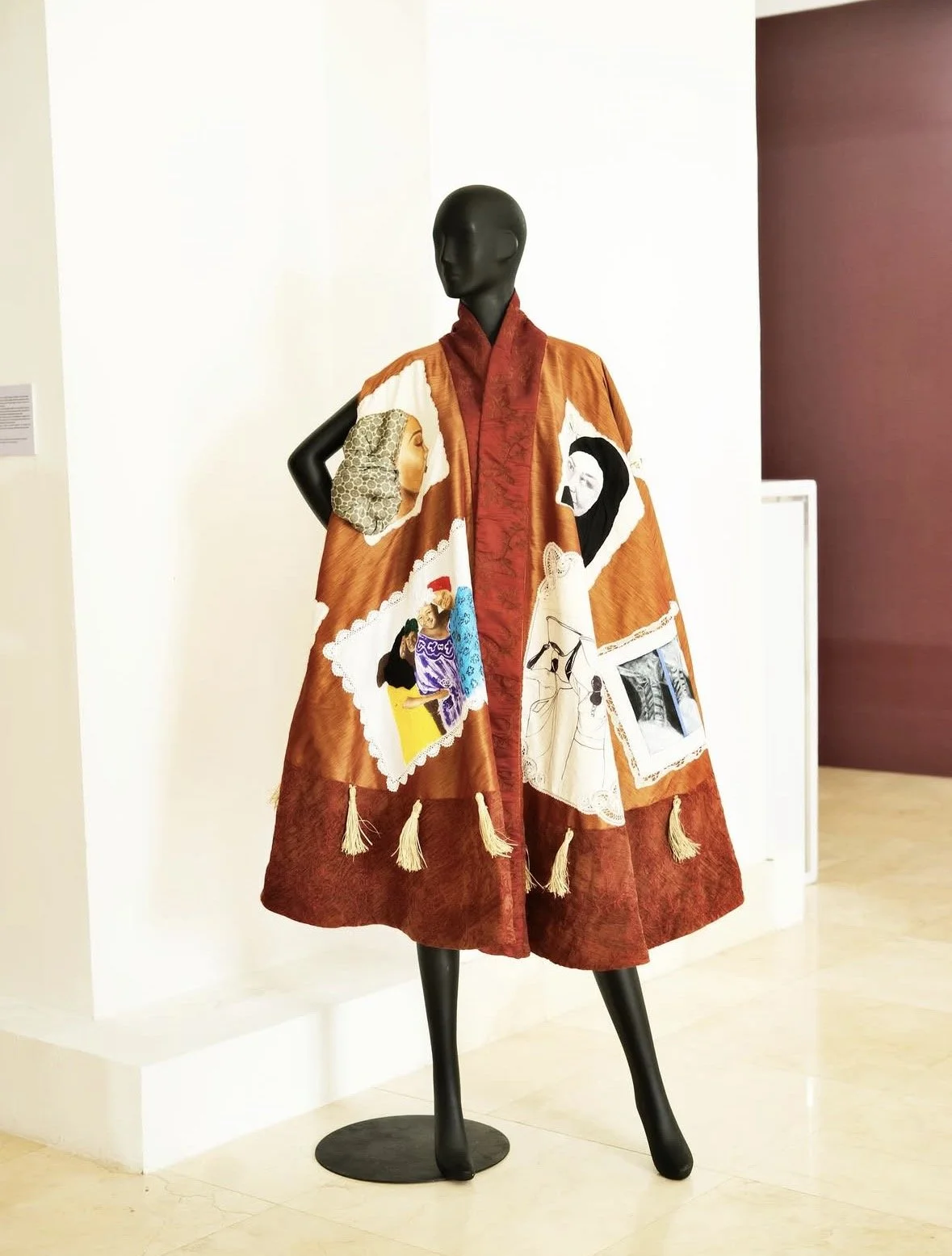
NAKOI piece exhibited at Lagos Fashion Week’s Woven Thread showcase in April 2026. Courtesy of Lagos Fashion Week
This article is based on an interview with Rebecca Naa Korkor Mensah, founder of Nakoi, conducted by Frida Nakarma Lidbom by video call in June 2026.
Where to find the work
NAKOI: @nakoi.yoo. Pieces are sold directly. Order by DM, with worldwide delivery.
Rebecca Naa Korkor Mensah: @__naakorkoi__
Sources
The description of Kantamanto links to the MADE IN KANTA series introduction, The World's Largest Secondhand Market, on NDAANE.
The Or Foundation: theor.org
Adorn Me Treasures: adornmetreasures.com
About the writer
Frida Nakarma Lidbom is a writer and visual storyteller working on circular fashion and textile waste. She directed The Threads of Resilience (2024). Read her NDAANE CURATORS portrait.
In brief
Rebecca Naa Korkor Mensah is a 26-year-old creative director and upcycling designer who launched the label Nakoi in Kantamanto market, Accra, Ghana, in 2024.
Rebecca was introduced to upcycling while volunteering at the recycling institution McKingTorch Africa during an apprenticeship, and realised that much of her earlier work had already been upcycling.
In Kantamanto, where most designers are men, Rebecca has made empowering women central to Nakoi, and she sees her designs as rooted in who she is and in her community.
Rebecca says Kantamanto is often used as evidence, data and imagery in Global North conversations about sustainability and textile waste, while the people who work there are rarely included in decisions on policy, funding and the direction of the industry.
For Rebecca, real inclusion means investment that flows back into Kantamanto and platforms owned by the people doing the work, which is why she is invested in the Kantamanto Upcyclers Association (KUA).
Rebecca is clear that being featured in an article is not a seat at the table. What a series like MADE IN KANTA can do is keep the makers' names, their words and their work in front of the people reading. Start with our introduction to the world's largest secondhand clothing market, then read episode one with Nii Teiko of KALA BLAQ KINTSUGI and episode two with Bhabi of Xtreet Guidance.
Subscribe to the NDAANE newsletter to stay across every conversation.