
Koura-Rosy Kane on Why Visibility Alone Was Never the Point
KOURA-ROSY KANE
“What began as a craving for representation gradually turned into something deeper: a desire to intervene, to create spaces where complexity, nuance and plurality could exist. Over time, this urge evolved into a commitment to contributing to long-term structural change. Not only for my generation, but for those that come after.”
Koura-Rosy Kane wants to build beyond visibility. A researcher, strategist and fashion advisor who divides her year between France and Senegal, she has read culture for Nike, WGSN and YouTube and styled for Gabriel Moses, IB Kamara and Dazed. All of it feeds PLATFORM, the research laboratory, strategy agency and magazine she founded to treat creative work as something to be structured, with the frameworks, economic models and archives that implies. In Dakar she is opening DECKI, a second-hand boutique that confronts waste colonialism rather than speaking the language of circularity trends. In this portrait, she talks about why representation only counts when it’s collective, and why creative industries have to organise on their own terms before meeting the world on anyone else’s.
HER CRAFT
Strategy, cultural research and the making of PLATFORM
Could you tell us what you do and why it matters to you?
I work at the intersection of strategy, fashion and cultural research. I’m a researcher, strategist and fashion advisor, and over the years I’ve collaborated with creative strategy and forecasting agencies as well as global platforms such as Protein, WGSN, Nike and YouTube. My work has spanned creative strategy, research, forecasting and foresight, with a constant focus on how culture, identity and power shape creative systems.
In parallel, I’ve worked independently in production and styling, contributing to projects with creatives such as Gabriel Moses and IB Kamara, and publications like Dazed. These experiences allowed me to stay close to the image, the body and the emotional language of fashion, which grounds my strategic work in lived, visual and sensorial realities.
At the core of my practice is PLATFORM, which I founded as a research and strategy lab along with a magazine dedicated to fashion sovereignty. PLATFORM is my main focus and the project I’m most deeply invested in. It operates as a space for research, strategy and creative direction, with a particular focus on African markets and Afro-descendant communities. Through PLATFORM, we work with brands and creatives across brand strategy, narrative development and creative assets, while also producing cultural programming and physical events.
What is specific to PLATFORM is its commitment to creating spaces for reflection, shared memory-building and representation. We see physical gatherings, conversations and cultural events as essential tools for imagining futures, especially in contexts where creative industries are still being structured or remain under-supported. The magazine acts as an archive and a visual tool, translating the insights, data and observations we gather through our research and on-the-ground work into images, texts and stories.
This project is where my passion truly lies, because beyond being a structure or a company, PLATFORM is conceived as a movement. One that aims to recentre narratives around African creative practices and to contribute to building stronger, healthier ecosystems for African creatives.
Alongside this, I’m also developing DECKI, a pre-loved clothing boutique based in Dakar. It’s still at an early stage, but it’s a project I care deeply about. Through DECKI, I explore questions of circularity, responsible consumption and the afterlives of garments in West Africa. It’s also my way of engaging critically with waste colonialism, by reclaiming narratives and practices around second-hand clothing beyond Western frameworks.
Across all of it, the intention is the same: systems that let fashion act as a tool for representation, resistance and future-building.
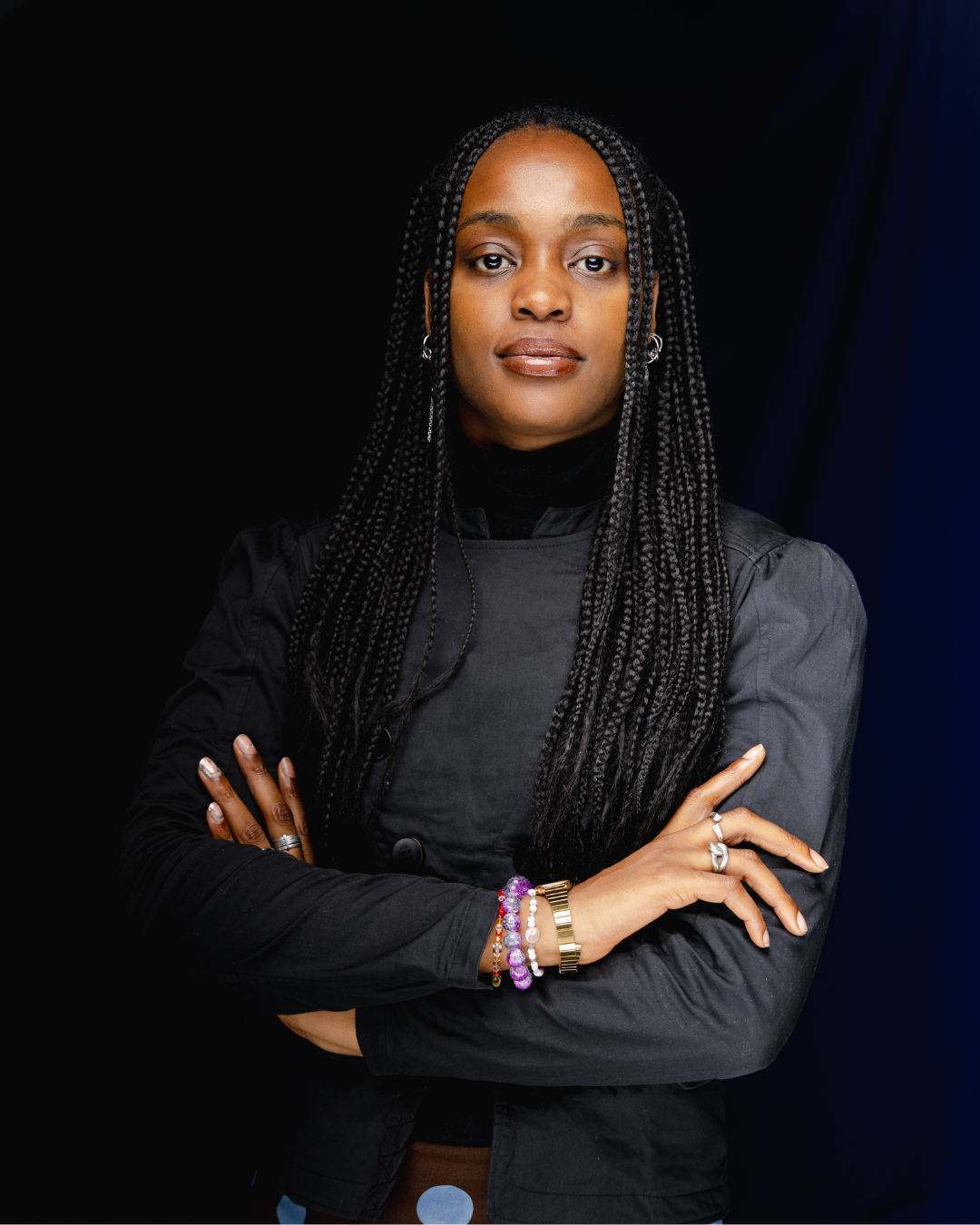
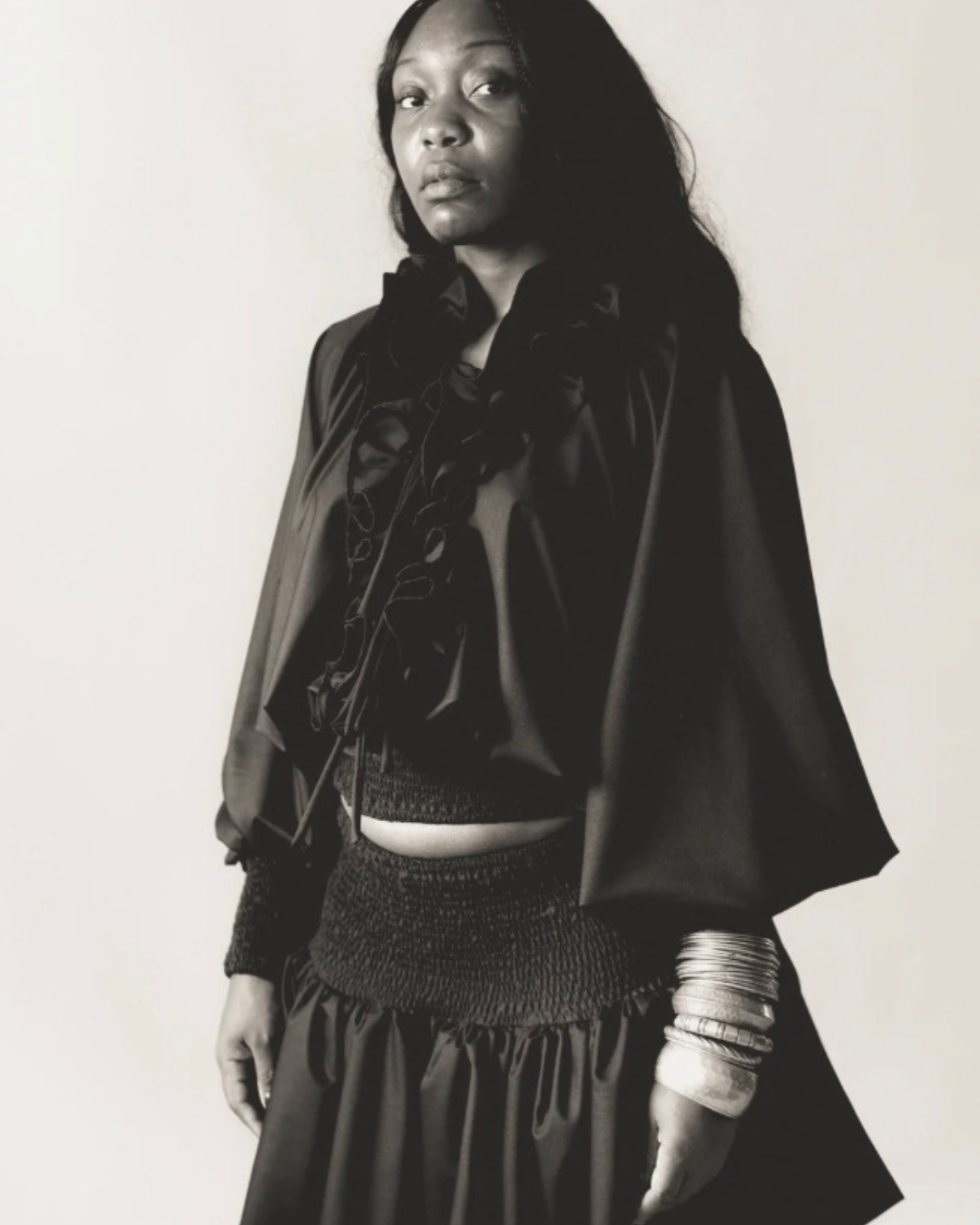
Koura-Rosy Kane photographed by Mariette Kouame for the first cohort 2025/2026 of the MansA Lab incubator programme
What led you into starting these ventures?
The idea for PLATFORM started very early, while I was still a student. Growing up, I consumed a lot of fashion and cultural content, but as I got older and began navigating my own insecurities, I slowly realised that the issue was not me. It was the content itself, and the narrow, one-dimensional representations being offered, particularly of Black women and Black bodies evolving within European contexts.
What began as a craving for representation gradually turned into something deeper: a desire to intervene, to create spaces where complexity, nuance and plurality could exist. Over time, this urge evolved into a commitment to contributing to long-term structural change. Not only for my generation, but for those that come after.
PLATFORM emerged from that necessity. It was conceived as a tool to rethink how fashion narratives are built, who they centre, and which bodies, practices and geographies are legitimised. Beyond visibility, it’s about building frameworks: intellectual, cultural and economic structures that allow African and Afro-descendant creatives to exist on their own terms and to project themselves into the future.
DECKI, on the other hand, grew out of lived experience. Over the years, I spent countless hours in local markets across West African cities, observing, sourcing and engaging with the realities of the second-hand clothing sector. These spaces became sites of learning about logistics, informal economies, social dynamics, and the cultural life of garments after they have circulated in the Global North.
As political discourse increasingly points toward stricter regulations on textile waste exports, the reality on the ground is that the volume already in circulation is immense. In this context, circularity is no longer an abstract concept but an imposed reality. Through DECKI, I’m interested in what comes next: how local reuse practices can be strengthened, revalued and eventually optimised through technological innovation and local knowledge.
Both ventures come from the same impulse. To reclaim narratives, to work with what already exists, and to imagine futures rooted in dignity, agency and cultural intelligence.
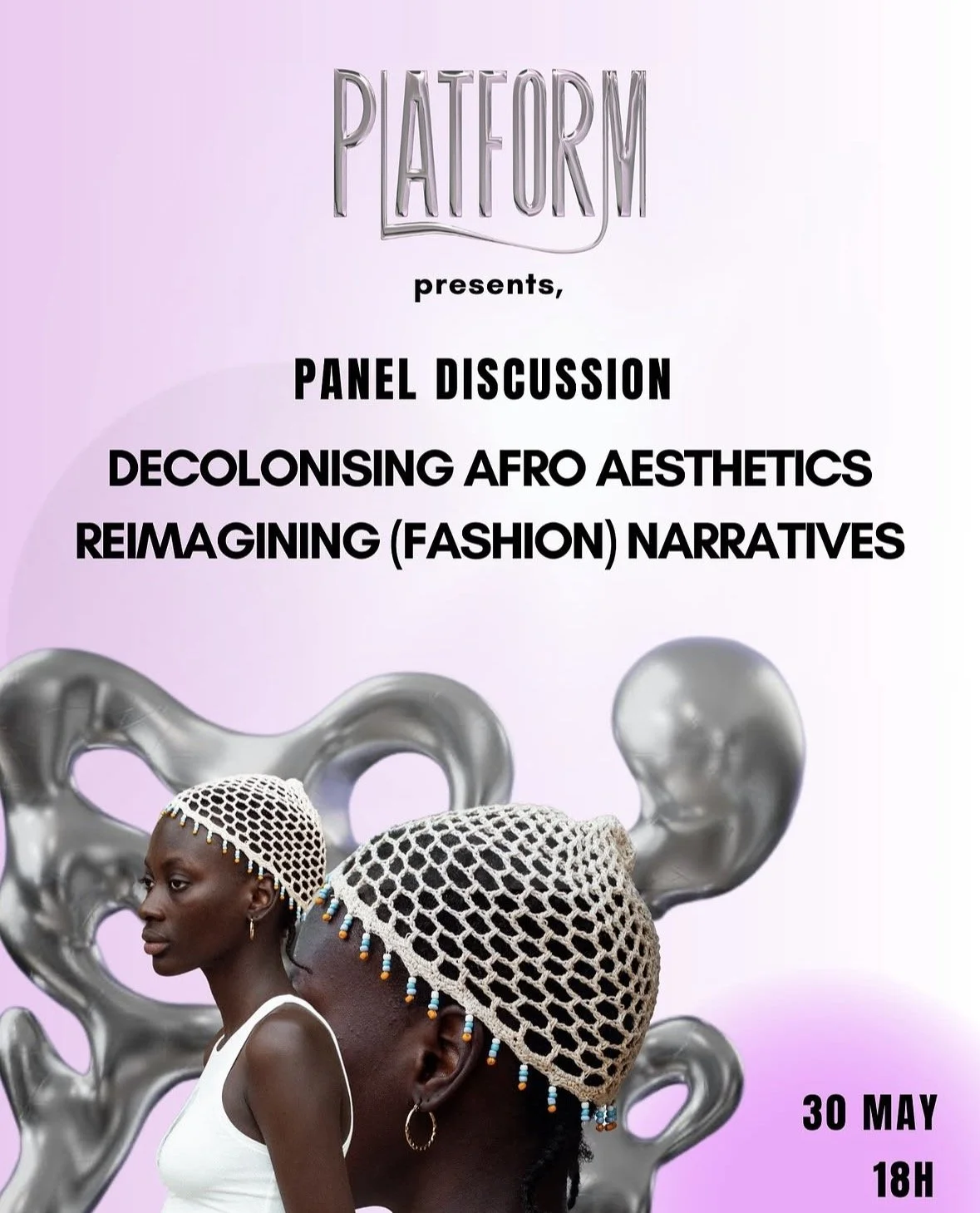
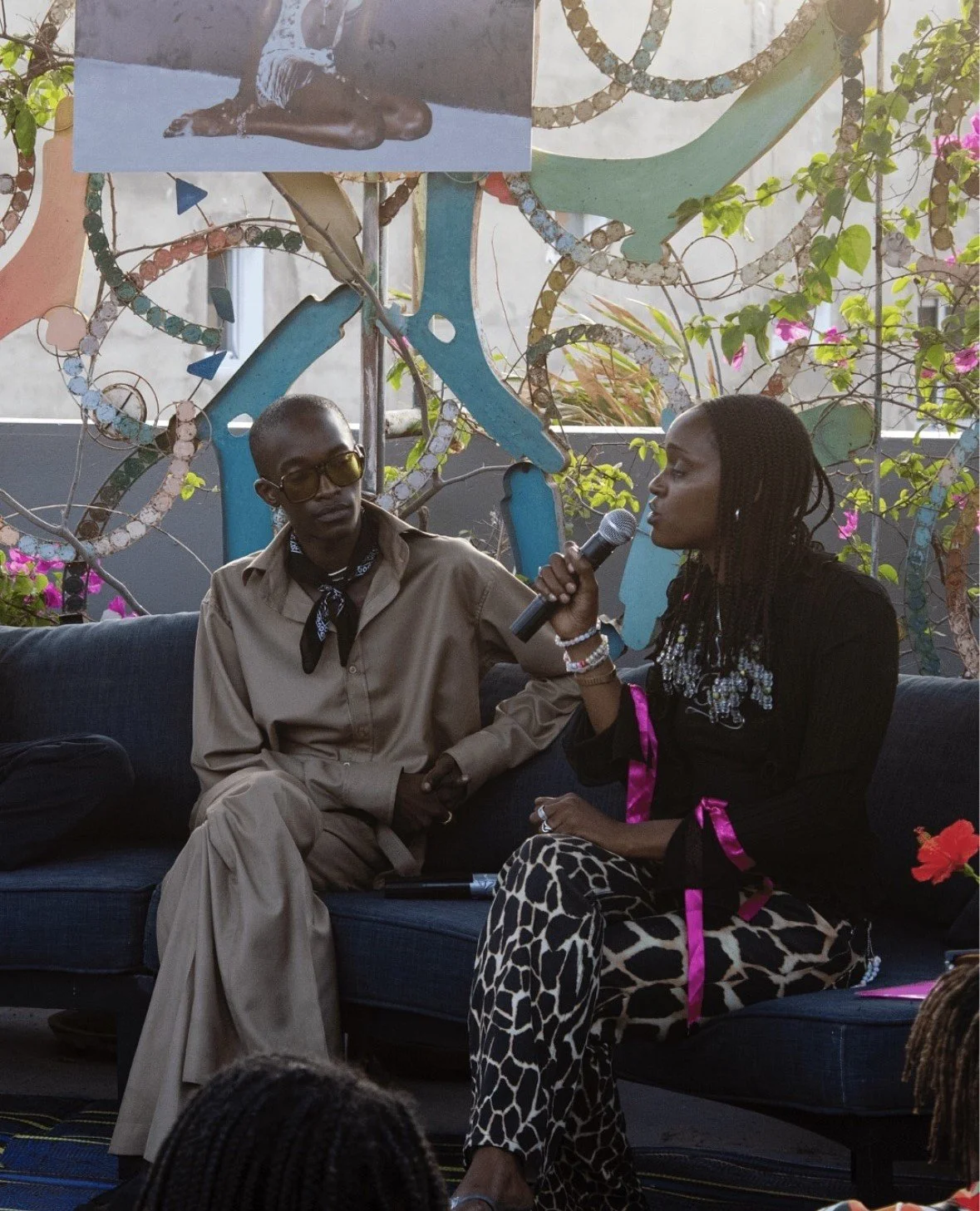
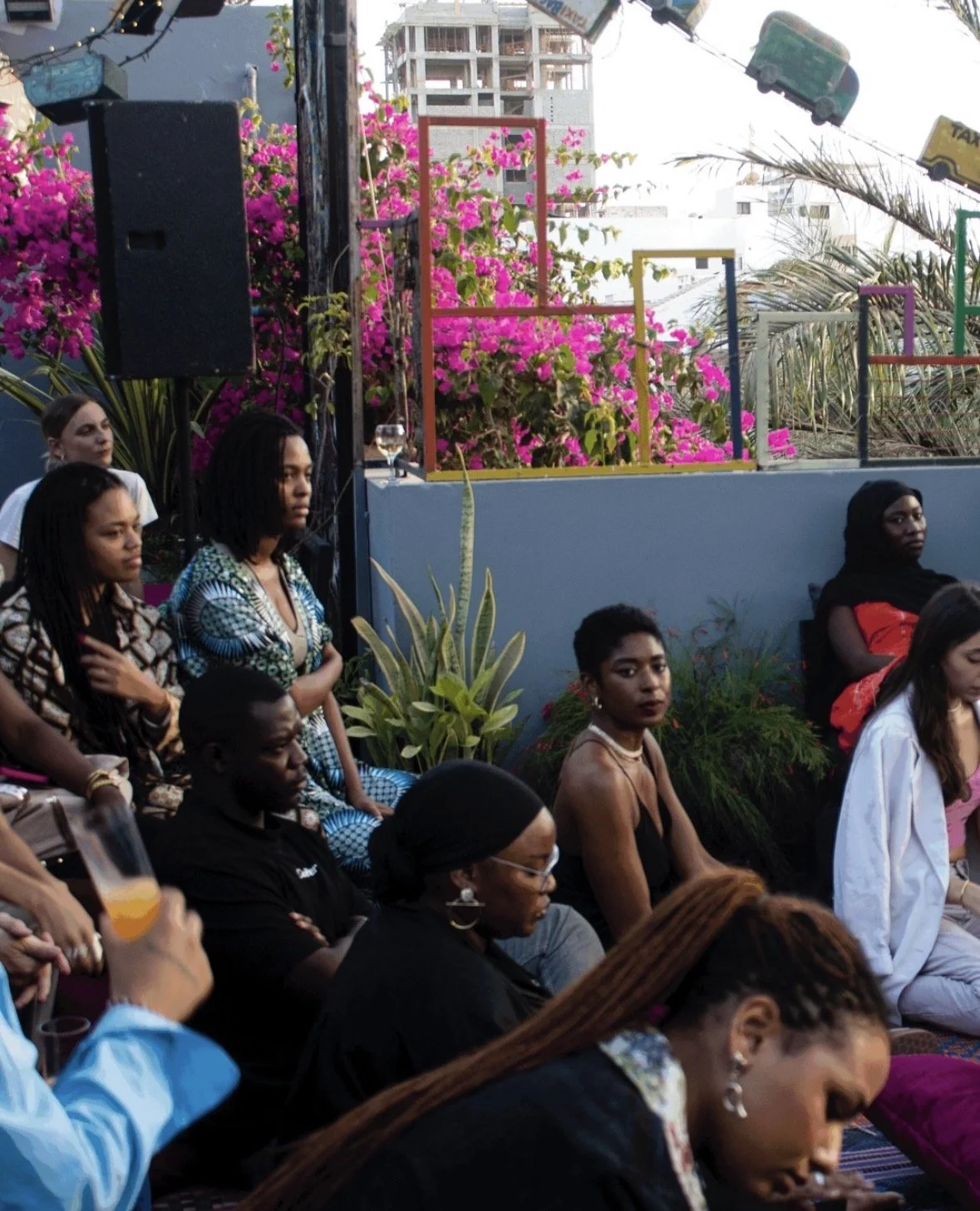
PLATFORM’s first panel talk “Decolonising Afro Aesthetics, Reimagining (Fashion) Narratives, 2024
What message do you want to convey through your work, and what does it mean to you?
At the centre of the message I want to convey are self-love, self-esteem, empowerment and pride. At this point, I see these values not as abstract ideas, but as a mental health and wellbeing necessity.
When you grow up internalising negative narratives about who you are, it slowly pushes you into a state of self-doubt and emotional fatigue. You stop believing in yourself, and at some point you begin to abandon parts of yourself, sometimes without even realising it. This is something I experienced as a Black girl growing up in predominantly white spaces.
The lack of representation, or even the presence of shallow, distorted ones, can have a quiet but lasting impact. Those absences affect the way you see yourself while you are still in the process of building your identity. They create gaps you are forced to fill alone.
Through my work, I want to contribute to representations that reflect the full range of Black personalities and experiences as they truly exist. I’m interested in the unseen, the untold, and the figures that do not necessarily pass through the gates of a Euro-centric gaze. For me, this work is about making space, emotionally, culturally and intellectually, so that people can recognise themselves without having to reduce or translate who they are.
“It was conceived as a tool to rethink how fashion narratives are built, who they centre, and which bodies, practices and geographies are legitimised. Beyond visibility, it’s about building frameworks: intellectual, cultural and economic structures that allow African and Afro-descendant creatives to exist on their own terms and to project themselves into the future.”
How has PLATFORM evolved since you started it?
PLATFORM initially started as a space rooted in curation. The focus was on highlighting emerging and alternative designers through interviews, visual research and aesthetic exploration. At that stage, the project allowed me to build a close relationship with imagery, creative languages and visual culture.
As the project evolved, this curatorial approach naturally expanded to include a stronger focus on African markets and Afro-descendant communities. That shift was closely tied to my own movements and travels across the continent, which enabled me to map local creative industries, conduct ethnographic research, and engage more deeply with on-the-ground realities.
At a certain point, I felt the need to pause and rethink PLATFORM. The more I learned about the structural, economic and cultural realities of African fashion ecosystems and global Afro-creative communities, the clearer it became that curation alone was not enough. This reflection led to the organic emergence of PLATFORM as a creative laboratory and consultancy. I wanted to actively support designers and creatives in navigating the fashion industry, helping them articulate their visions, structure their practices and share their stories with clarity and intention. I wanted to use my skills as a strategist and a consultant for these segments.
Today, the creative lab and the magazine work in dialogue, offering a multi-dimensional platform for the communities and segments we engage with. In November 2025, I joined the MansA incubator, marking a new phase of restructuring, repositioning and long-term strategy, supported by clearer metrics and professional tools. That experience has reinforced my belief that entrepreneurship is a continuous learning process.
In parallel, the reception from our audience has evolved. The community that initially followed PLATFORM for its curatorial content is gradually engaging with this renewed positioning, while new audiences, including brands, institutions and potential collaborators, are joining the conversation. This diversification feels aligned with PLATFORM’s mission, as it strengthens representation and creates richer, more layered exchanges.
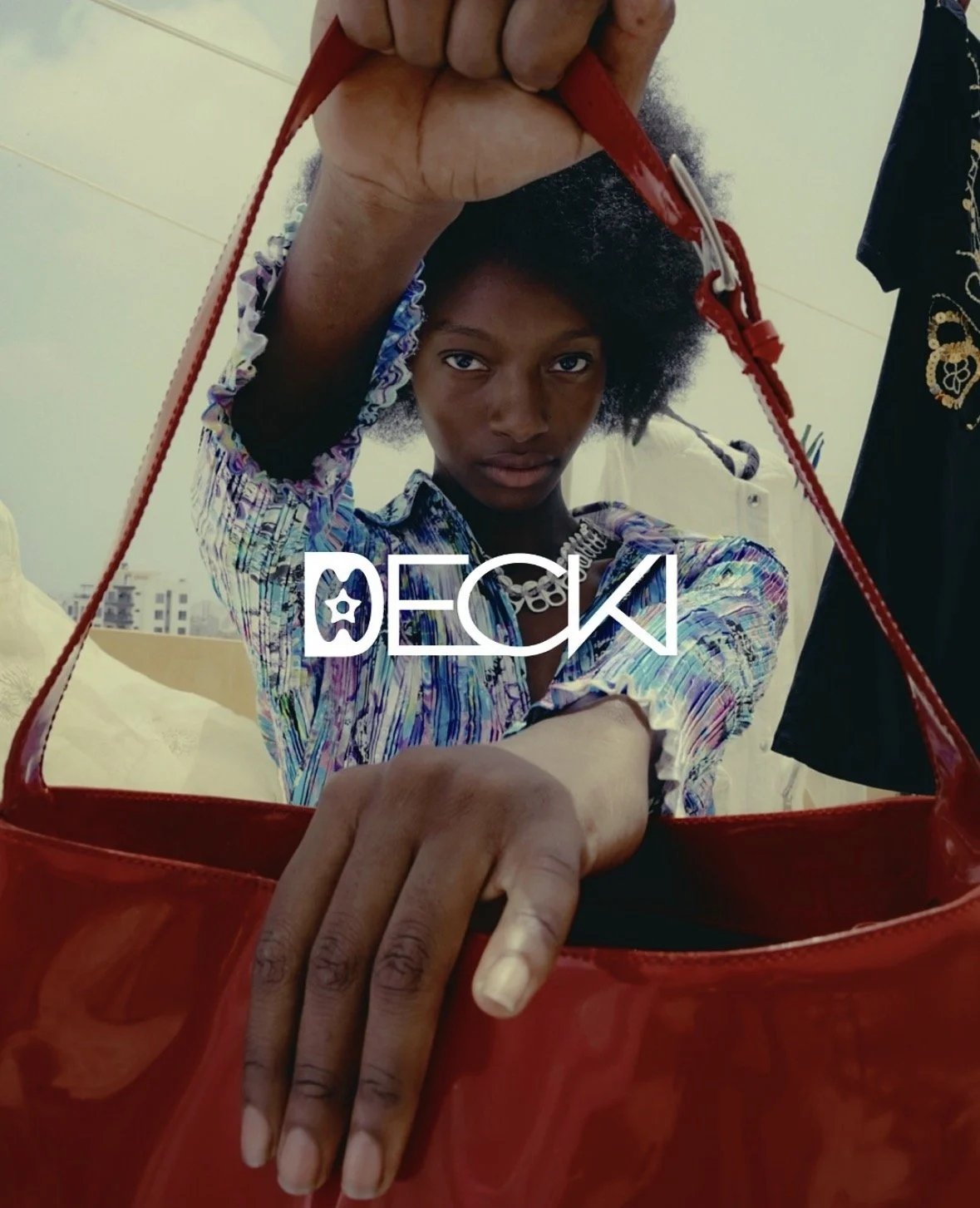
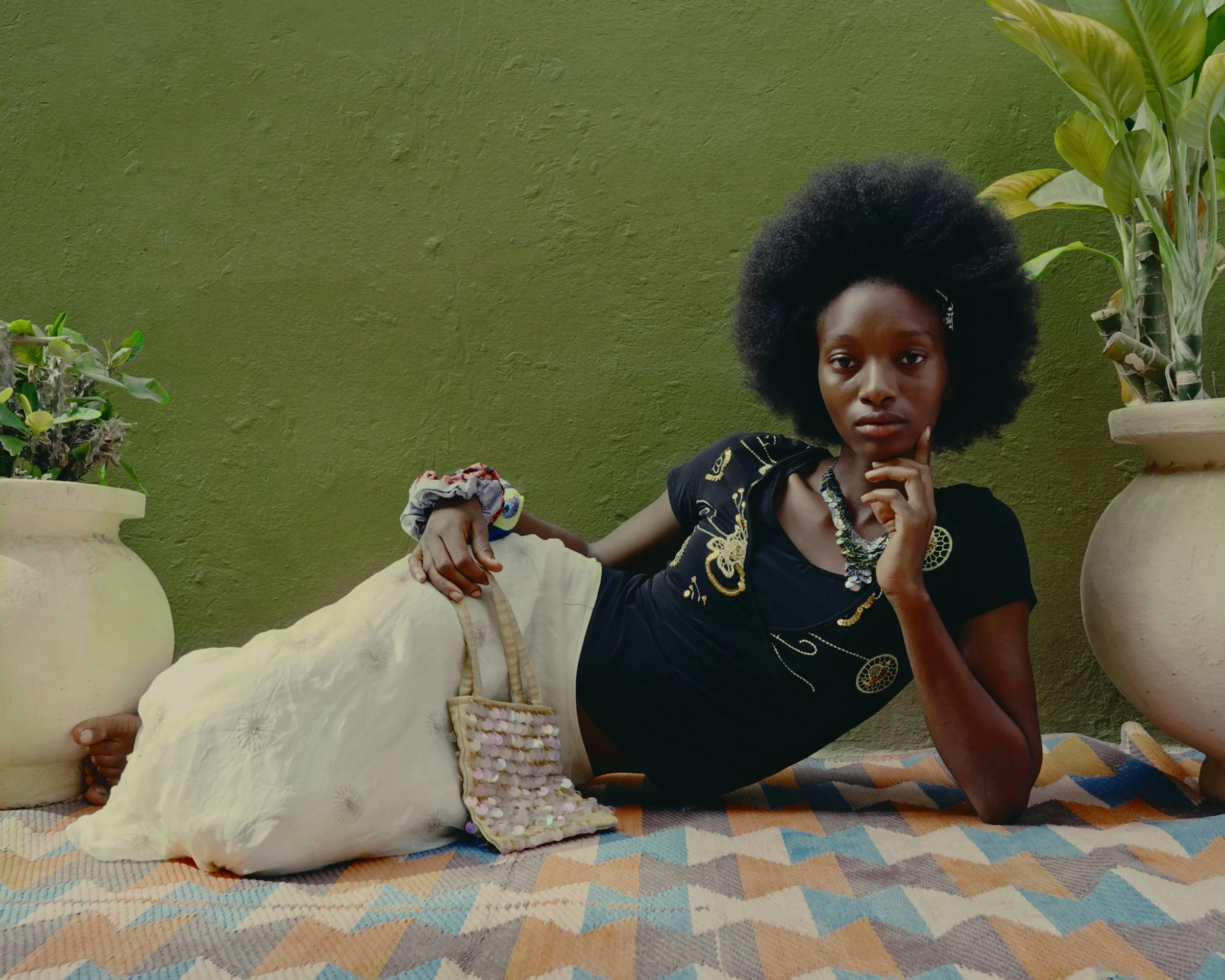
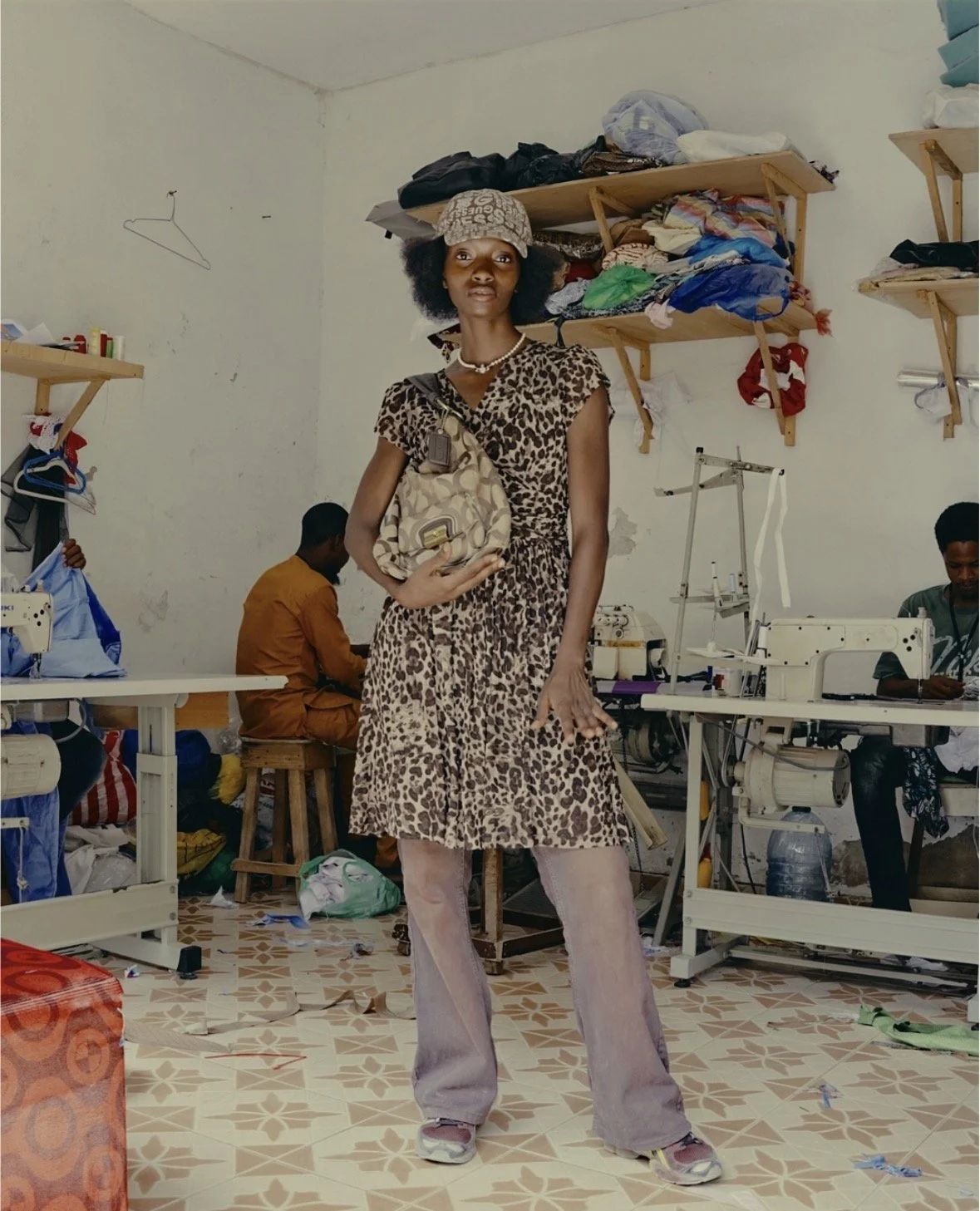
DECKI Campaign, shot by Shawn Hounkpatin, with model Dija Sow
What are you focusing on at the moment?
At the moment, my focus is largely on strengthening the foundations of PLATFORM. Through the incubator, I’ve worked on refining our commercial offer and economic model, alongside the more technical and administrative aspects that are necessary to build a sustainable structure.
Beyond this structural work, two projects are central to my attention this year. I’m currently focused on developing PLATFORM in more intentional and institutional ways, building around the axes of sovereignty and foresight. Alongside that, I'm renewing our cultural event editions to deepen these perspectives on the continent, and developing stronger research and reports to meaningfully advance the conversation.
The second focus is the development of PLATFORM’s first print magazine. This edition is imagined as a long-term object, a curated archive bringing together research, visual storytelling and critical perspectives gathered through our work.
Any recent work you would like to highlight?
With PLATFORM, one of the projects I’m most proud of from the past year is the latest edition of our cultural event series in Paris. The conversations that emerged around the theme "What We Carry: Fashion, Memory & Power" were particularly meaningful. The audience was deeply engaged, and the exchanges felt generous, critical and emotionally invested, which reaffirmed the importance of creating physical spaces for collective reflection.
I’m also proud of the recent visual stories developed through PLATFORM. One was produced in Dakar with Dan Carter, and another in Paris with Téné Niakaté. Both projects pushed strong visual narratives and allowed me to explore styling as a storytelling tool, which I found especially fulfilling.
Alongside PLATFORM, my freelance practice continues to be an important part of my work. I’m particularly proud of my role as a stylist assistant on the Gabriel Moses x Adidas short film "All Day I Dream About Sport", shot in Dakar. It was a memorable and enriching experience, from the logistics to the curation and sourcing. Leading an editorial for Dazed as a stylist was another key milestone, as it allowed me to bring my creative vision into a well-established publication.
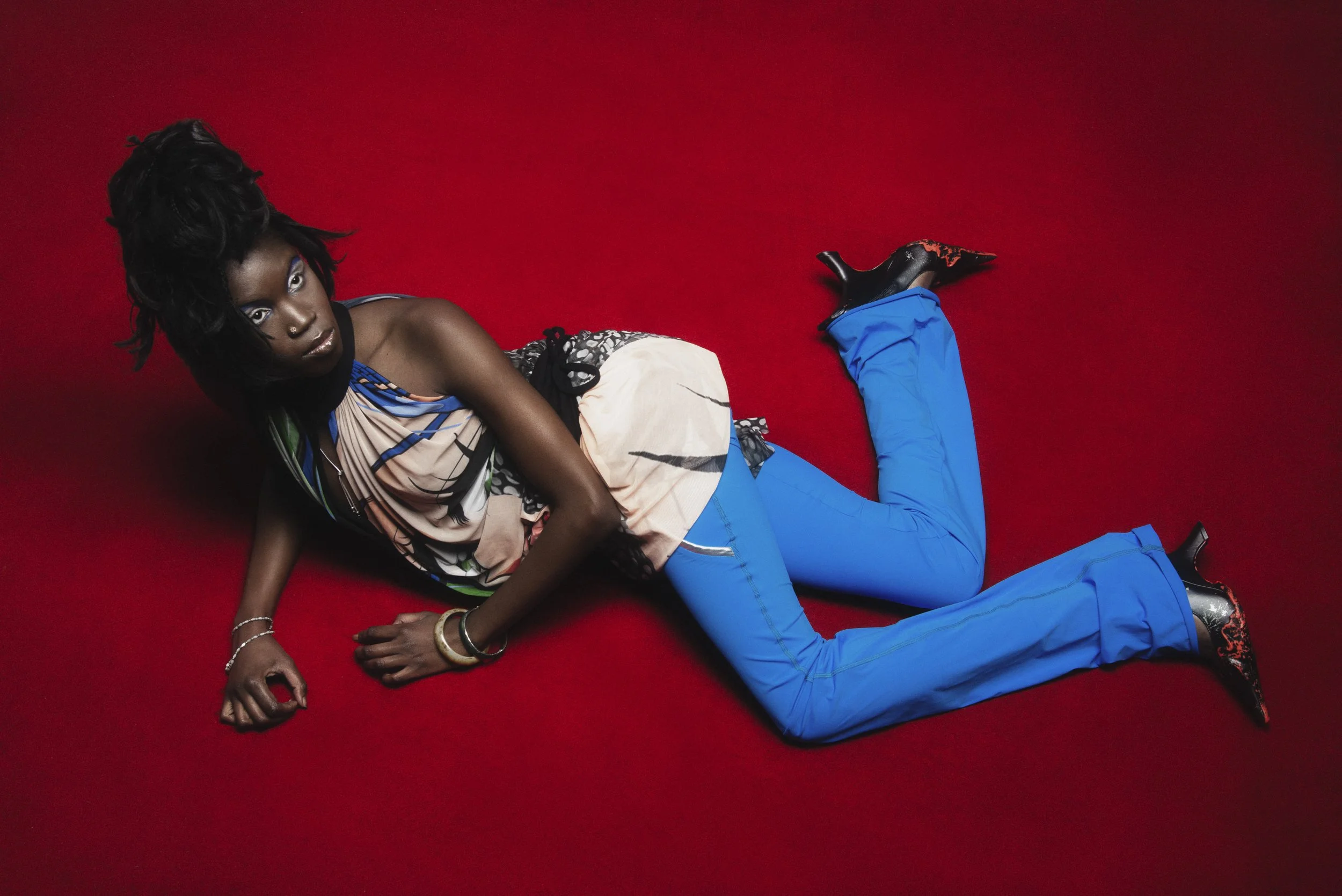
PLATFORM editorial, model @f_syll shot by Téné Niakaté
HER LESSONS
Misogynoir, access to capital, and why an idea needs structure
What major hurdles have you had to navigate that you would like people in your field to learn from?
One of the major challenges I’ve had to navigate, and that many Black women in the creative industries will recognise, is structural discrimination. We are often overlooked, undervalued, or invited into spaces for our ideas without being given the space, resources or authority to own them. The creative world frequently consumes our perspectives while resisting our leadership.
A collective of Black women creatives, Noire Soeurs, published a powerful manifesto on misogynoir within the cultural industries a few month ago. It articulates with great precision the mechanisms many of us face daily, while also calling for structural change, which I believe is one of the most necessary outcomes if we want the industry to evolve in a meaningful way.
Access has also been a recurring challenge in my work. When projects move from ideas to tangible, operational realities, especially when funding is involved, barriers become more visible. As a Black woman, accessing capital or institutional support often comes with additional layers of resistance. It’s not impossible, but the path is undeniably more obstructed, particularly in ecosystems where funding still largely prioritises male-led projects.
I would not say that I’ve fully overcome these challenges. Structural discrimination, misogynoir, invisibilisation and limited access are still very present in my journey. What has changed is my ability to navigate around them. I’ve learned how to build alternative paths, develop parallel structures, and protect my vision without constantly seeking validation from systems that were not designed to include us.
I do not believe in adapting to these barriers. I believe in working toward their disappearance. That conviction is what keeps me going. Through collective work, alternative methods and long-term commitment, I hope that what we are building today will eventually make the path less obstructed for those who come after us.
A recent lesson that changed the way you operate?
One of the most important lessons I’ve learned recently came through the process of rebuilding and rethinking PLATFORM. It made me realise that ideas only gain power when they’re treated as something that deserves structure, discipline and long-term commitment. An idea is not fragile by nature. It becomes fragile when it’s not given the tools to exist in the real world.
This process also reshaped the way I think about leadership. Defining where PLATFORM needed to go forced me to reflect on who I needed to be to lead it responsibly. Not just creatively, but structurally and strategically. Entrepreneurship can be an isolating space, often filled with uncertainty, but I’ve learned that clarity comes from alignment rather than constant reassurance.
What truly changed the way I operate is a deeper trust in my own judgment. I no longer approach my work as something that needs to be justified or softened to fit existing frameworks. I focus on making it tangible, sustainable and precise, because it has relevance, context and a clear place in the world.
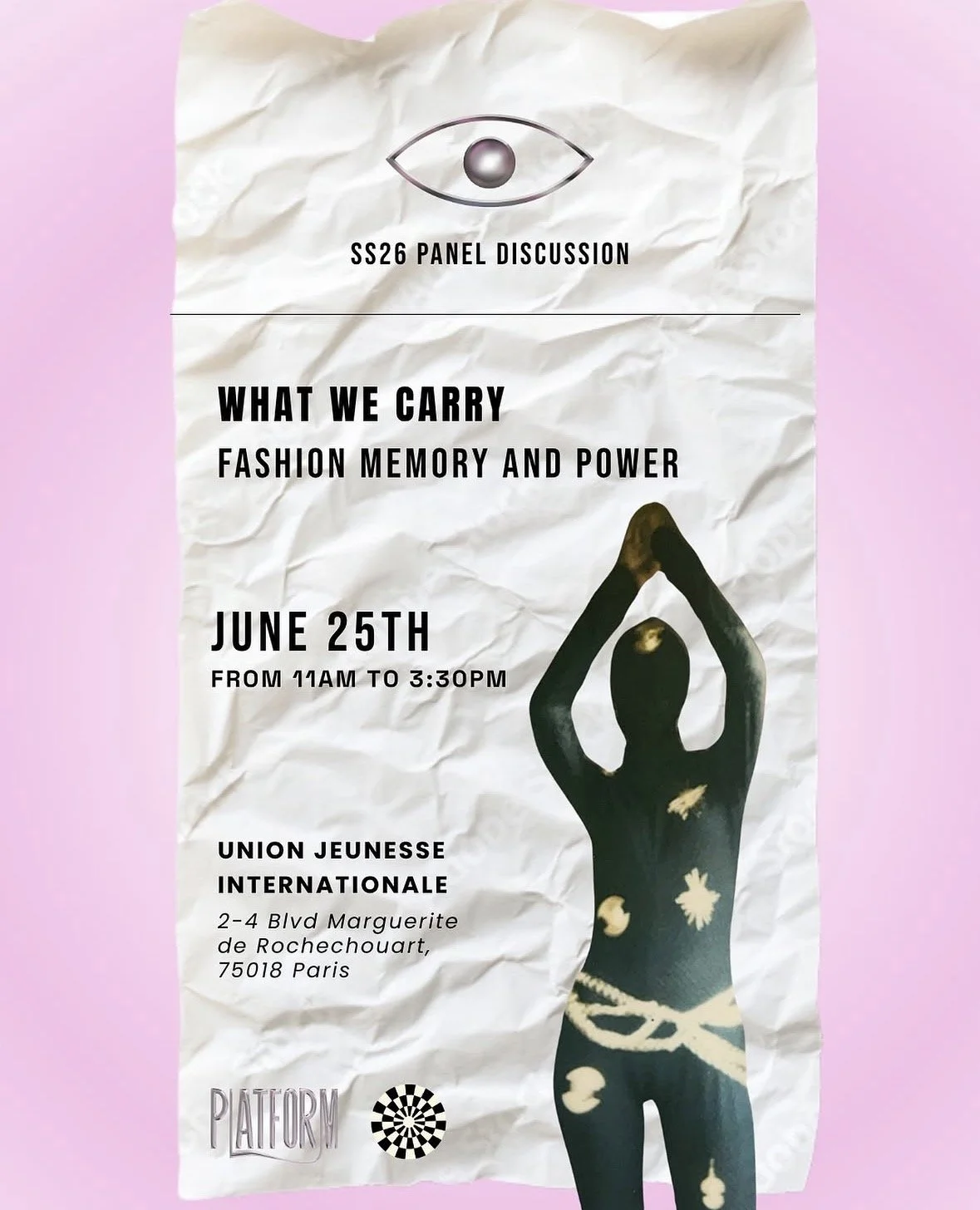
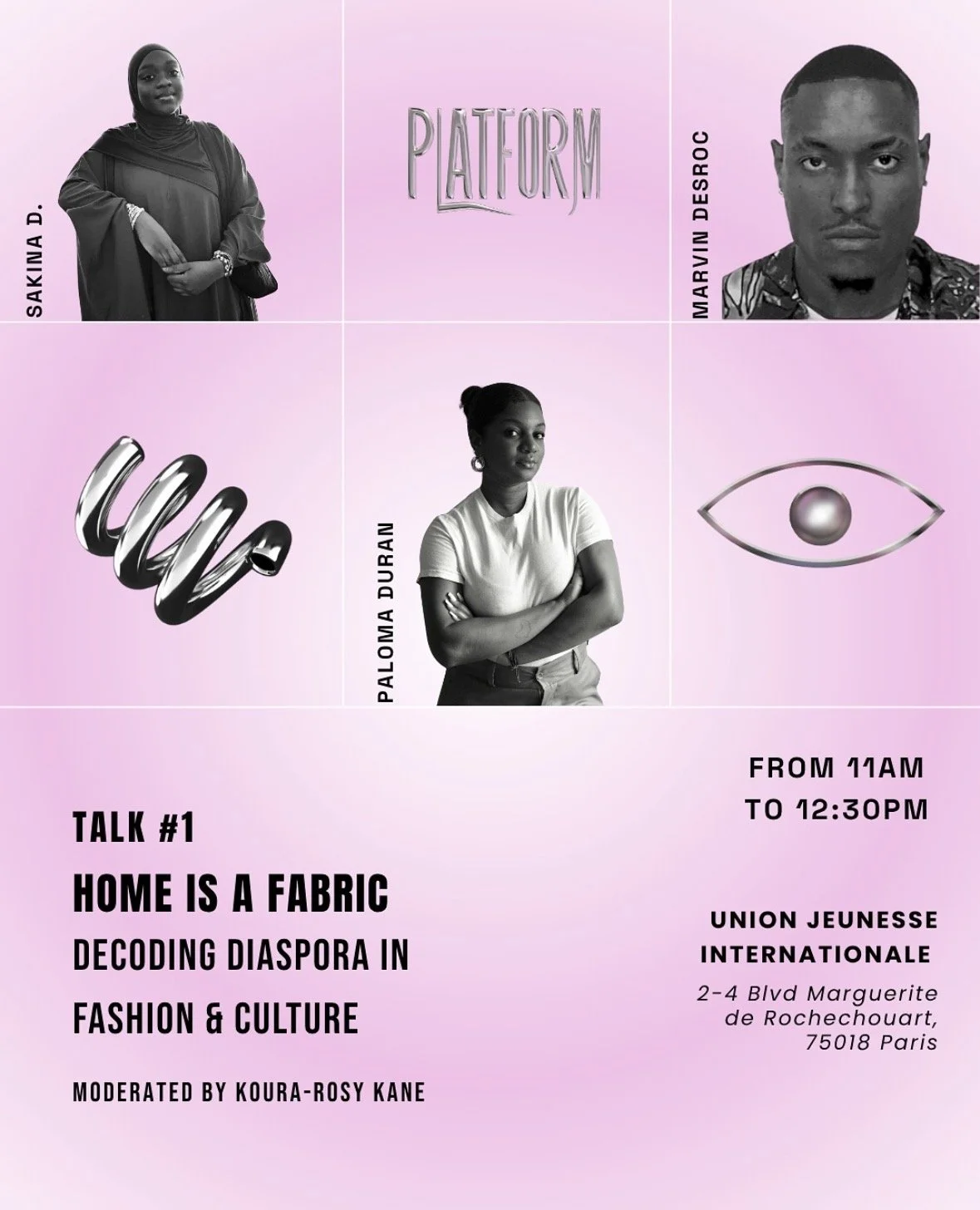
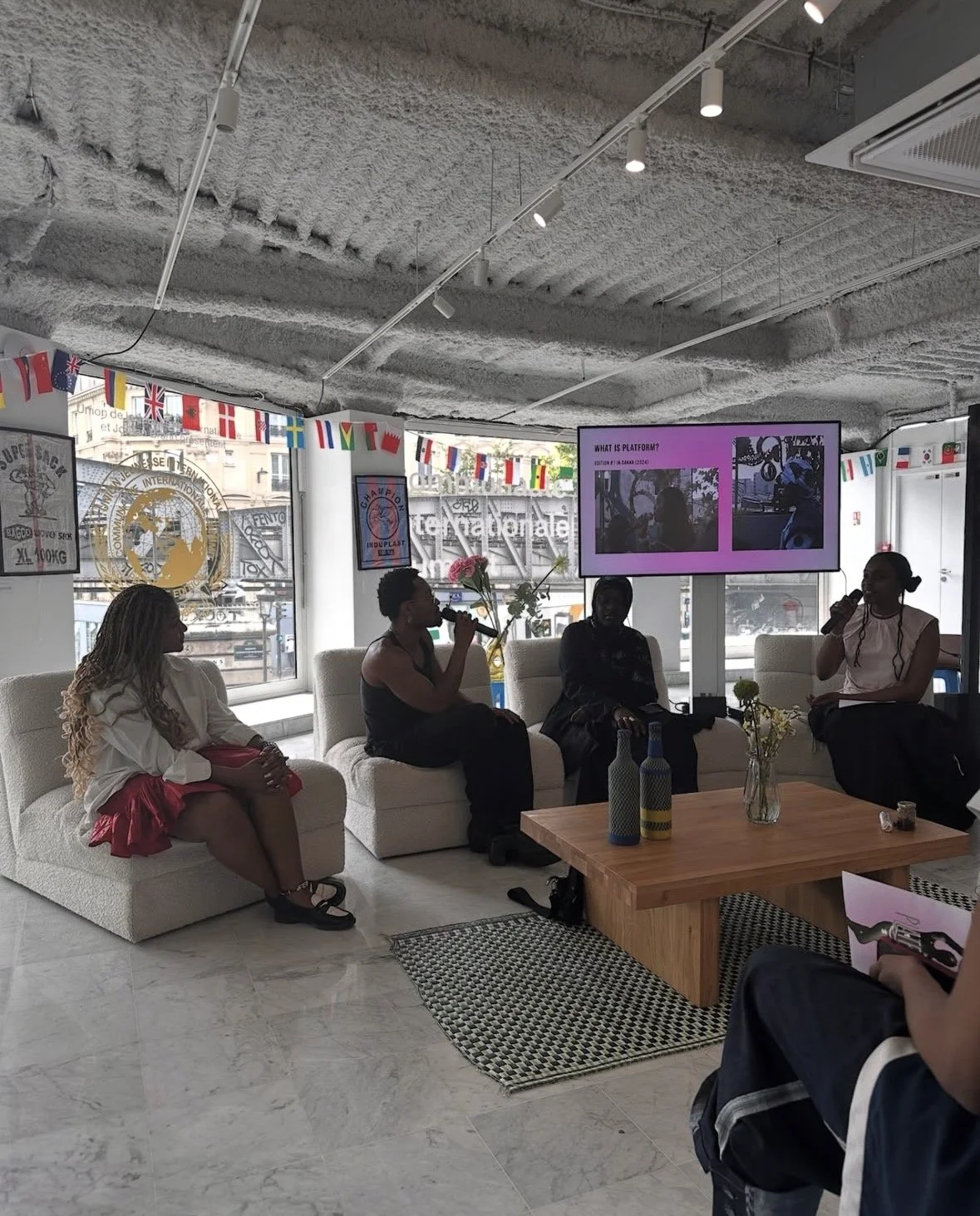
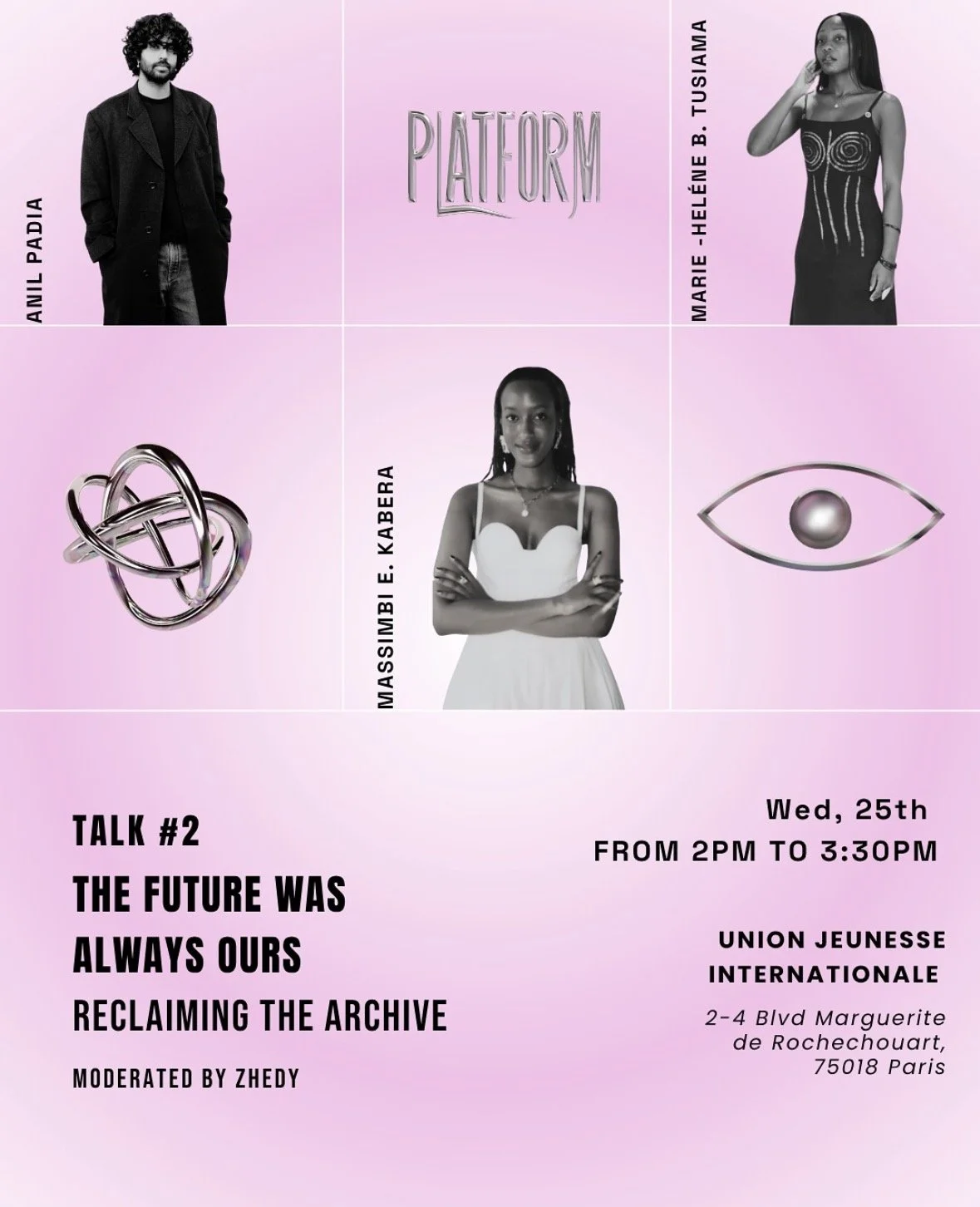
PLATFORM’s second panel talk “What We Carry. Fashion, Memory and Power”, 2025
A recent piece of advice that changed the way you operate?
One of the most impactful pieces of advice I’ve absorbed recently did not come from a single conversation, but through observing cultural figures whose journeys felt deeply aligned with where I’m today.
The evolution of Issa in Insecure left a strong impression on me, particularly the idea that many of our limitations are internal. That final reflection, "everything was in my head", resonated as a reminder of how doubt can quietly influence our decisions. It echoed something Doechii shared in an interview, where she spoke about reaching a point of exhaustion with fear and self-doubt, and choosing instead to act, to quiet the inner voice that can paralyse you and make you shrink.
Another perspective that deeply influenced me came from Tracee Ellis Ross during her conversation on Aspire, Emma Grede’s podcast. She spoke about self-determination and the importance of knowing yourself so well that you move through the world with clarity and comfort in who you are, beyond imposed social or cultural norms.
Together, these reinforced something essential: when you stop negotiating your presence, your work gains precision, confidence and longevity.
A habit you are trying to build in your work?
One habit I’m actively working on is consistency, particularly when it comes to maintaining motivation and confidence over time. Building long-term projects requires a steadiness that goes beyond bursts of energy, and I’m learning to cultivate that discipline as part of my daily practice.
Alongside this, I’m focusing on building something more sustainable collectively: a real team, a strong network, and meaningful collaborations with creatives who share similar values.
Finally, I’m becoming more attentive to work-life balance. This path can be mentally and emotionally demanding, and preserving my wellbeing is essential to sustaining the work in the long run. Taking breaks does not come naturally to me, but I’m learning that rest is not a pause in momentum. It’s part of the structure that makes growth possible.
“I want to contribute to representations that reflect the full range of Black personalities and experiences as they truly exist. I’m interested in the unseen, the untold, and the figures that do not necessarily pass through the gates of a Euro-centric gaze. For me, this work is about making space, emotionally, culturally and intellectually, so that people can recognise themselves without having to reduce or translate who they are.”
HER ENERGY
Turning ideas into living archives
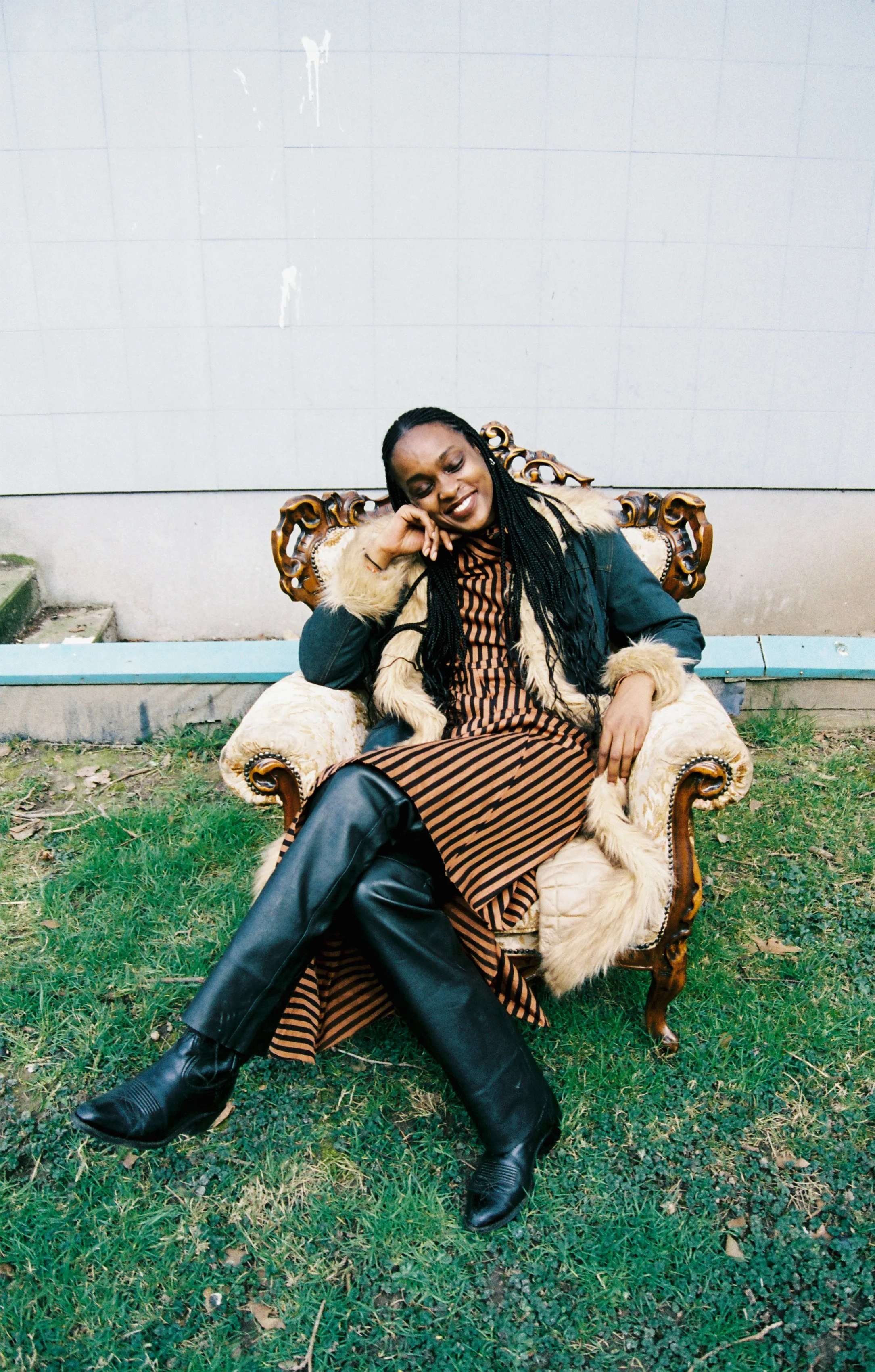
Koura-Rosy Kane, photographed by Téné Niakaté
What do you enjoy the most in your work?
What I enjoy most is the process of turning ideas that live in our heads into something tangible, living archives that can take many forms, from images to words, strategies or physical spaces. Making thought visible and actionable is deeply satisfying to me.
I also value the people I get to meet through this work. Being surrounded by inspiring, thoughtful collaborators is one of the most enriching aspects of my practice. Projects often become spaces of exchange, learning and mutual growth, which I find incredibly energising.
Finally, the intersection of strategy and visual production is where I feel most at home. I enjoy connecting dots, reading social and cultural realities, and speculating on how they might evolve. It’s fulfilling to work at that crossroads, where analysis meets imagination, and to contribute to aspirational futures by acting on them in the present.
What keeps you going?
A strong sense of responsibility and justice. At its core, my work is driven by social justice, not as a concept but as a necessity. For me, it’s the bare minimum.
I often say that if I had not found my way into fashion, I would probably have ended up working in human rights or law. Fashion just happens to be the language I use to engage with these questions today. It allows me to address issues of power, representation, access and dignity in a way that is both cultural and structural.
There is also something deeply inherited in this drive. A continuity rather than a calling. I feel connected to those who came before me and to the responsibility of building spaces that are fairer, more honest and more sustainable for those who come after.
How do you stay inspired?
Research is a central source of my inspiration. I constantly move across disciplines, markets and cultural contexts, so inspiration is not something I actively look for. It emerges through the process of learning, observing and connecting information. This ongoing research keeps my thinking fluid and prevents my work from becoming static.
Travel also plays an important role. Being in different environments quickly reshapes my perspective and challenges my assumptions. It forces me to unlearn and reframe, which is essential for staying creatively alert and intellectually honest.
Archives are another key source, though in a more personal way. Beyond professional research, spending time with family histories and ancestral narratives has been deeply nourishing. Understanding where I come from helps me better understand why I make certain creative choices today.
Where do you find sanctuary in challenging times?
I find sanctuary in family and in movement. Family grounds me. It reminds me who I’m beyond work, ambition or external pressure, and it offers perspective and a sense of continuity, especially in moments of doubt.
Movement is equally essential. It helps my mind breathe. Sometimes it’s sport, other times gentler forms of movement like walking or dancing, anything that reconnects me to my body and pulls me out of mental overload.
Music is also central to my sanctuary. It has always been a core part of my life, but in challenging times it becomes a powerful anchor. It helps me recentre, process emotions and regain clarity.
Finally, I’m deeply soothed by open spaces and elevated views. Being somewhere vast, where the horizon feels expansive, helps put things back into proportion and creates room to think, feel and reset.
A motto you live by?
"Everything is in my head." The good and the bad things (lol).
An affirmation that keeps you going at the moment?
I would not call it an affirmation so much as a guiding idea. I truly believe we do not need to ask for a seat at the table. We can create our own. I no longer feel the need to fight for space in environments that were never designed to welcome me.
The world is vast, and there are many other tables to build. Spaces shaped by shared values, aligned visions and mutual respect, even across different fields. This mindset keeps me grounded and moving forward, on my own terms.
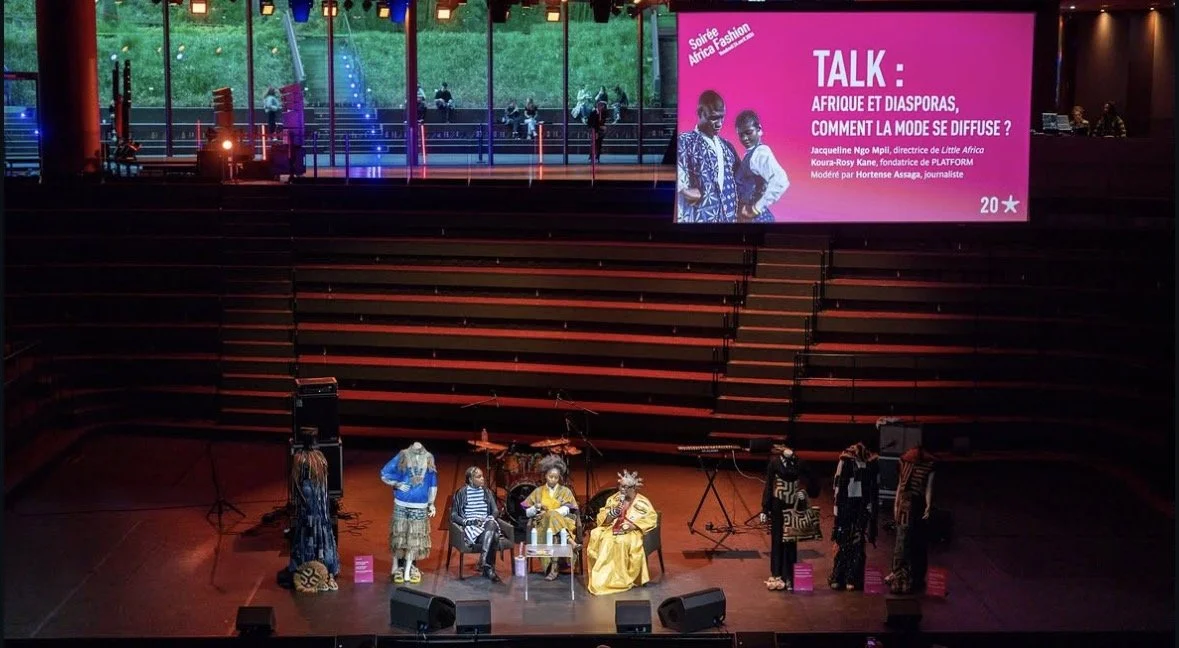
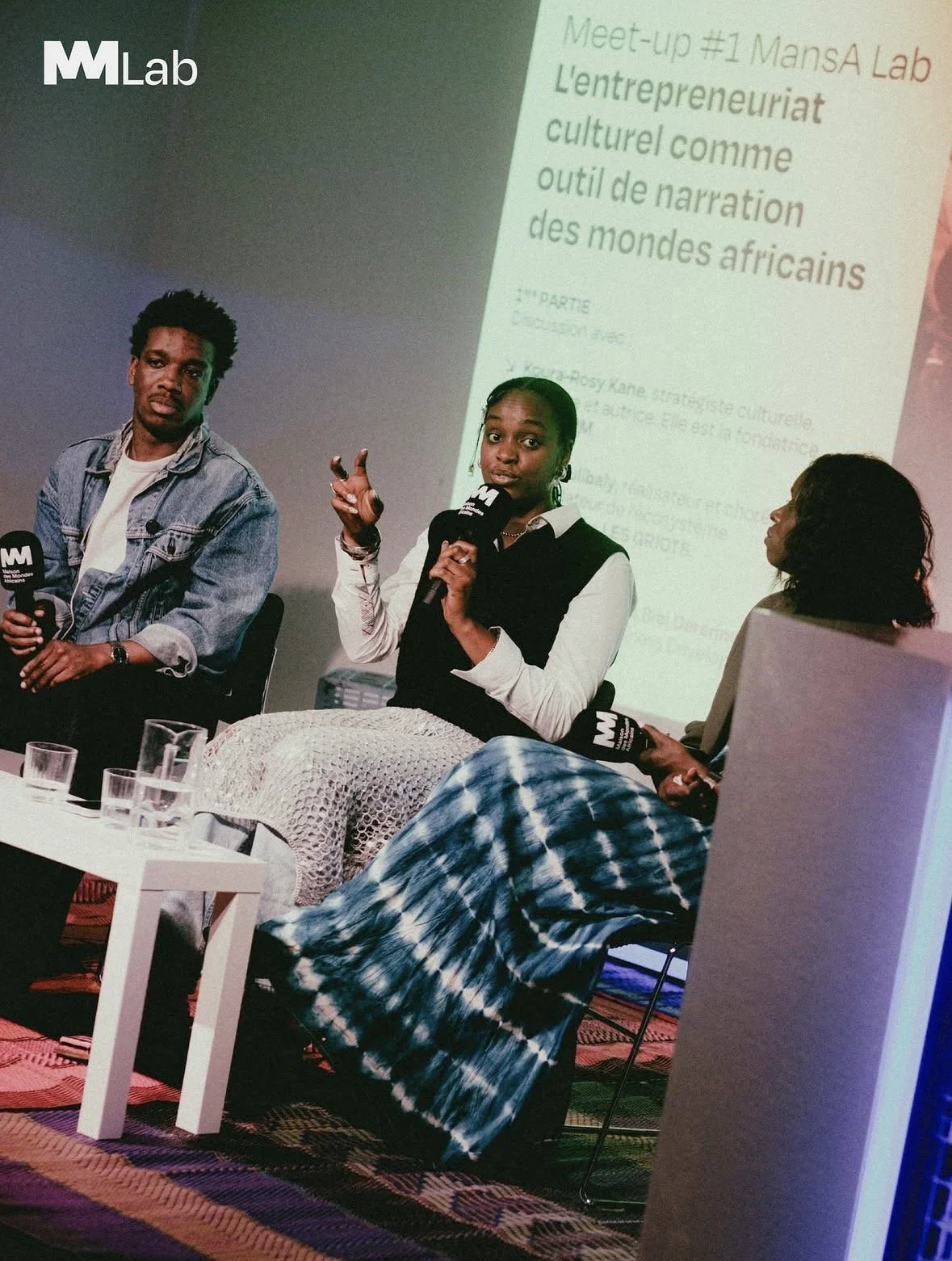
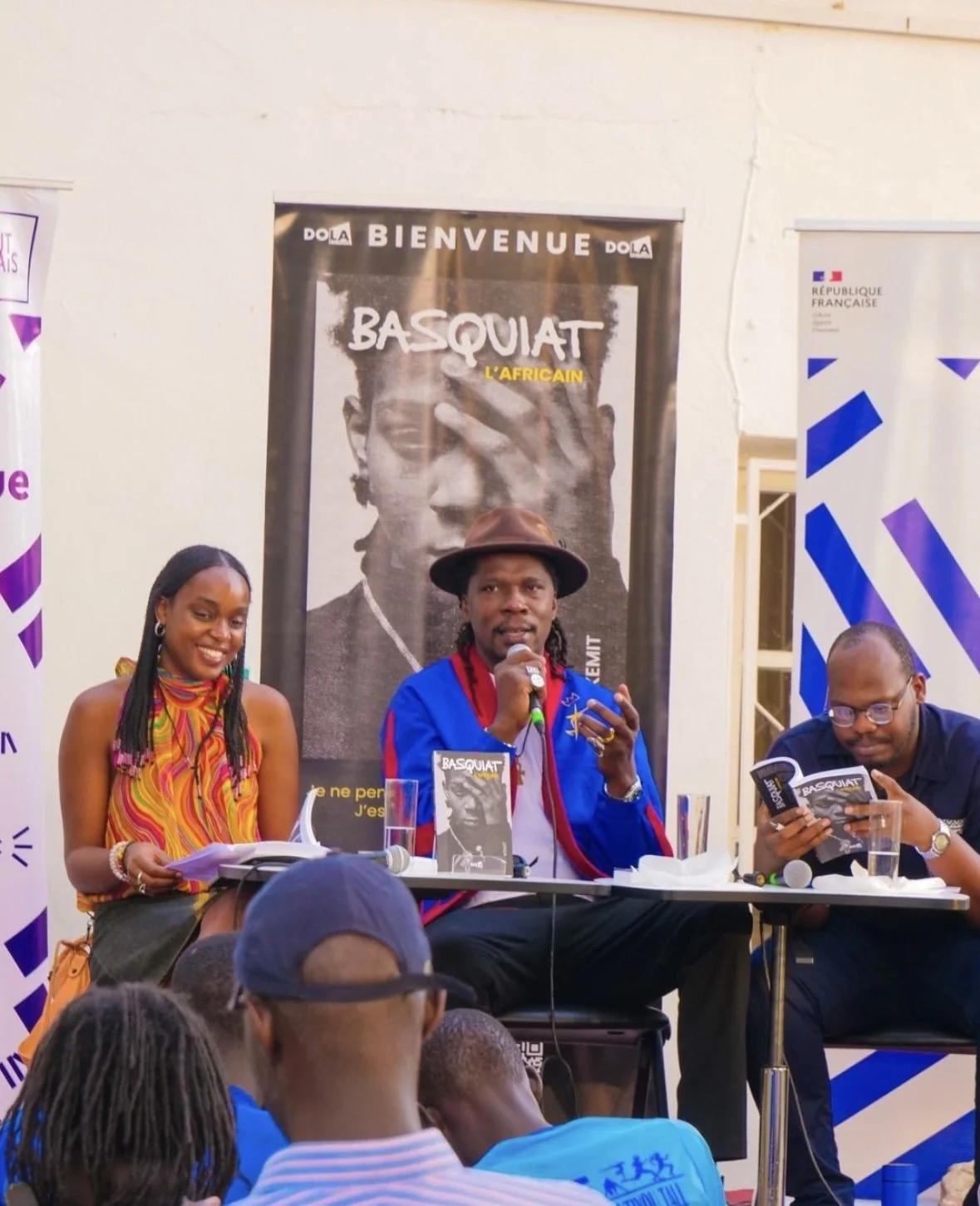
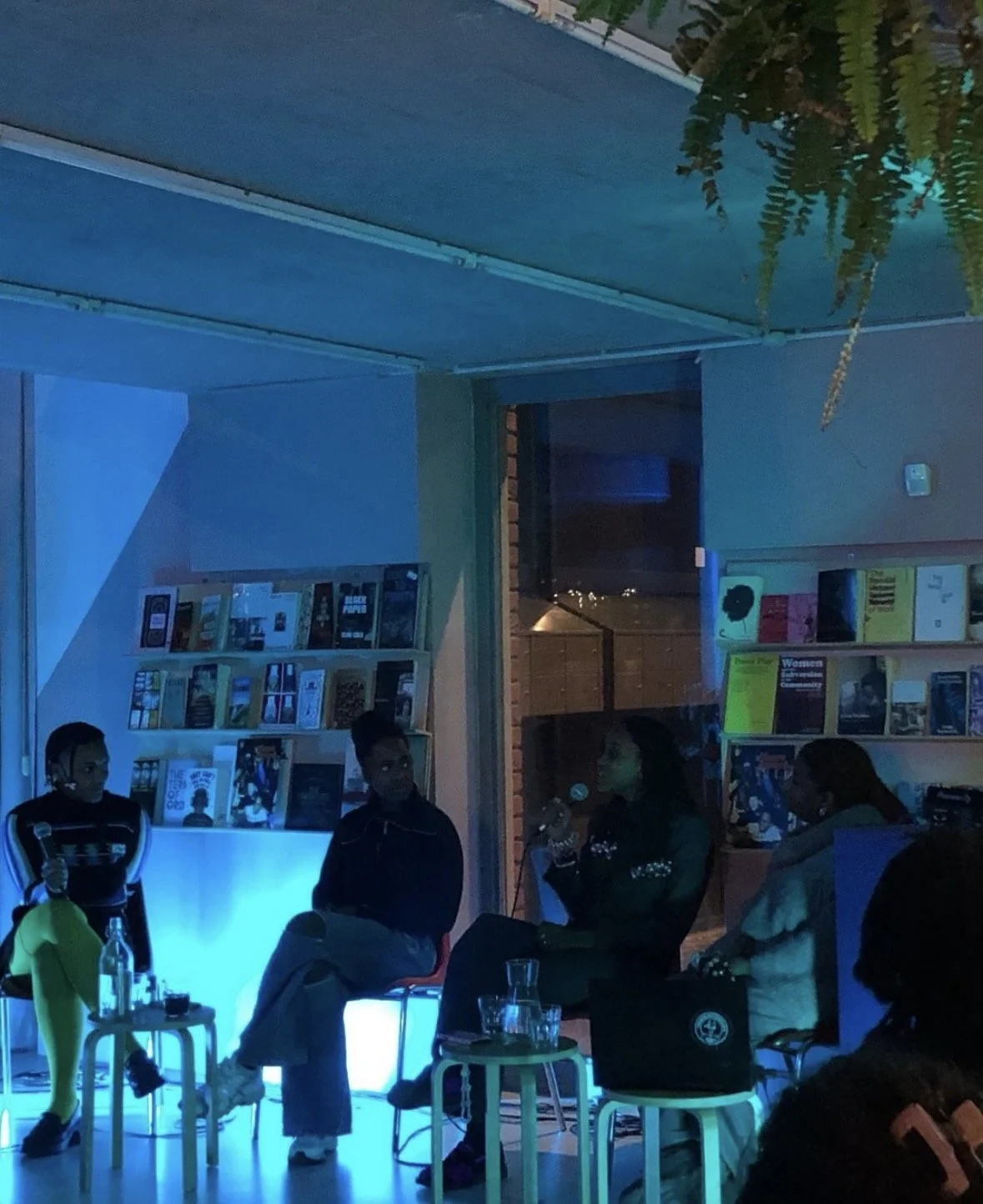
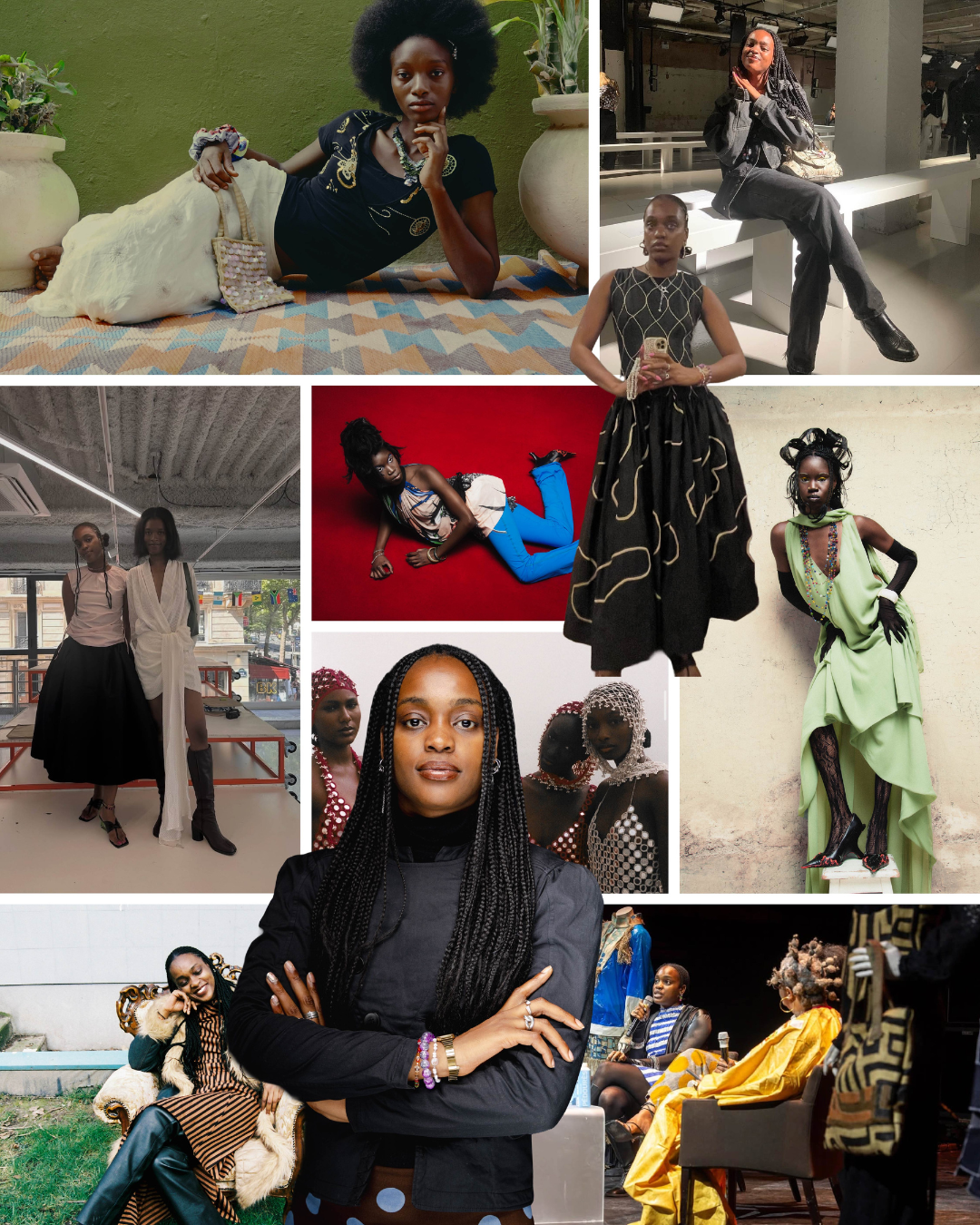
Koura-Rosy at different speaking engagements between Paris, Dakar and Amsterdam
HER COMMUNITY
Plural communities and the limits of tokenism
Do you see yourself as part of a community?
Definitely. I believe we are all interconnected and, even if we are not a homogeneous group, we are often facing similar structural challenges and can benefit from the same shifts and changes. What feels important to me today is moving away from dynamics driven by exclusivity or purely individual advancement.
Representation only truly matters when it’s collective. Being the token leads nowhere. I see myself as part of multiple communities rather than a single one, because we are plural beings.
What does community mean to you and how has it showed up for you?
For me, community is not an abstract idea or a branding tool. It’s about creating concrete, supportive ecosystems that allow everyone involved to move forward with intention and integrity.
My communities coexist, communicate with one another and intersect, while still keeping their own specificities. They’re made of my different origins, cultures and experiences, and I embrace that overlap rather than trying to fit into one fixed definition.
It shows up in many forms: through collaborations, shared work and collective projects, but also through conversations that challenge you, inspire you and shift the way you see the world. It shows up through care, solidarity, and the simple but powerful act of being seen.
Being surrounded by people who understand you through shared experiences, histories or cultural references is not just comforting, it’s essential. I genuinely see this as a mental health and wellbeing matter. We need spaces where we feel recognised, supported and understood in order to truly grow.
“One of the major challenges I’ve had to navigate, and that many Black women in the creative industries will recognise, is structural discrimination. We are often overlooked, undervalued, or invited into spaces for our ideas without being given the space, resources or authority to own them. The creative world frequently consumes our perspectives while resisting our leadership.”
HER PERSPECTIVE
Endogenous methods, policy, and fashion as an economic force
Any specific topics or questions you have been digging into lately?
Lately, I’ve been focusing on how fashion and creative industries can be structured in African societies using endogenous methods and mechanisms. I feel that the institutionalisation of these fields is essential to harness their potential as a real, nationwide economic and cultural force. I’m particularly interested in policy frameworks and what is needed to build strong, sustainable industries. Understanding how these systems could function organically within local contexts is, to me, a key area for research and strategic agency.
What challenges and opportunities do you see in the global African fashion ecosystem?
One of the main challenges is that fashion is often not taken seriously. It’s still perceived largely as entertainment rather than as a legitimate industry: a space of intellectual production, cultural power and real economic potential.
Yet it involves real economic value, from designers and stylists to artisans and the wider workforce. While countries like Nigeria are starting to treat fashion with more seriousness, across the continent funding is often short-term and focused on hype rather than long-term brand development. That perception makes it more difficult to attract long-term investment, institutional backing or inclusion in cultural support programmes.
At the same time, this challenge presents a major opportunity. There is space to demonstrate fashion’s economic and cultural power, to build sustainable structures, and to show its role as a driver for national development. Strategically positioning fashion as a serious industry could unlock long-term growth and elevate its global standing.
What avenues could better bridge independent designers and makers on the continent with global audiences?
I think the starting point has to be within the continent itself. African creative industries need to structure and strengthen themselves independently of the Euro-centric gaze. Once these industries are solid and self-aware, collaborations with international markets can happen on African terms.
The diaspora plays a key role too, but it should listen closely to the social and cultural narratives emerging from the continent rather than imposing external perspectives. I truly believe that for African creative industries to succeed internationally, they first need to look inward, define their own systems, and build from their own histories, methods and communities.
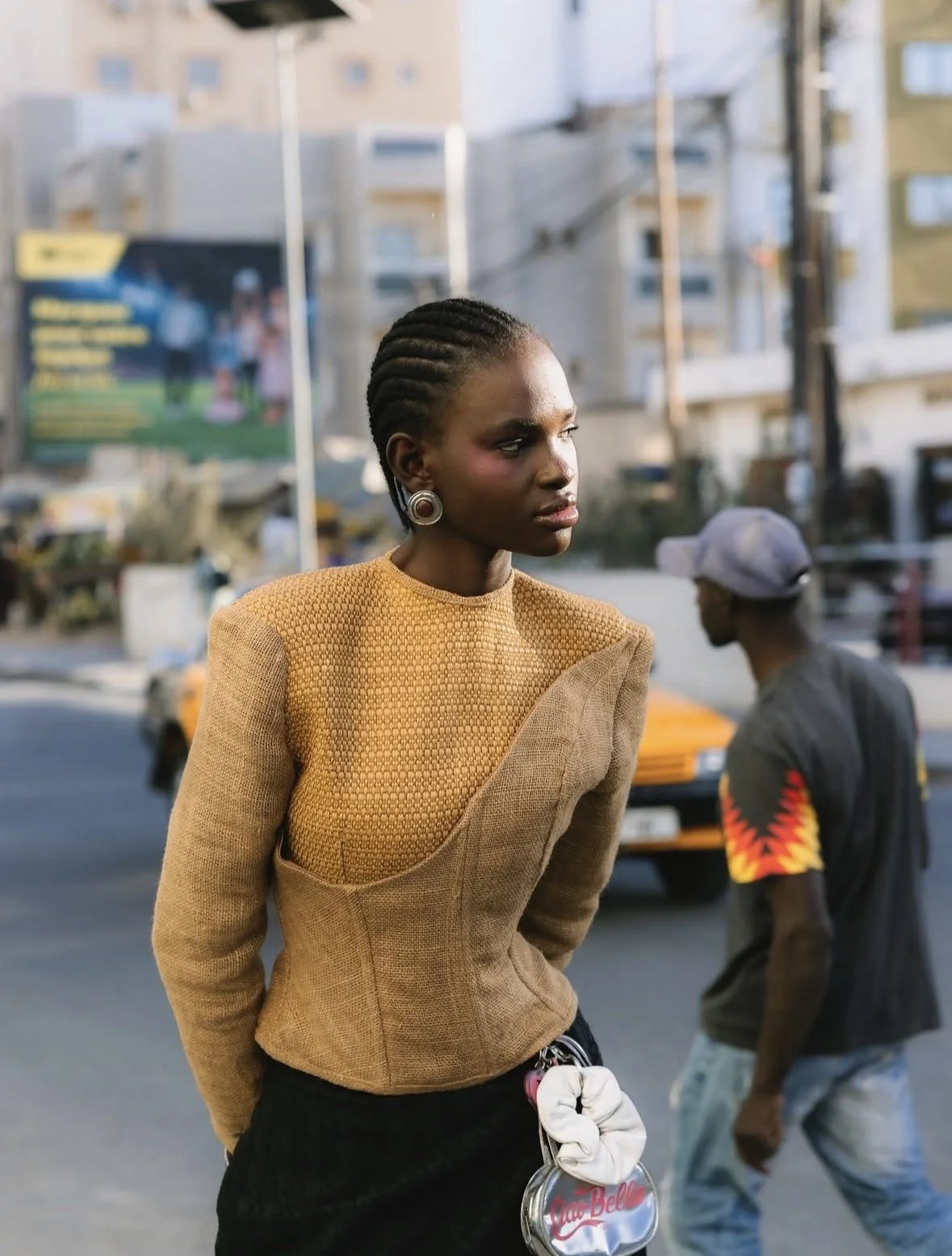
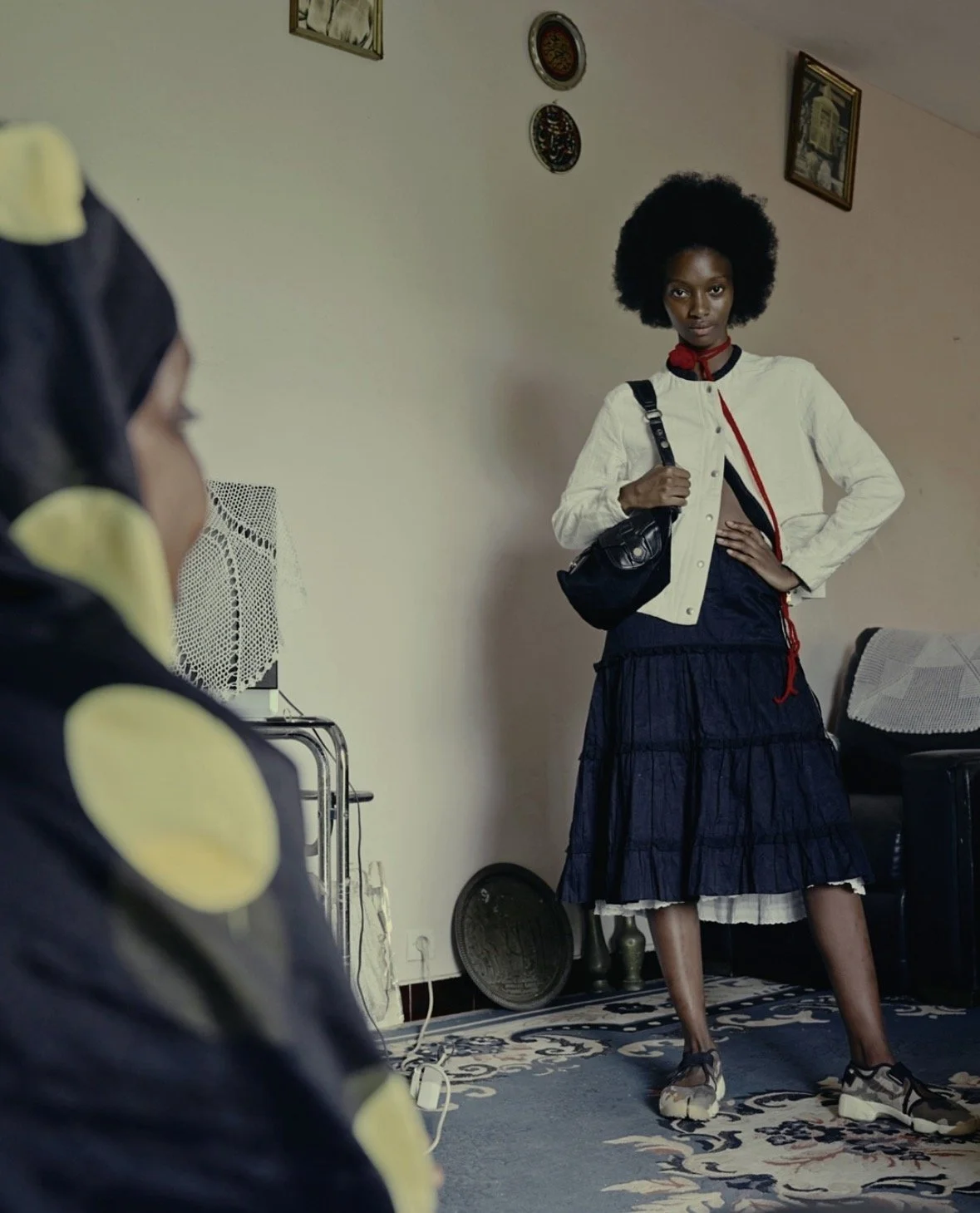
PLATFORM editorial, shot by Dan Carter, model Marieme Ndiaye wearing ROMZY
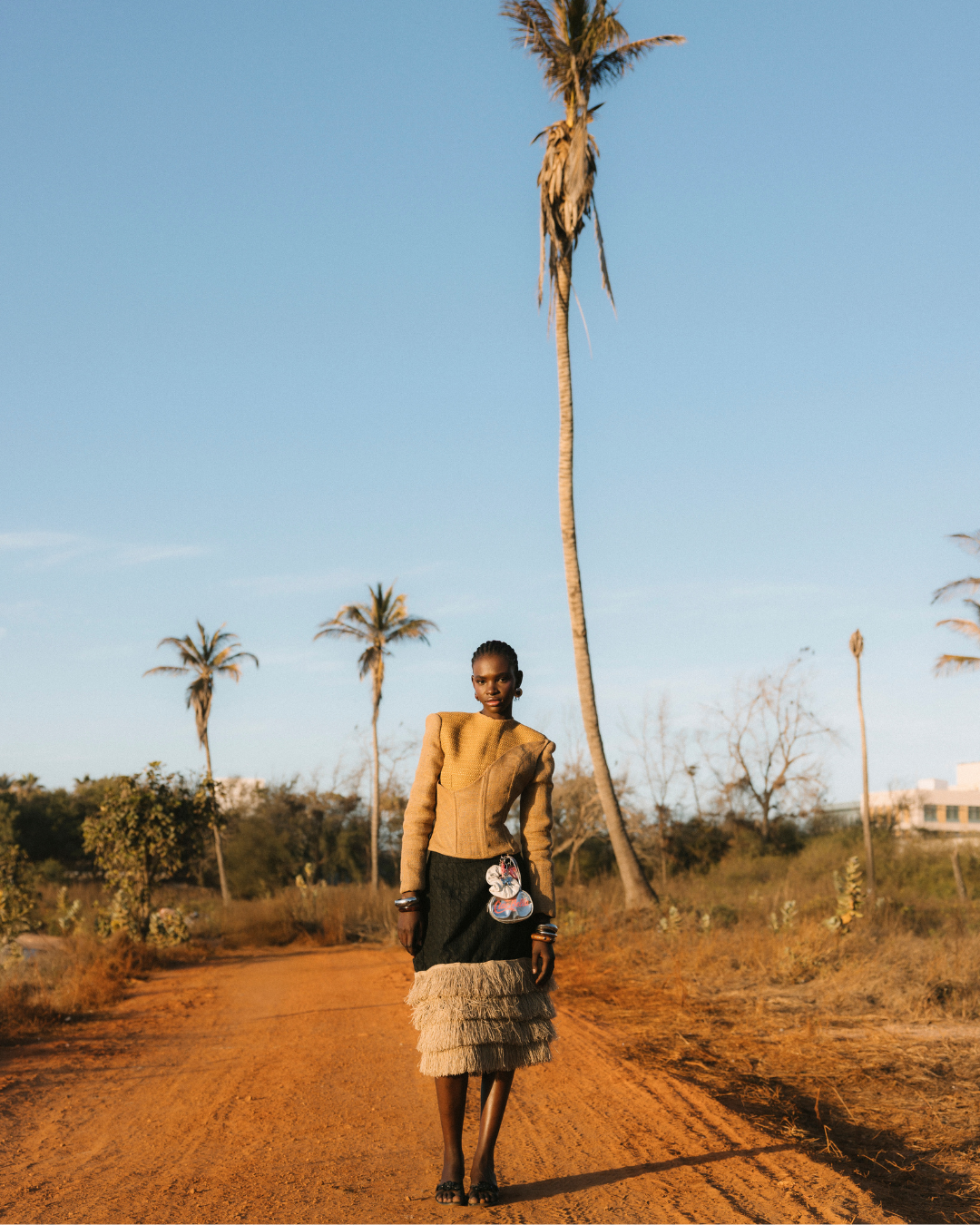
PLATFORM editorial, shot by Dan Carter, model Marieme Ndiaye wearing ROMZY
ON HER RADAR
Data-led reporting and fashion policy in Nigeria
What are you curious about at the moment?
I’m particularly interested in the social signals that indicate a movement toward decentralising Western narratives.
What fashion event or news got you excited recently?
Something I’ve really been appreciating recently is the work of agencies like Clearly Invincible, especially their first data-led report on Lagos Fashion Season 2025 coverage. A first of its kind, and I’m here for it. I also admire the work of the Fashion Law Institute Africa, which tackles policy in African fashion, particularly in Nigeria, from education to proposing new frameworks. Their work feels highly relevant and genuinely impressive.
“What keeps me going is a strong sense of responsibility and justice. At its core, my work is driven by social justice, not as a concept but as a necessity. For me, it’s the bare minimum.”
HER STYLE
Bags, shoes and the pull of the Nigerian scene
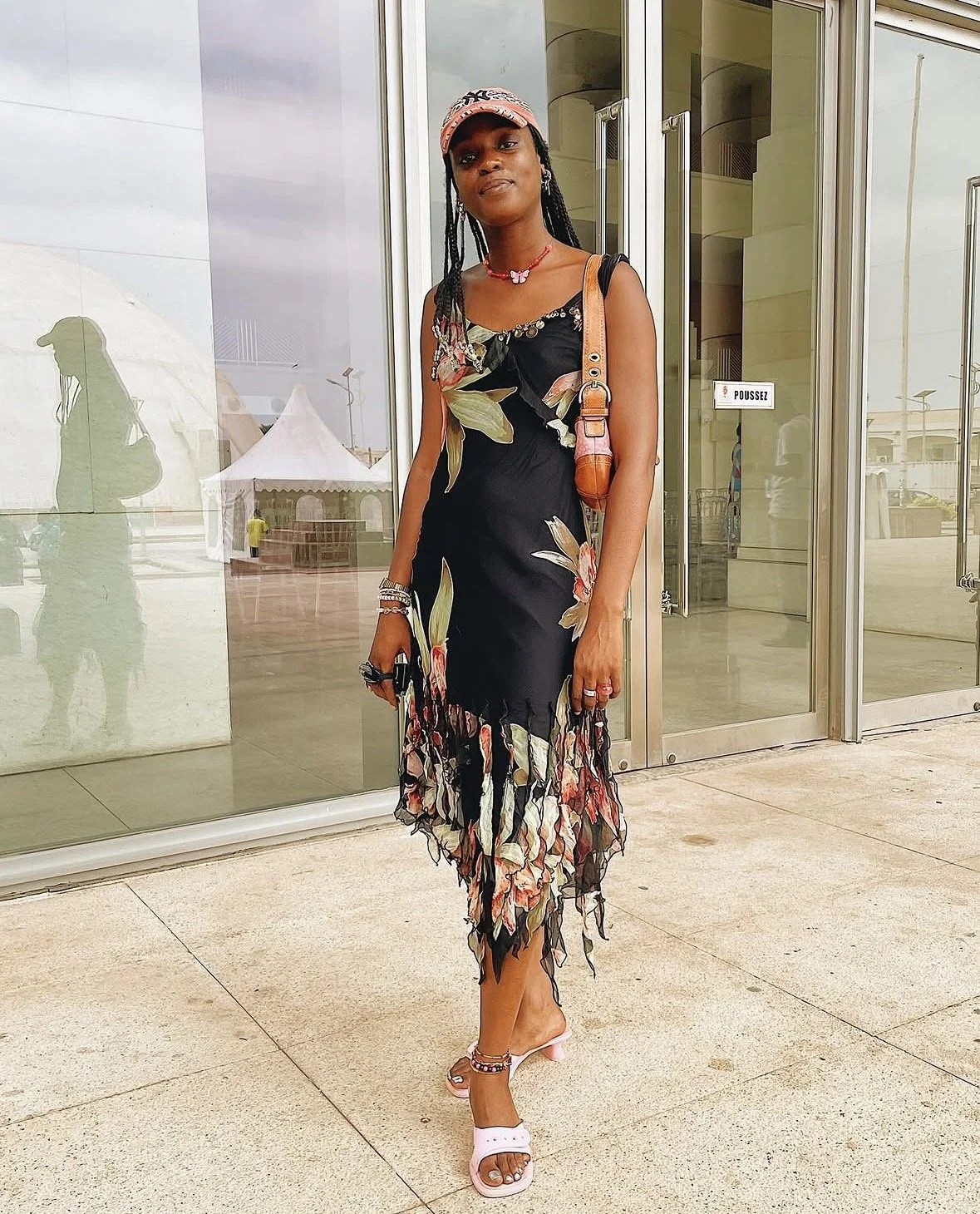
Koura-Rosy Kane on her way to attend a show by Maison Kébé, photographed by Déthié @thefreeminds
Your wardrobe essentials?
I source a variety of items, but there are two categories I cannot go without: bags and shoes.
Your go-to destination to discover African and diaspora brands?
I spend a lot of time curating on social media to discover African and diaspora designers. One country that stands out for me is Nigeria. The scene there is truly incredible. Unfortunately, for many brands, shopping directly in their stores is still the easiest way to access their collections.
Some of your favourite African and diaspora brands?
Oríré, whose latest collection was stunning. I connect with their design approach on a deep level. Tolu Coker is a consistently reliable brand, and I love her aesthetic and the way she draws on culture and storytelling. The Hybrid Studio offers a small collection of high-end essentials, with beautifully executed basics. And Dohrek, who I feel are redefining African contemporary luxury with each collection.
Specific pieces you have your eye on?
I would refer back to the brands I mentioned. Those are the ones I’m most excited to shop from in the near future.
THE CONNOISSEUR EDIT, INSPIRED BY HER

TOLU COKER x Topshop Knitted Ovoid Sleeve Navy Dress
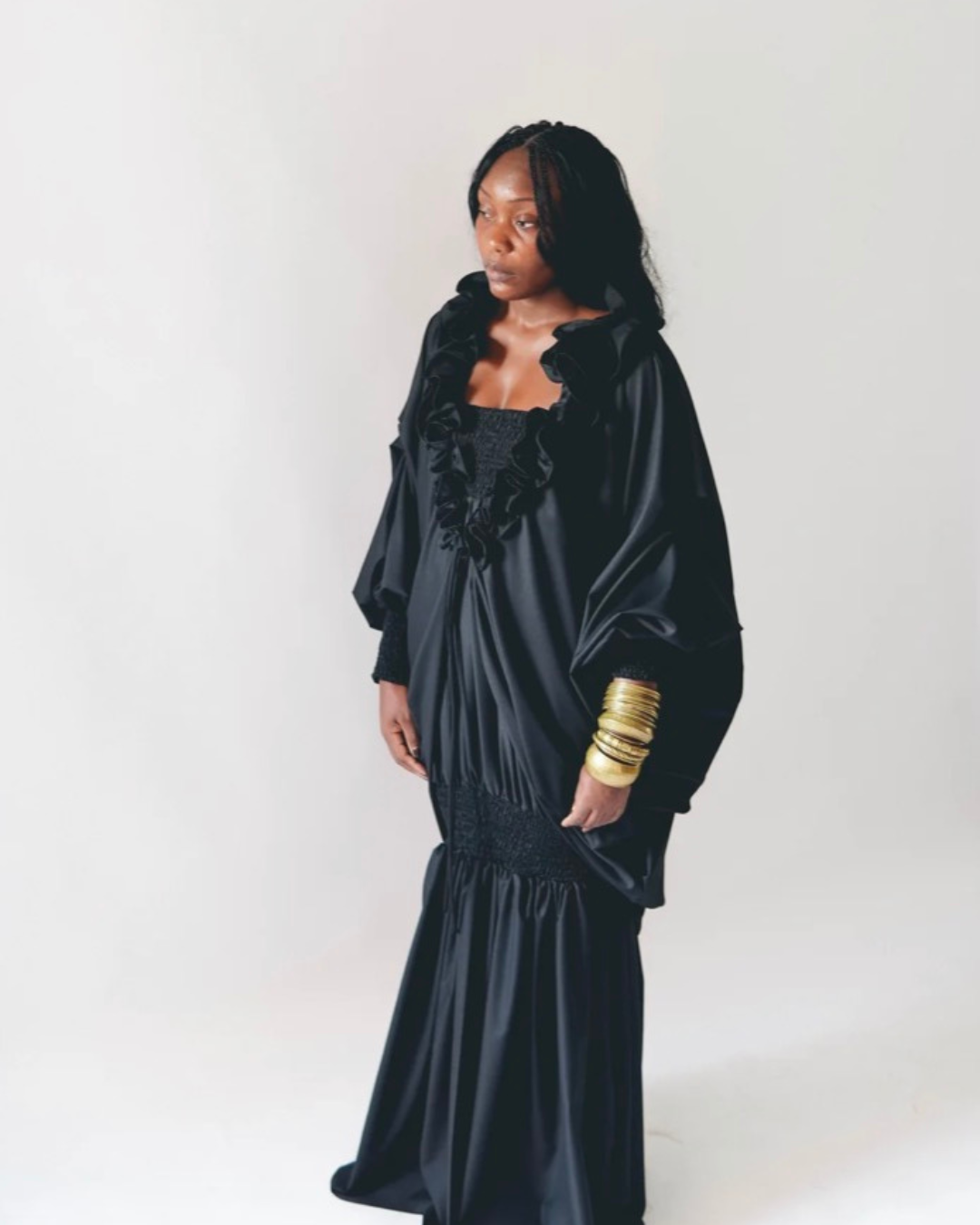
HYBRIDE STUDIO Boubou Jacket
HYBRIDE STUDIO Camisole

TOLU COKER x TOPSHOP Long Sleeve Shirt Blue Stripe
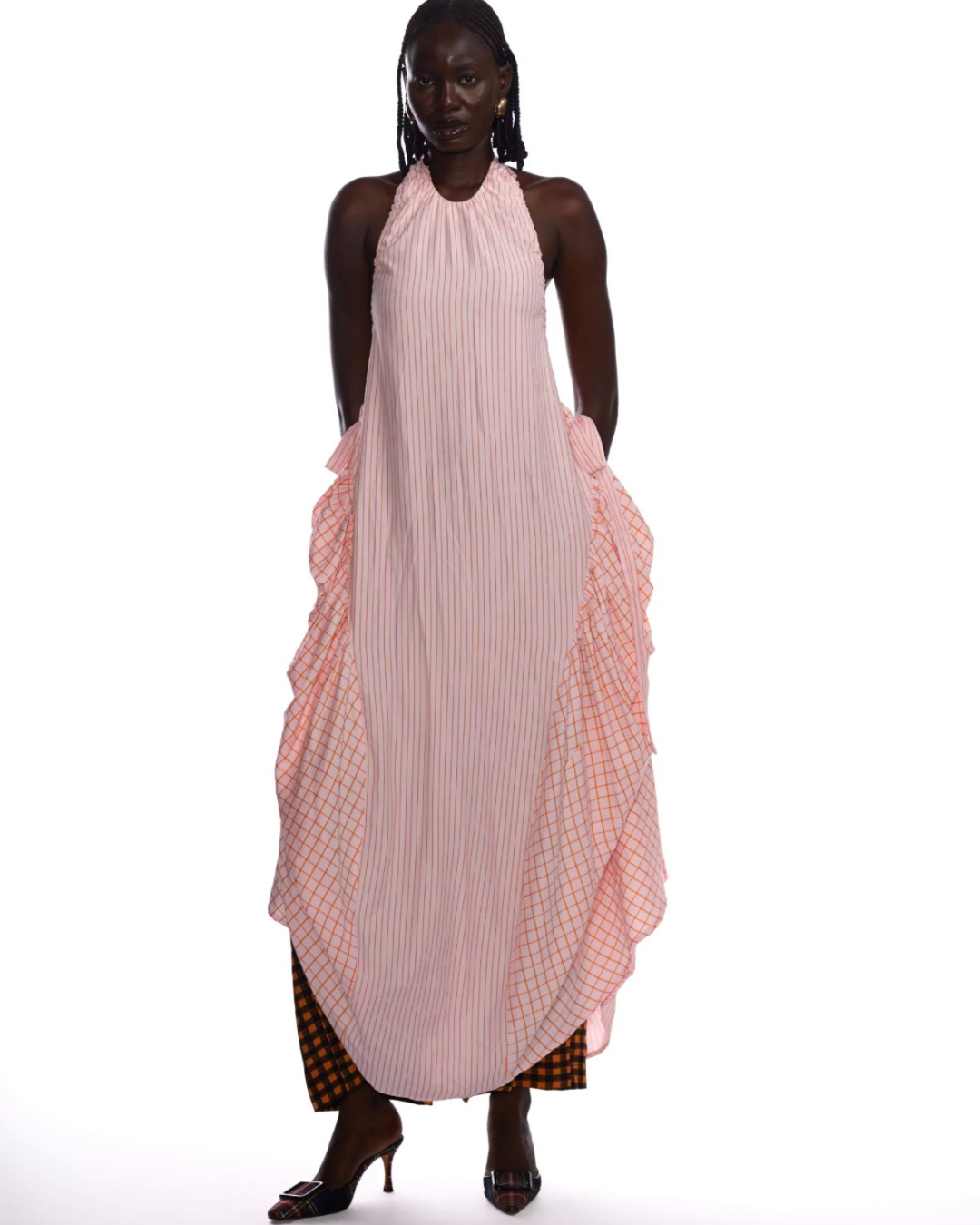
ORIRE Lina Halter Dress
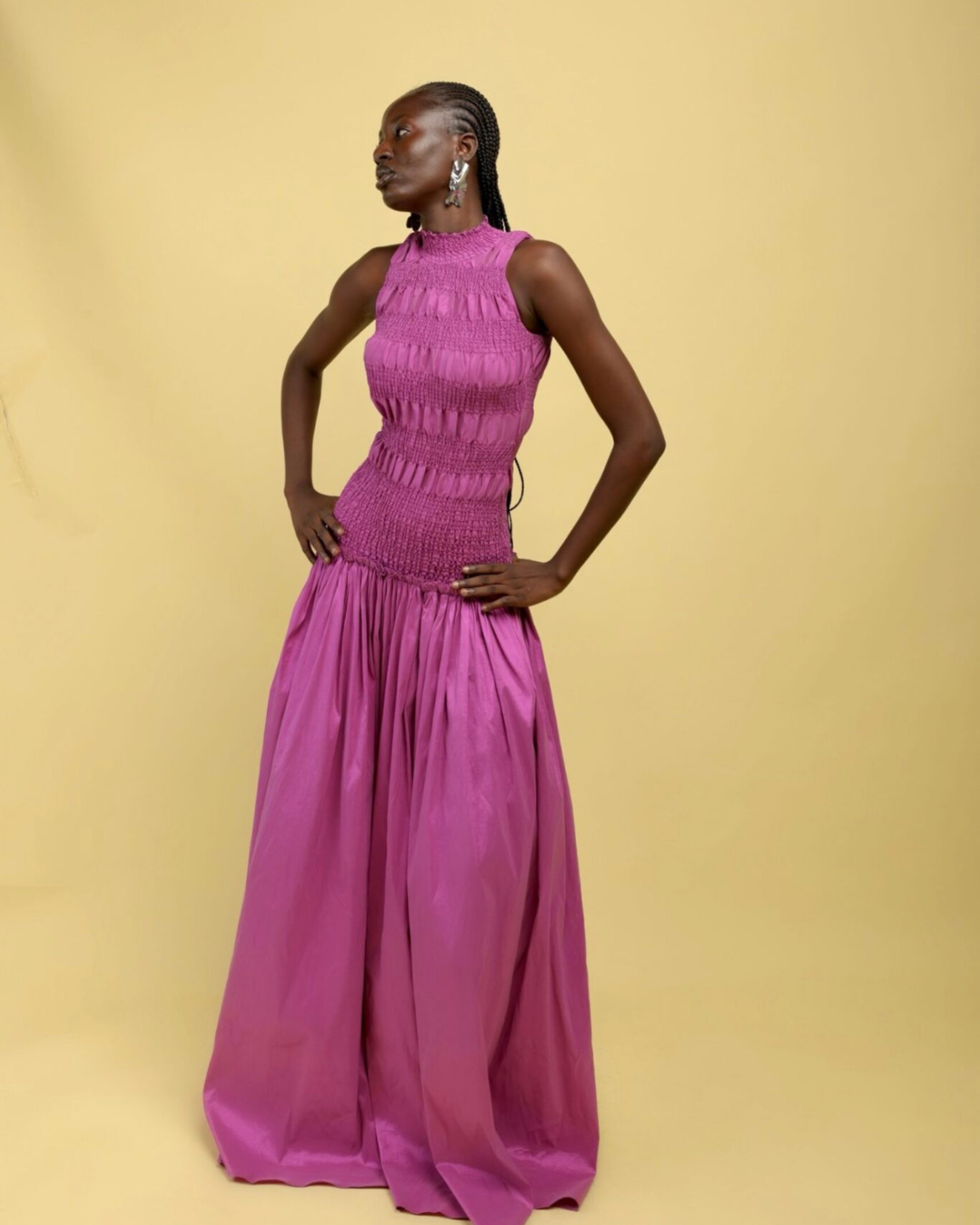
ORIRE Barry Maxi Dress
Kane’s argument lands hardest where it’s least comfortable: that the creative world consumes Black women’s perspectives while resisting their leadership, and that fashion is dismissed as entertainment precisely when it should be funded as an industry. Her response is not to ask those systems to do better but to build parallel ones, starting inward, on her own methods and terms. Legitimacy, in her account, is something you construct rather than request.
Follow Koura-Rosy’s work at @platform___ and @koura.is.rosy, read PLATFORM on Substack, and see her portfolio on her website.
Read the previous portrait with Balmlabs and The Showroom Accra founder Baboa Tachie-Menson, and subscribe to the NDAANE newsletter to stay across every conversation in the series.