
After Visibility: Dola’s Yannick Do on Who Owns Africa’s Creative Moment
African music, fashion and design have won the world’s attention. Yannick Do, co-founder of the French creative agency Dola, is asking what comes next: who owns the value that attention creates? He speaks to Kemi Iruwa about infrastructure, gatekeeping and why, in his words, “Africa is not a trend”.
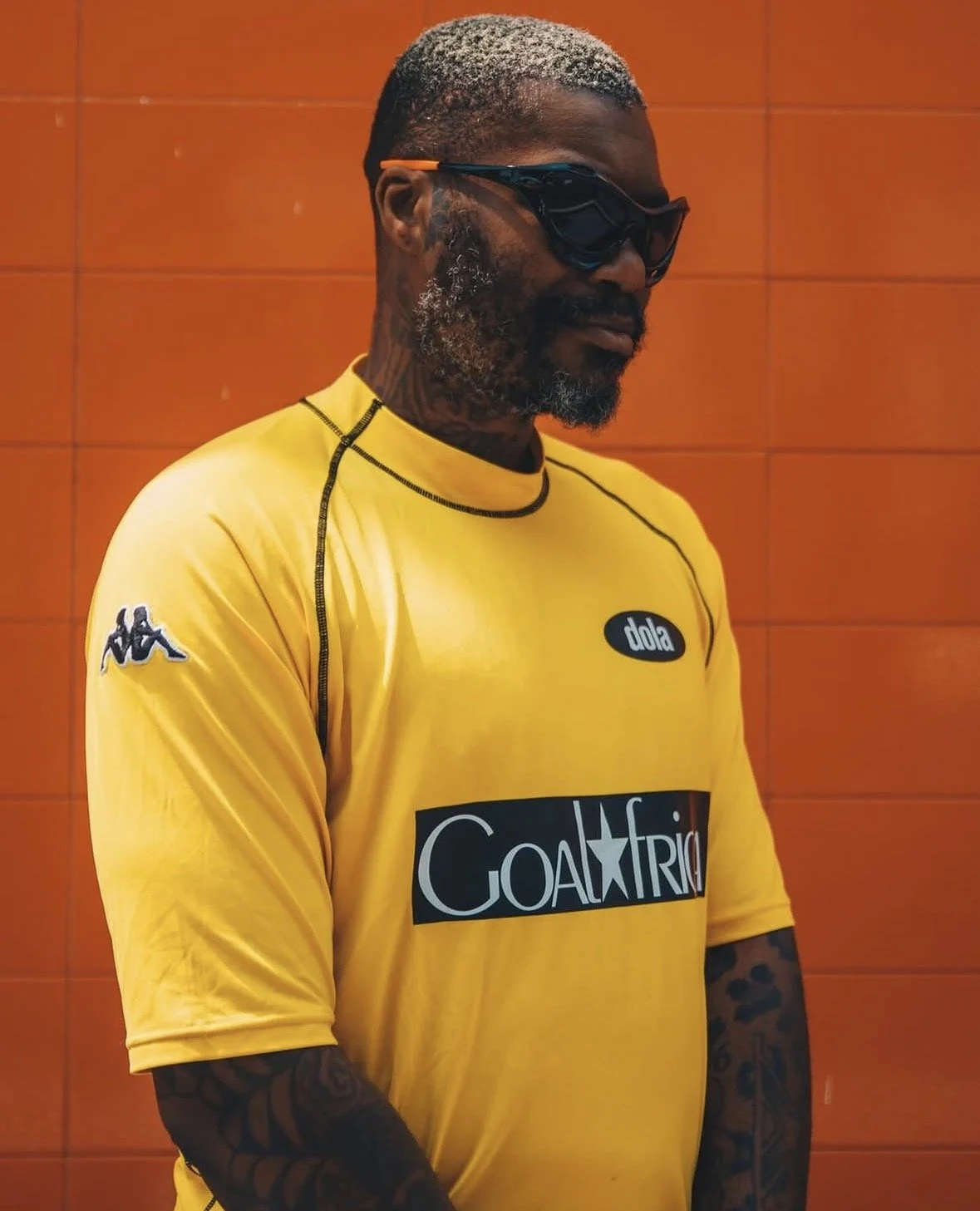
Former football player and cultural icon Djibril Cissé wearing a signature Goal Africa jersey by Dola. Courtesy of Dola.
Over the last decade, creative and cultural work of African origins has become increasingly difficult for the rest of the world to ignore. Afrobeats has moved from a sound with strong regional and diasporic audiences to a defining force in global pop. African fashion has gained visibility across the international fashion system, while designers, photographers, artists and creative studios working across the continent have found themselves with audiences far beyond their immediate markets. African design, too, has increasingly been treated as a source of influence rather than something operating at the margins of global culture.
The shift in attention is significant, but so are the questions that come with it. When African culture becomes commercially desirable, who actually benefits? If international audiences want more African music, fashion and design, where does that value go? Who decides which designers, musicians, photographers and stories are given a global platform? And perhaps more importantly, what happens when the current appetite for African culture eventually changes?
For years, conversations about African creativity were largely organised around individual success stories with the focus being on the person who had managed to break through, and visibility itself was often treated as the measure of progress. But as the African creative economy has expanded, another group has become increasingly important: the people building the conditions around the culture. Publishers, agencies, producers, curators and platforms are creating the infrastructure through which creative work is commissioned, distributed, documented and commercialised. They are not always the people whose names appear in headlines, but increasingly are the ones deciding what gets seen, who gets opportunities and how creative value evolves.
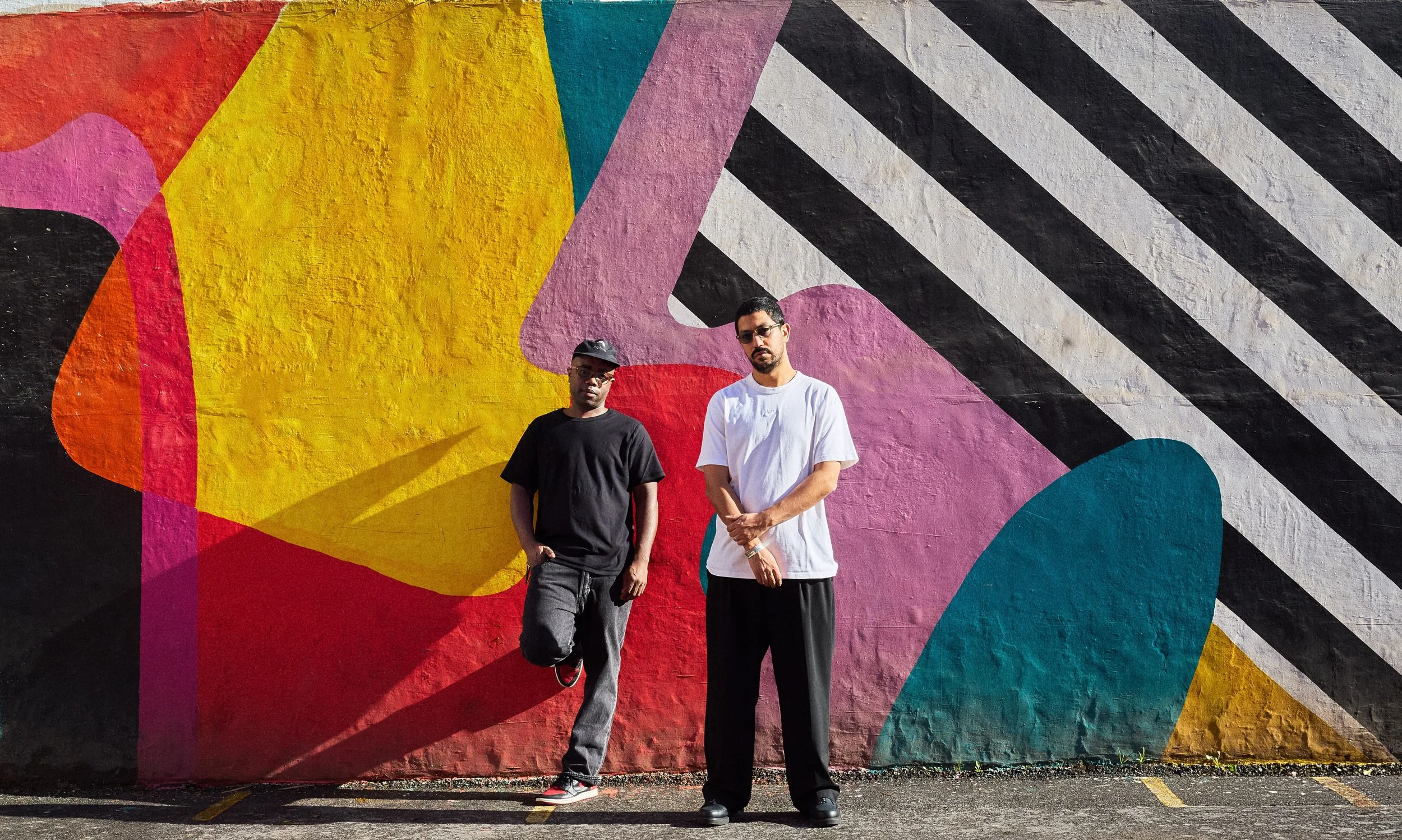
Dola co-founders Yannick Do (left) and Fayçal Lazraq (right). Courtesy of Dola.
From concept store to creative agency
French creative agency Dola sits at the centre of that shift, having grown from an online concept store into a creative platform that produces, publishes and distributes African culture while creating new routes between the continent and the global market.
Founded by Yannick Do and Fayçal Lazraq in 2022, Dola began as an online concept store specialising in African streetwear. The idea came from a gap the pair identified after months of research into brands and products across the continent. There were already digital platforms representing African luxury, particularly in Nigeria and South Africa, but they saw little in the way of contemporary African streetwear and the Francophone market. The initial idea was therefore relatively straightforward: curate the products, develop a strong visual identity and create a destination through which African brands could reach a wider audience.
Within its first year of operations, the opportunity to produce a creative event in Dakar pushed Dola into a different direction. An agency component had always been somewhere in the business plan, but the timing accelerated the process. “We were maybe going to start a creative agency in the second year or something like that,” Do tells me over a web call. “In our first year, someone from marketing at ONOMO Hotel in Senegal asked us to do an event in Dakar and we decided to change everything very quickly.” Within a week, the company had shifted its status and begun operating secondarily as a creative agency.
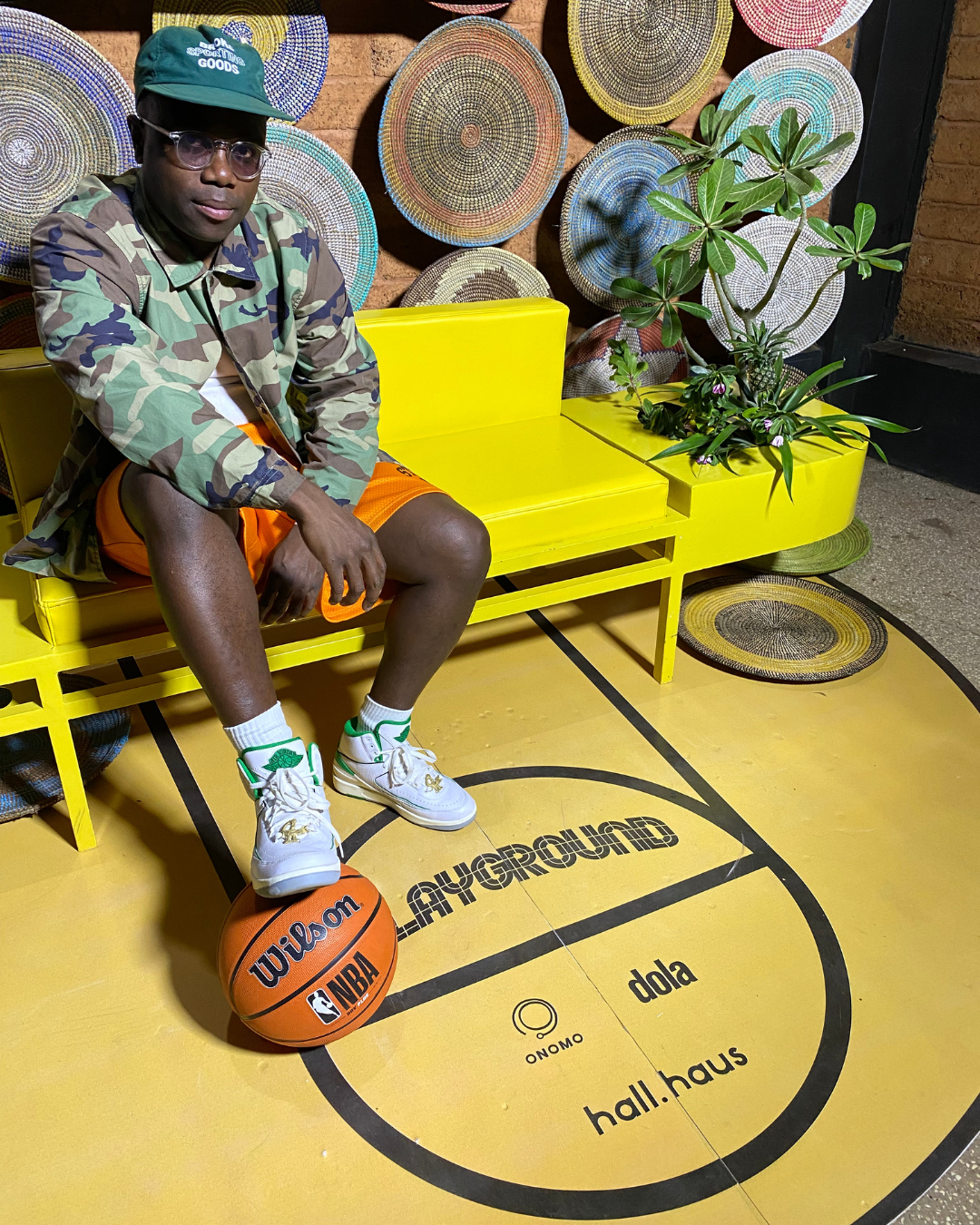
Yannick Do posing in an installation by Dola at ONOMO Hotel Dakar, built as part of their collaboration. Courtesy of Yannick Do.
That ability to move between different parts of the creative economy has remained central to Dola. The company now works across creative strategy, production, publishing, photography, film, events and brand partnerships, with its agency work making up around 90 per cent of the business. It has also developed Goal Africa, a sports and culture project that has included work around AFCON, alongside projects connecting young creatives across West Africa through football, skateboarding and surfing.
Expertise starts on the ground
For Do, this evolution is tied closely to his own experience in the industry. Before launching Dola, he worked as a creative producer at Nike in Paris, producing campaigns involving major athletes and members of the African diaspora, including Kylian Mbappé and members of the French national football and basketball teams. He had spent years working within a major global creative machine, but his experience working more closely on the continent changed the way he thought about what that expertise meant.
“Don’t just come with your knowledge. You also need to listen to the guys on the ground, the youth, and everybody else.”
“When I started to work in Africa, it was a little bit different,” he explains. “Compared to Europe, or the US, you need to adapt your mindset and your skills. Don't think, ‘yeah, I know everything, I can do this and that.’ You can have 20 years of experience but when you get there, you need to connect with the people on the ground who really understand the landscape. I think that’s the key to success.”
It is a distinction that has become increasingly important as international interest in African creativity has grown. While Western brands, magazines and creative agencies are interested in Africa the way that interest can sometimes operate leads to disjointed work that struggles to connect with any audience. Do recounts stories where he’s seen international teams fly into Africa, produce a shoot, hire someone locally to facilitate it and leave again, often without involving local creative teams in the actual creative process. “You can come with your photographer or director, whatever,” he says, “but you need to have people you trust on the ground. Not only a fixer, but a whole team over there.”
For Do, the local creative is not simply there to make production for international brands and agencies easier. They bring a perspective that someone visiting the continent for a few days is unlikely to have. “Seeing the Eiffel Tower as a French person is very different from going to see the Eiffel Tower for the first time as a tourist,” he analogises. “That's why it's very important to work with someone on the ground.”
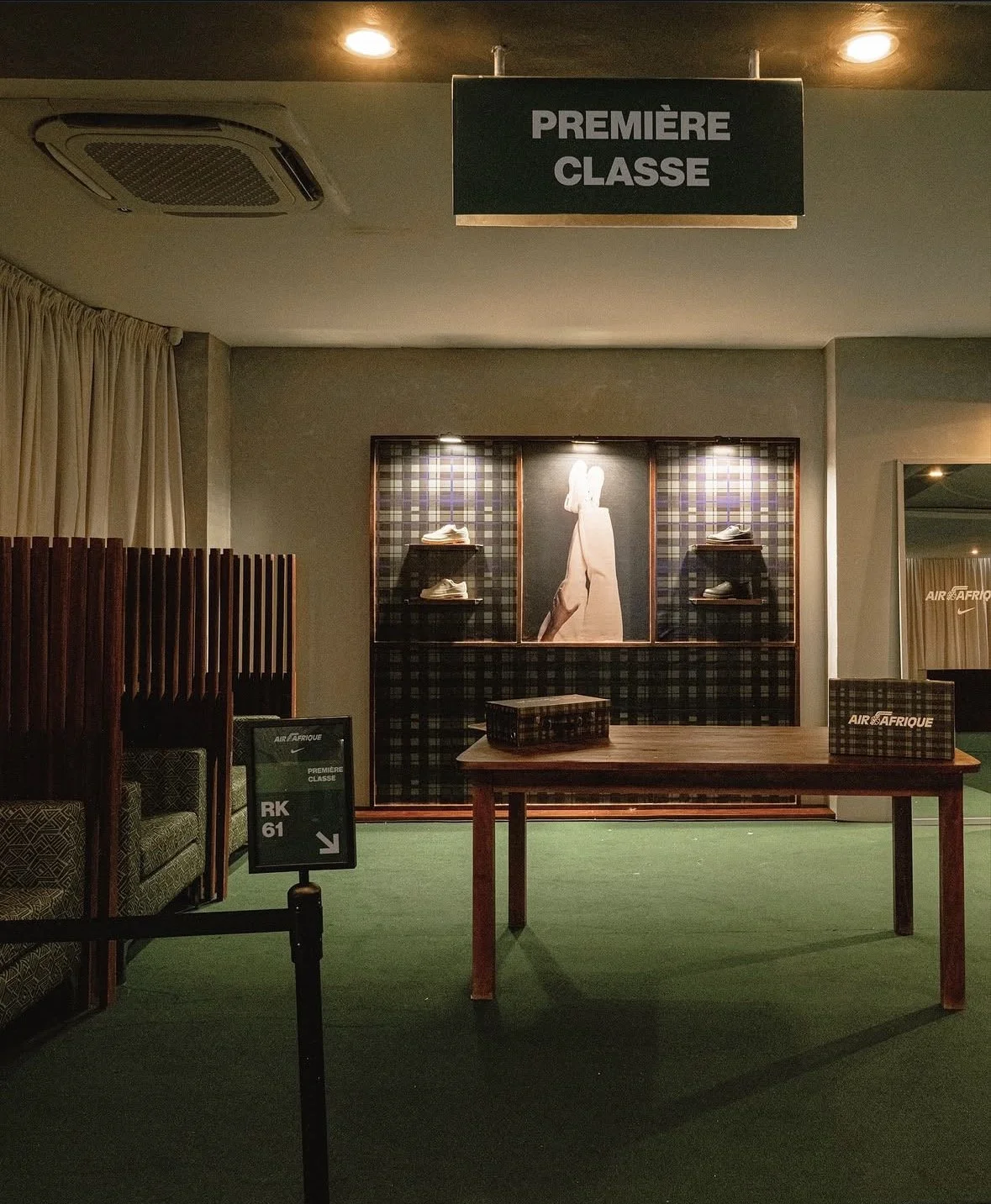
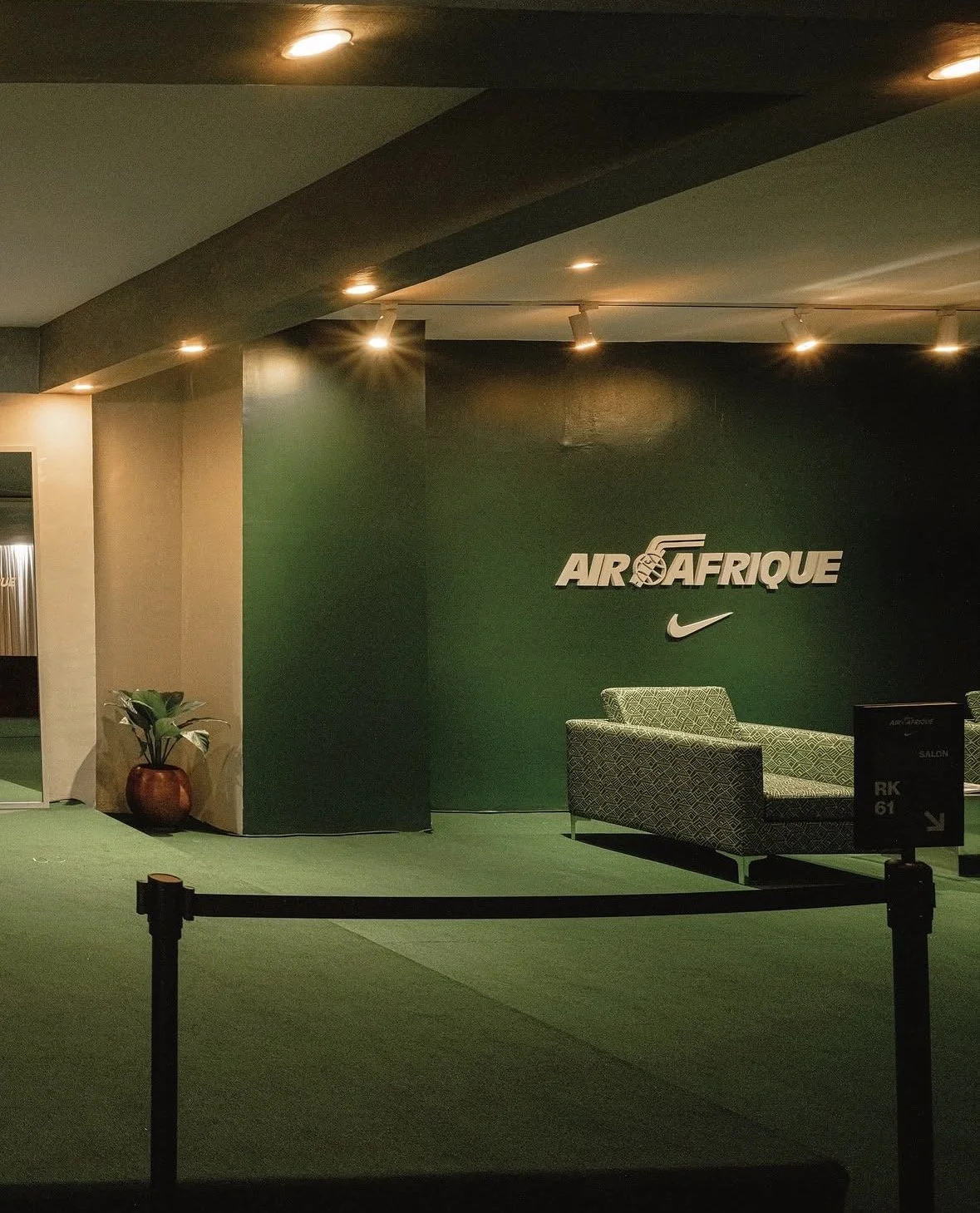
Dola’s set design production at Blu Lab concept store in Abidjan for the launch of the RK61 sneaker, a collaboration between Nike and creative collective Air Afrique. Courtesy of Dola.
Between the diaspora and the continent
His stance especially makes sense when you take his personal experiences into context. Born and raised in Paris, Do's understanding of Africa was shaped by his Togolese heritage and the different African communities around him, from Senegalese and Congolese to Moroccan and Algerian. He describes his perspective as “hybrid”, shaped by the experience of growing up within an African diaspora rather than being raised on the continent itself and that distinction has become clearer through his work. Do is wary of the ways Africa can sometimes be romanticised from outside, including by members of its own diaspora. He describes some representations as carrying a “Wakanda spirit”, a version of Africa that can feel more like an imagined continent than a reflection of contemporary life on the continent. Working in Africa has made him more conscious of that gap.
“Your mindset changes when you start to work in Africa,” he says. “Not as an African from the diaspora but once you begin to operate more like someone born and raised on the continent.”
That is not to say that the diaspora should be removed from the conversation. In fact, the increasingly blurred relationship between the continent and its diaspora is part of what Do sees as one of the most interesting developments of the last decade. Fifteen years ago, he described the relationship as a bridge, with people travelling back and forth between cities such as London, Lagos, Paris and Accra. Now, that line is becoming more blurred. “We don't know if an artist came from Lagos or London or LA or New York,” he says. “And this is a good thing.”
But if there is no single African experience, there can also be no single person responsible for representing it. Do is conscious of the power that comes with deciding what gets a platform, and says he actively works with creatives across different countries and communities rather than positioning Dola as a singular authority. “I am not the only one,” he says. “And I’m always partnering with my colleagues and peers from Nigeria, Ghana and Morocco.” He sees greater collaboration across the continent as necessary, particularly between its Francophone and Anglophone creative economies. “We are not going to win alone,” he says. “We all need to work together.”
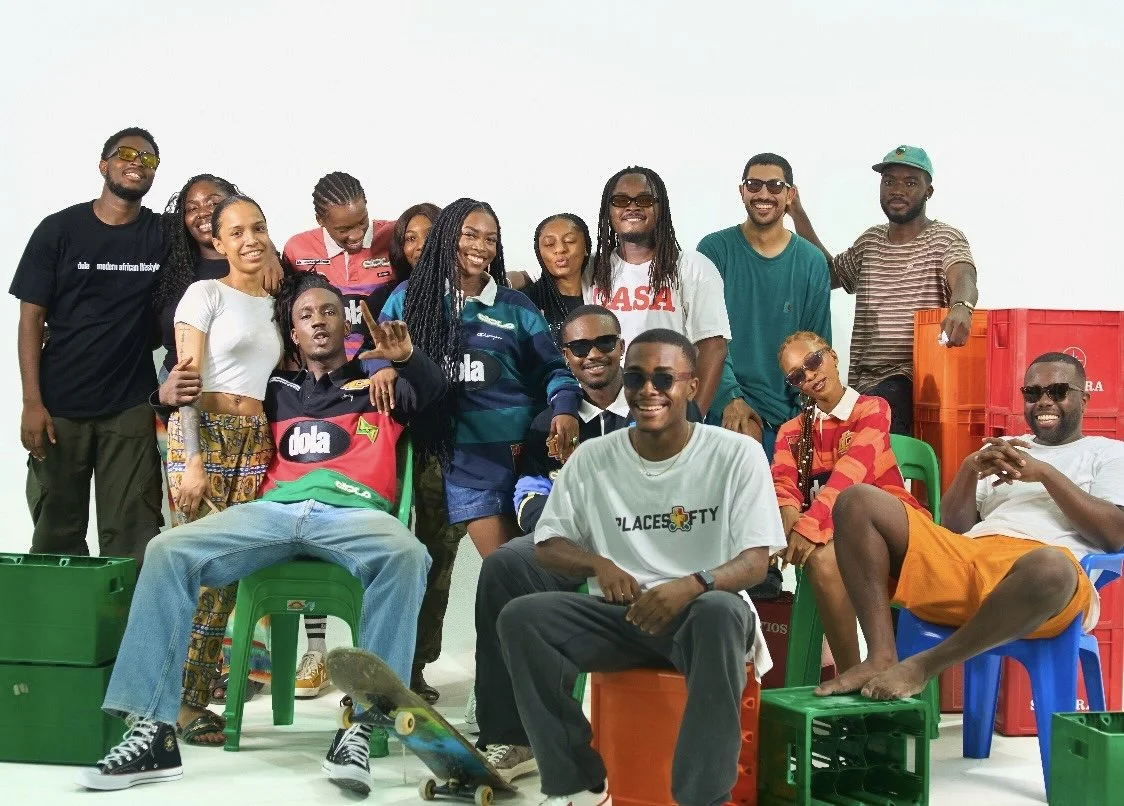
Crew of the Dola vintage polo campaign celebrating their second year of operation. Courtesy of Yannick Do.
“Africa is not a trend”
The question of who gets to speak for Africa becomes even more complicated as global interest continues to grow. The last decade has brought huge cultural and commercial opportunities, but it has also created the possibility for African culture to be consumed as a trend.
Do rejects the idea that this is simply another cultural moment that will eventually pass. “Africa is not a trend. I think we are going to enter a new period of Africanness, an Africa 2.0 or 3.0,” he says. Instead he sees the current landscape as another stage in a much longer evolution.
“10 years ago, everybody would say ‘Africa is the future’, but now, we are in Africa’s time.”
For Dola, part of the answer to what to do with Africa’s creative currency is deciding how much of the culture should be made available for consumption in the first place. “We need to be our own gatekeepers and keep our vision of Africa, not just sell everything to the West.” The position Dola takes recognises the commercial value of cultural access while questioning whether everything needs to be translated for an outside audience. Do also stresses the importance of returning to the continent throughout the year rather than only during the periods that have become associated with diasporic tourism and cultural consumption.
“Sometimes I go back for just two months and something has changed and is totally different compared to my last trip,” he says. “You need to see the evolution of the youth, the new trends as they happen.”
Do’s insistence on being present is also tied to who benefits from the current creative boom. Dola's first customers were largely members of the African diaspora in France. Now, Do says, the company sells more in the United States, while international brands are increasingly approaching Dola for its perspective on work being developed in Africa. That shift in demand is important because the company is no longer simply being asked to provide African talent or imagery. It is increasingly being asked to influence the work from conceptualisation. “Every week we receive a call or email from a big company,” Do says. “They need our point of view.” Brands want Dola to help them understand “the reality of Africans, the dos and don'ts”.
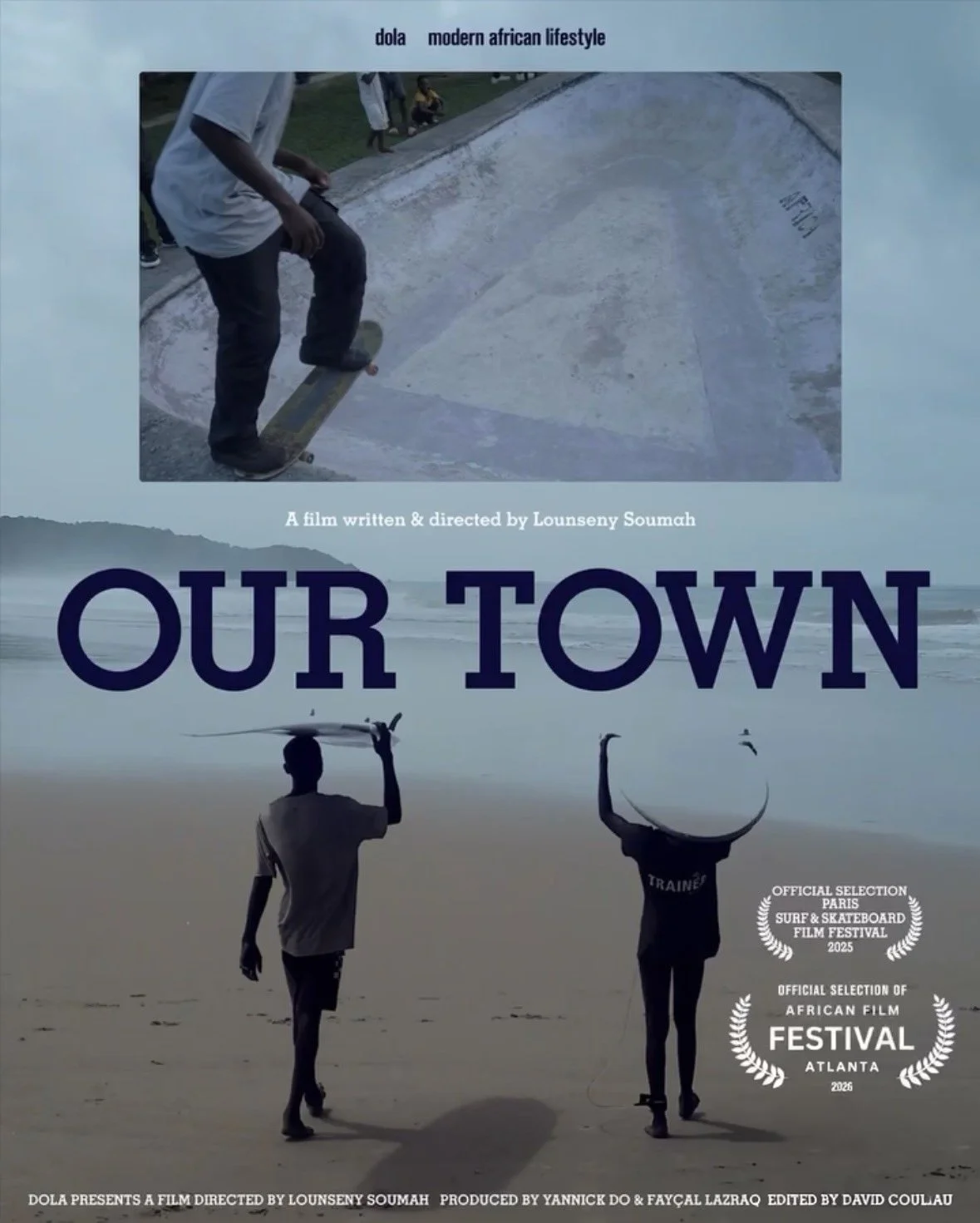
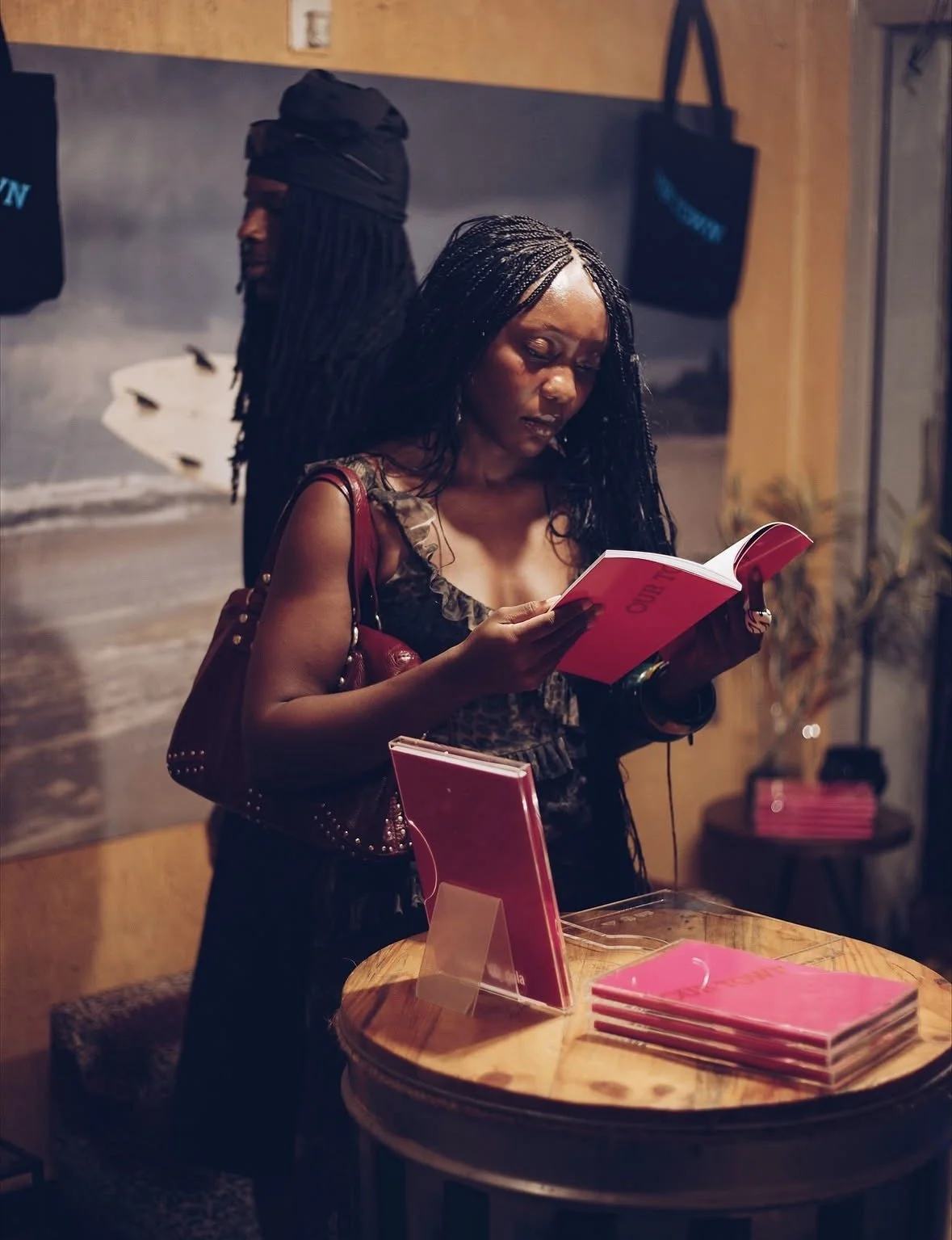
“Our Town” film produced by Dola (left). Independant researcher, curator and founder of Archives Ivoire, Marie-Hélène Tusiama Banimbadio, at the “Our Town” photobook signing at Dozo concept store in Abidjan (right). Courtesy of Dola.
From representation to ownership
A decade ago, Do argues, the visual shorthand for African culture could be much more superficial. “Back in the day, if you wanted to shoot or design something in African style, you just put the red, the yellow and the green on something in the background of your shoot,” he says. “But now it's very different.”
The difference in question is where representation starts to give way to ownership. It is one thing for African models, musicians or designers to appear in a campaign. It is another thing entirely for African creatives, strategists, producers and agencies to be involved in deciding what the campaign is from the start. When I ask Do what ownership means to him, his answer is immediate.
“Ownership is everything. It’s not just the money, it’s very important because it’s our culture.”
“We are the gatekeepers of this culture. It's not an easy hat to wear, but we need to wear it and work on it. This is our mission,” he says. For Dola, ownership extends across the entire creative chain: intellectual property, platforms, distribution, publishing, production and the money generated from the work. It also means having the ability to decide which stories are told and how they are told, rather than simply responding to demand from elsewhere. All of that requires infrastructure, something Do admits the West African creative economy still lacks.
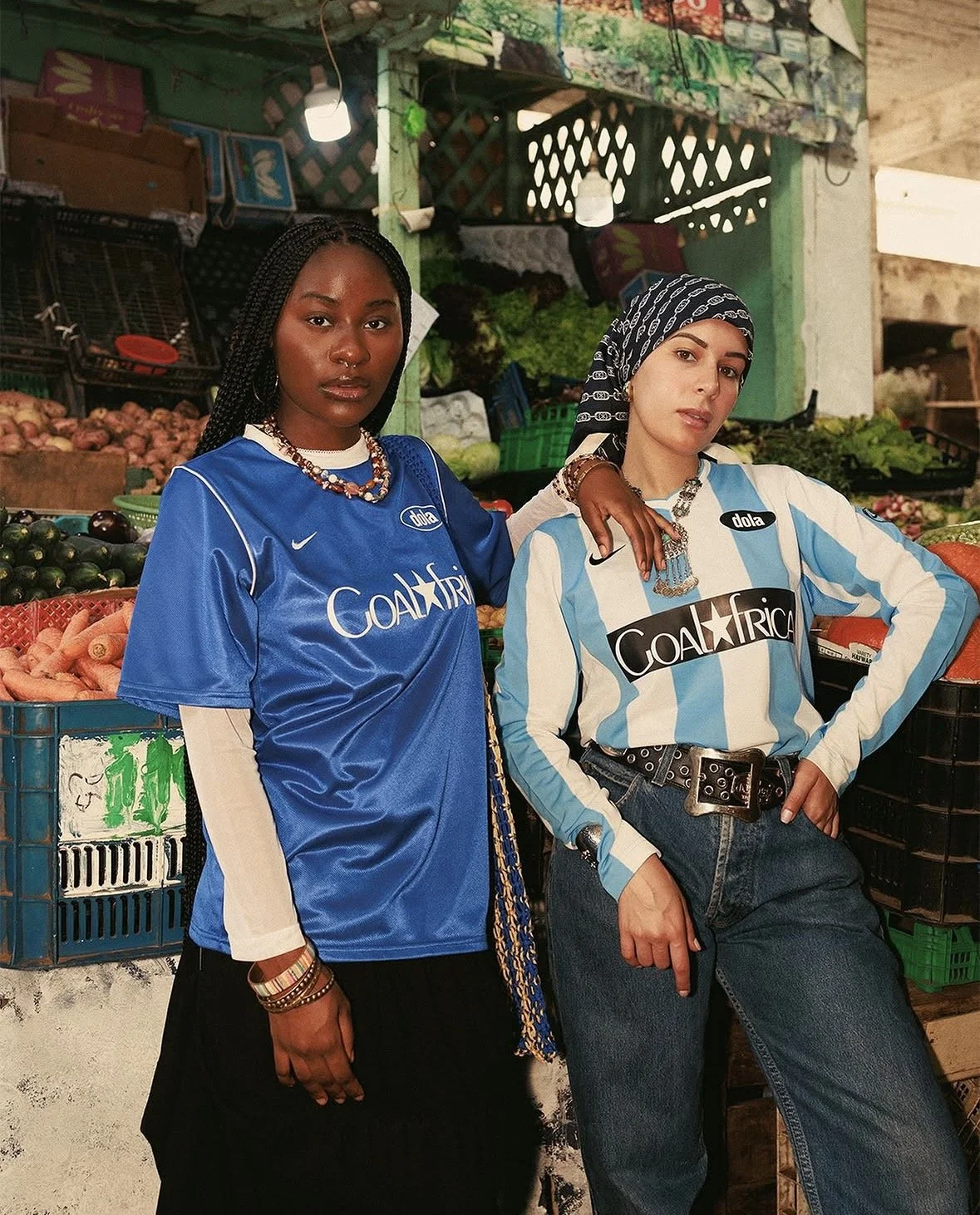
Dola’s vintage Goal Africa jersey campaign, 2024. Courtesy of Dola.
“If you give one million to someone disorganised, they’re not going to do anything great. Money with no infrastructure means nothing.”
It is one of the clearest arguments for why platforms like Dola matter. Investment can fund a project, but infrastructure creates the conditions for creative industries to keep producing impactful work. Dola has gradually become an ecosystem itself, even if Do is reluctant to define it too narrowly. “We are still working and we are still finding our way of doing things,” he says. “I don't know if I want to be a full agency or full e-shop or fully editorial or fully film production." For now, the point is that Dola can operate across all of those areas. “If you want to produce a film, we can do it. If you want to publish a book, we can do it. If you want to do a photo shoot or lookbook, we can also do that.”
That flexibility might seem at odds with the usual trajectory of a growing business, where companies are expected to find a niche and specialise but Dola has effectively done the opposite, starting with a specific retail proposition and expanding outward as new opportunities have emerged. And in an ecosystem where many of the necessary structures are still being developed, the ability to move between disciplines can itself become a form of infrastructure.
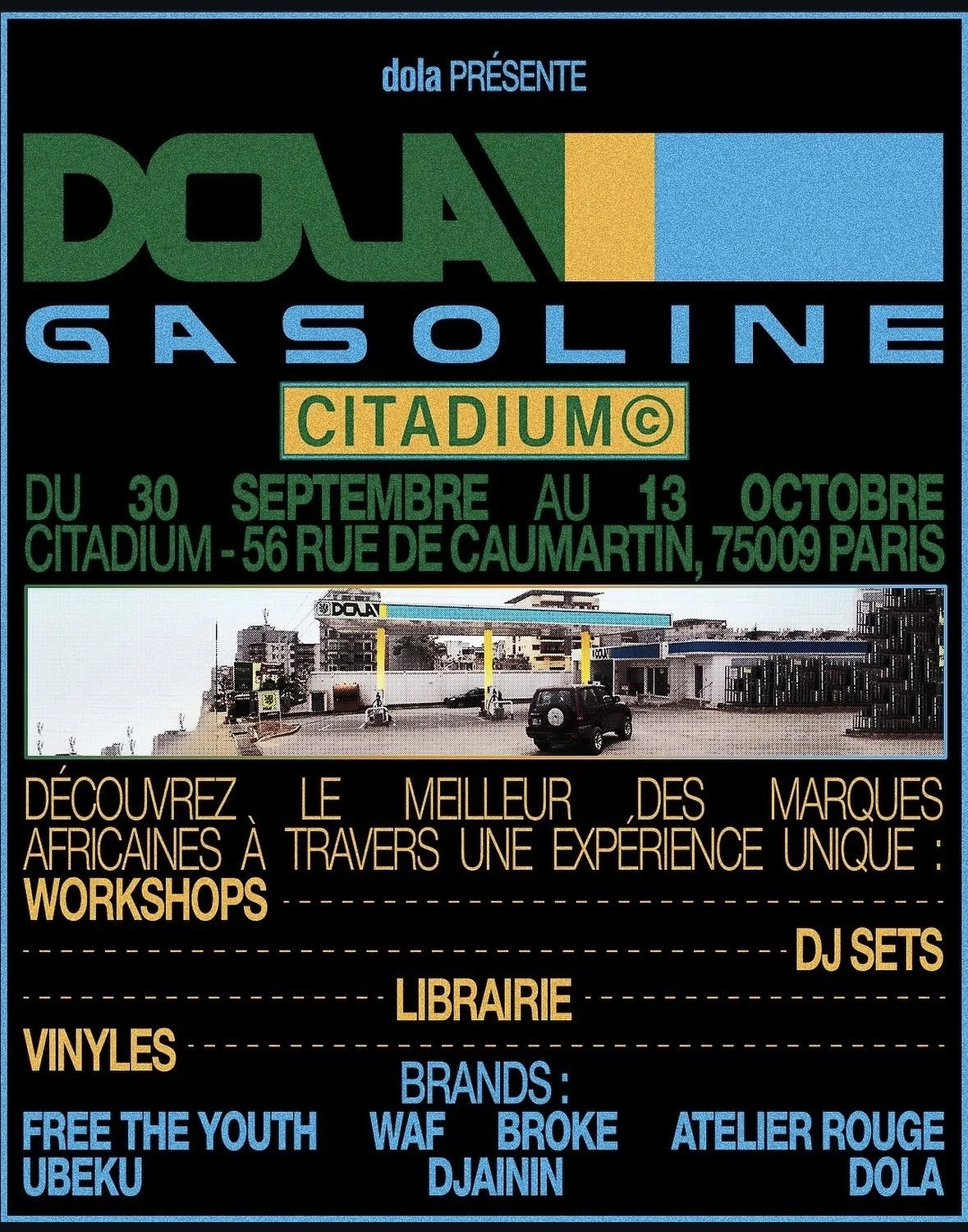
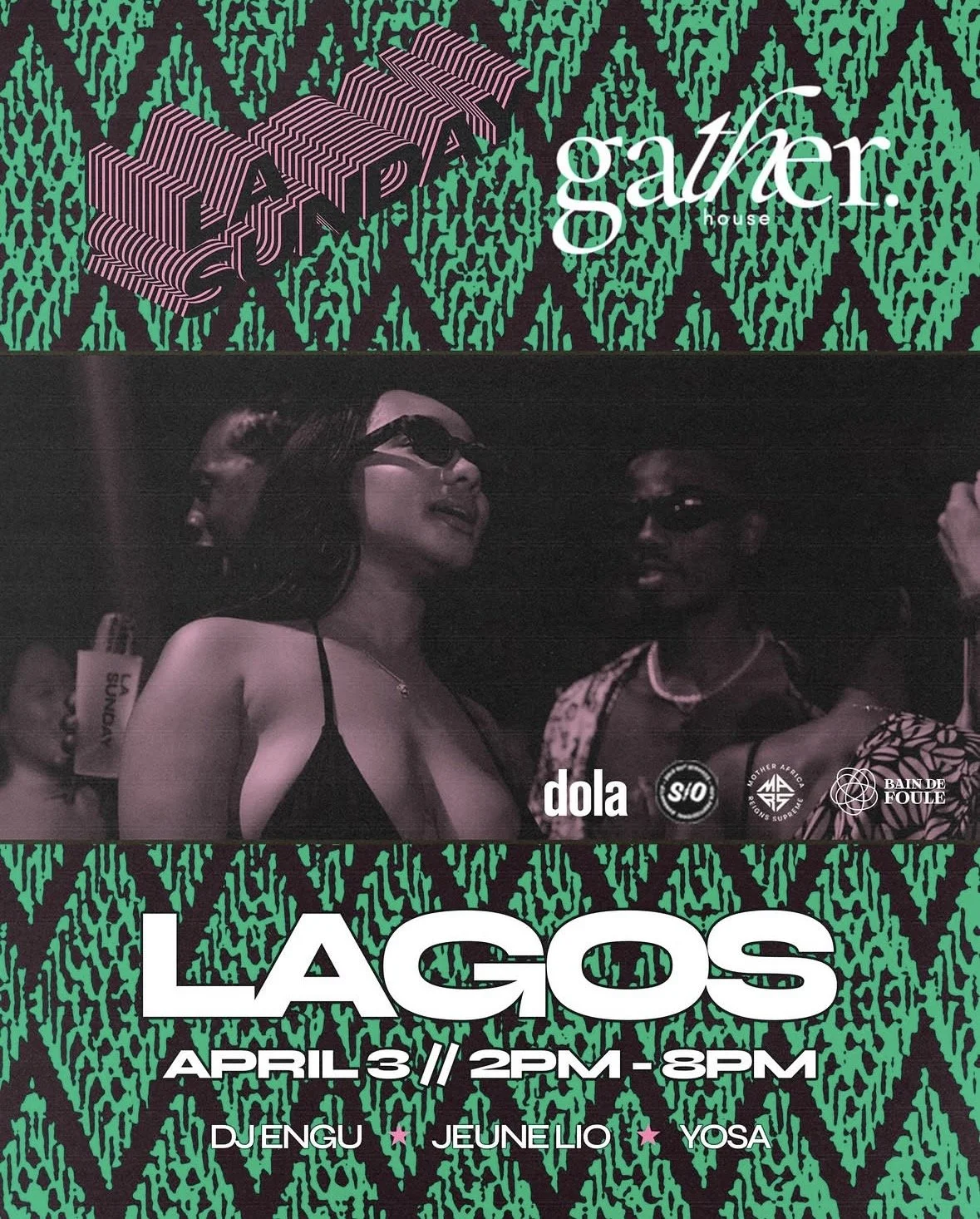
Dola’s events between Europe and Africa. Courtesy of Dola.
Beyond the pitch
Sport has become one of the clearest examples of that approach. Dola's Goal Africa project began around AFCON in Côte d'Ivoire, initially as a larger project with a global athleisure brand that was cancelled shortly before the tournament. Rather than abandon the idea, Dola continued with a stripped back version and documented the tournament through its own creative lens. The response received was far greater than the company's existing audience might have otherwise suggested.
“We didn't work with a PR team or anything like that,” Do says. “We just posted on our Instagram with 4K followers and our work was seen globally. It was crazy.” The success convinced Dola to continue Goal Africa around major sporting events. For Do, sport provides a particularly powerful cultural language because it connects people who might otherwise have little in common. That project later inspired a Dola documentary about skateboarding and surfing in West Africa which included a road trip by bus between Ghana and Côte d'Ivoire with young people from Togo, Ghana and Côte d'Ivoire. “Nobody spoke the same language,” Do says. “But sport was the only language they needed to communicate.”
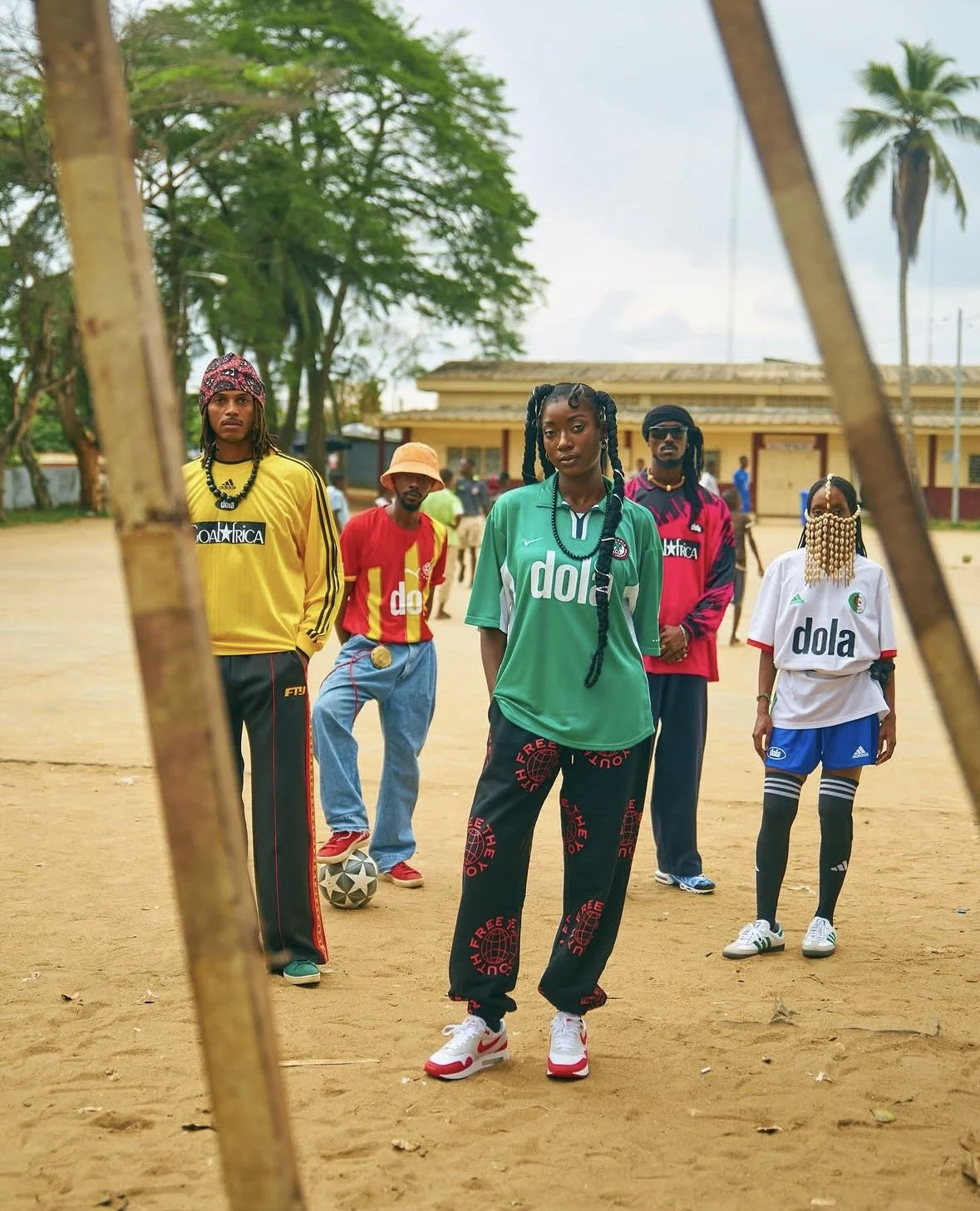
Dola’s Goal Africa campaign 2024. Courtesy of Dola.
That is part of why he believes AFCON can become much more than a football tournament. Its audience creates an opportunity for fashion, music, lifestyle and events to develop around the sport, in the same way that major sporting events elsewhere have become commercial and cultural platforms in their own right. Do's ambition is for Dola to eventually become a lifestyle partner for AFCON, working on the cultural programming that exists alongside the matches. It is a logical extension of the wider role Dola is trying to occupy. Rather than waiting for culture to happen and then documenting it, the company wants to help create the spaces in which it happens.
The question now is what that looks like at scale. Dola is approaching its fifth year, and Do says he and Lazraq are considering what the next stage of the company should be. The agency currently accounts for most of its work, but he does not want to abandon the digital platform that Dola started out as. There is also the possibility of developing something more physical and institutional. Whatever form that takes, the company's trajectory reflects a broader change in the African creative economy. The conversation has moved beyond whether African creatives can achieve international visibility because they have already proven they can in multitudes. What matters now is what happens to the cultural and commercial value created by that visibility.
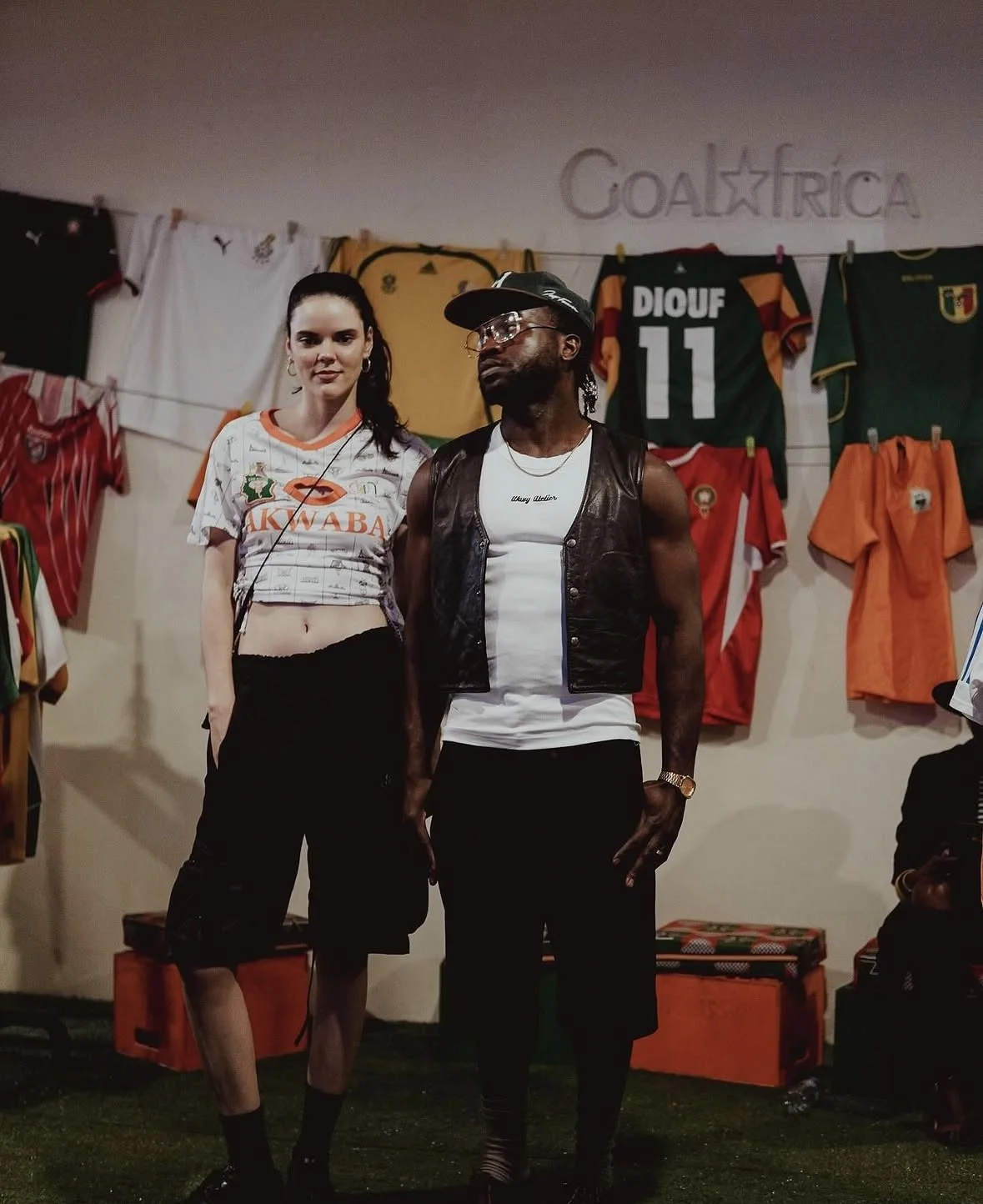
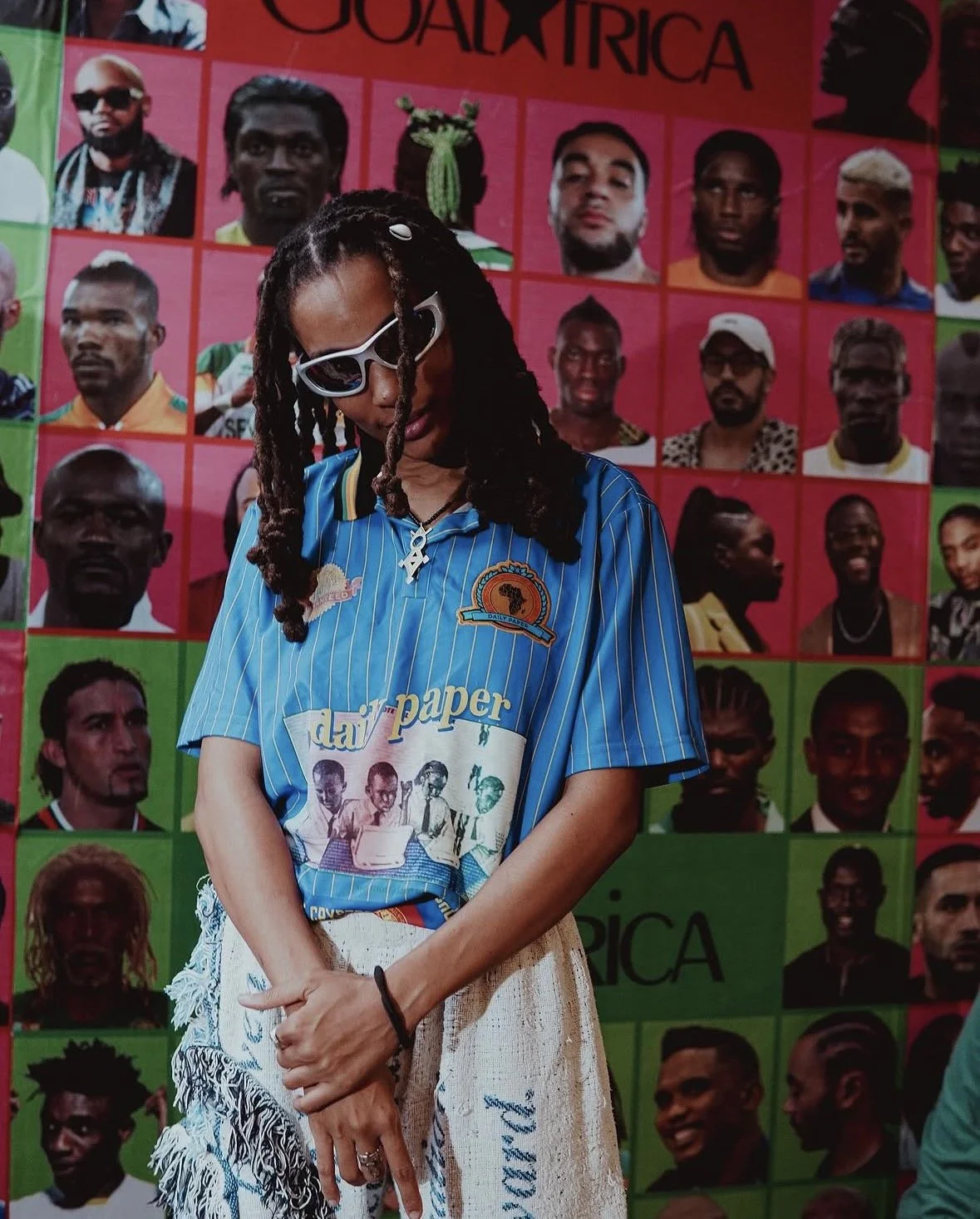
Dola’s Goal Africa event at Blu Lab concept store during Côte d’Ivoire’s AFCON
Dola is still deciding exactly what it will become within that ecosystem. Do talks about establishing a headquarters in Abidjan, another in Casablanca and potentially expanding elsewhere on the continent. His own ambition is to spend more of his time in Africa, eventually living in Togo while working in Abidjan and across the continent, “I want to be in Africa full time right now,” he says.
For a company that began as a Paris-based online concept store selling African streetwear, the direction is revealing. The old model was often about building a bridge between Africa and the West, helping talent and products travel outwards. The emerging model is less interested in the bridge itself and more interested in strengthening what exists on either side of it.
This article is based on an interview with Yannick Do, cofounder of Dola, conducted by Kemi Iruwa, by video call in July 2026.
About the writer
Kemi Iruwa is a London-based media creative and journalist focused on culture, fashion and music.
In brief
Dola is a French creative agency co-founded by Yannick Do and Fayçal Lazraq. It began as an online concept store for African streetwear, and agency work now makes up around 90 per cent of the business, according to Do.
Yannick Do, a former creative producer at Nike in Paris, argues that international teams producing work in Africa need a whole local creative team on board, not only a fixer.
For Do, the question facing the African creative economy has moved from visibility to ownership: of intellectual property, platforms, distribution, publishing, production and the money the work generates.
Do says the West African creative economy still lacks infrastructure, and that investment without it achieves little: “Money with no infrastructure means nothing.”
Dola’s Go Africa project began around AFCON in Côte d’Ivoire and documents sport as a cultural language. Do wants Dola to become a lifestyle partner for AFCON.
The question this conversation leaves open is not whether African creativity will be seen, but who will hold what it builds. For more on the structures being built around it, read the African Fashion Coalition’s manifesto for a regenerative future, our guide to six digital platforms championing African brands and Eniola Telly’s conversation with Archives Ivoire on memory, not nostalgia.
Subscribe to the NDAANE newsletter to stay across every conversation.