
After Visibility: Dola’s Yannick Do on Who Owns Africa’s Creative Moment
Founded in 2020, Archives Ivoire is an inventory of Ivorian feminine beauty drawn from television archives, women’s media and family albums. It was built by Marie-Hélène Tusiama Banimbadio, curator and founder of the project, who hails from Côte d'Ivoire. Six years later, Paris-based Tiphaine Tano joined to carry the project forward into creative collaborations and towards the ambition of a physical media library in Abidjan. Eniola Telly, Ivorian researcher and founder of A LA MODE DE CHEZ NOUS (ALMDCN), an observatory dedicated to African and diasporic fashion memory and narratives, conducted this interview for NDAANE. On the agenda: the origin story of a project born from rupture, the evolution of Ivorian aesthetic across the decades, the tension between archive time and a media platform rhythm, and what building an independent memory project actually demands.
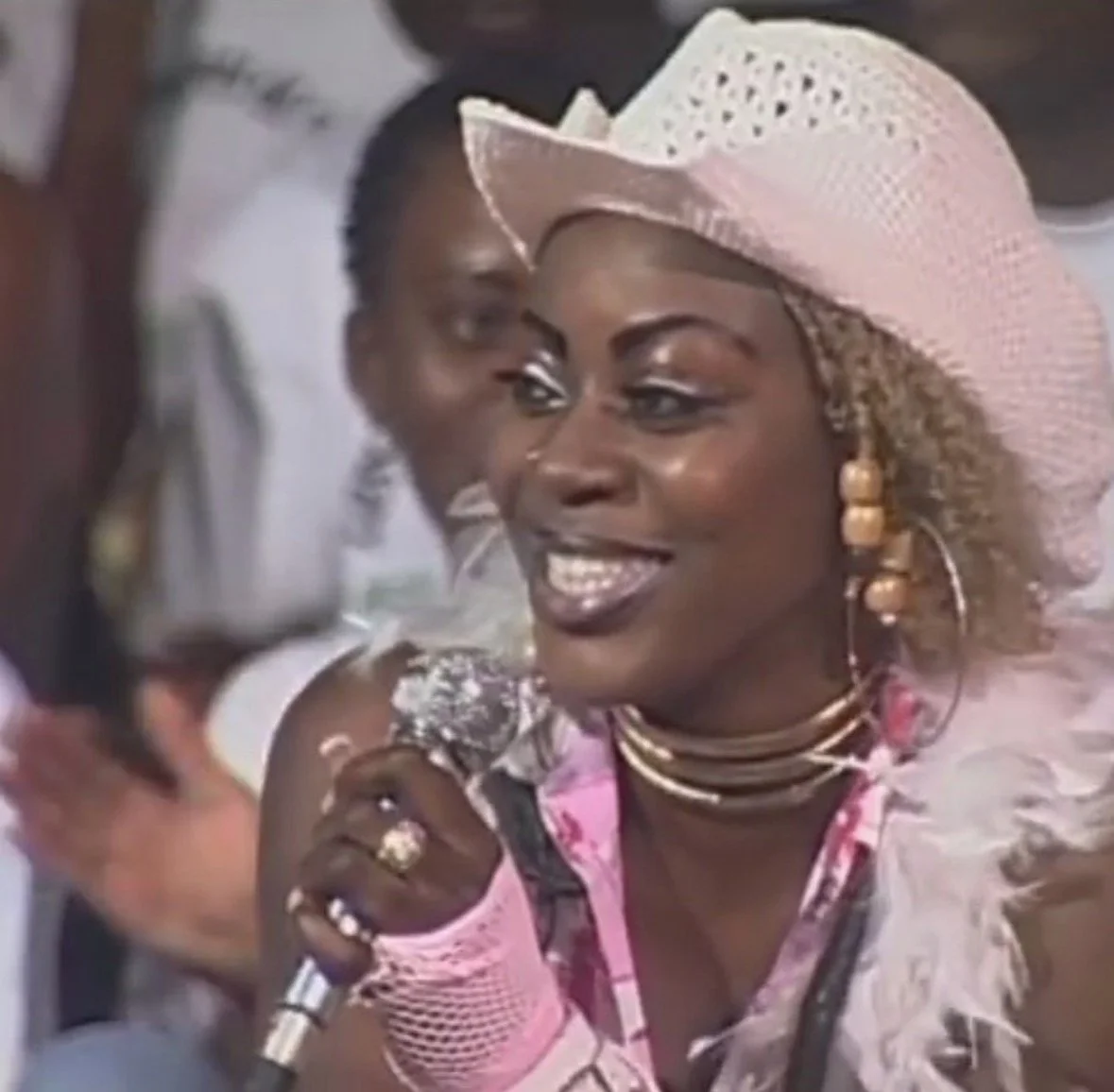
Courtesy of Archives Ivoire.
There are projects you recognise before you fully understand them. I had been following Archives Ivoire for a while — an Instagram account showcasing Ivorian feminine beauty with a precision I hadn't seen anywhere else. No surface nostalgia. No folklore. Sourced, contextualised images, placed with care. A gaze that knew exactly what it was looking for.
I'm Ivorian. I work on African and diasporic fashion memory and narratives: what people wear, why they wear it, what it says about who they are and where they come from. I formalised this work into a project I call ALAMODECHEZNOUS, which acts as an observatory and research bureau. The question driving it from the start has always been the same: what do we lose when we don't archive?
That is exactly the question Archives Ivoire has been asking since 2020, from Abidjan, from the archives of Ivorian television and the press, from family albums and forgotten series. Six years this year: six years building a body of work that no one else was building.
It was Stéphanie, founder of NDAANE, who asked me to conduct this interview. A four-handed conversation: her platform, my researcher's perspective, reaching for what previous interviews hadn't touched yet: the sociology of clothing as political language, the method behind the image, the inside story of a creative project built from Côte d'Ivoire and oriented towards the world.
Across from me: Marie-Hélène Tusiama Banimbadio, founder of Archives Ivoire, and Tiphaine Tano, who has been carrying the project externally since they united their forces. Two curators. One corpus. And the shared conviction that documenting is already resisting.
Paris — Abidjan, 8 May 2026
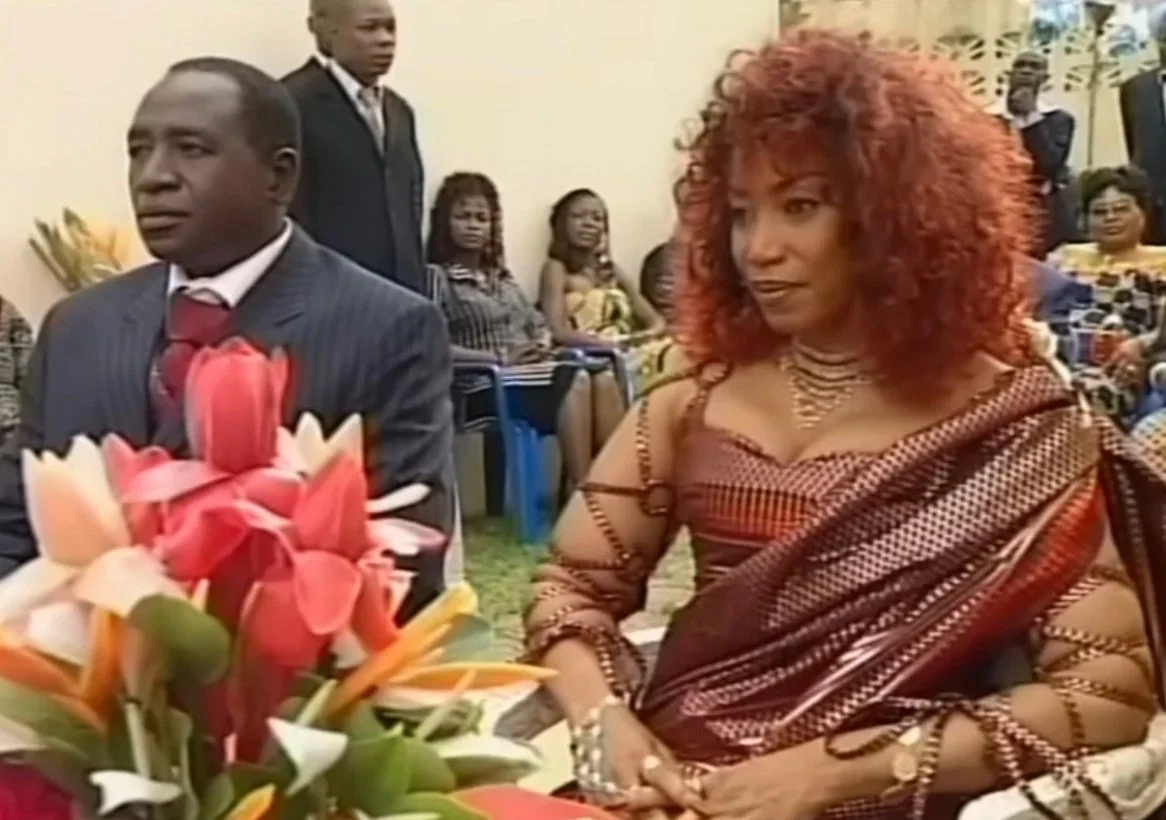
Courtesy of Archives Ivoire. Featuring Ivorian actress, director and producer Akissi Delta.
What we lose when we don't archive
Eniola: What strikes me about what you do with Archives Ivoire is that you don't simply share images. You organise them. You decide what is worth seeing, and how. It's a curator's eye rather than a collector. Marie-Hélène, when you look at the body of work you've built today, what surprises you? What did you not see coming when you started?
Marie-Hélène: I started from a simple observation: Ivorian women weren't represented enough. I grew up surrounded by these women. Leaving for France at ten years old was a brutal break. No more women who looked like me in the adverts, no more little Black girls in conversations about beauty. Archives Ivoire was born from that break.
At the beginning, my focus was purely on clothing. I wanted to look back at different styles of maxi (ed. note: a pagne ensemble consisting of a skirt and matching top, to which an additional length of pagne can be added depending on the occasion), to show that the maxi can be sexy, it can be traditional, it can be taken apart and recombined differently. And I couldn't find anything written about that evolution: how we get from puffed sleeves to something more hybrid, more assured, like what Akissi Delta (actress, director and producer of the iconic Ivorian series Ma Famille) was wearing, which became something unapologetically sexy.
Then I expanded my gaze. I wanted to reclaim the way Ivorian women talk about themselves, their beauty, their aesthetic. Archives Ivoire became a kind of self-confidence journal seen through an Ivorian lens. That's what matters most to me. And what still fascinates me is that I've held that line since the beginning, even as I've opened it slightly by moving between music and written press.
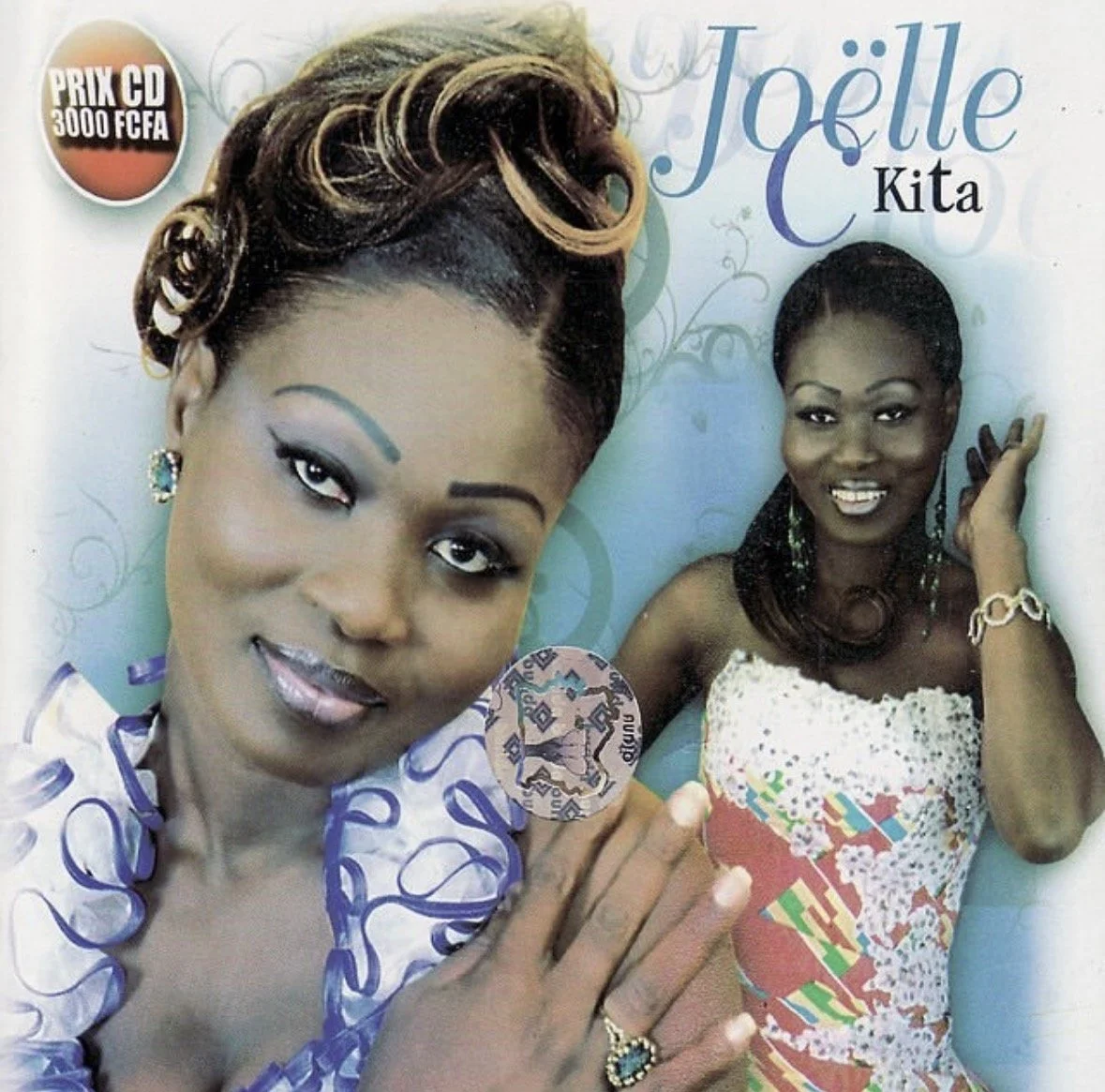
Courtesy of Archives Ivoire.
Eniola: Archives Ivoire is described as an "inventory of Ivorian feminine beauty." Behind memory projects like this, there is often a guiding figure: a mother, an aunt, a grandmother. What place did the visual heritage passed on by the women in your family occupy in how the project came to be?
Marie-Hélène: In my case, it's my mother and my grandmother, above all.
My mother was the first person I told about Archives Ivoire. She backed me immediately, and it's because of her that the project carries this intergenerational layer. Her references and mine both live in it. At the start it was a two-gaze process: she guided me, nudged me — "you should look at that series from the eighties, draw some comparisons with today." I almost had her sign off on every post. Even though I've been entirely independent since then, that approach never left the project's DNA.
My grandmother was the one who first put Ma Famille in front of me. She's a reference for me, in life and in the way she dresses. Growing up in Côte d'Ivoire, I noticed how maxi styles travel: the ones Akissi Delta wore in the series would show up on other women in town. I grew up in a very small town, Agboville, and my grandmother's styles moved through the community the same way Delta's did. That circulation has always been there, and with it all of these questions around gatekeeping, particularly around the tailor — conversations that matter, and that are not nearly discussed enough. Those two lineages are where I try to begin.
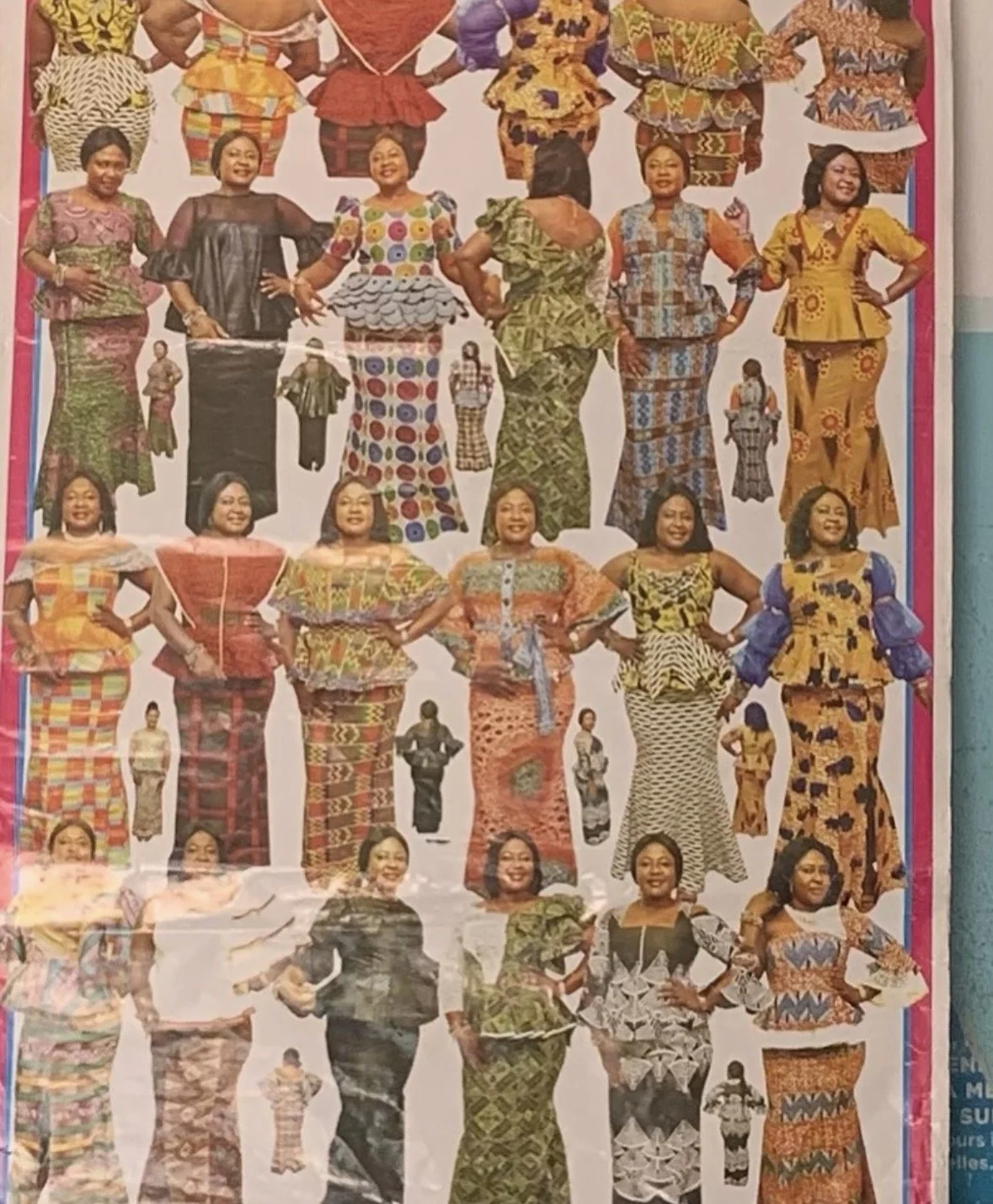
Courtesy of Archives Ivoire.
Eniola: When did the project stop being a personal passion and become this mission of visual education?
Marie-Hélène: I honestly couldn't name a specific moment. It happened in a very organic way. The two things have always existed side by side, from the start. When I was little and watching my grandmother, I would think: "when I grow up, I'm going to have a maxi made for me, I'm going to go to work like that." It was already written within me.
Then, like so many people, 2020 became a moment of reckoning. I asked myself what genuinely made me feel alive, what I was drawn to, and I came back to that dream. The moment I created the account, I thought: "I'm going to show the whole world that the little girl I was had every reason to look at her grandmother the way she did." That's what drives me, and it's ultimately what people find when they land on the account.
I also needed this mission, this dream, to be grounded in Côte d'Ivoire. Building Archives Ivoire from France in the beginning only sharpened my desire to move back to Abidjan. I wanted to bring more meaning with my work. Today the project has outgrown me a little, in the best possible way.
“ I wanted to reclaim the way Ivorian women talk about themselves, their beauty, their aesthetic. Archives Ivoire became a kind of self-confidence journal seen through an Ivorian lens. That’s what matters most to me.”
What clothing says about us
Eniola: With ALMDCN, I've come to see that clothing is rarely neutral: it positions, it makes claims, it locates. Looking through your archives, particularly those from the period of the Ivorian Miracle or the Y2K shift, how do you read the evolution of Ivorian "posture"? What was a twenty-five-year-old woman in Abidjan in 1975 or 2002 saying through her clothes that a twenty-five-year-old today wouldn't say, or would say differently?
Marie-Hélène: In the seventies and eighties, what came first was the idea of social class and the image you projected from it. The fabric mattered immensely: where it came from, what it meant. The higher the social class, the more Western the way of dressing gets. Women were making frequent trips to Europe during that period, and from those trips came trends that took Ivorian heritage and shifted it, making it more Western. Clothing became a class marker. In Abidjan especially, with its posh and popular neighbourhoods, how you dress lets you move between them, signaling where you belong or to stake a claim somewhere else. But whether you came from money or not, elegance was everywhere.
That showed up in very precise cuts. Short outfits were for young women and the city in the daytime. Evening called for longer silhouettes. There was a clear language around how you went into town, how you went to work, how you showed up for occasions. And nobody really pushed the limits.
The shift came much later, really around the political crisis of the early 2000s. I remember one interview, from the 2010s, with a woman who said that after the crisis, something broke sharply in the way people dressed. Nobody wanted to fit in anymore. People were trying to carve out their own freedom in how they moved through the world.
Today the distinction between work, the city and other occasions is still there, but the maxi has been somewhat lost along the way. We've drifted from our mothers' inheritance in how we dress for work, though I'm noticing that something is pulling people back to it right now.
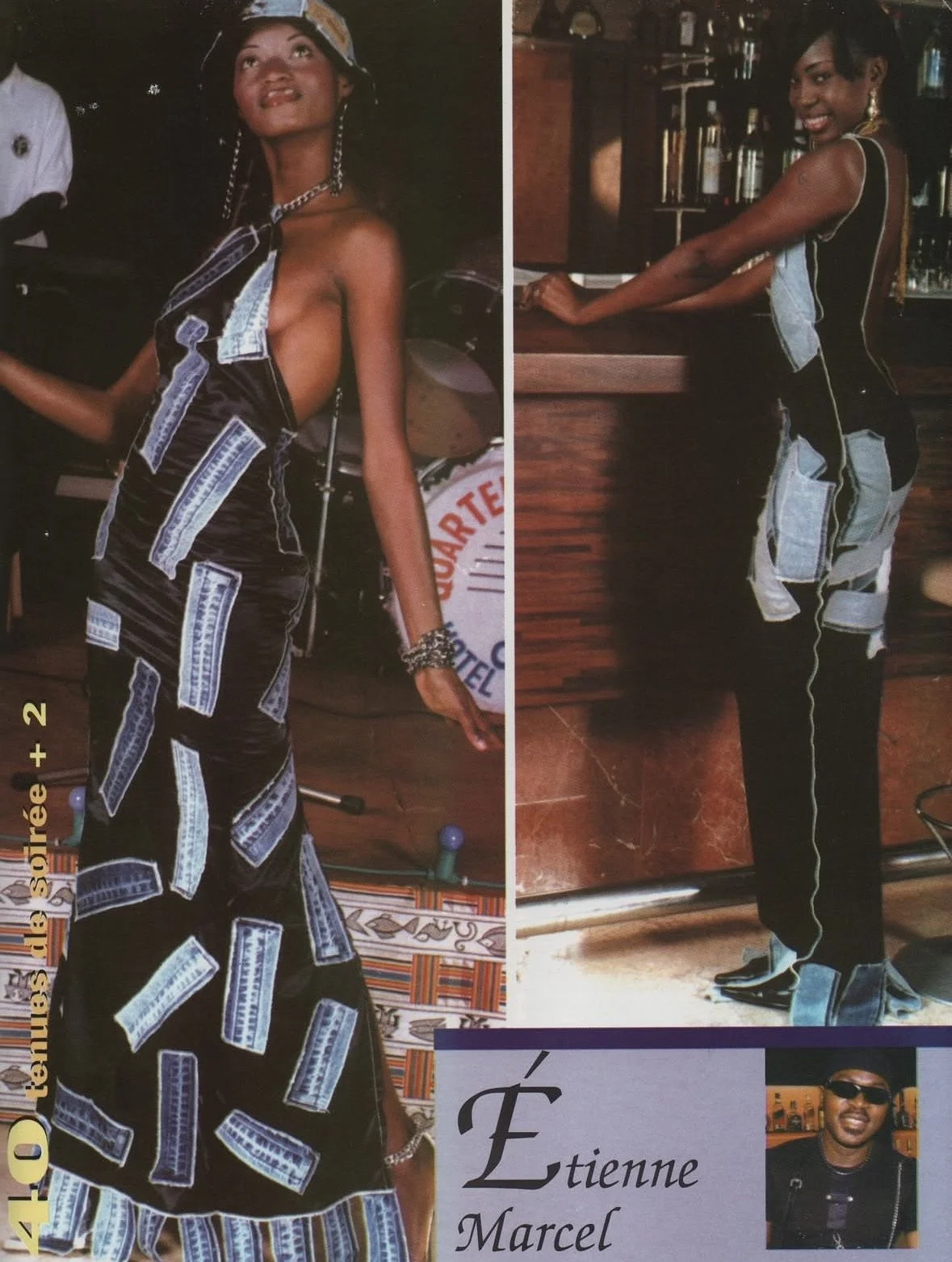
Courtesy of Archives Ivoire.
Eniola: In the Ivorian aesthetic, there are unwritten codes: the walk, the way you hold your head, the choice of colours. How do you archive something that intangible when it's precisely what defines Ivorian elegance?
Marie-Hélène: It's almost strange, but I carry most of it in my head. I archive by collections. There'll be a stretch where I'm only gathering images of women in headscarves; then a stretch where I'm looking at nothing but skirt shapes. Those distinctions live in my memory. I'm pushing myself more and more to write them down, but at its core this is visual memory work.
Eniola: And beyond visual, where else do you look? Do you go into written sources?
Marie-Hélène: To go further, I've been making a point of collecting writings by Ivorian women about their own practices. Over the past few months I've been gathering Ivorian women's magazines, because from the nineties through to around 2015 there was a rich women's press here, with journalists who did real, serious archival work on Ivorian fashion and its movements. That collection is feeding my practice more and more. I also draw on films, and on the early 2000s online press: sites like Abidjan.net, IvoirTV and Actu225, which function as contemporary archives in their own right.
Eniola: Do you meet these women too, the ones who wrote, the ones still active?
Marie-Hélène: Yes, more and more. It's something Tiphaine and I want to make much more central this year. One of my most recent encounters was with Miss Sery Dorcas (Miss Côte d'Ivoire 2005), just after I'd posted a photo of her from 2007. These are still informal conversations, where I ask very specific questions: "I noticed that around a certain point you did this" — but it's work that still needs to be formalised.
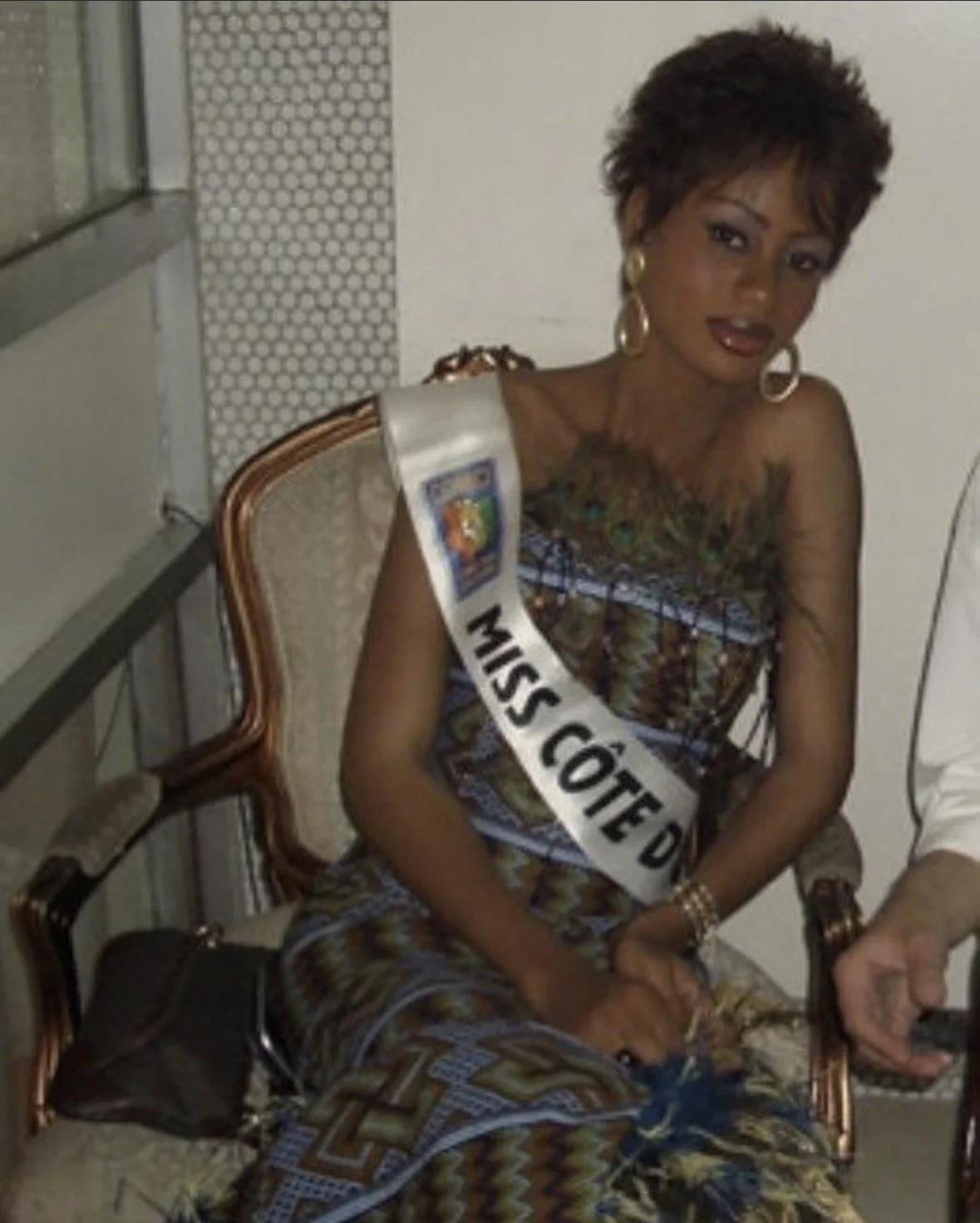
Courtesy of Archives Ivoire.
What archives cannot conceal
Eniola: You mentioned the political crisis of the early 2000s and the way it changed how people dressed, how they carried themselves. As a curator, you're archiving those moments too. How do you hold the tension between the glamour of Ivorian splendour and the harder social realities lying inside those same archives?
Marie-Hélène: Everyone who was there during that period talked about it very openly. Once you start collecting, whether it’s interviews or anything else, this subject comes back around consistently, because it was such a defining time that nobody could avoid it.
That period is also where coupé-décalé was born. I'm particularly drawn to the feminine aesthetic within that movement. It's a part of the story I feel hasn't been given its due. The entire era was shaped by what was done to women's bodies: the physical, verbal and moral violence, alongside the ways women reclaimed those narratives, rewrote them, while carving out their own space apart from the male narratives, which were extreme during that time. In my work, both realities have to meet. I keep coming back to Claire Bahi, singer and central figure of the movement, nicknamed "La Première Dame du Coupé-Décalé." She spoke extensively about the beauty standards of the era, the way the scene placed value on certain types of female bodies at the expense of others, to serve the male gaze. What's compelling about her approach is that she doesn't answer that with a counter male discourse. She addresses it with a feminine, assured voice directed at women, by a woman: "here is what this created, here is what I, today, choose to celebrate, and why." You can't archive the visual aesthetic without speaking to the realities beneath it. It simply isn't possible.
“To go further, I’ve been making a point of collecting writings by Ivorian women about their own practices. Over the past few months I’ve been gathering Ivorian women’s magazines, because from the nineties through to around 2015 there was a rich women’s press here, with journalists who did real, serious archival work on Ivorian fashion and its movements.”
Growing without compromising yourself
Eniola: Tiphaine, you came on board to carry the project further. How is your role taking shape in bridging Marie-Hélène's near-archaeological research and the openings that are emerging for Archives Ivoire right now?
Tiphaine: When Marie and I met five years ago, I was following the project the same way everyone else was, drawn in by the nostalgia and by this desire to reconnect with a culture that belongs to us as Ivorians.
Today I bring an outsider’s eye to all of this archival work: how do you bridge the research Marie is doing and the creativity that lives inside the project? How do you create archives that speak to now, not just preserve what came before? My role is also about keeping the project moving: creating conversations, building bridges with industries that resonate with what we do, fashion, print, and other ways of telling the stories of the archive. As African women, we know what it means to search for images that no longer exist, images we would have wanted to find. The goal is to build something that speaks to the generation here now and the one coming. Through paper archives, cultural projects, textile: making all of it physical and lasting.
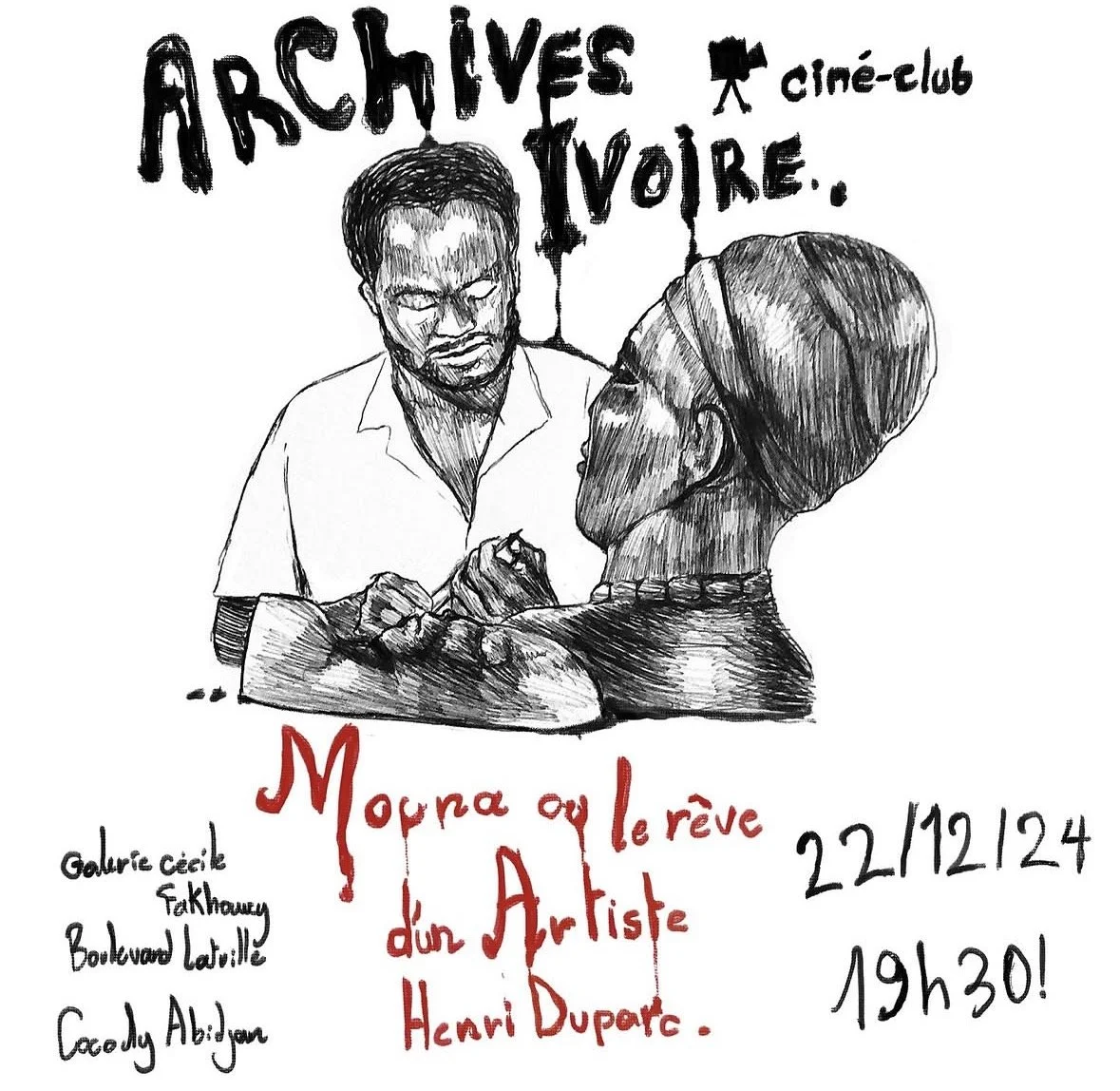
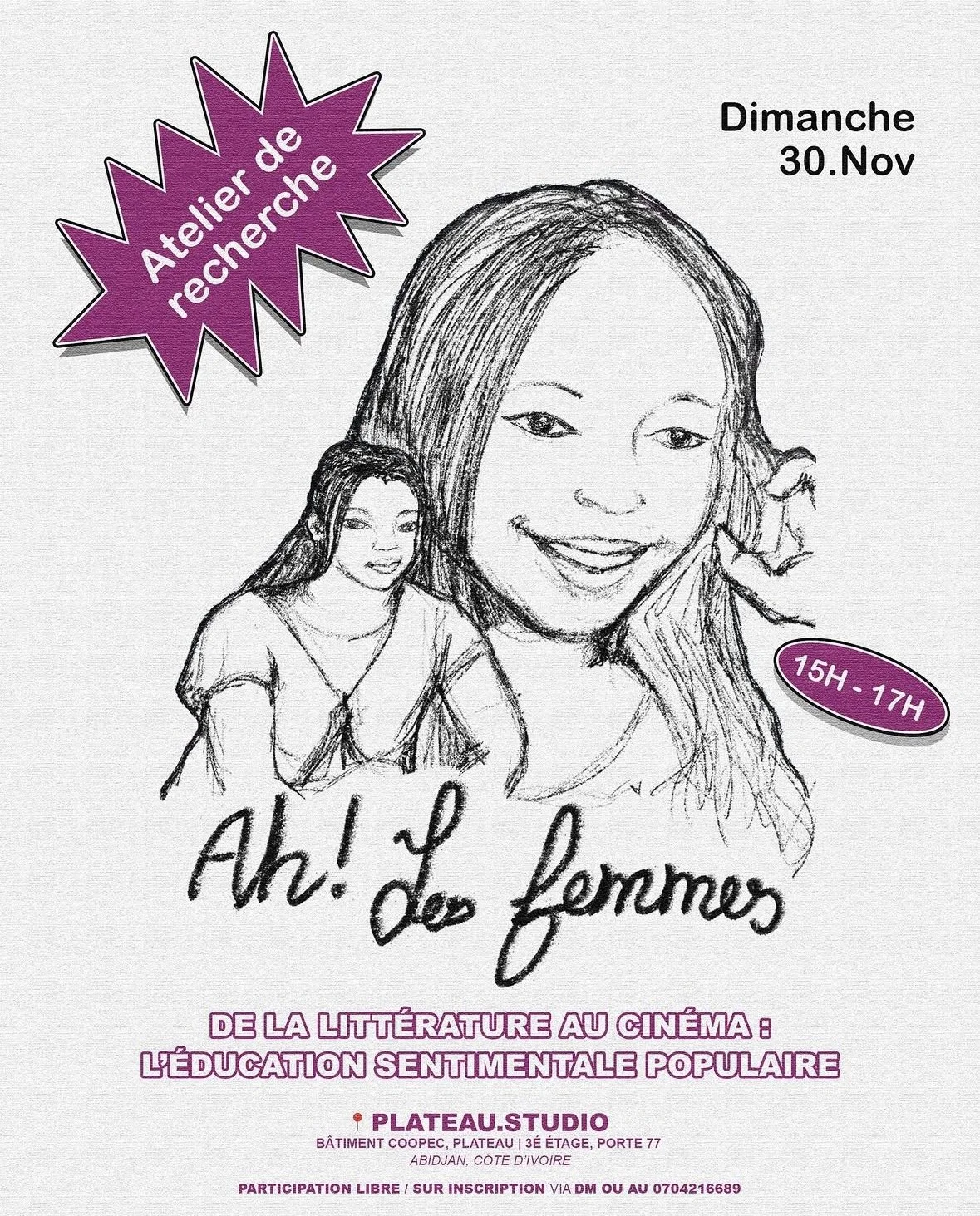
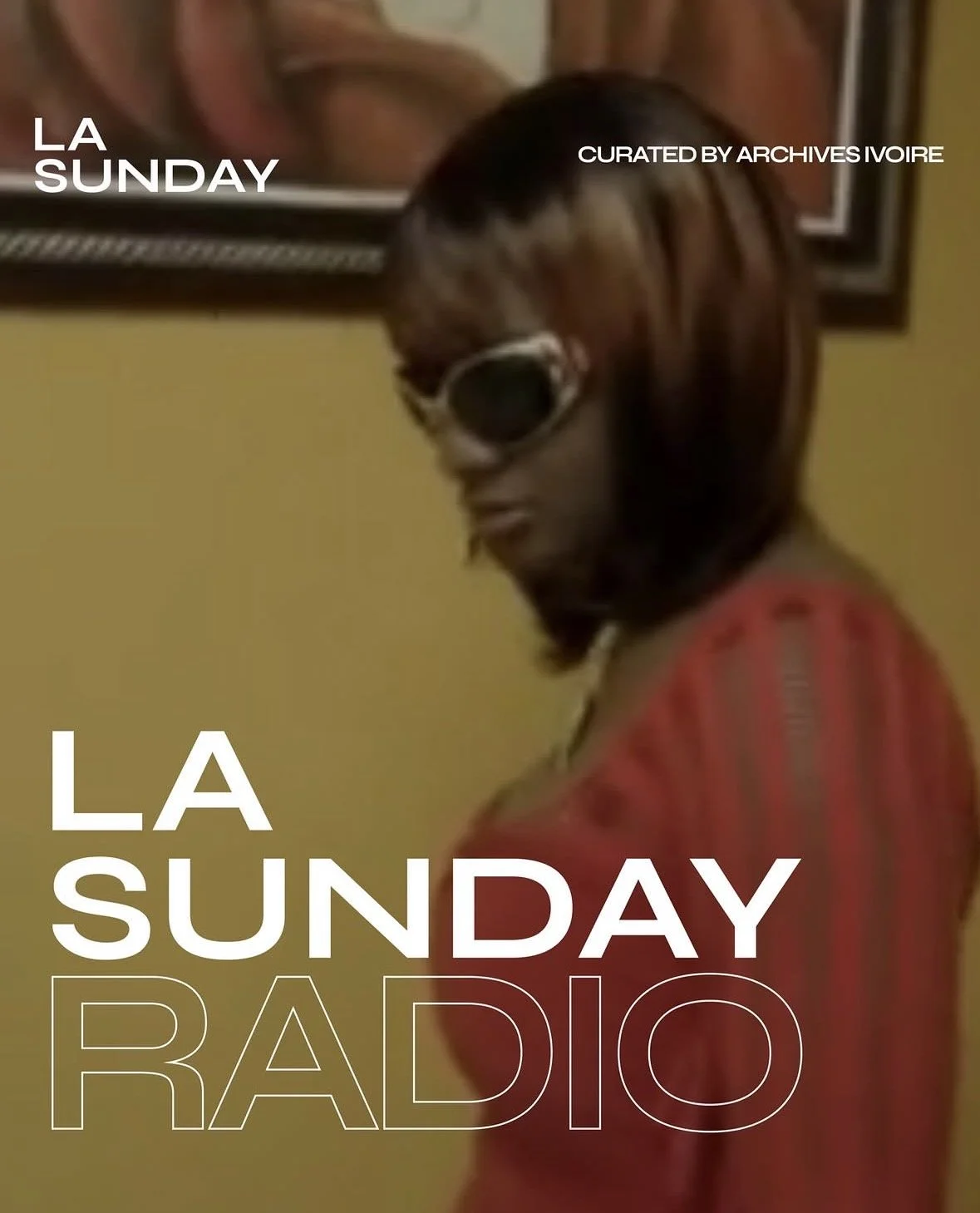
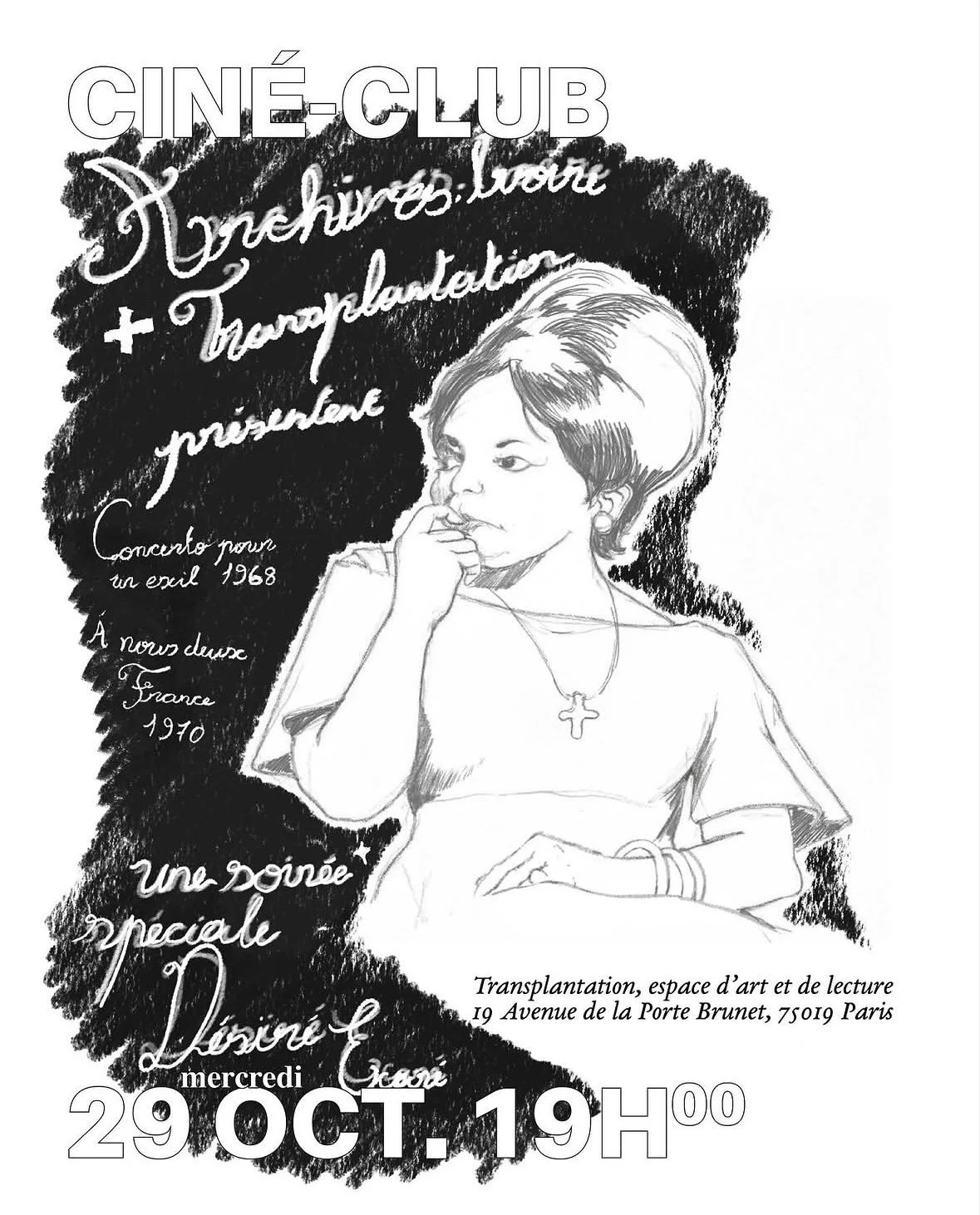
Examples of Archives Ivoire’s pluridisciplinary progamming
Eniola: More practically, you come from a marketing background working with major brands. Were there habits from that world you had to unlearn to work on Archives Ivoire?
Tiphaine: In the beauty industry, speed is constant. You identify a trend, a behaviour, an opening, and the instinct is to move on it immediately. I've had to undo that reflex. Some things take time to build, to find their meaning. They need to be left alone to develop, and you have to give yourself permission to come back to them, to sit with them. That's still a learning in progress, and it's one of the things this project teaches me about myself.
Eniola: That tension you're describing in your professional life, I see it in the project itself. Instagram, which is your main platform, runs on a rhythm that is nothing like the rhythm of an archive. An archive is slow work: it's cross-referenced, verified, given time to settle. Instagram asks for the opposite. How do you live with that friction day to day? And how do you make sure a moment of virality doesn't end up diluting the project?
Tiphaine: On my end, everything has to hold up over time: does this make sense? Does it distort the work we're building? Marie is instinctive, and so am I. Working on Archives Ivoire taught me to trust my instincts again. The tension is always there, but it's necessary. What I'm not after is something that performs well for a week. The question I keep asking is: will this still matter in ten years? That's a completely different kind of discernment.
Marie-Hélène: When I started, there was a very particular relationship to virality, but it was a virality specific to Côte d'Ivoire. There were stretches when the account circulated widely but stayed within Ivorian circles, spaces where the codes and references were understood. Occasionally I'll let the archives respond to something happening in Côte d'Ivoire in real time: the Miss Côte d'Ivoire election, or the country's AFCON run. Those are the only moments where I deliberately try to make the platform part of a larger conversation. Following trends will never be part of what Archives Ivoire is.
What I want is to stay true to the original idea: building an inventory. I keep feeding it, and I always expect people to find it that way, as something to explore. The content on Archives Ivoire isn't content you consume in the moment. In the early days, people called it "our little media library," "our little audiovisual museum." I loved that. Because that's exactly the spirit of it: that someone gets lost on the account, spends hours on it. I feel it in the messages I receive. That's what we want to protect.
“Today I bring an outsider’s eye to all of this archival work: how do you bridge the research Marie is doing and the creativity that lives inside the project? How do you create archives that speak to now, not just preserve what came before? My role is also about keeping the project moving: building conversations, creating bridges with industries that resonate with what we do, fashion, print, and other ways of telling the stories of the archive. ”
Reference, Not Relic
Eniola: Reading what's been written about you across different publications, certain words kept coming up: cultural reappropriation, retro fever, patriotic responsibility. How do you make sure the work serves as a live tool for today's creators rather than a catalogue of nostalgia?
Marie-Hélène: I had a conversation recently where I was explaining exactly this: I'm not a nostalgic person at all, even though that label gets attached to me immediately. It's something else entirely. I grew up with these references, and I simply needed to gather them in one place I could keep returning to.
A friend who works in fashion for a major Italian brand told me: "You're in moodboards all the time. You have no idea." Large international outlets follow the account from time to time. The Instagram account is already a reference point. That's the direction we want to take further: a genuine tool for creators. Recently I temporarily set up my magazine collection in a physical space, and a designer came by and spent the whole visit going through everything, asking: "at what point will I actually be able to come and look through all of this in person?" For now it's Instagram, which is free and the most accessible place to start. But I hear that question regularly. One thing is for sure, the question of patriotic duty matters to me deeply, and with it, the desire to one day build a physical space, a media library in Côte d'Ivoire, one that would also carry this Ivorian pop culture out into the world.
Tiphaine: That's exactly why we're trying to build Archives Ivoire as a creative studio, not just an archive to draw from. We collaborated on a photo book story on Instagram with Amiina TV: our first real steps into creative direction, which has honestly been inside the project from the beginning. The idea is to make it formal. If we work with brands in the future, we don't want to show up only as an archive supplier. We want to bring a creative perspective, a way of reading the world that is ours. What's real between Marie and me is that we have overlapping references, Ivorian and global, that we never consciously built together. Everything converges naturally. That's what we want the collaborations ahead to reflect.
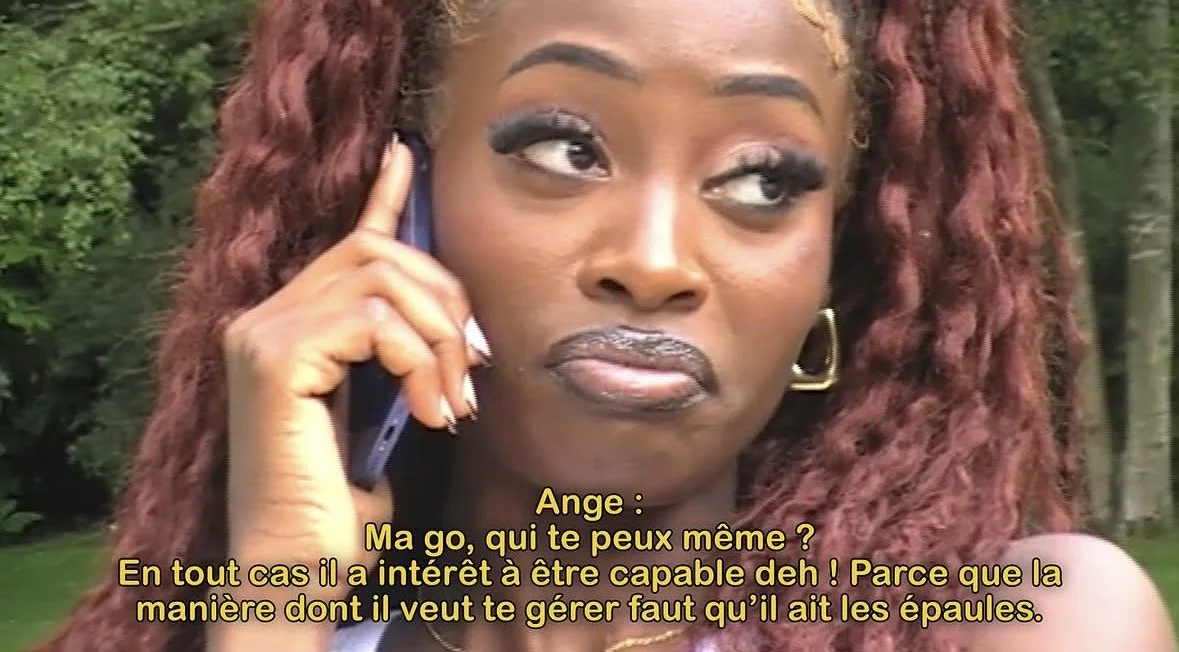
Excerpt of photo book collaboration “International goumin” with Amiina TV.
Eniola: How do you choose your partners at Archives Ivoire? How do you keep the memory you're building from becoming a marketing product?
Tiphaine: The same way any project stays honest: you go back to the source. When I come with a proposal, we always bring it back to the archives to test whether it holds. I go through the account looking for the post or posts that make the connection click. As long as we stay true to why we're doing this, the right partners will find us. The archives have the answers we're looking for. Whether it's brands or individual creatives, the connections form naturally when we retain that red thread throughout.
Marie-Hélène: Tiphaine said it well. We both have a similar relationship to the world: living between Abidjan and Paris, carrying a global sensibility while being deeply rooted in our own culture. That's the lens I want to build Archives Ivoire within. With people who share some of that anchoring, who instinctively understand the questions we're asking and can see value in the same places we do. That alignment matters more than anything else.
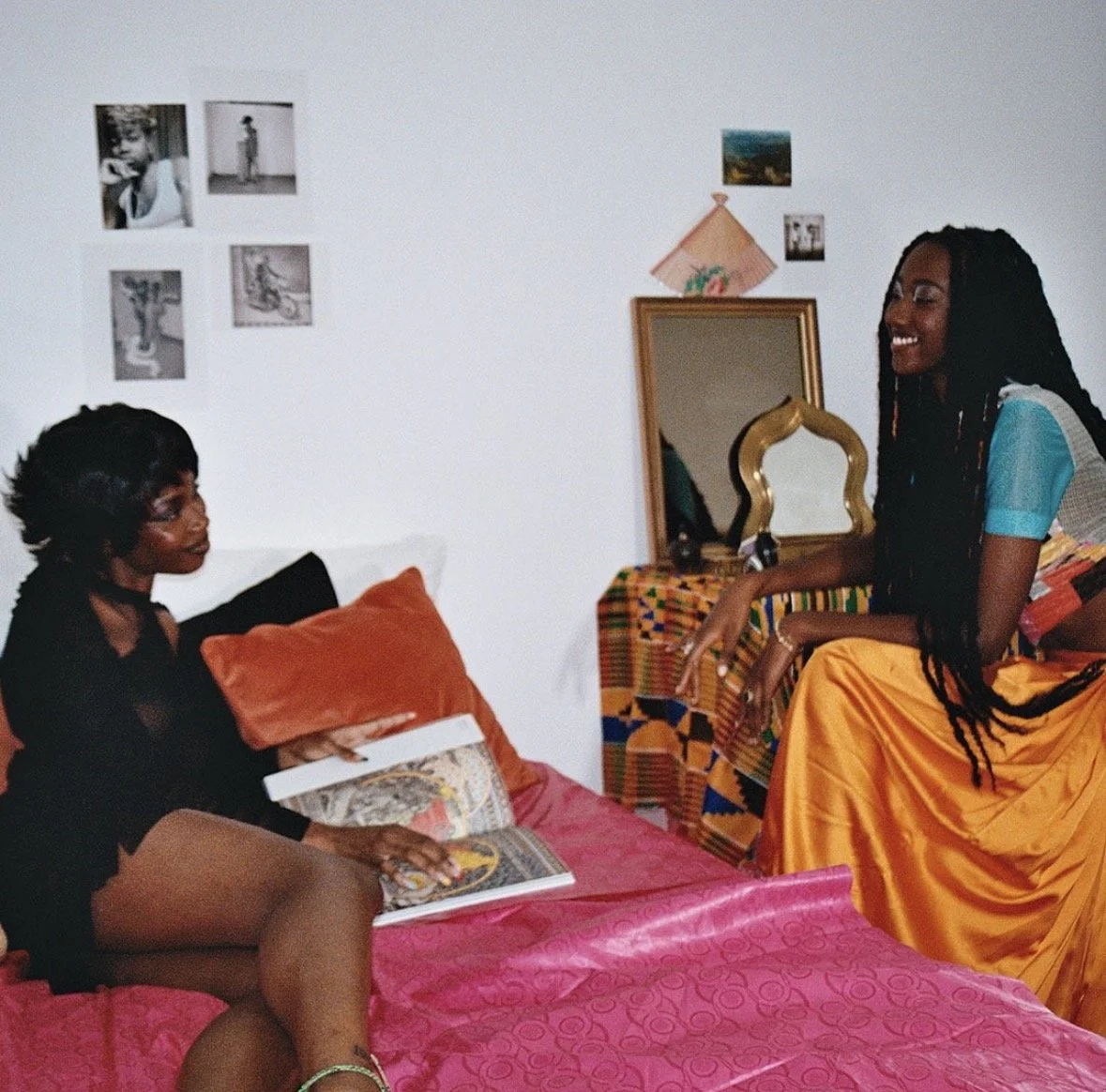
Excerpt of visual essay “Fanta, amour et trahison” (Fanta, love and betrayal), in collaboration with wä dé.
Eniola: We've spent a lot of time talking about what you're unearthing, what you're documenting. I want to end by turning the question around: in ten years, what would you want Archives Ivoire to have given, not to institutions, not to creators, but to a young woman coming across the project for the first time?
Marie-Hélène: I'd want the work to pass on how important it is to look inward before looking outward. For that young woman to be able to see that Ivorian women, African women, are just as beautiful, just as significant as anyone else in the world. Looking at Archives Ivoire, I want her to feel that she's looking at a part of herself that will let her rise and go further than she thought she could.
Tiphaine: I'd want Archives Ivoire to mean that an Ivorian woman, whatever she does, creative or not, can be fully resourced and inspired from within. I lived in Asia, and it was striking to see how creatives there drew from their own archives, their own cultures, not just from a traditional angle but from a pop cultural one too. Starting with themselves gave them a kind of confidence you rarely see elsewhere. That's the vision I'd want Archives Ivoire to feed. When you scroll through the archives on the account, you see so many different expressions from one woman to the next: styles, faces, body types. You don't need to look anywhere beyond home to build your own sense of self.
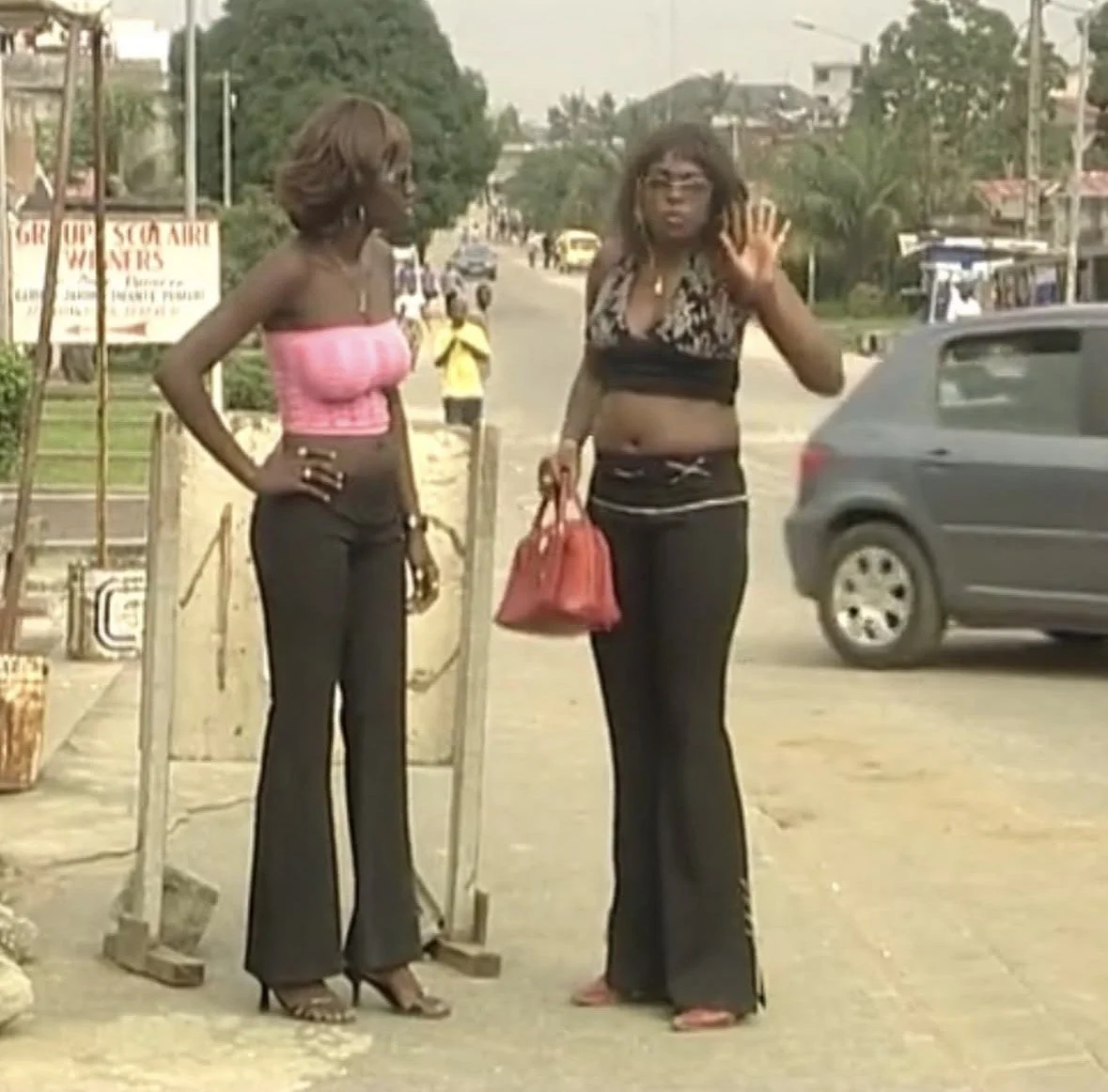
Courtesy of Archives Ivoire.
What this conversation confirmed for me is that a corpus is often built from a wound or a gap. Marie-Hélène started with a break: the absence of images that looked like her. Six years later, that gap has become an inventory. And that inventory is becoming an infrastructure.
Archives Ivoire is doing this from Abidjan. ALMDCN works from the same urgency, from other angles, from other territories. Documenting what is disappearing. Restoring what remains. With the conviction that these memories belong to those who lived them.
A larger question rises from this conversation, one that reaches beyond both projects: the necessity of the spaces we make for ourselves. Platforms, places of memory, conservation, diffusion, built from the inside by those who understand what we lose when we stop paying attention. That question isn't only about Côte d'Ivoire. It concerns the entire continent and its diaspora, and it demands we keep answering those questions together, with the same care.
Follow Archives Ivoire on Instagram: @archives.ivoire