
Inside FARE: Structuring a Sustainable Fashion Brand in Benin
A conversation with founder Peter Toni-Basengula
"We're really missing that space where communities can mix, where people can meet, collaborate, create together."
Peter Toni-Basengula isn't just building a sustainable fashion brand in Benin. He's trying to build the ecosystem around it. In a country where the government is investing heavily in cultural visibility but where creative infrastructure is still taking shape, FARE embodies both the promise and the challenges of structuring a brand in Benin on your own terms.
Courtesy of Peter Toni-Basengula.
An institutional push to promote arts and culture
The 7th edition of "Le Mois de la Mode" (Fashion Month) wrapped up on July 26th in Cotonou with the much-anticipated "La Nuit de la Mode" (Fashion Night) runway show. From Cotonou to Paris, the impact was immediate. Organised by Benin's Ministry of Tourism, Culture and the Arts through its Agency for the Development of Arts and Culture (ADAC), this edition aimed to be both powerful and impactful. "Fashion today is no longer just about the art of dressing. It's a universal language, a vehicle for influence, and a true reflection of our humanity." said Minister Jean-Michel Abimbola at the launch.
The strategy is working: from the World Expo in Osaka to American artist Ciara's widely publicised acquisition of Beninese citizenship, and a notable presence at New York Fashion Week, Benin is successfully positioning itself as an essential cultural crossroads.
From Accra to Paris, many creative industry experts who've spent years working in the sector would like to see such a vision materialise across every African nation. Debonair Afrik magazine founder Emmanuel Ekuban recently expressed this in a call to action to Ghanaian institutions, while Nelly Wandji, founder of Moonlook Africa, often identifies government support as a major challenge for developing creative talent across the continent.
An emerging brand whose commitment grows and asserts itself
Among the designers who showed that evening at the Sofitel Cotonou, Peter Toni-Basengula, founder of FARE, made an impression. "A brand with spirit," noted Jerry-Sinclair Aguénoukoun, the show's artistic director, in a debriefing with media outlet Cotonou Boy Show.
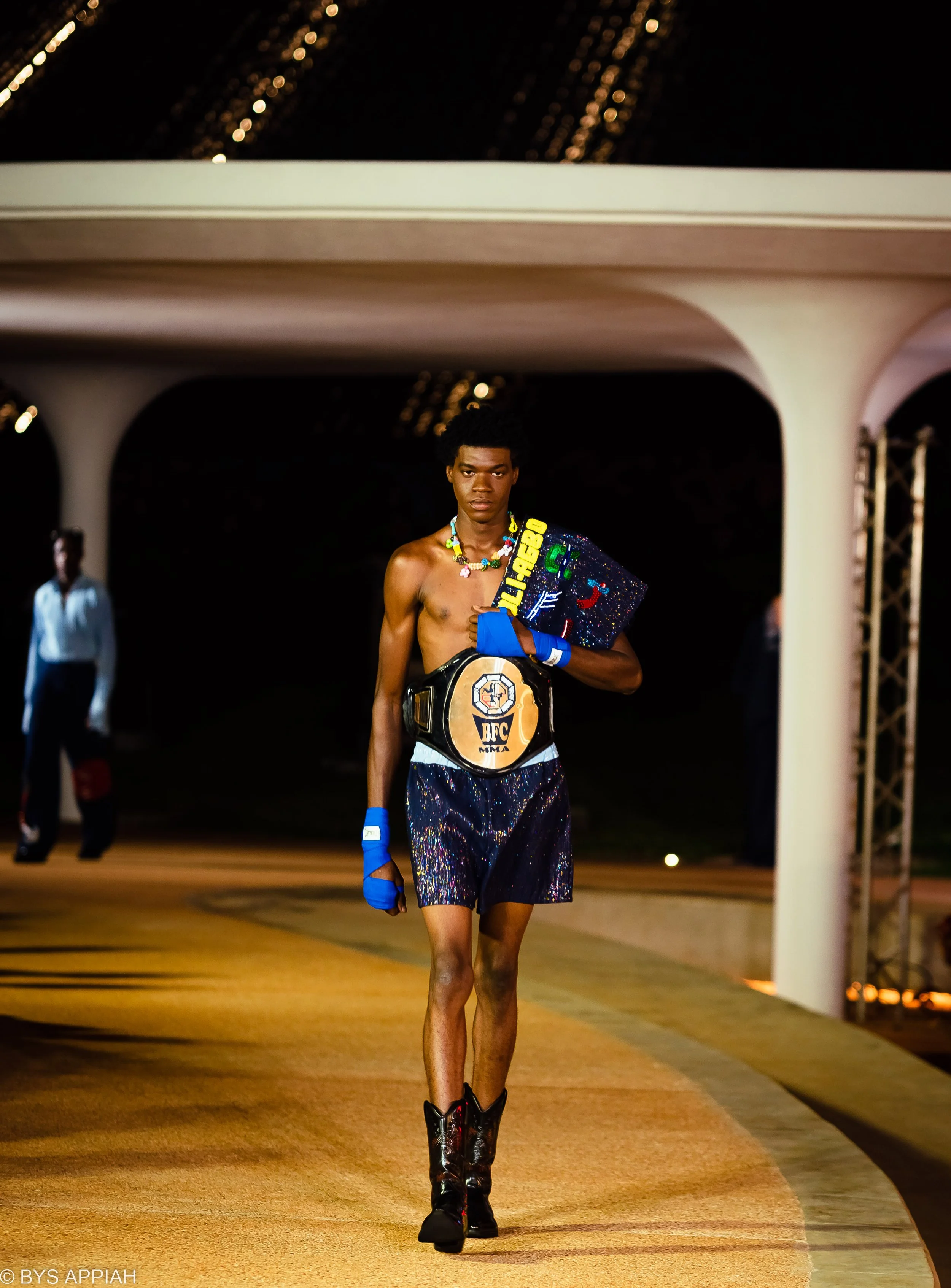
Launched in 2020 as an experimental project during his UX design studies at the Sèmè City innovation hub, FARE presented its collection as part of the FLY incubator (Fashion Led by Youth), born from a strategic partnership between Sèmè City and the Institut Français de la Mode.
We've been following FARE's journey since its first collections. On the occasion of our Taking Up Space pop-up dedicated to sustainable fashion, Peter reflects on the pivot from deadstock to craftmanship promotion, the impact of the FLY program, and what's still missing from Benin's creative scene.
Courtesy of Peter Toni-Basengula.
Three years of research and development
FARE has had many significant moments between 2024 and 2025, including your participation in the FLY incubation program. But your brand has been turning heads since 2020. How did those early years unfold?
Between 2020 and 2023, FARE was just a project I was developing alongside my studies. Those three years were really focused on R&D: our positioning, the product offering, understanding whether we were actually meeting a real need. We created test collections to meet our clientele, identify their needs, and make sure we could address them. Those three years allowed us to nurture the vision, define our values, and clarify what came next.
2024 accelerated everything. I became more present with the brand. We wanted to create clothes that actually center people, nature, and cultural memory—rooted in Benin but open to the world. We entered into more permanent distribution and participated in more events.
Beninese cultural heritage is now central to the brand. What motivated this choice?
I come from different cultures myself. Born in the Democratic Republic of Congo but raised with Beninese culture. The concept has always been to promote sustainable fashion while highlighting our own codes, inspired by my daily environment: someone in the street, the work of a contemporary artist, Beninese or not.
The cultural aspect isn't clichéd because my influences are multiple. We always add a special touch—an illustration, a message—that Beninese people recognise themselves in. We want to speak to them while having a global vision to reach a broader audience.
And the sustainability values?
There was a time when textiles held great value. Artisans were the guardians of their meanings. Then industrialisation created this rupture with craftsmanship, with the work of the hand. Today, many people consume without caring about origin or manufacturing conditions. FARE's message is about reconnecting clothing with what’s essential—valuing craftsmanship through simple pieces, inviting people to reconsider their consumption habits. A need to raise awareness and share.
“FARE’s message is about reconnecting clothes with what’s essential—valuing craftsmanship through simple pieces, inviting people to reconsider their consumption habits.”
From artisans to clients: rethinking production
So how does this play out in production?
We produce everything locally in limited quantities. No overstock. A collection is a collaboration with our artisans, our workshops, our distributors. I educate all these collaborators about our values so they understand our vision.
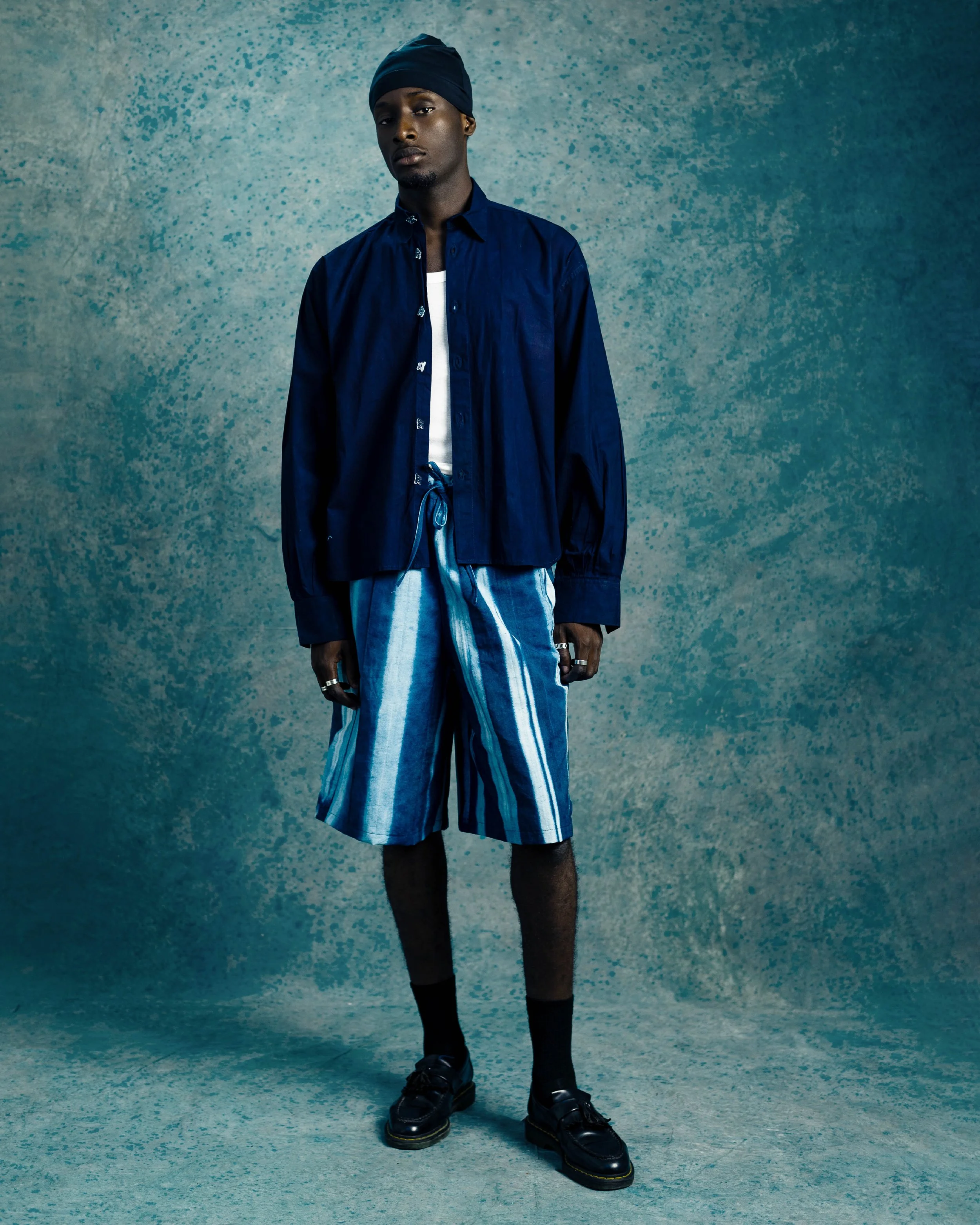
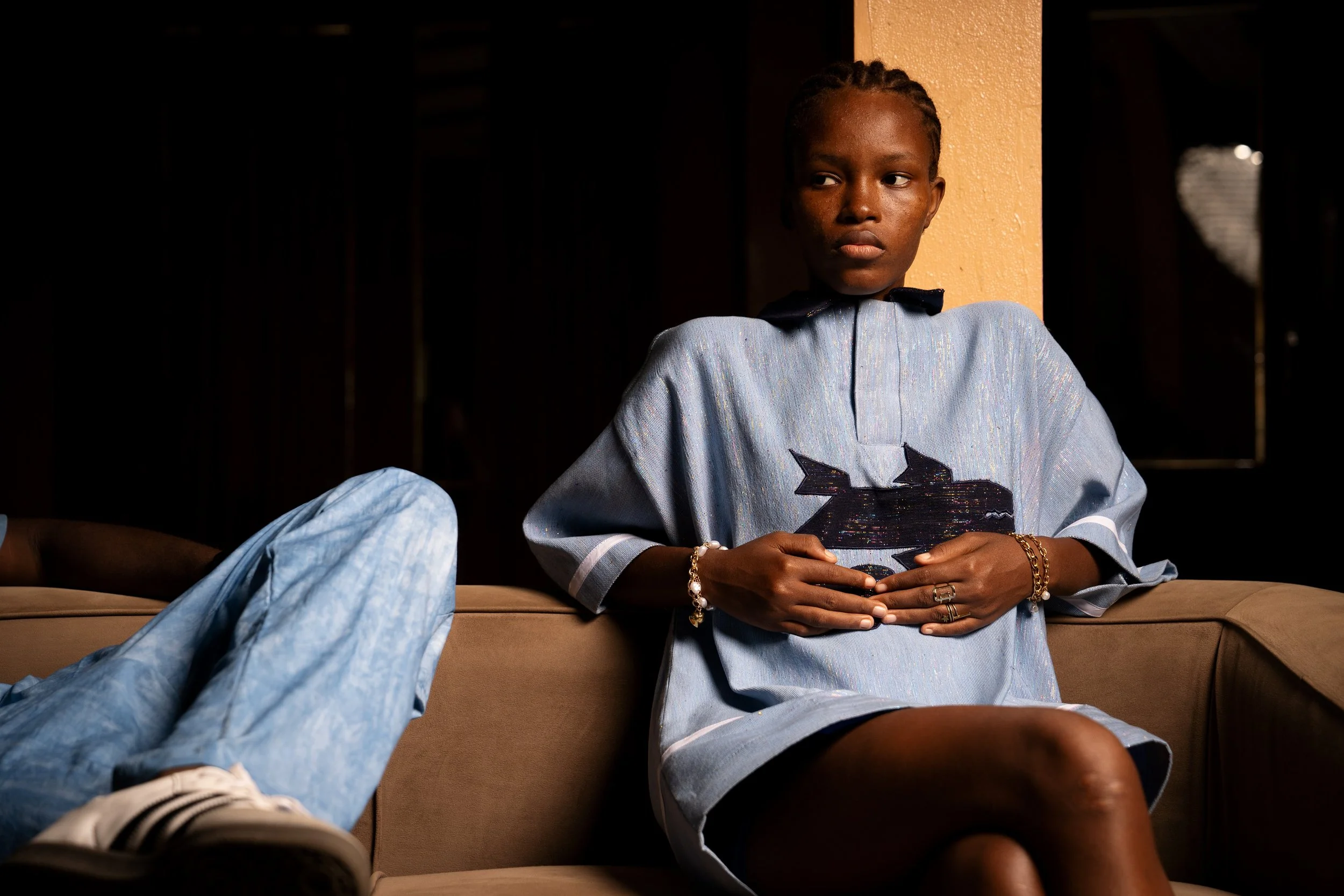
For me, workshops are spaces of renewal and knowledge-sharing. We collaborate with artisans in Cotonou for natural indigo dyeing and batik, with a women's cooperative in Natitingou producing woven organic cotton, and with the lineage of King Agonglo's weavers in Abomey. These choices celebrate artisanal expertise and bring this textile heritage forward into something contemporary.
This also brings a certain exclusivity to our clients. They know FARE pieces are unique and won't be available in large quantities for long. Buying becomes more than a transaction—it's a philosophy our clients connect with.
Courtesy of Peter Toni-Basengula.
When UX design meets fashion
You're both an art director and a UX designer. How do those roles work together in FARE?
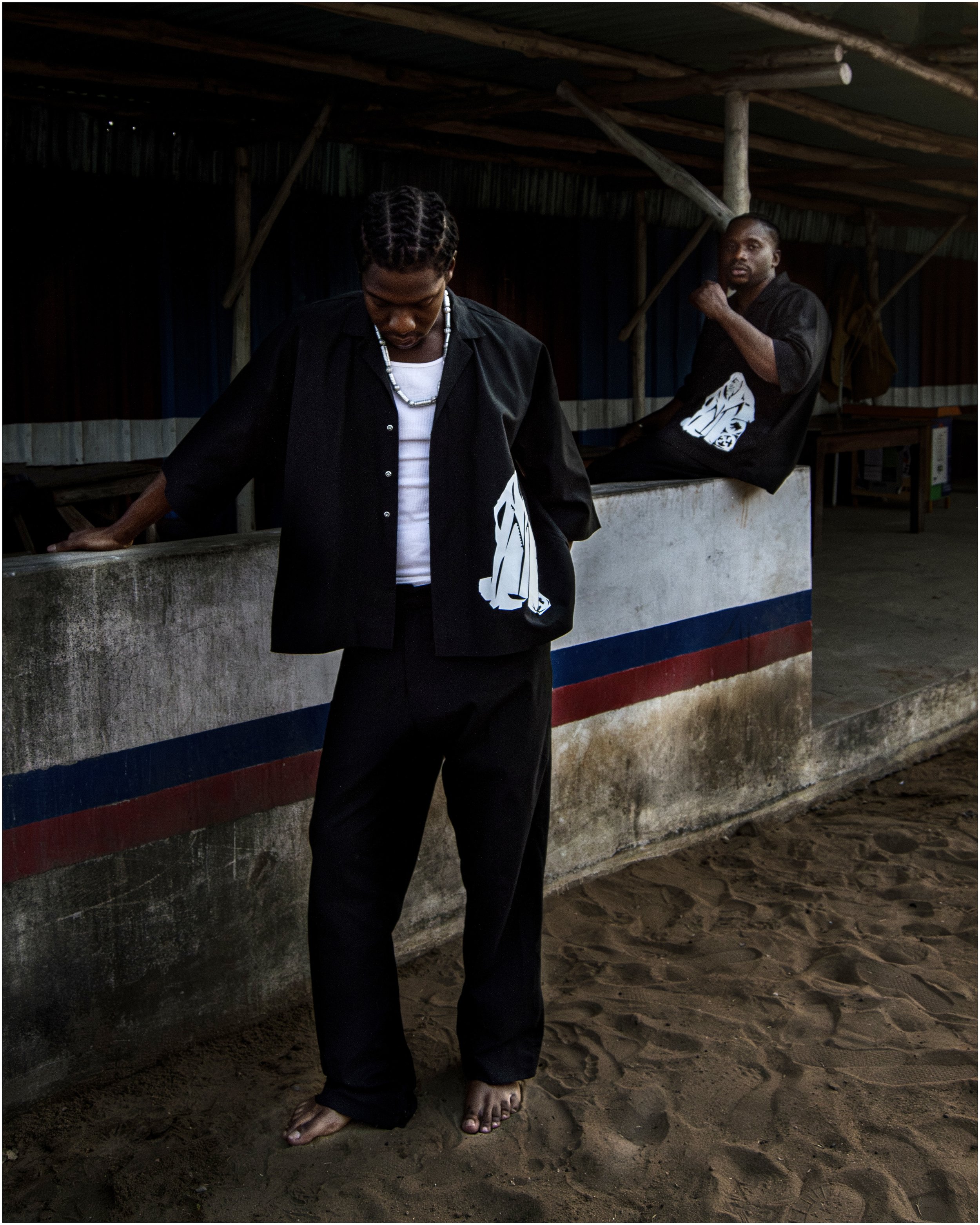
I still do art direction, but I'm more selective to optimise my time. For example, with friends, we're building a community of creatives in Benin. Recently, we also collaborated with Vodun Bar for their first anniversary—an exclusive capsule with two fabrics inspired by Vodun religion. A way to celebrate this important cultural address.
My whole approach with FARE comes from design thinking. First the research phase, then collections are approached as themes responding to a problem. This ensures we're meeting client needs. As needs evolve, we take feedback into account to adapt our products, we anticipate future needs and we grow with our clientele.
What's a specific example of that?
The experimentation started with the Vestiaire Original concept store where we did our first pop-ups. FARE had started with deadstock and secondhand. But client feedback revealed that certain materials weren't adapted to Benin's climate—too heavy—or that secondhand wasn't well perceived here. These remarks made me think: how do we stay sustainable with new materials? So we launched into our own prints and dyes based on local cotton production.
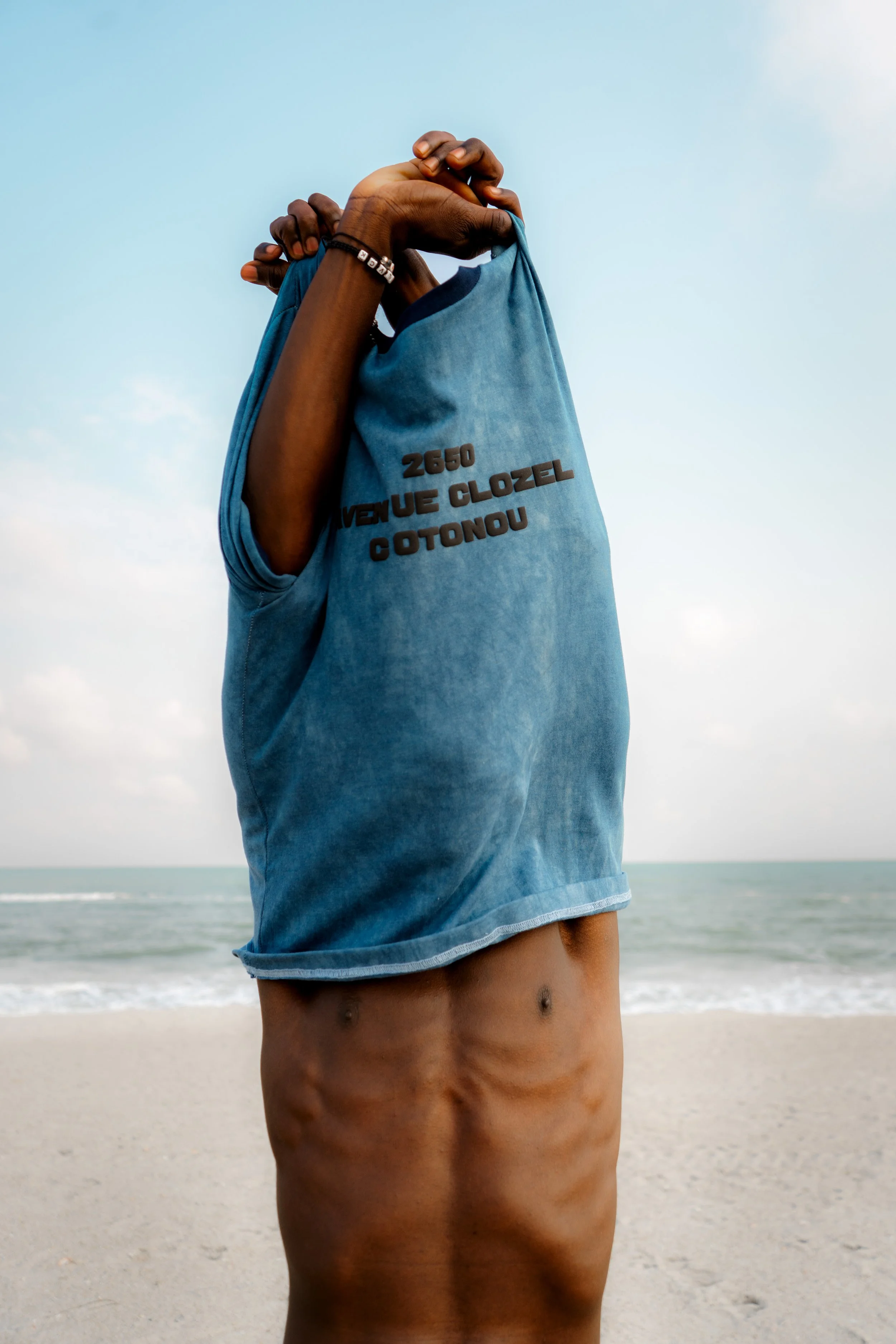
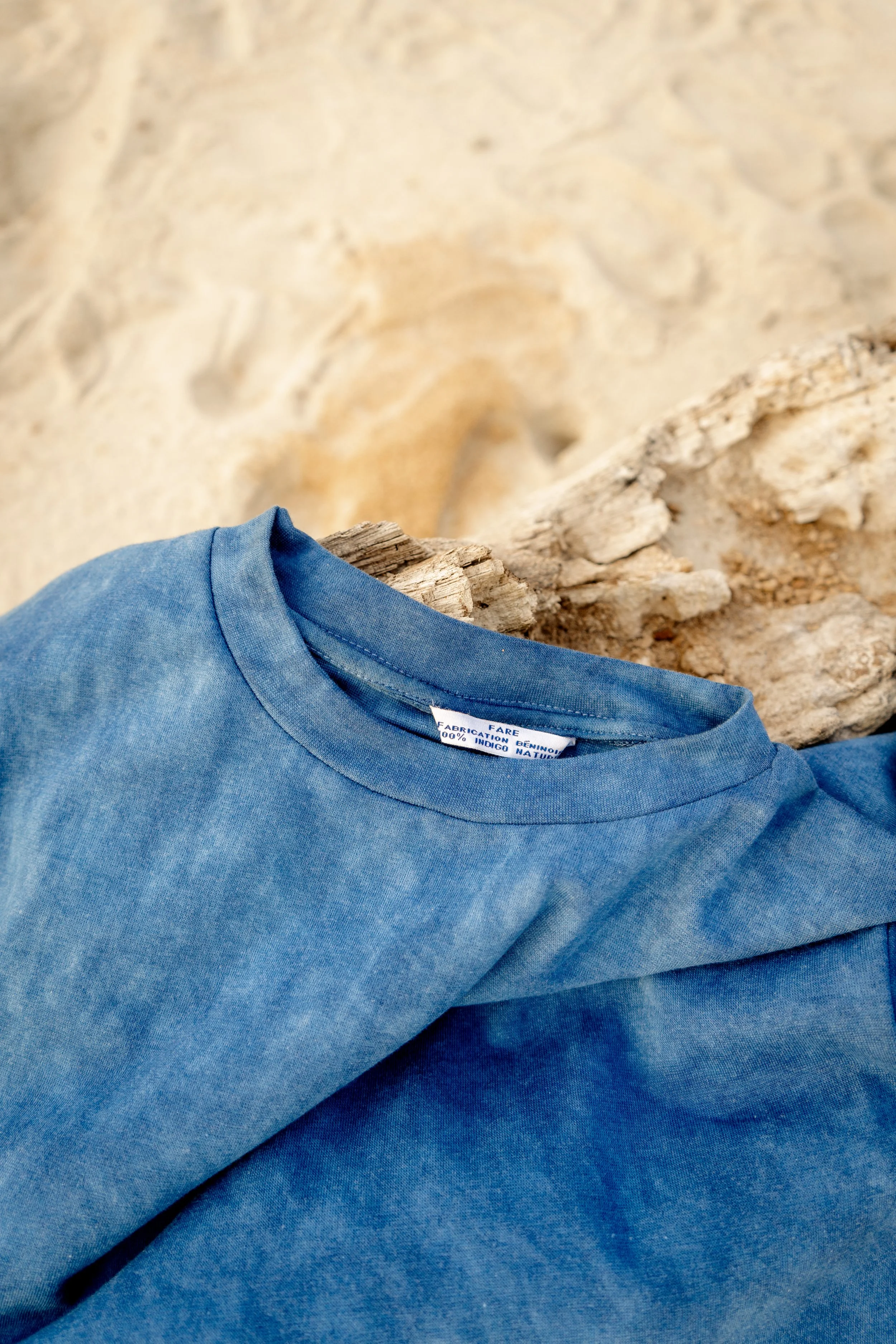
This year, we made sustainable t-shirts. I wanted them to be 100% sustainable, but we reached about 70% because the cotton we used isn't available in Benin. I had to source from Nigeria. We dyed it with natural indigo in Cotonou and everything was assembled from A to Z with a partner workshop in Calavi.
Beyond indigo, we recently started working with turmeric dye. It's not yet totally mastered by our artisans, so we're still researching.
“My whole approach with FARE comes from design thinking. First, the research phase, then collections are approached as themes responding to a problem.”
The FLY program's impact
FARE was part of the FLY incubator program between IFM and Sèmè City. What impact did it have?
FLY allowed me to understand the business aspect of a brand. Before the program, creativity was taking over everything. Creative vision is essential, but so is knowing how to build a sustainable business. FLY gave me tools to structure and develop the project. Before, I'd spent three years learning on my own. The program's experts accelerated that learning into one year. The fact that I already had a history allowed me to submit problems to experts and get solution paths.
Today, in addition to the workshops and artisan communities I work with, I have a team of three people. I manage production, suppliers, and distribution with my brother. And we've also started working with an independent PR agency for public relations and communication.
Courtesy of Peter Toni-Basengula.
What's still missing from the Beninese scene
How does FARE fit into Benin's creative space? How have you seen it evolve?
Since 2020, Benin's creative and cultural scene has evolved dramatically. But we don't yet have a scene as active as Nigeria, Ghana, or Côte d'Ivoire. We don't have this notion of collaboration around how to work together. But the demand is there, and things are slowly coming together.
FARE has always been a collaborative ecosystem. I surround myself with friends and creatives whose work I appreciate or who share our vision. I work easily with different photographers, art directors because everyone has something to contribute. Recently, we've started supporting some communities through our network. There's Koffi Nation who are really starting to have an impact—they organise jam sessions, pop-ups in unusual places. We've also supported Convergence Créative which offers opportunities to creative communities in rural areas.
I really believe we need a community to move forward faster.
What would you say is still missing compared to neighbouring scenes?
We're really missing that space where communities can mix, where people can meet, collaborate, create together. There's also no strong collective of Beninese creatives. Very often, I see that activations in anglophone environments happen as groups, not solo like here. And they support each other. We should think in that direction.
On the media side, things are starting to move. Barbès Magazine has set up here. The government's efforts are paying off. Beninese from the diaspora understand it's time to come back, launch projects. I'm optimistic. In a year or two, there will be even more beneficial initiatives for the creative community.
Courtesy of Peter Toni-Basengula.
We've seen the buzz around Ciara or Lauryn Hill visiting, particularly with the Eya center visible internationally through its We Love Eya festival. How do you feel the impact of these visibility operations?
Benin has global attention right now. But people don't always know how to actually establish themselves here. Without visible collectives or networks that international creatives can plug into, collaboration becomes difficult. So everyone ends up working in silos.
Take We Love Eya—it's one of those moments when different spheres converge in Cotonou. You meet people, opportunities open up. Last year, we dressed ODUMODUBLVCK, one of Nigeria's biggest artists. The opportunity came simply: I sent a message to a contact in Nigeria who quickly connected with the artist's team. It shows we can easily collaborate when we connect with each other. We need to create more synergies.
You'll find out someone was in town but won't know where they were or how to meet them. Without connections, it's hard.
“FARE has always been a collaborative ecosystem. I surround myself with friends and creatives whose work I appreciate or who share our vision.”
Visibility and responsibility
Given the impact of La Nuit de la Mode, FARE is now a showcase of Beninese creativity. Does this visibility bring responsibility?
Absolutely! We're launched! We need to structure ourselves more. Before, we could move forward without a real strategy. But now that important people are watching us, we have to be responsible, stay constant and coherent. The pressure is real! But we're going to work harder. More visibility also means more clients, so more demands and more requirements.
How are you experiencing this personally?
Honestly, I'm flattered. I'm a pretty reserved person. When I think back to the beginning—when FARE was just a personal project—and see the opportunities that have opened up, sometimes I can't believe it.
We always think we could do better. So when I get messages or recognition, it touches me. It's all the strength and support around FARE that makes me believe in it and want to push further. That's why I always say FARE isn't just about me—it's everyone who supports it, buys the pieces, sends encouraging messages. All that energy is what makes the brand.
Next steps: Abidjan, Lagos, and beyond
What does FARE have in store right now?
I'm working on expanding our distribution. We have more demand in Benin but also in the region. I'm approaching a new market: Abidjan. I hope Nigeria will follow. I love Lagos' creative energy so much that it would be recognition to be distributed among all the beautiful brands that exist there. Alára would be the dream! I also really like Temple Muse.
Starting next year, I want to activate our communities in Europe. We did the test together in London and it was a success! I want to continue with Amsterdam and Paris. So stay tuned.
Peter Toni-Basengula's approach with FARE comes down to a clear method: actually listening to client feedback, leaning on local expertise, understanding what it takes to build a brand that lasts. But what stands out is his clarity about what's missing—physical spaces, visible collectives, real networks. He doesn't just name the gaps. He builds around them.
This generation of designers isn't waiting for perfect conditions. They're building the infrastructure themselves.
Follow FARE on Instagram: @fareofficiel