
Building the Missing Infrastructure: What it actually takes to build a fashion system from the inside
Founder of the African Fashion Guild, Ntombikayise Khambule first appeared on NDAANE in CURATORS 07. In this piece, writer Mkhetwa Baloyi takes up the question the industry keeps returning to: if the gap is infrastructure, what does building it look like?
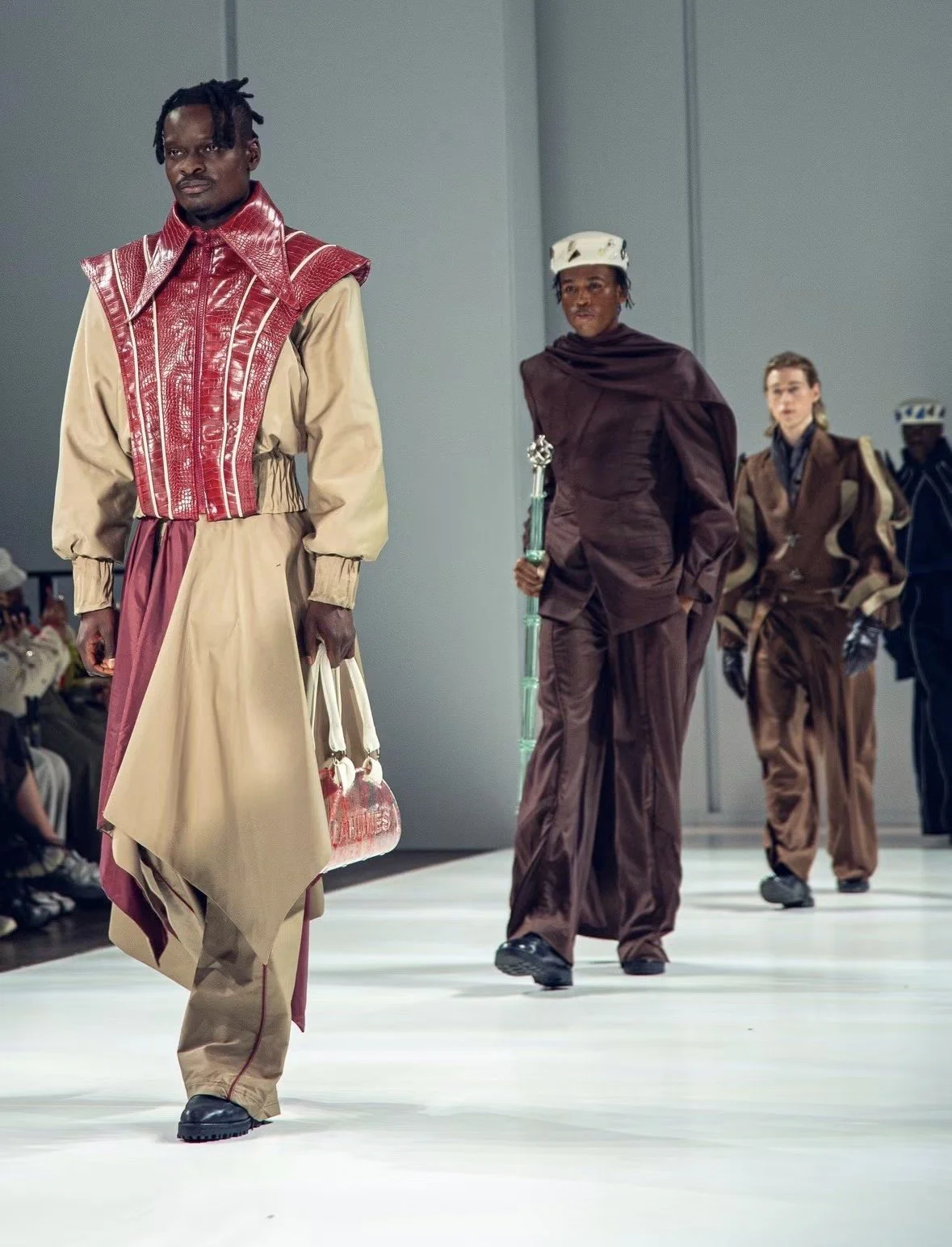
AW27 Fashion show of label Anunes at South African Fashion Week (SAFW), founded by Stadio Fashion School graduate, Ana Nunes. Courtesy of SAFW.
There is a point in most fashion businesses where creativity stops being enough. It does not arrive dramatically. It arrives quietly, often within the first six months. By then, ideas begin to meet cash flow, and what once felt like an open-ended dream becomes structured by constraint. For Ntombikayise Khambule, this is where the real work begins. “Early on it’s still about possibilities,” she explains. “But around six months, the realities of building a sustainable business become much harder to ignore.” It is at this point that fashion shifts from imagination to infrastructure. It’s also where most of the industry’s structural weaknesses become visible. Not in the design. But in the system around it.
She speaks from the inside. Before the African Fashion Guild became her primary focus, Khambule was Chief of Operations at Thebe Magugu, the Johannesburg-based label that won the LVMH Prize in 2019. She founded the Guild while still in that role: a non-profit built around a gap she had seen up close, designers with the talent to grow and too little structure to sustain it. Today she leads it as Founder and Chair, alongside her consulting work.
Where the system breaks
Fashion is often introduced as a creative field. Yet a recurring disconnect emerges between creative ability and business mindedness. Designers enter the industry with strong ideas, but limited exposure to the operational realities that sustain a brand: pricing, production cycles, margins, logistics and cash flow. By the time these realities surface, correction is often more difficult than construction would have been. “In many cases, designers don’t fully understand the business side from the outset,” she says. “By the time they do, they’re correcting earlier mistakes rather than building from a strong foundation.” The issue is not talent. It is timing and the absence of early structural support.
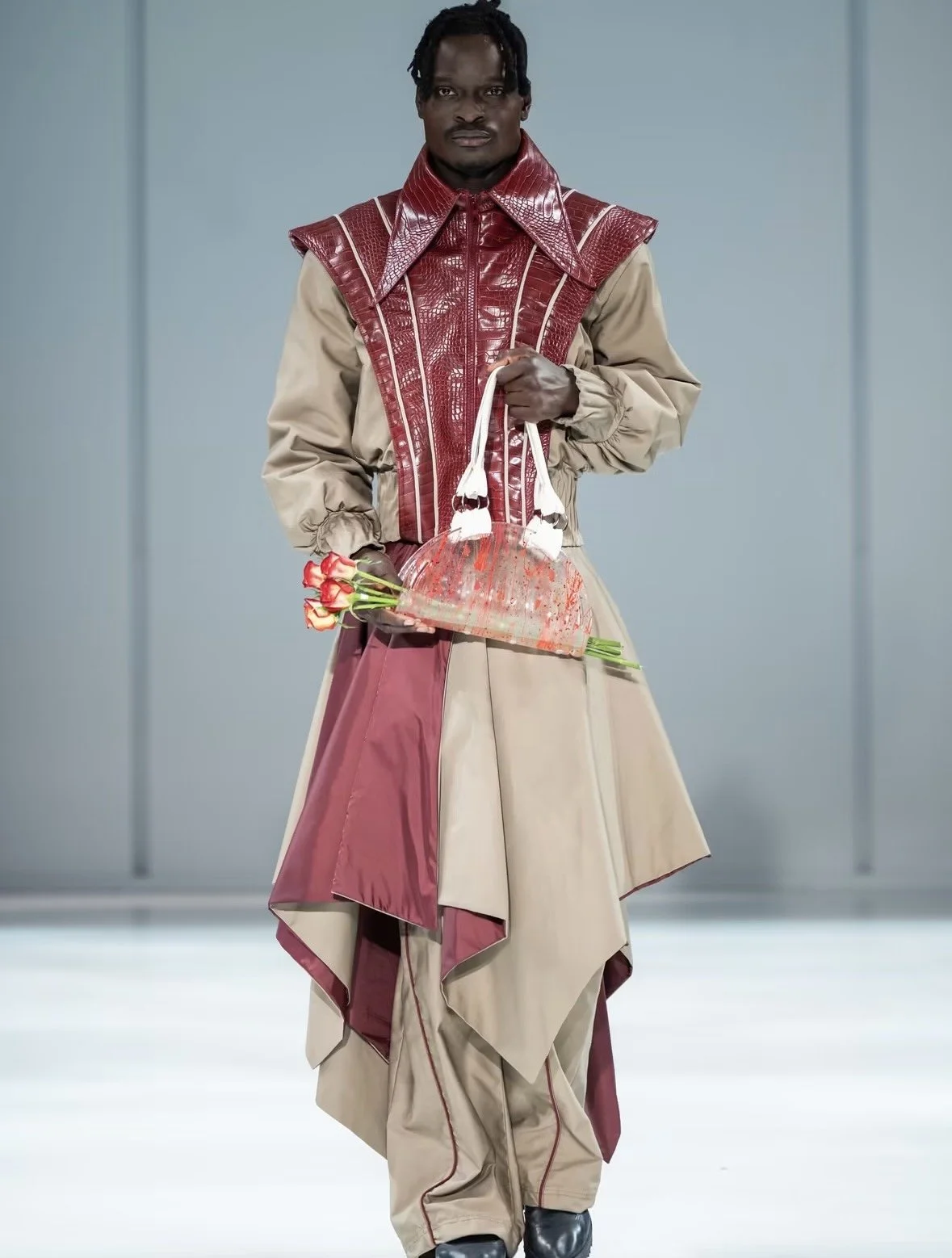
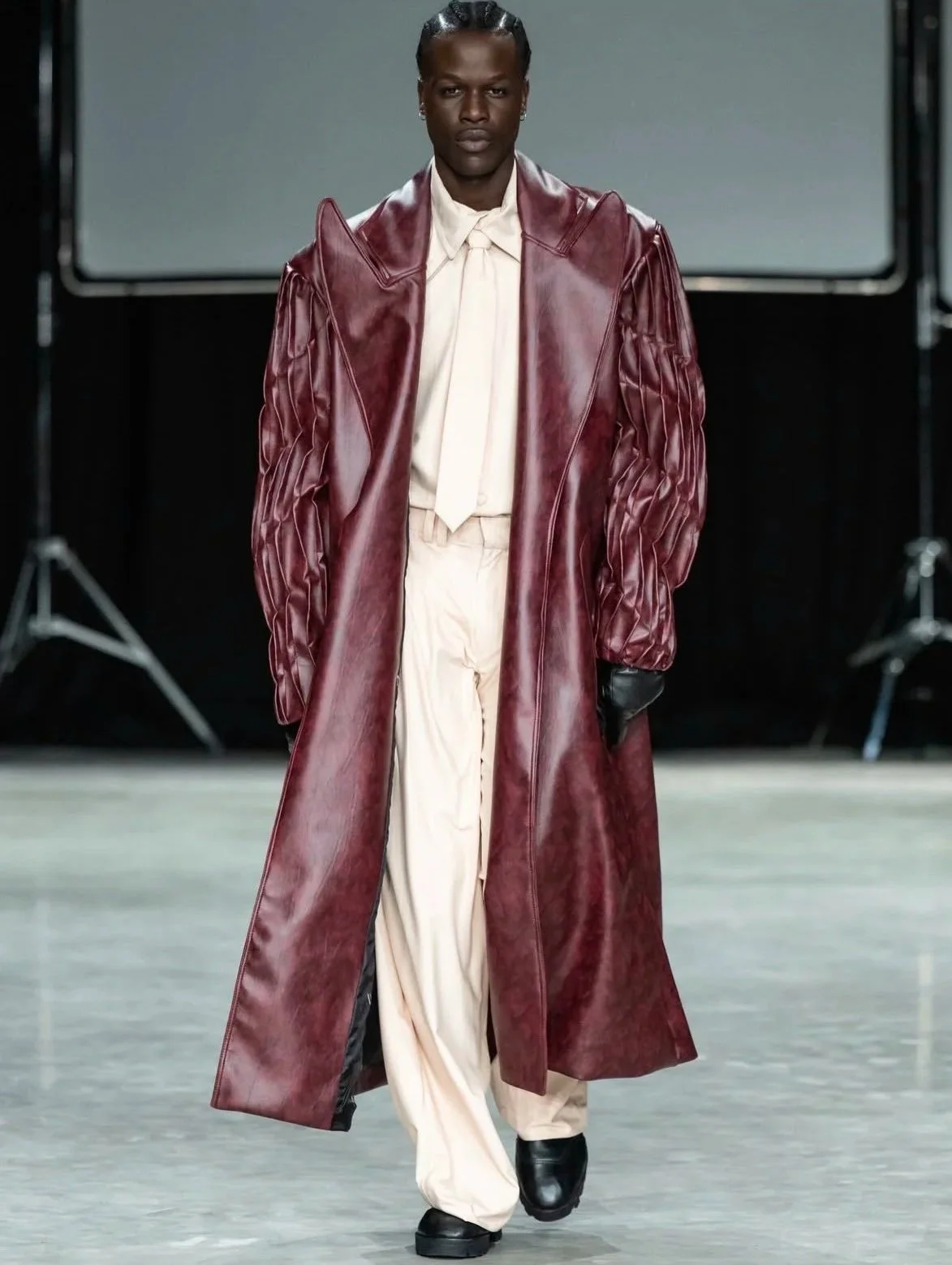
Anunes returns to SAFW AW27 for its second appearance with “Ekwikwi Soma Inene” collection (left), following its debut at SAFW SS26 with “The Second Drive” collection (right). Courtesy of SAFW. ©Eunice Driver
For Khambule, the challenge is not individual failure but systemic absence. “I think the industry fails designers from the very beginning,” she says. “For some, that begins in school. For others, it’s when they start their businesses.” What is missing, she argues, is a cohesive system — one that connects education, production, finance, retail, and industry support into a functioning whole. Without it, the ecosystem becomes fragmented and that fragmentation becomes structural over time. Each part operates in isolation. Knowledge does not accumulate in shared systems. It circulates unevenly, if at all. Designers are left to navigate multiple disconnected processes without a stabilising framework. “In an ideal system,” she adds, “support structures should exist long before a business reaches a crisis point.” In that environment, support rarely appears as prevention but as intervention. This is precisely what the African Fashion Guild is designed for. Rather than reacting once a business is already strained, it works to reach designers early, with support that holds consistently as a brand grows.
What support really looks like
Panels, programmes, funding calls, many promise to support designers. But what does that support really look like? At AFG, support begins with access — to information, to networks, and to people who can intervene when needed. “I would recommend starting with an AFG membership,” she says. “But even beyond that, people reach out and we try to assist where possible.” The principle is simple: there should always be somewhere to turn to. But access alone is not enough. Support must be functional. It must translate into operational outcomes. In practice, that takes concrete form: business diagnostics, a digital directory of designers, production efficiency programmes and a store and supplier network, with membership open to designers and students alike.
One of the early challenges within AFG was not concept, but execution. Membership became one of the organisation’s earliest learning curves. Initially, Khambule assumed that information and resources would be enough. Over time, she learned that designers respond more strongly to immediate value — particularly market access or financial opportunity. “I’ve learned it’s easier to attract and retain members when you can offer immediate and tangible benefits,” she says. The shift required more capacity than was initially available. Only after moving into consulting did she gain the time needed to develop the organisation more strategically. Infrastructure, she notes, is not only ideological. It is time-intensive.
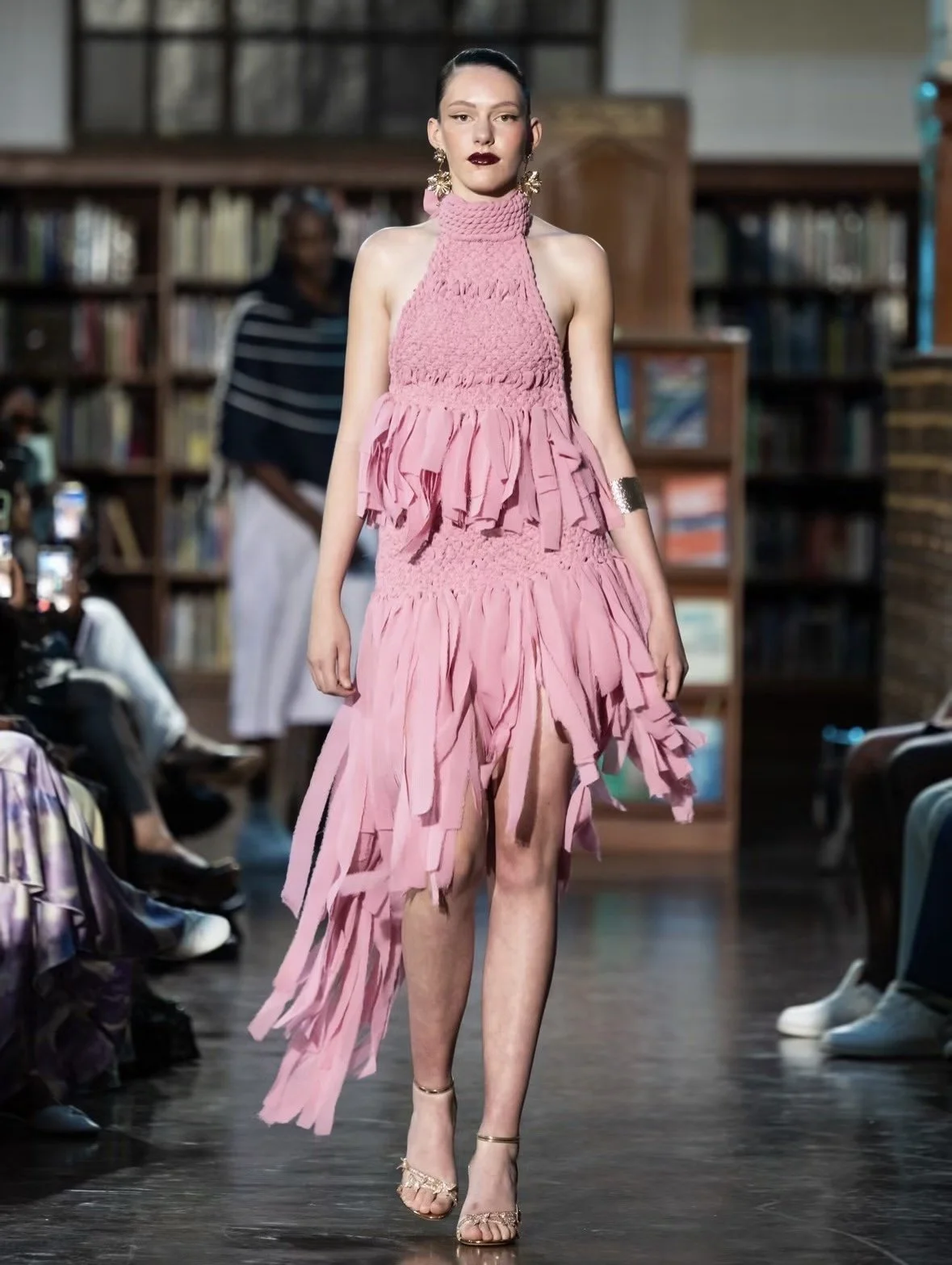
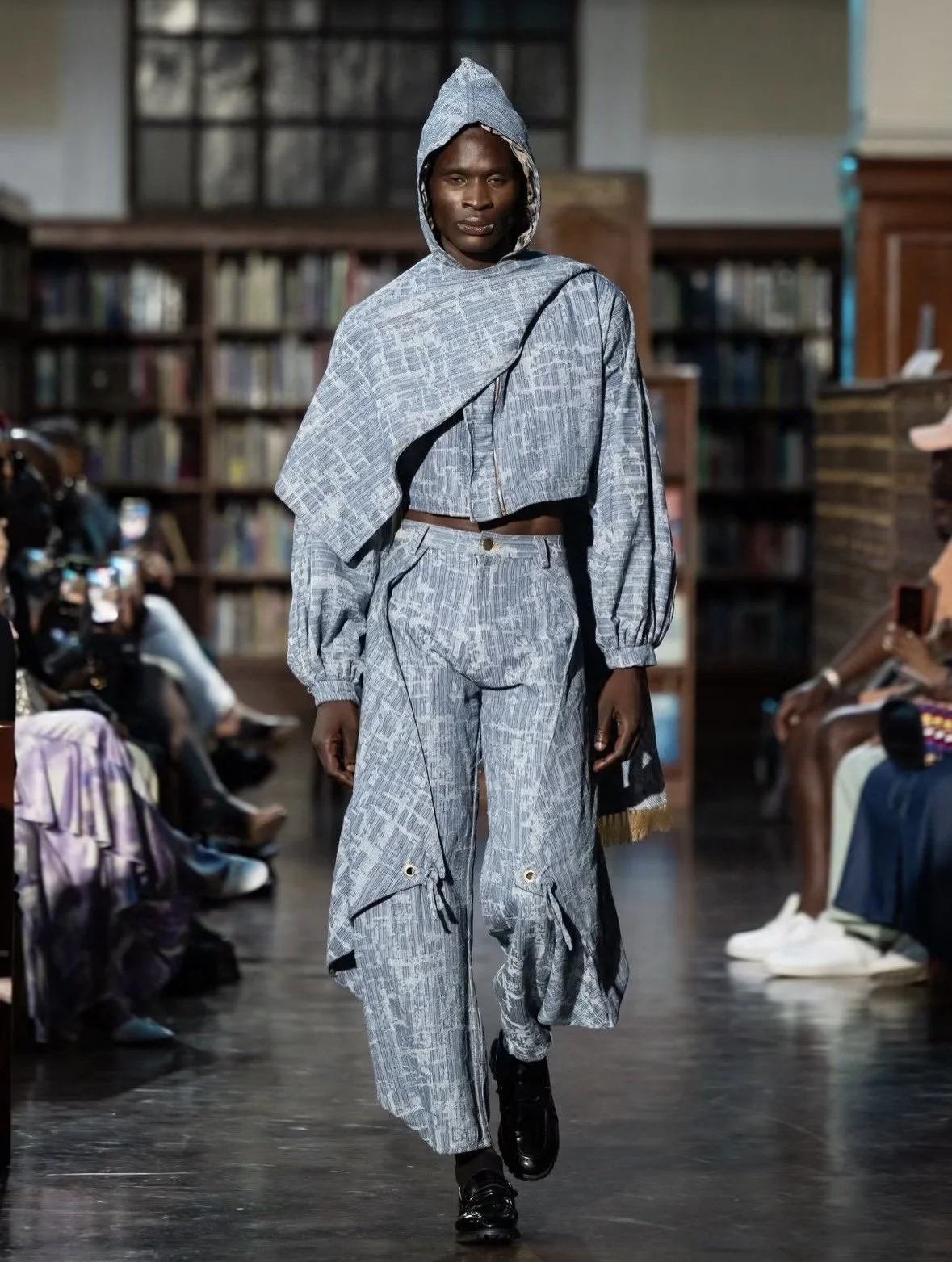
A collaboration between South African designer David Tlale and the David Tlale Academy, showcasing the next generation of designers alongside David Tlale’s own collection. ©Eunice Driver
The initiative speaks to African Fashion guild’s work around mentorship, fashion education and equipping emerging designers with the business knowledge needed to build profitable and sustainable brands.
The work behind the brand
Fashion tells its stories through the designer. Beneath design sits another layer of infrastructure: roles that rarely appear in public narratives, but determine whether a business survives. “COOs, production managers, logistics coordinators, sales agents,” she says. “These functions are critical, but often underdeveloped or missing entirely.” It is a list she knows from experience. Operations was her role at Thebe Magugu. Sales, in particular, she argues, is often misaligned with the realities of independent brands and needs rethinking to better reflect how emerging businesses actually operate. What emerges is a different understanding of fashion: not as a single creative role, but as a network of coordinated labour.
Traditionally, authority in fashion sits with the designer. The creative lead. The final decision-maker. Whether this model still holds is another question. “I would say it sits with the designer,” she says, “but I don’t believe that’s the ideal model.” Instead, the argument points toward distributed leadership — authority shared across experienced roles within the business. As fashion companies grow more complex, she suggests, no single person can carry all operational, creative, and financial decision-making without strain. “Stronger collaboration and distributed leadership would lead to more sustainable and resilient businesses.” The shift is subtle but significant: from hierarchy to interdependence.
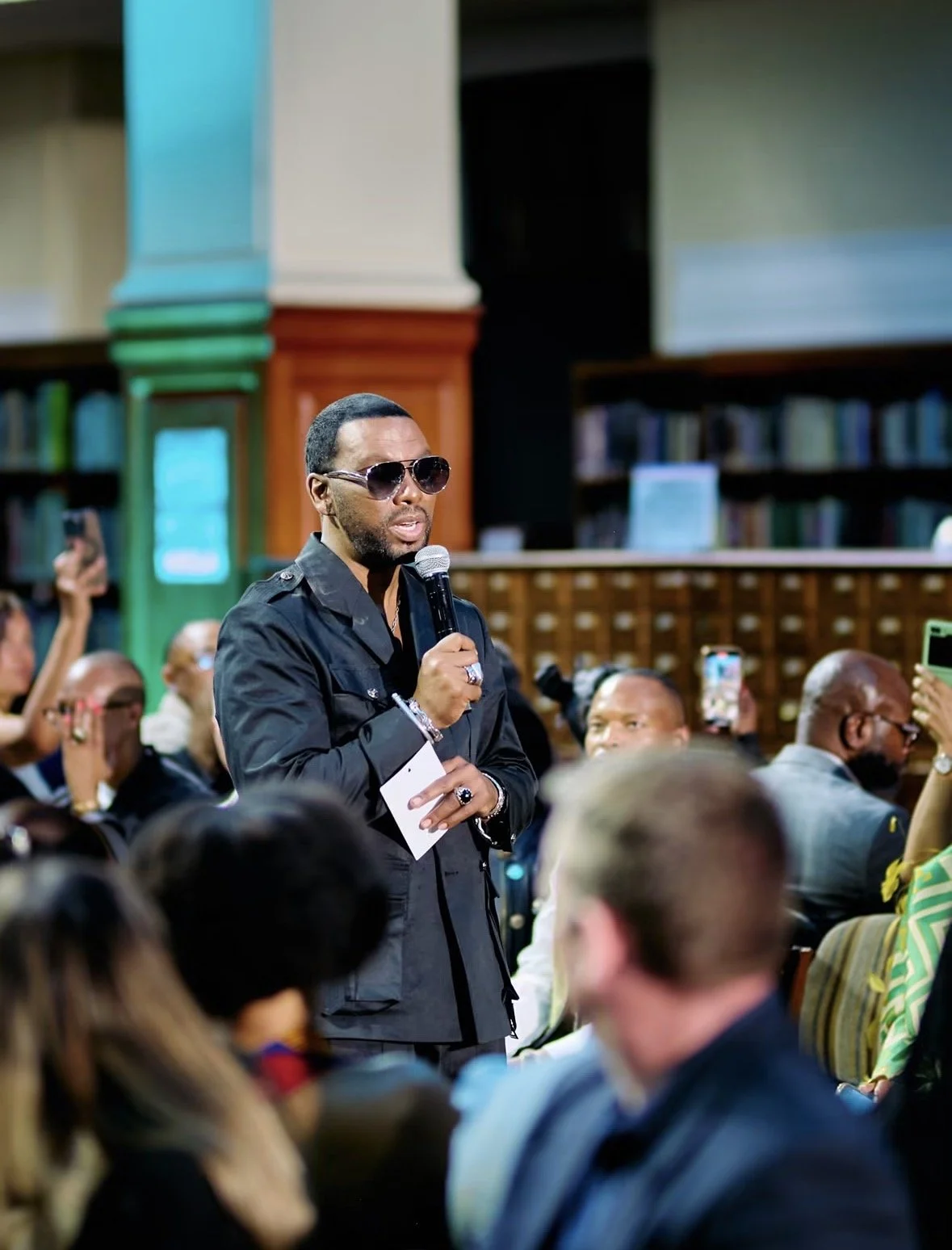
David Tlale presenting The Intern by David Tlale. Courtesy of SAFW.
Visibility is not viability
Fashion shows, trade presentations, large collections — these are often treated as milestones. Their assumed value is worth questioning. “They require significant upfront investment,” she says, “and they don’t always deliver an immediate return.” For emerging designers, she argues, these resources are often better directed toward activities that generate revenue or strengthen core operations. Visibility, in her framing, is not the same as viability. The contradiction is structural: the industry often rewards symbolic visibility before it rewards operational stability. Designers are encouraged to perform scale before they have the systems to sustain it. For emerging brands, this creates a tension between image and survival — where resources are directed toward producing moments of recognition rather than building mechanisms of revenue.
Khambule’s position is not a rejection of these platforms, but a reordering of their role. Their value is conditional: they function effectively only when a business already has the infrastructure to absorb and convert attention into income. Without that foundation, visibility becomes expensive performance — not growth, but exposure without absorption. The more urgent question, then, is not whether designers should participate in these systems, but whether the systems themselves are sequenced correctly for the stage of business they are meant to serve.
A recurring concern in Khambule’s thinking is structural dependency — particularly the reliance on external systems for validation. “I don’t think it’s possible to achieve lasting global success if you remain structurally dependent on external validation,” she says. Instead, she argues for a reversal: global recognition should follow local strength, not replace it. This requires more than talent. It requires institutions, networks, financing systems, and production capacity that exist independently of external approval. “The goal should not be to seek validation from outside,” she says, “but to build an ecosystem so robust that global relevance becomes a natural consequence.”
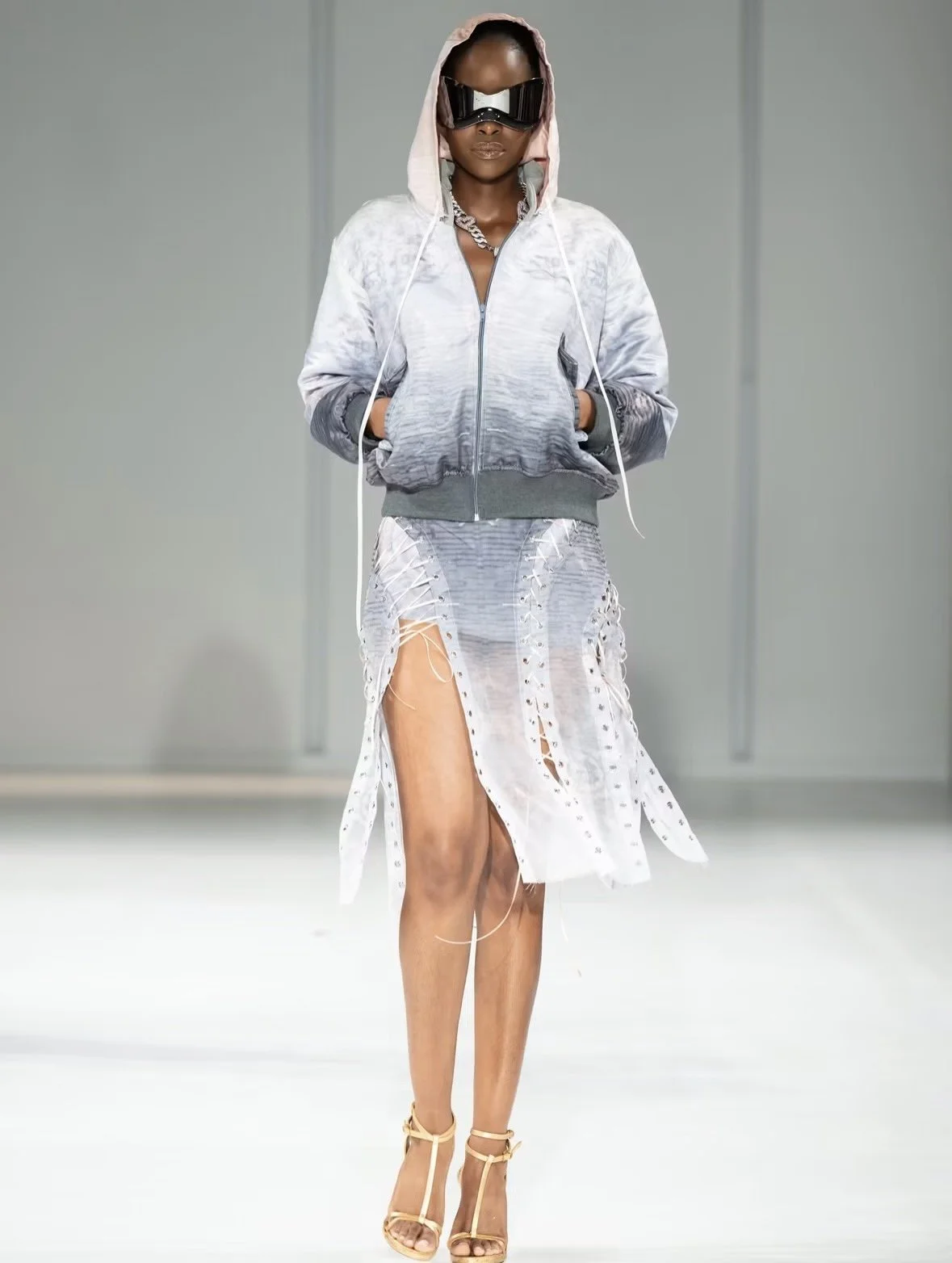
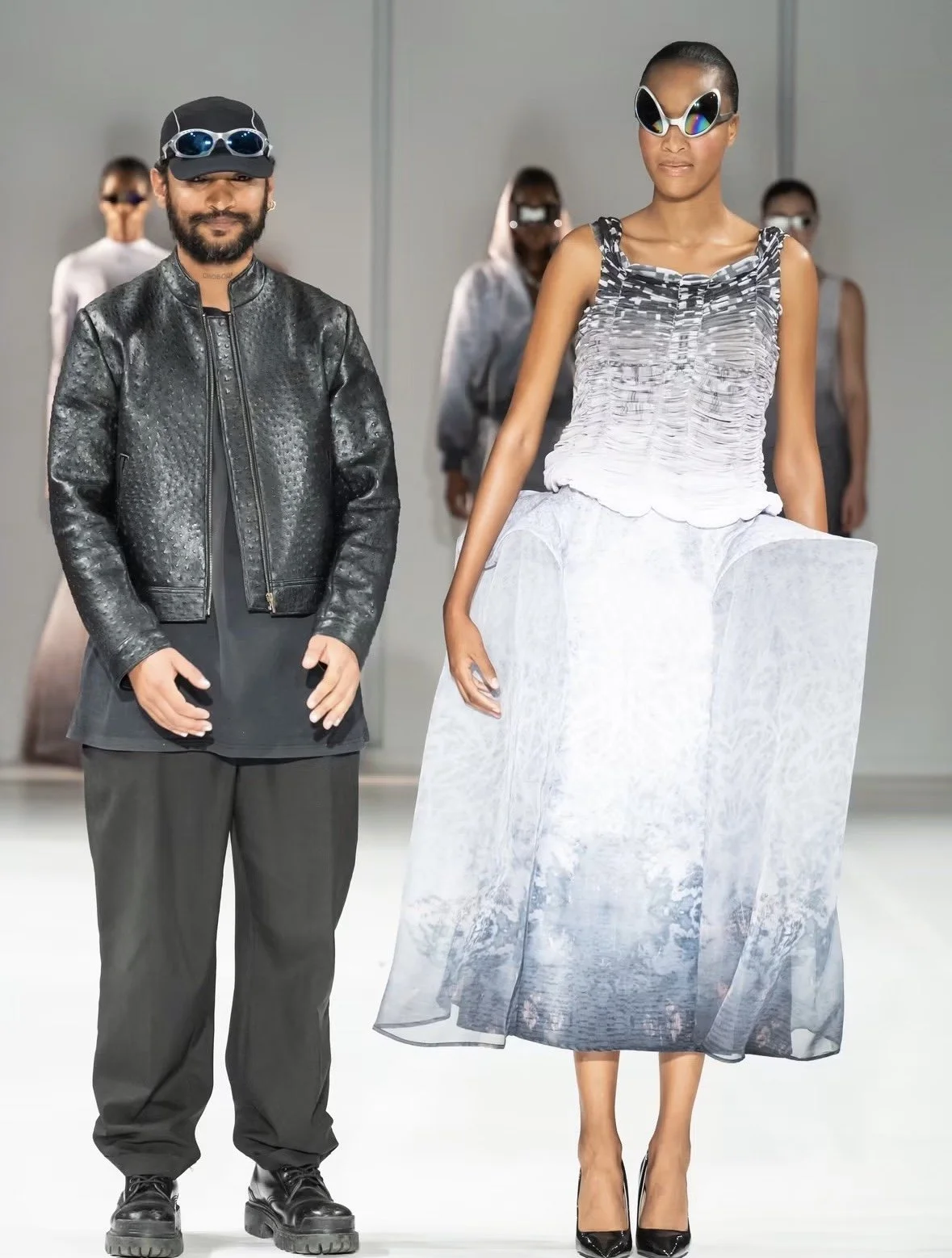
Streetwear brand, Ntwana, making its runway transition this season at SAFW AW’27. Its inclusion offers an interesting perspective on the evolution of independent streetwear labels and their entry into the formal fashion industry. ©Eunice Driver
A correction of sequence
Financial discipline also runs through Khambule’s approach. Understanding production costs, margins, cash flow, and inventory is not secondary knowledge. It is foundational. “Cash flow is particularly important,” she explains. “A high-revenue business can still fail if it runs out of cash.” The gap between profitability and liquidity is where many brands collapse. Overproduction, miscalculated margins, and delayed returns quietly erode stability. The conclusion is direct: creativity defines direction, but financial structure determines survival.
Across the discussion, a consistent philosophy emerges: restraint. Treat the brand as a business from the beginning. Separate finances. Understand margins before production. Control spending. Scale intentionally. Protect cash flow. And above all: “Growth should be funded by a business model that works, not by continuously spending money in the hope that opportunities will eventually follow.” It is not a rejection of ambition. It is a correction of sequence.
The African Fashion Guild sits within a broader question: what does it take to build an industry before one fully exists? Khambule’s answer is operational. It involves systems, roles, financial discipline, shared authority and a shift away from visibility as the primary measure of success. But more than anything, it involves patience with structure — the often invisible work of building conditions where creativity can survive beyond its initial moment. Because fashion, in the end, is not only what is designed. It is what is sustained. And sustainability, as Khambule suggests, is never accidental.
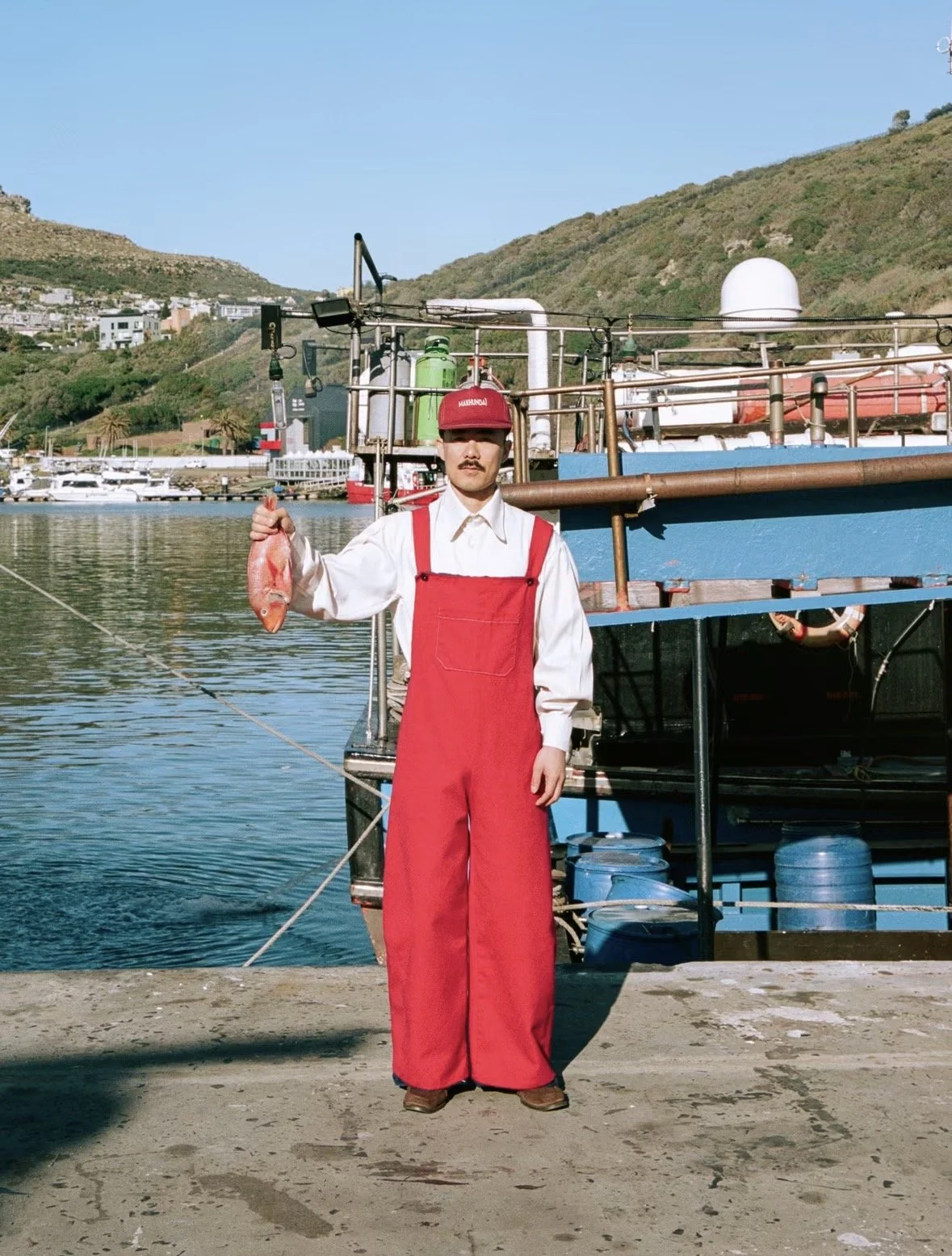
Twyg’s sustainable Emerging Designer Awards finalist, Makhundai. “Good Farmers, Fresh Produce” AW26 collection. ©OSKI Studio
In Brief
Ntombikayise Khambule is the founder and chair of the non-profit African Fashion Guild, and the former Chief of Operations at Thebe Magugu in Johannesburg.
Khambule locates fashion's weakness in the system around design rather than in design itself, and identifies the first six months of a business as the point where that system is tested.
The African Fashion Guild aims to reach designers early, with support that holds as a brand grows, rather than intervening once a business is already in crisis.
Khambule names COOs, production managers, logistics coordinators and sales agents as roles independent fashion brands need but often lack.
In her view, fashion shows and trade presentations pay off only when a business already has the infrastructure to turn attention into sales.
Read More
The gap has been named before on NDAANE. In her CURATORS portrait, Koura-Rosy Kane spoke about the frameworks the industry still needs to build, and Yannick Do, co-founder of Dola, told Kemi Iruwa that money without infrastructure means nothing. This piece picks up where those conversations leave off: with what it takes to do the building. Ntombikayise Khambule's own path, from operations at Thebe Magugu to the African Fashion Guild, is told in her CURATORS portrait.
Subscribe to the NDAANE newsletter to stay across every conversation.
About the writer
Mkhetwa Baloyi is a Johannesburg-based fashion journalist. Follow his work on Instagram at @mkhetwa.baloyi and @demodejournaliste.