
Fiona Uwamahoro: Documenting Rwandan Fashion From the Inside
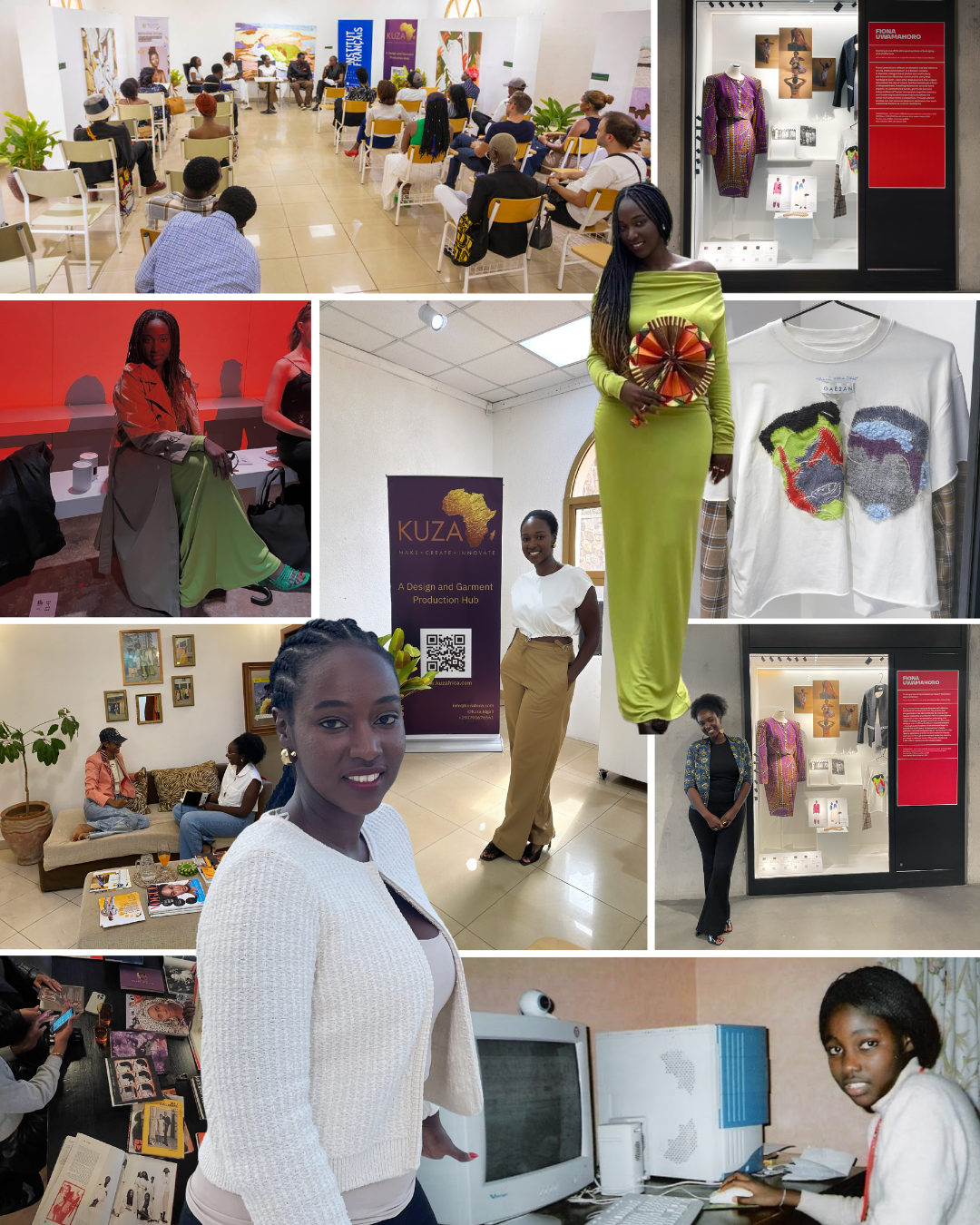
FIONA UWAMAHORO
“Being able to research and document fashion from my home country and to engage directly with designers and creatives in that space is deeply meaningful to me.”
A PhD researcher at the London College of Fashion, Fiona Uwamahoro is writing the evolution of the Rwandan fashion sector into the record, moving between libraries in London and the ateliers and markets of Kigali. Her route here ran through a sociology degree, a master's thesis on fashion entrepreneurship, and a Guardian article on Rwanda's second-hand clothing ban that made her think further about who the global fashion system was built to serve. This portrait follows what it means to her to research her own country's fashion while counting herself as part of the field she is documenting, and why she believes the work of building the sector starts with education and the systems that nurture it.
HER CRAFT
Researching Rwandan fashion, from Tumblr feeds to industry insider
Could you tell us what you do and why it matters to you?
I am a PhD researcher at the London College of Fashion, where I examine the evolution of the Rwandan fashion sector. I have always loved learning. Growing up, I was the good student. At the same time, I was obsessed with fashion as a teenager. I spent countless hours on Tumblr and fashion blogs, taking in image after image. I knew a lot about European fashion and African American culture, but I wasn't really exposed to fashion from Africa. Around 2016 and 2017, I started discovering African fashion content online, and my visits to Rwanda at that time allowed me to find emerging brands for myself.
Over time, my academic interests and my passion merged. Being able to research and document fashion from my home country, and to engage directly with designers and creatives in that space is deeply meaningful to me. I feel that my personal journey led me here and I do not take it for granted.
How did you decide to go the PhD route?
While I was doing my Bachelor in Sociology in 2017, I read a Guardian article titled “It's about our dignity: vintage clothing ban in Rwanda sparks US trade dispute.” I was already following Rwandan fashion brands closely. That article pushed me to think more critically about the global fashion system, sustainability, and the politics of second-hand clothing.
After my BA, I went on to a master's in Innovation, Creativity and Entrepreneurship, where I wrote my thesis on fashion entrepreneurship ecosystems. The more I learned, the more questions I had. That curiosity eventually led me to apply for a PhD. I was intentional about choosing the London College of Fashion. I wanted to be around people working across different parts of the industry while I kept my own research focused on African fashion systems.
Any recent work highlight ?
Between April and June 2025, I took part in the Fashioning Frequencies exhibition at the London College of Fashion. I curated a vitrine offering a glimpse into my research, The Rwandan Field of Fashion. It visually interpreted a section of my thesis where I reflect on my methodology and my position as both researcher and participant within the field. The pieces I showed were from Rwandan brands, IZUBAA, Moshions and GAË2AN. I bought some before the PhD, some during it, and others more recently for their symbolic significance.
Most of my work so far has been writing and presenting at conferences, so curating and engaging directly with academic and non-academic audiences was insightful. I would like to take that further and collaborate with designers in the process.
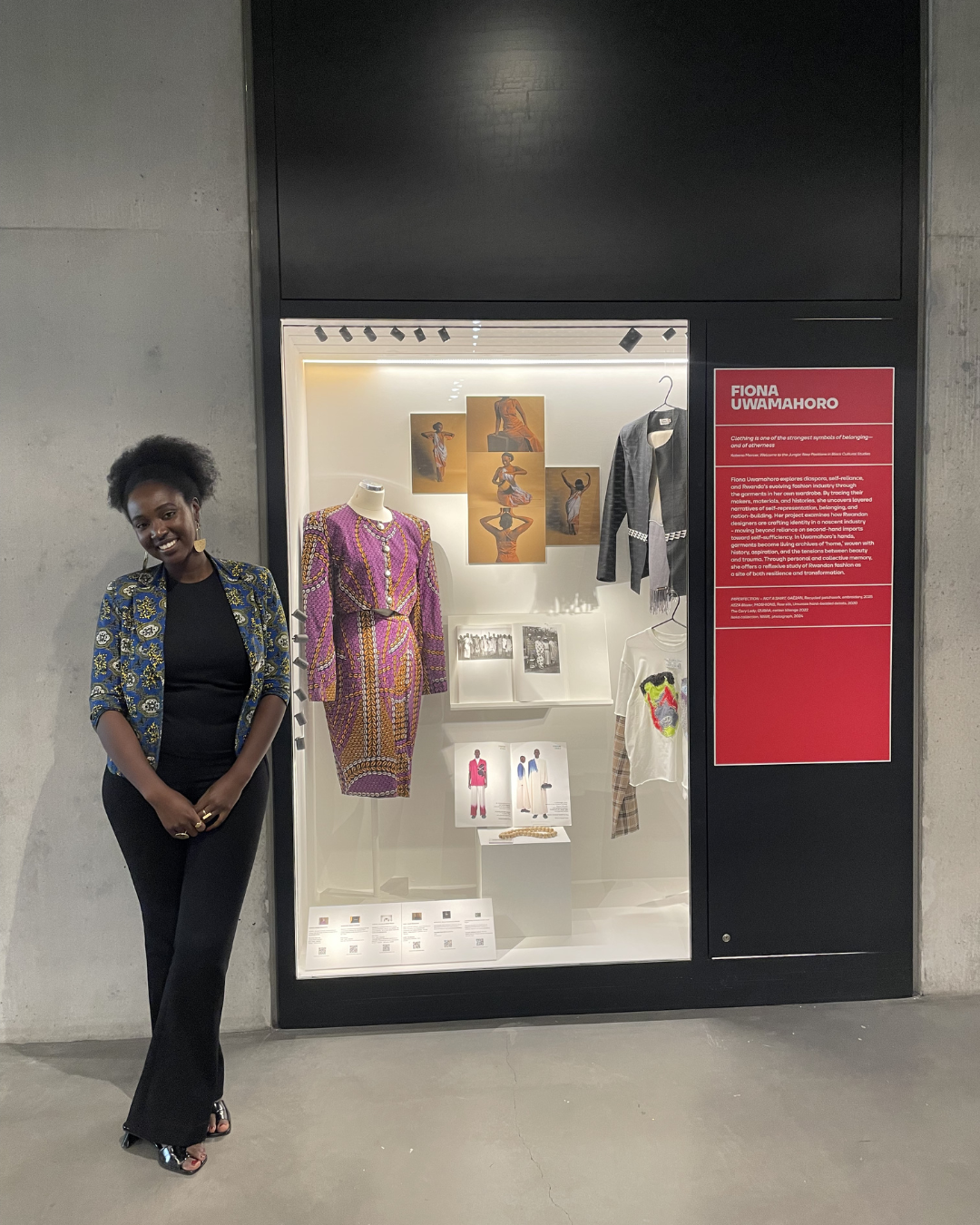
Fiona Uwamahoro next to her own vitrine at the London College of Fashion’s exhibition Fashioning Frequencies, courtesy of Fiona Uwamahoro
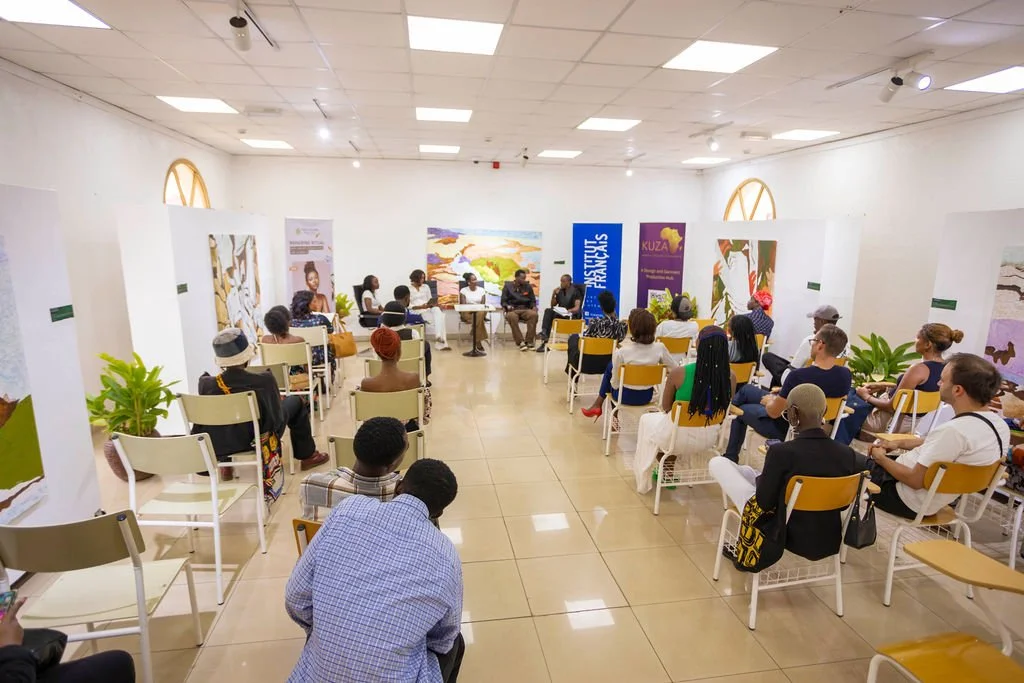
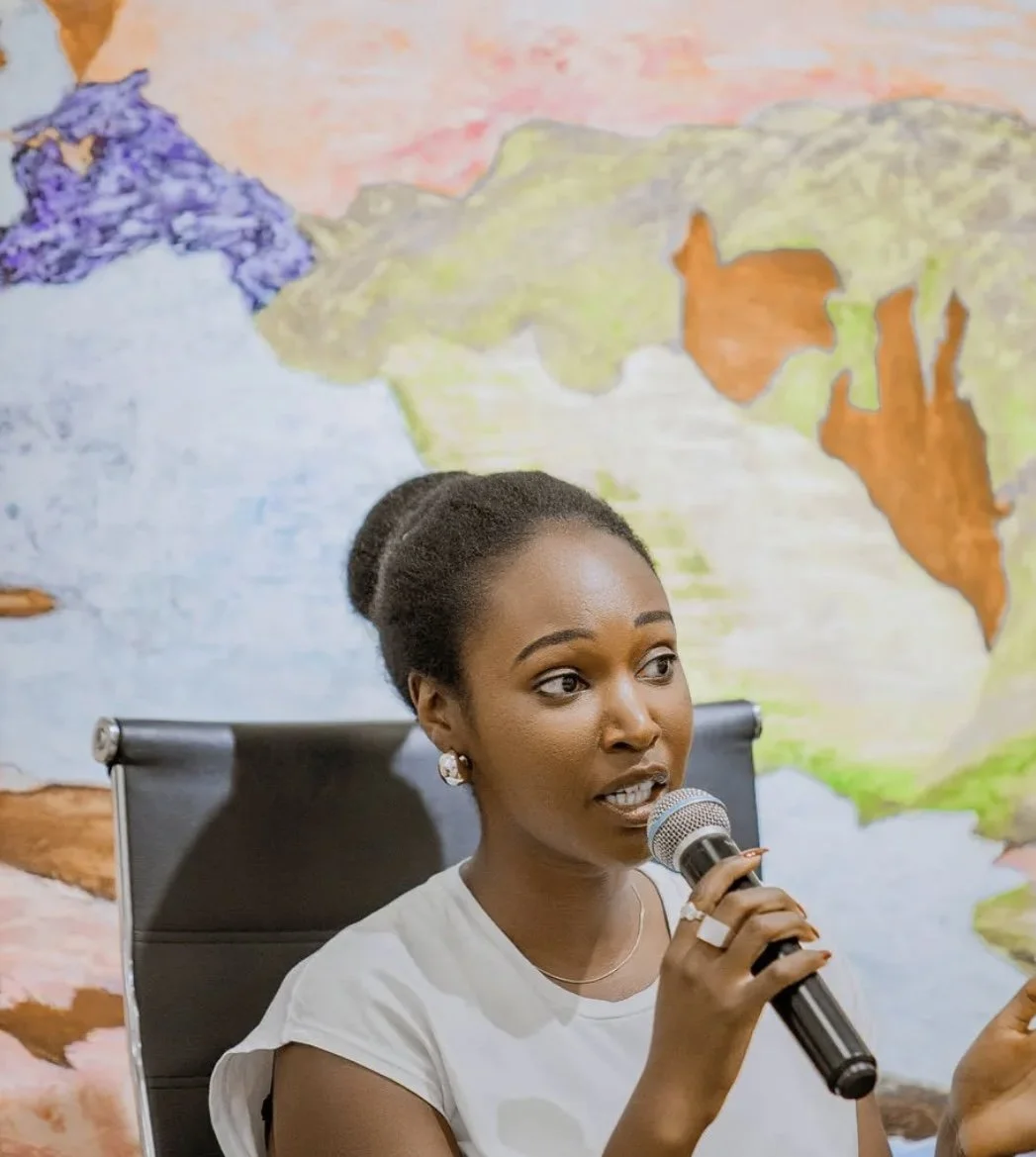


Fiona Uwamahoro speaking at a conference hosted by fashion entrepreneurship hub Kuza Africa, courtesy of Fiona Uwamahoro
HER LESSONS
Funding, adaptability, and the vulnerability of sharing the process
What major hurdles are you facing in your research?
Funding! For creatives, entrepreneurs and researchers alike, funding is always one of the biggest challenges, and it has been mine from the start. I haven't fully overcome it, but I haven't given up either. What I have learned is the importance of adaptability. My research has taken longer than expected, and challenges beyond my control came up. Being able to adapt or pivot has been key. Sometimes the goal stays the same, but the path and the timeline have to change.
A recent lesson that changed the way you operate?
Sharing the process of my work. I am learning to show not only the beauty of doing the work I love, but also the emotional and financial challenges that come with it.
A habit you are trying to build?
I now break my tasks, reading, data analysis, writing, into smaller chunks and give each one a specific time block. It sounds obvious, but I picked it up from The Productivity Method by Grace Beverley. It helps me stay focused without feeling overwhelmed, and it reminds me to take breaks.
HER ENERGY
Fieldwork, faith, and finding sanctuary in the everyday
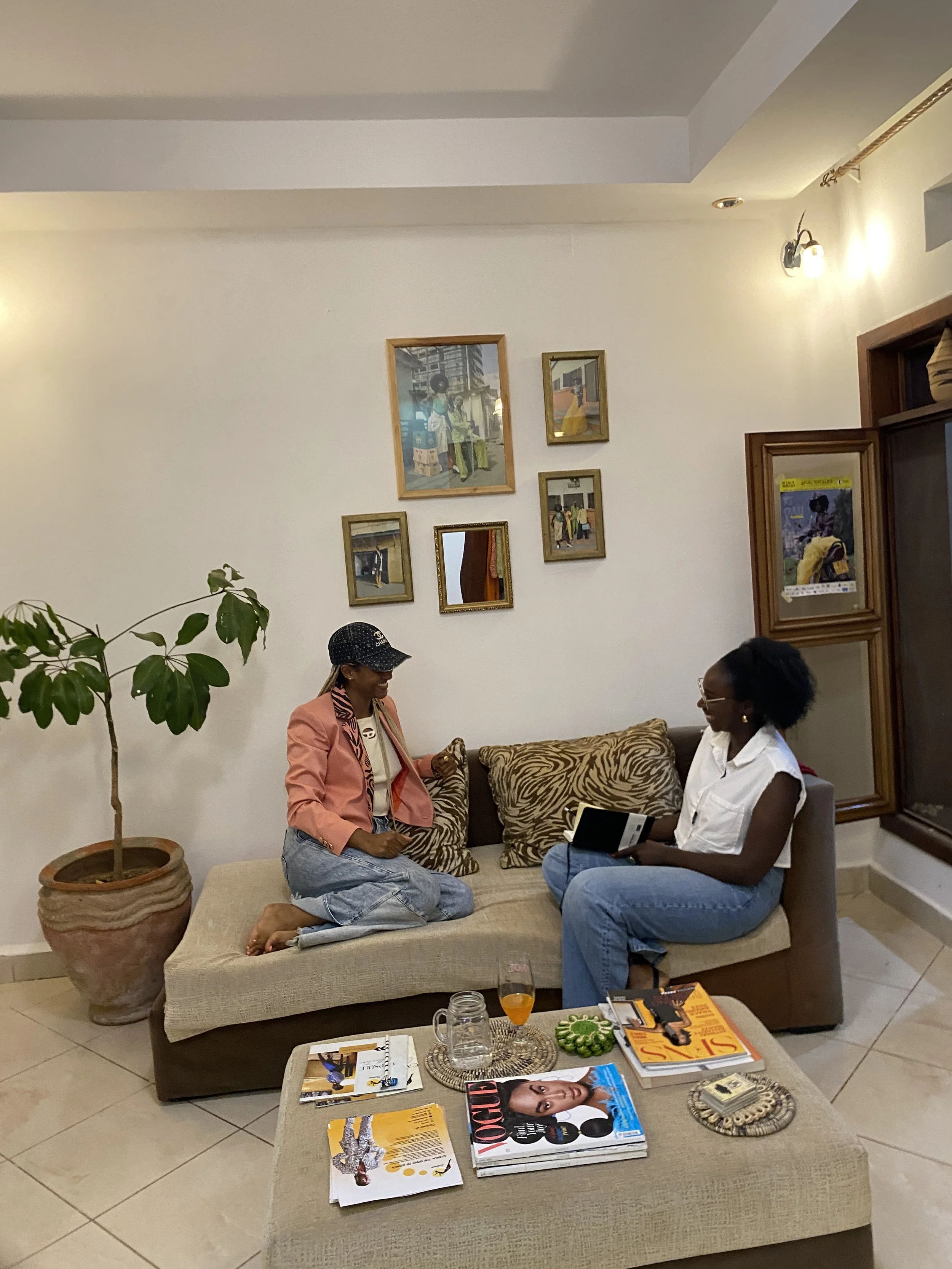
Fiona Uwamahoro in conversation with designer Elodie Fromenteau, founder of IZUBAA and NDAGABA Streetwear brands at the designer’s showroom in Kigali, courtesy of Fiona Uwamahoro
What do you enjoy most in your work?
Fieldwork. Visiting designers in their ateliers, following them through the market while they buy fabrics, talking through their journeys and understanding their creative processes. Fieldwork is my favourite part of the research.
What keeps you going?
Faith.
How do you stay inspired and nurture your creativity?
Reading, exchanging ideas with friends and colleagues about our projects, and visiting art and fashion exhibitions.
Where do you find sanctuary in challenging times?
First, cocooning and resting, doing things that bring me joy, like walking in nature. Then spending time with loved ones, laughing, and sharing meals together.
HER COMMUNITY
The communities we are born into and the ones we build
“Community grounds me. There are communities we are born into and communities we create. Being part of one comes with responsibility, just as it supports us in return. When I decided to pursue a PhD, the community I grew up in was very encouraging. We hype each other up and celebrate each other’s projects. And whether we succeed or fail, the value we hold for one another doesn’t change. There is a shared desire to do our best in whatever we take on.”
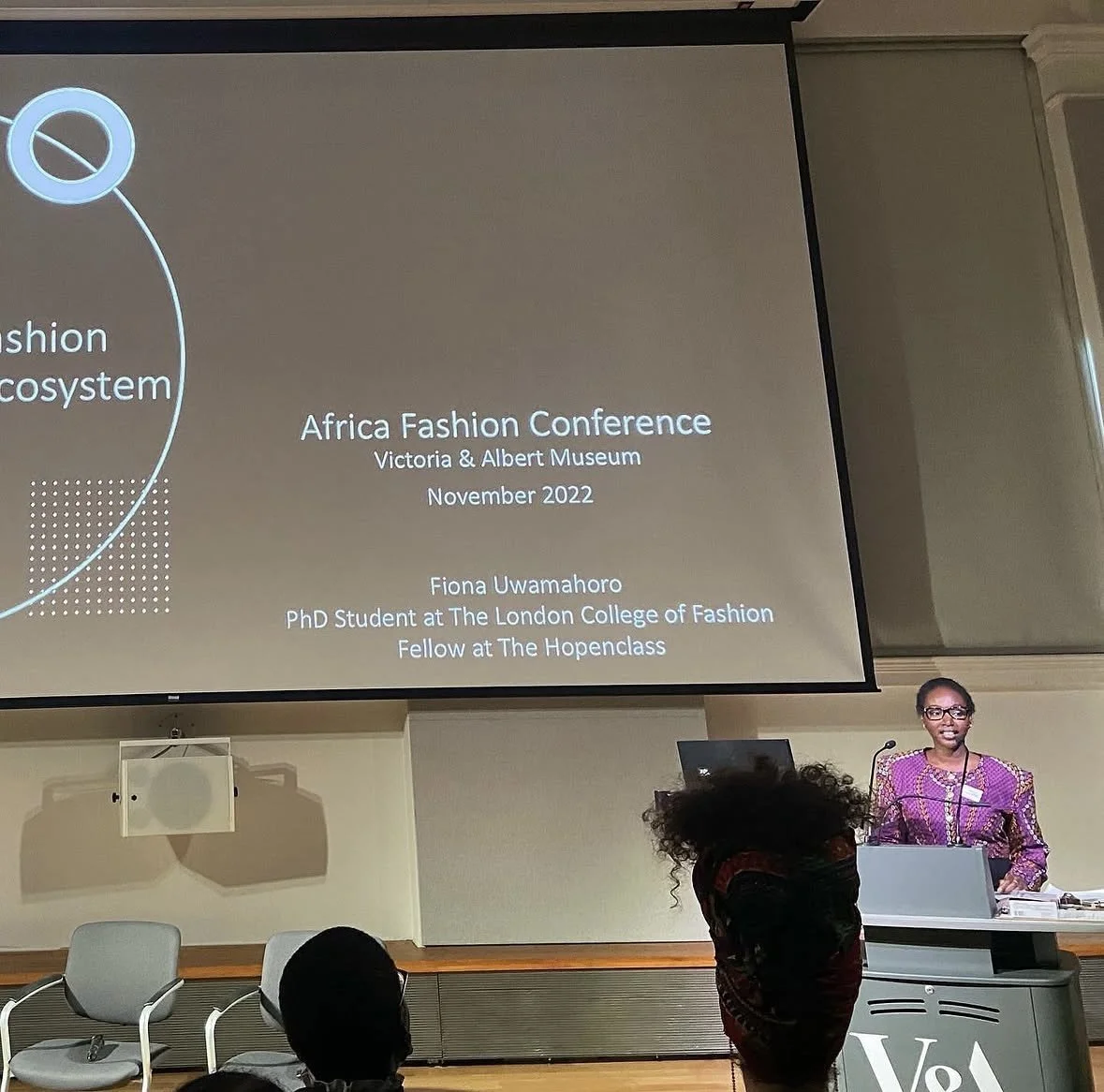
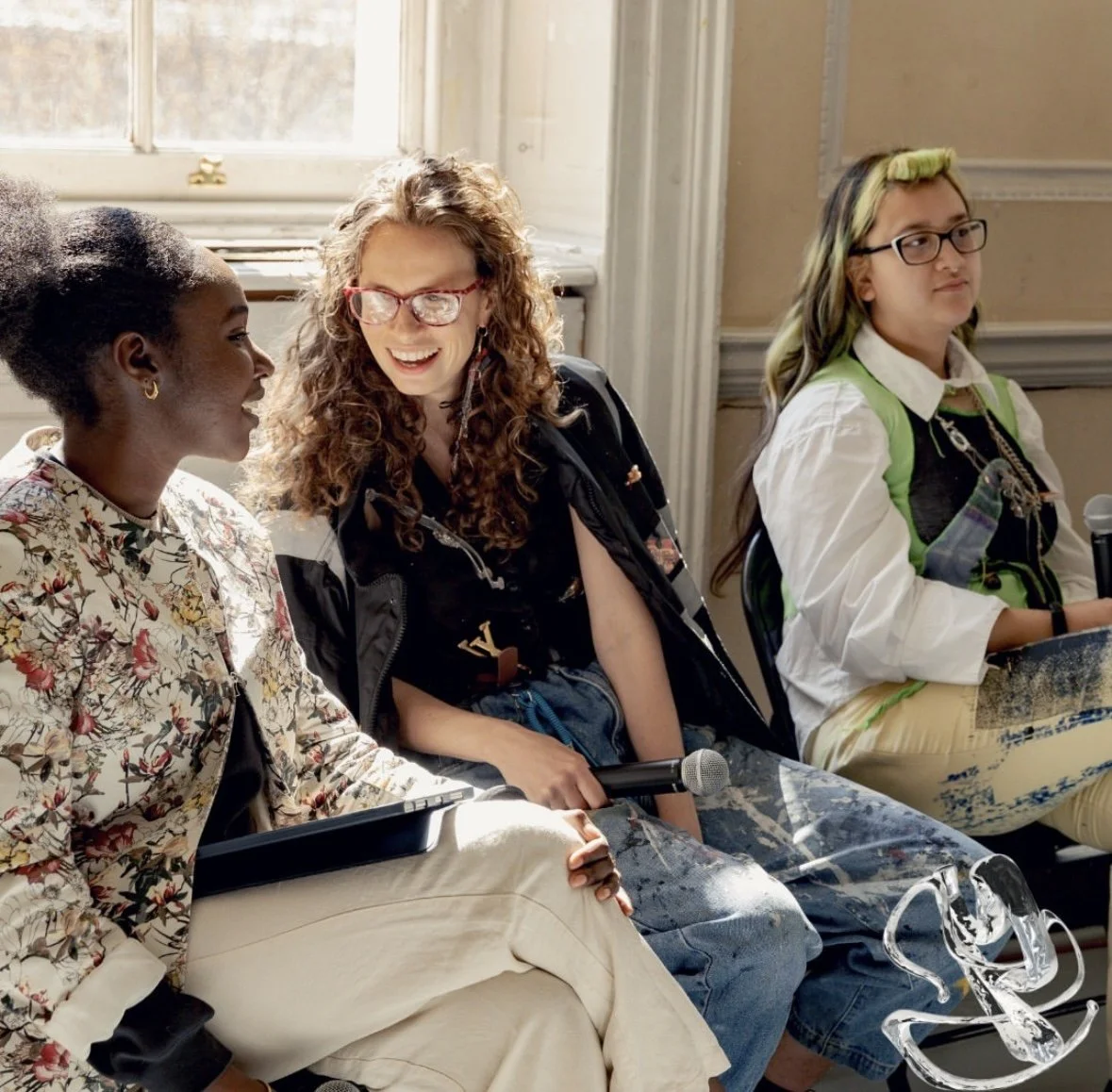
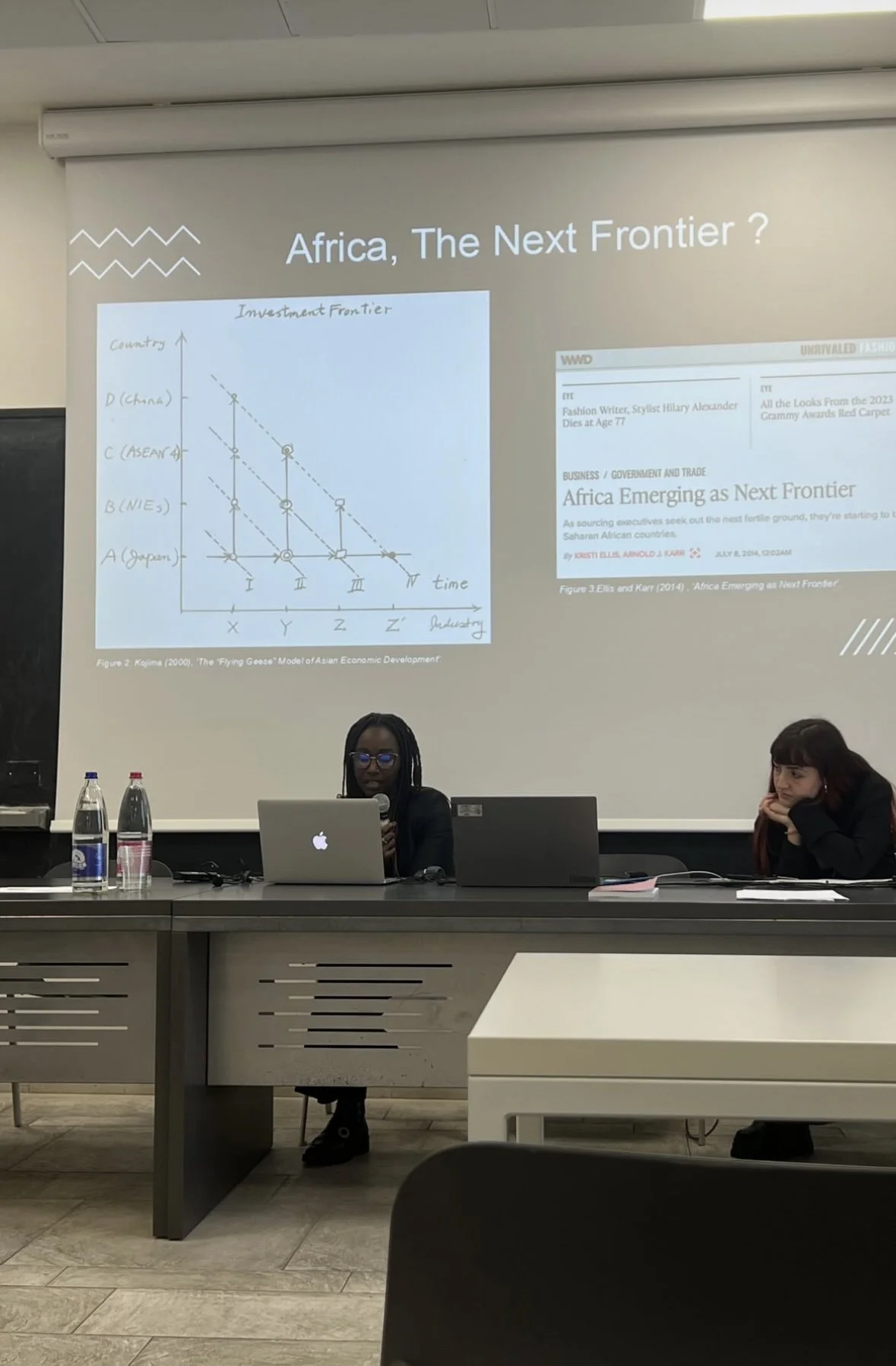
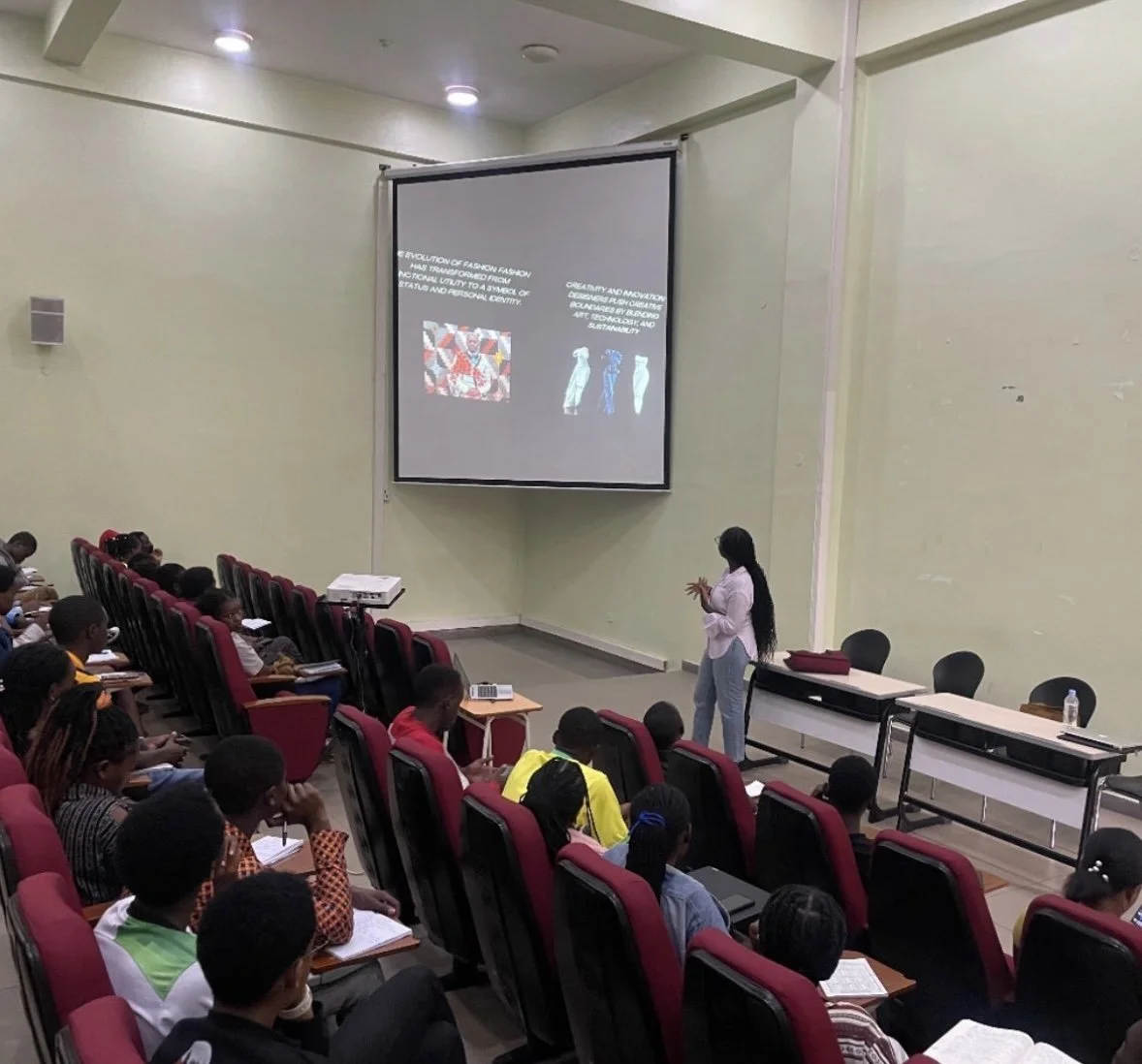
Fiona Uwamahoro at different speaking engagements (from left to right: at the V&A museum as part of the Africa Fashion exhibition extended programming, at the Clean Fashion Summit hosted by collective and research agency Colèchi, at the Prosperity Fashion conference hosted by REI Fashion Lab, at Fashion 101 series hosted by Kuza Africa hub for the fashion design students of the Kigali Integrated Polytechnic Regional College), courtesy of Fiona Uwamahoro
HER PERSPECTIVE
Fashion education, Gen Z designers, and bridging the gap
Any specific industry topics you have been digging into lately?
Fashion and creative education on the African continent. We are seeing a lot of incubators and accelerator programmes supporting designers and entrepreneurs to scale, alongside initiatives funded by organisations like the British Council and the Institut Français. Financial institutions have come in too: Afreximbank, through CANEX, and the Mastercard Foundation have both been backing the African creative economy.
But what happens when the funding stops? I would like to see funds and resources going into building long-term, sustainable systems. I still believe education, short-term and long-term, is one of the most important parts of the ecosystem. It is where people learn, experiment, and are allowed to fail. We need nurturing systems, not only to support designers and entrepreneurs who are already thriving, but to guide the ones who are just starting out.
We should be careful about celebrating quick success, or pouring money in without building supportive structures around designers. Every designer has different needs, and it is hard for a single programme to answer all of them. That is why education matters so much to me. It can take many forms: degree programmes, workshops, seminars, mentorship, short courses. It should offer practical skills, digital skills, business development, and theoretical grounding too, history or politics, the things that build critical thinking. And the curriculum has to reflect the culture, the values, the needs and the challenges of the continent.
All of this calls for a coordinated effort between governments, the industry, educational institutions, financial institutions, and development partners. As I finish my PhD, I am looking forward to working in this space and using research to collaborate with different actors across the ecosystem.
Something that piques your interests right now?
Gen Z fashion designers and the shifts they are bringing to the industry. Gen Z fashion designers and the shifts they are bringing to the industry. They are bold and confident. They know who they are and feel secure in their identities. At the same time they are wide open to the world, drawing on all kinds of sources. What excites me is the experimentation. A lot of them are making what Victoria Rovine called “conceptual African fashion.” There is a new zeitgeist on the African fashion scene. And it brings me back, again, to the need for nurturing systems that can support these designers over the long term and help them build sustainable careers.
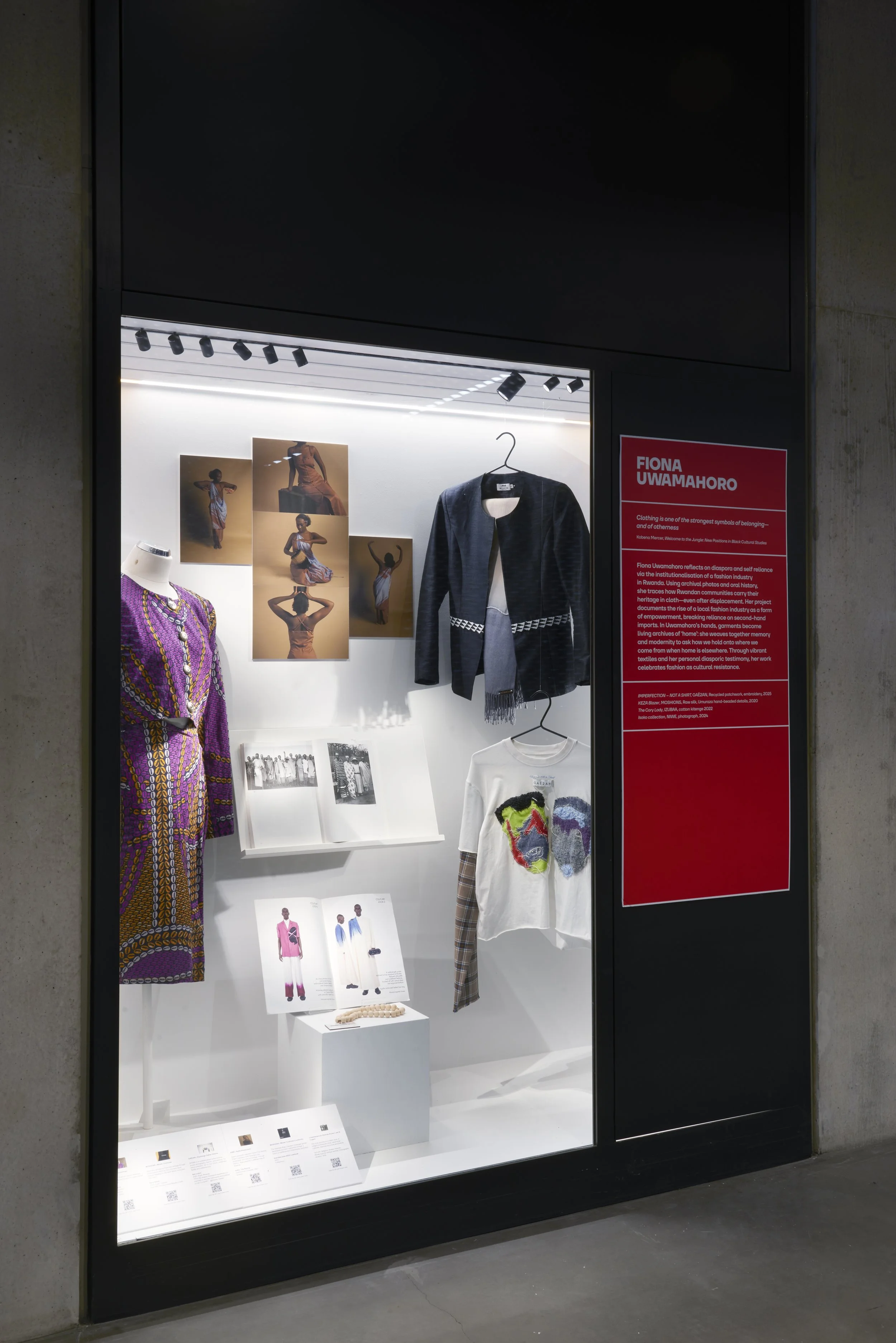
Fiona Uwamahoro’s vitrine at the Fashioning Frequencies exhibition
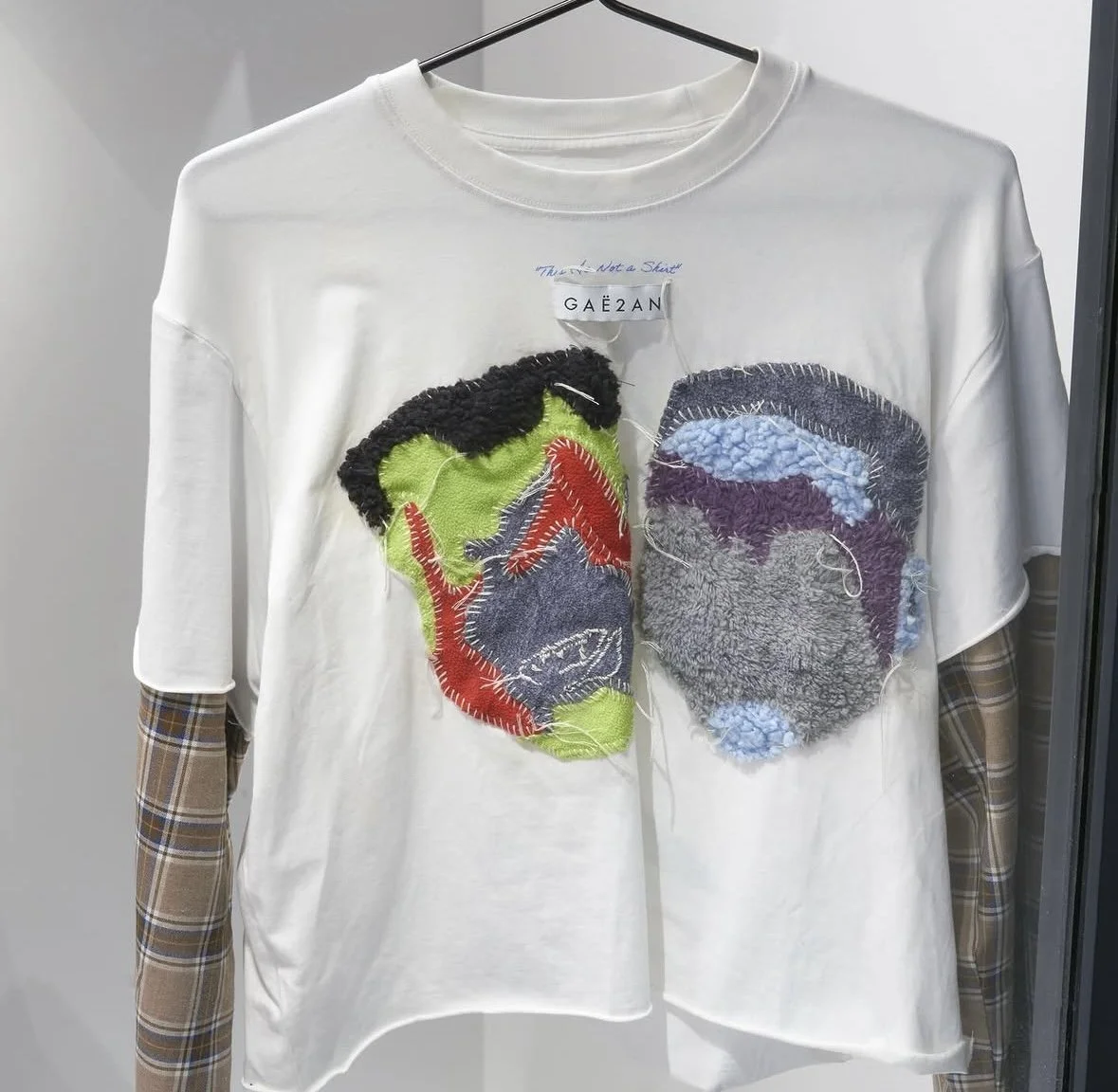
Details from Fiona Uwamahoro’s vitrine: top from the GAË2AN label
ON HER RADAR
The Africa Fashion exhibition, from London to Paris
What fashion event or news got you excited recently?
The Africa Fashion exhibition, which began at the V&A in London and has since travelled to the Field Museum in Chicago and the Brooklyn Museum in New York amongst other cities. It is now showing at the Musée du Quai Branly in Paris. As part of my research, I visited it in London, and I am looking forward to seeing it in Paris.
“I would like to see funds and resources going into building long-term, sustainable systems. I still believe education, short-term and long-term, is one of the most important parts of the ecosystem. It is where people learn, experiment, and are allowed to fail. We need nurturing systems, not only to support designers and entrepreneurs who are already thriving, but to guide the ones who are just starting out.”
HER STYLE
Dressing for the library, playing through accessories
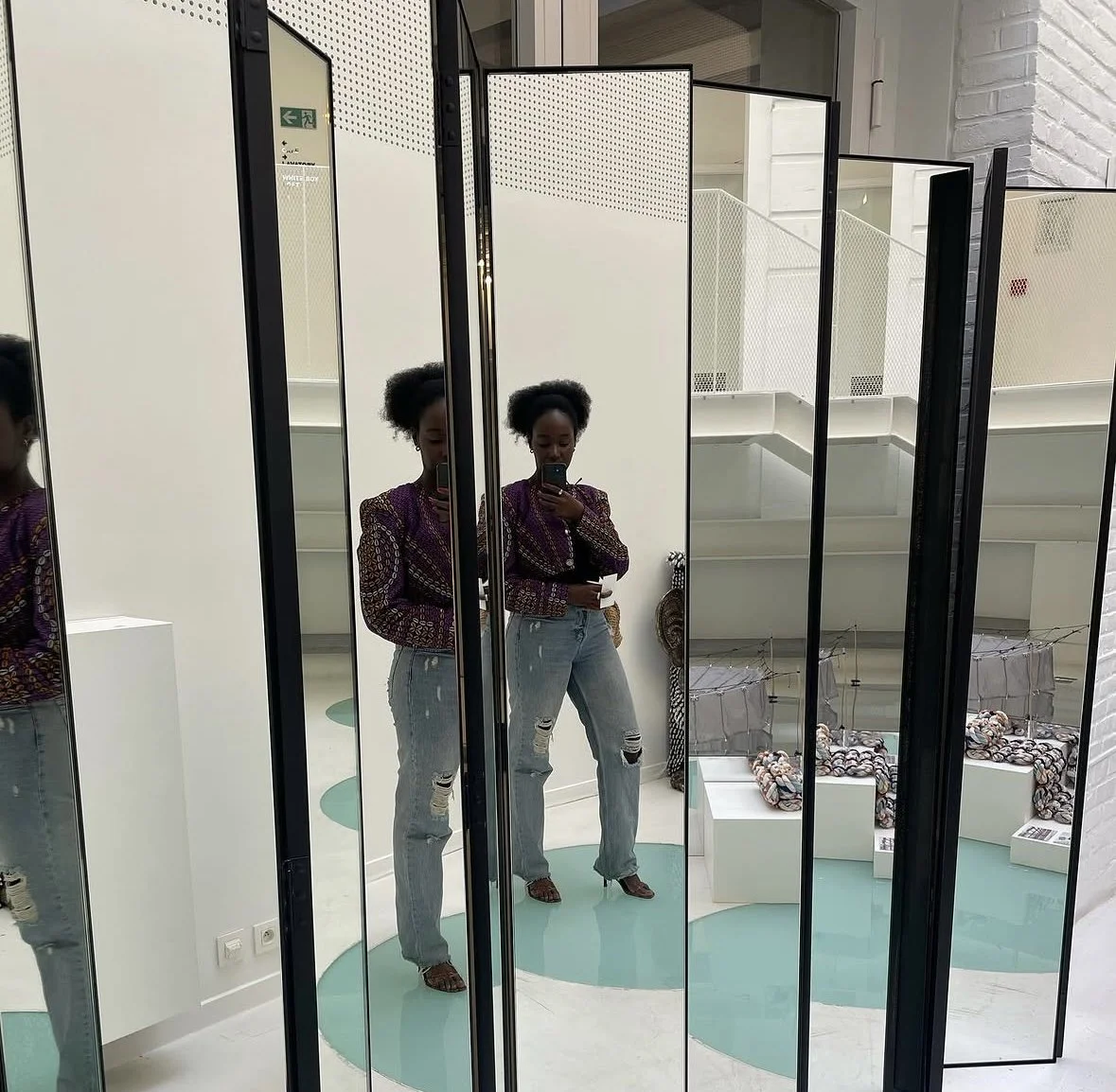
Fiona Uwamahoro wearing her IZUBAA jacket, courtesy of Fiona Uwamahoro
Your wardrobe essentials?
I spend more time researching fashion than being fashionable, and even more so lately , since most of my days are spent in the library. So, I dress for comfort. However, I like to play through accessories. I always have my brass earrings and rings from Kenya, and a leather bag from Ethiopia strong enough to carry my books and laptop. I also love my silk scarves from House of Tayo, which I tie around my neck or wear in my hair.
Your go-to destination to discover brands from Africa and the diaspora?
Instagram is the main one. I follow designers, brands, creators, institutions and influencers, and my feed keeps turning up labels I didn't know. Guzangs' page keeps me up to date on industry news, and I rely on the NDAANE website for in-depth stories and profiles.
Some of your favourite brands from Africa and the diaspora?
Some Rwandan brands, in no particular order: GAË2AN, Icyacumi, BONE, IZUBAA, Asantii, House of Tayo, MATHEO Studio, TDOBES, Fragile, Koni Clothing, Twinkle by Asty, Kezem, Masa Mara, Wase by Sarah Uwase, AMIKE Studio.
Specific pieces you have your eyes on?
For wearing: the Nshabure Dress by the Rwandan brand Kezem. I love it for its cuts, but also for its beading and cultural references. The dress nods to ishabure, a traditional Rwandan garment made from calf hide that was worn by both men and women.
For my fashion archive: a look from IAMISIGO SS24, Valley of Shadows, specifically the barkcloth corset and flared trousers. I saw the pieces at the Dirty Looks exhibition at the Barbican in London. The tailoring, the symbolism and the storytelling stayed with me.
THE CONNOISSEUR EDIT, INSPIRED BY HER
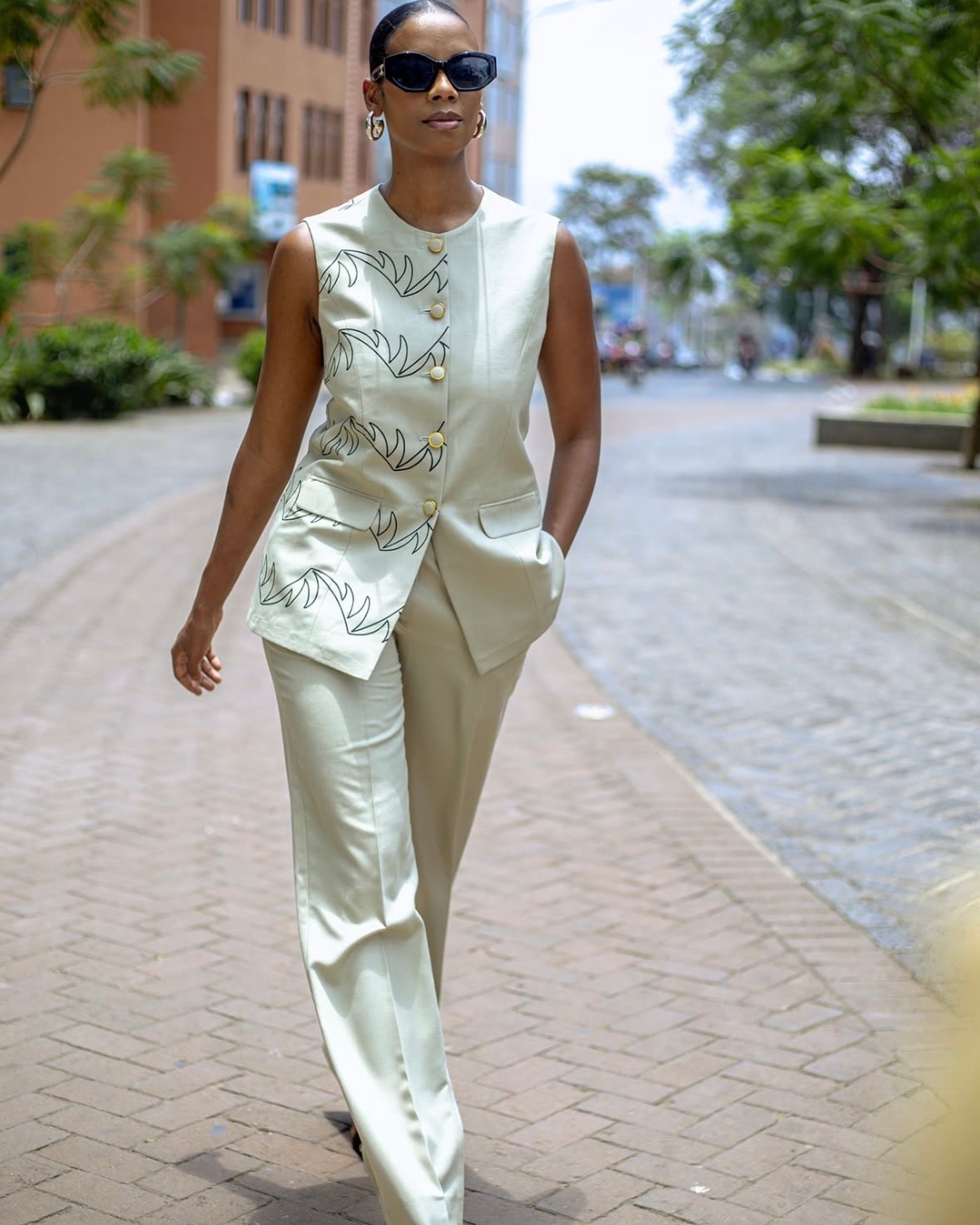
IZUBAA Gila Suit
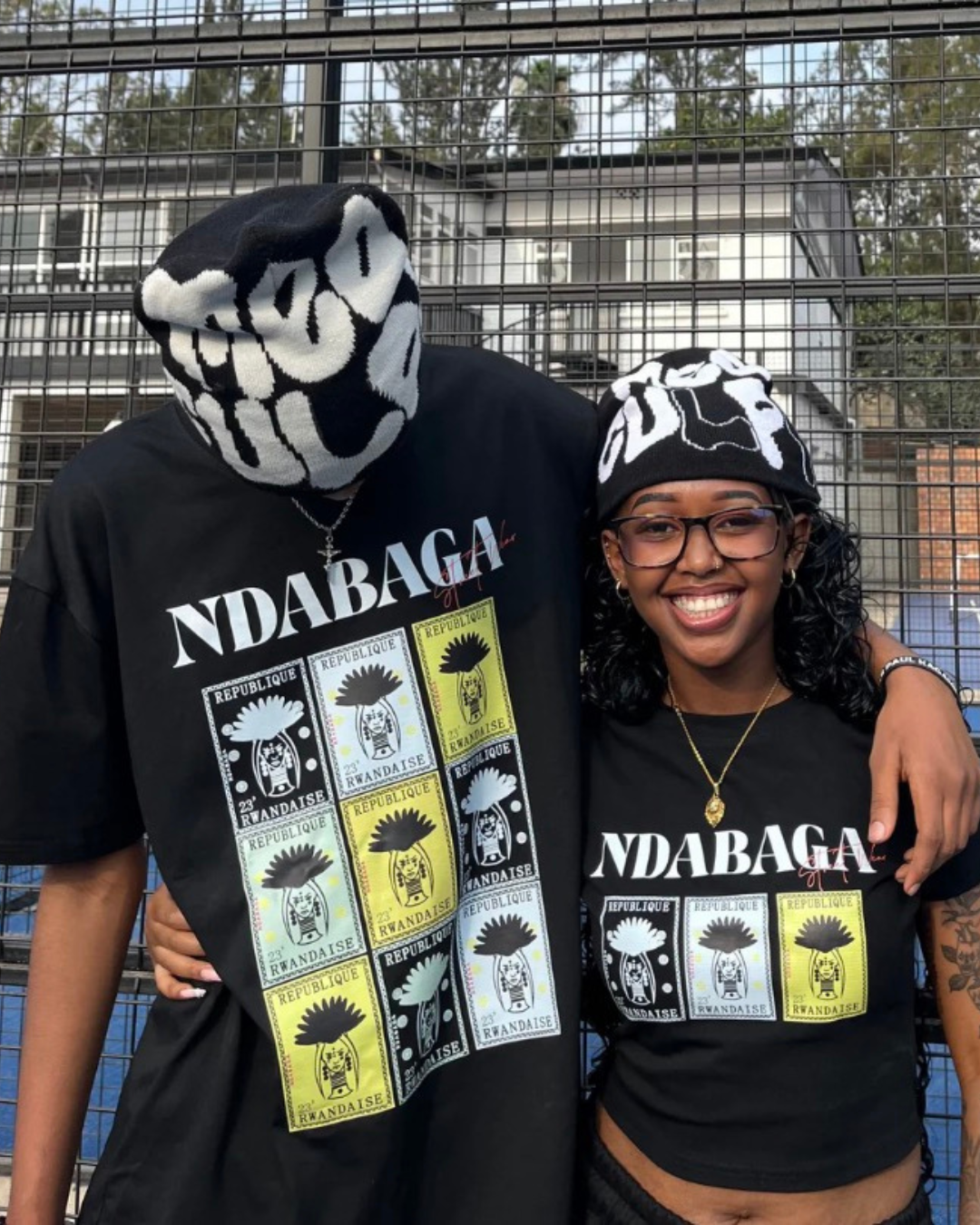
NDAGABA Multi-Stamps Tee
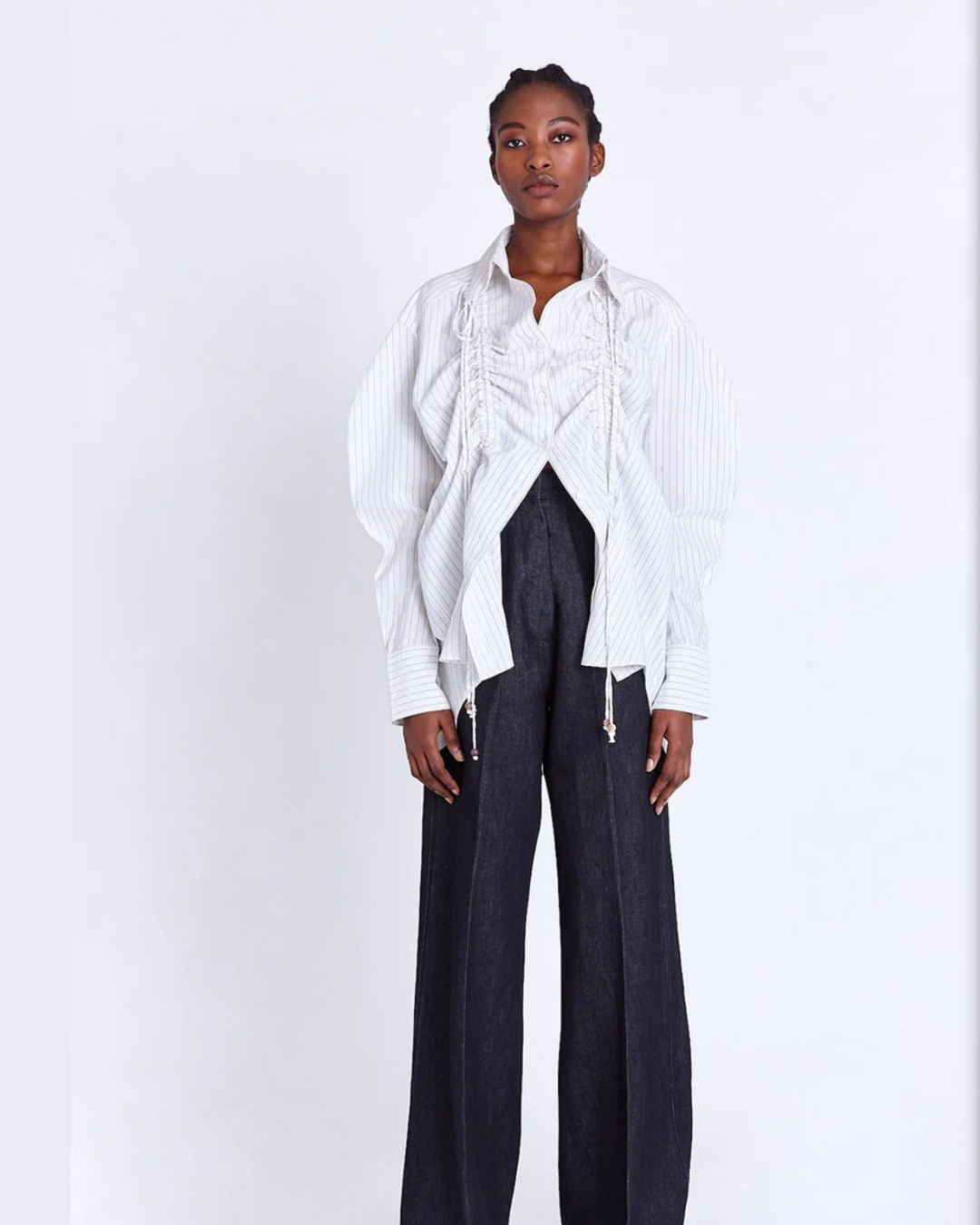
ASANTI Oversized Drawstring Shirt
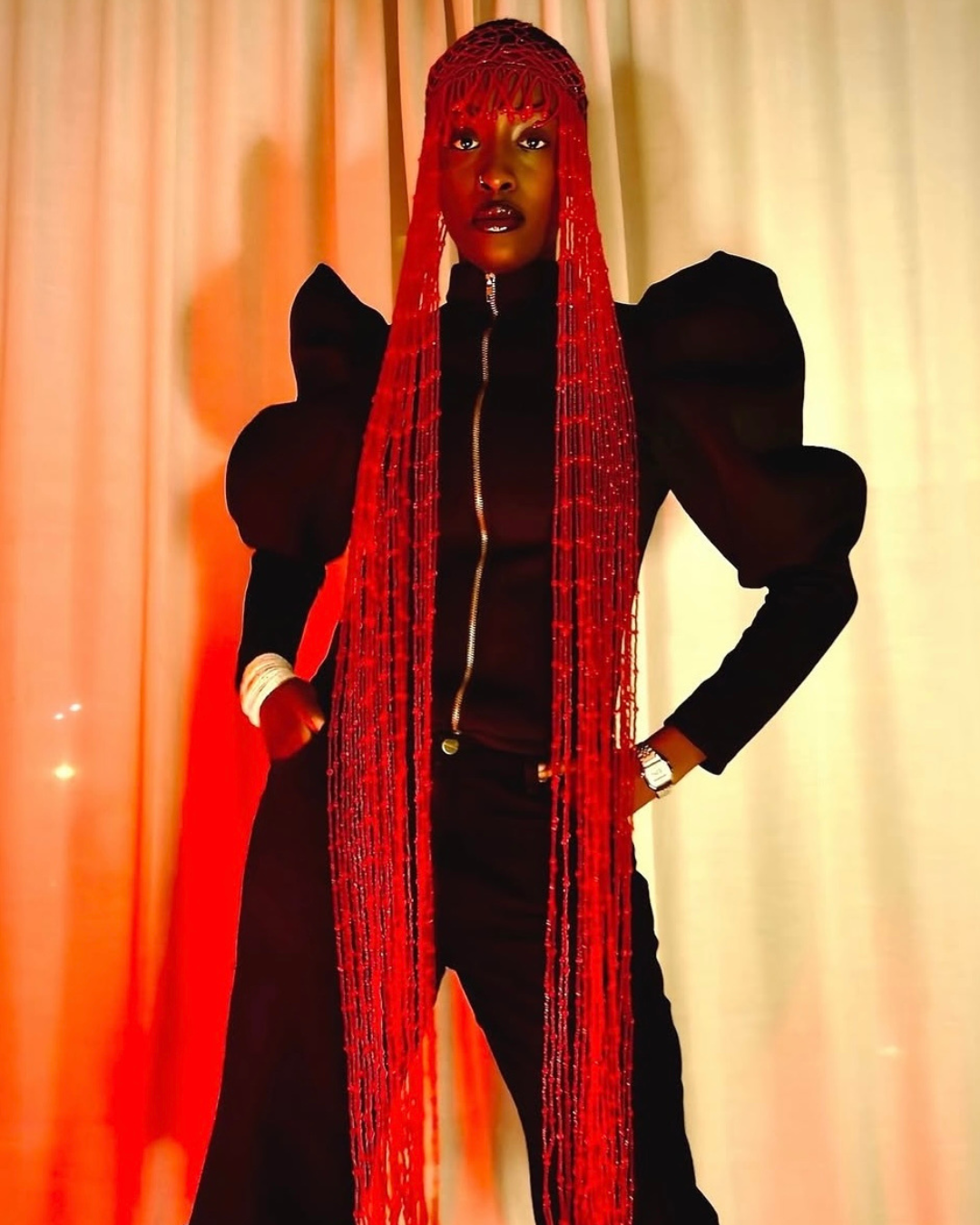
AMIKE STUDIO Mizi Headpiece
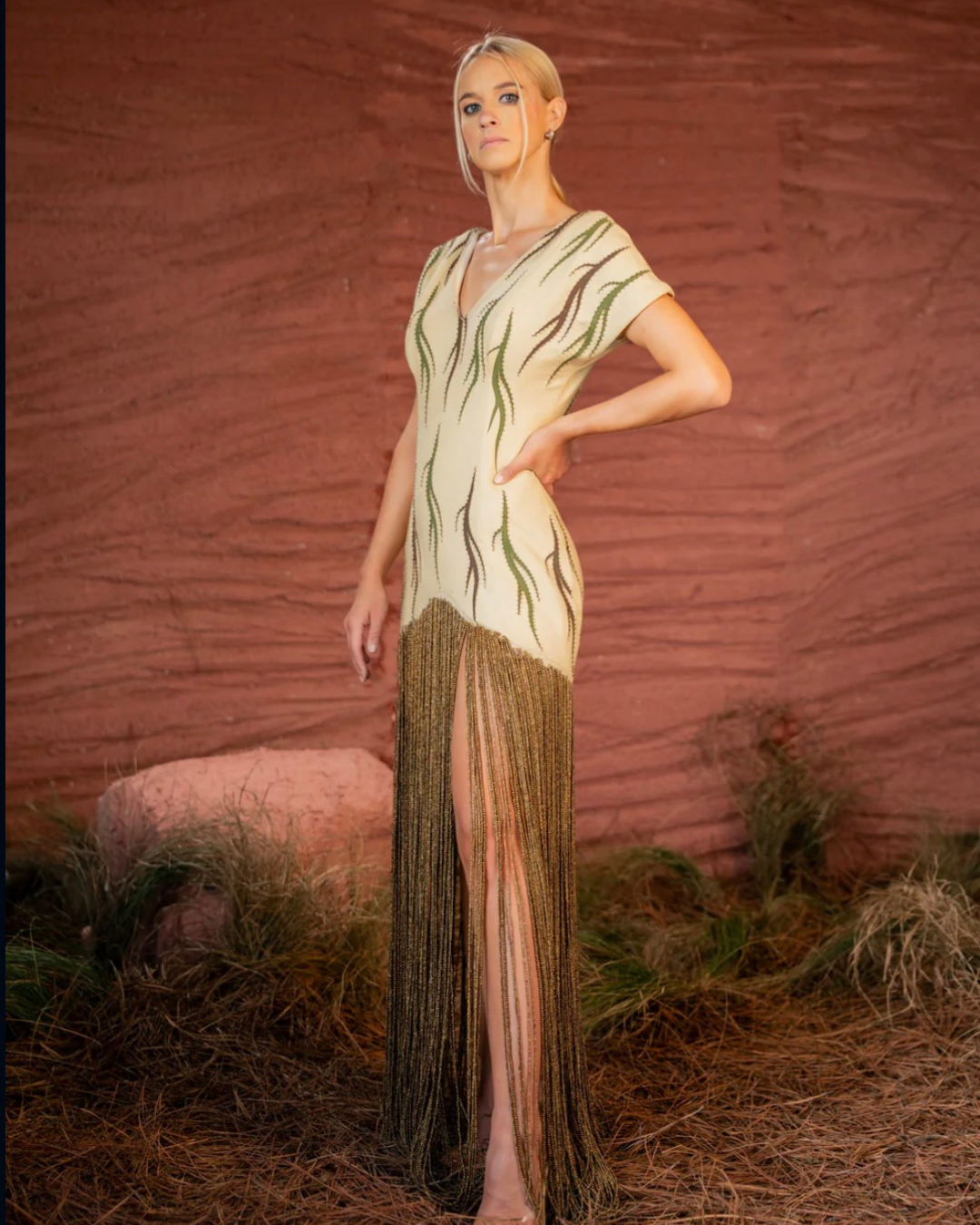
KEZEM Nshabure Dress
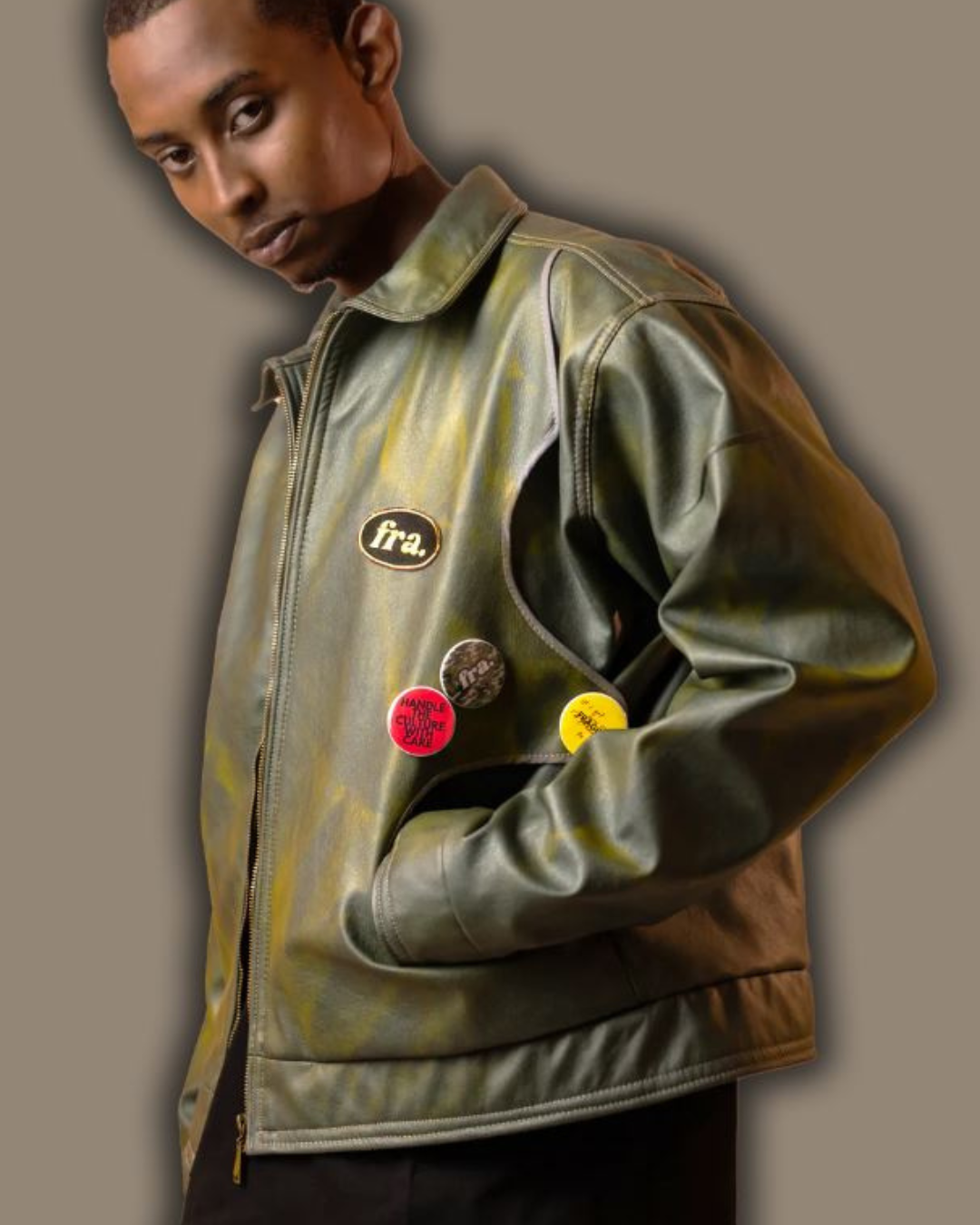
FRAGILE Goldie Green Jacket
Fiona Uwamahoro is documenting the evolution of the creative sector while helping to build it. Her work insists that Rwandan fashion, like every African country's, deserves to be studied on its own terms, and that the future of the ecosystem depends less on celebrating quick wins than on the slower work of education and the systems that let designers learn, experiment, and last.
You can follow Fiona on Instagram at @fiona.mahoro and @fieldofafricanfashion.
Read our previous portrait with Adaeze Oguzie and subscribe to the NDAANE newsletter to stay across every conversations in the series.