
"If It Can’t Be Made Sustainably, It Doesn’t Need to Exist Yet": Chloe Asaam on Design, Integrity and the Ghanaian Fashion Ecosystem
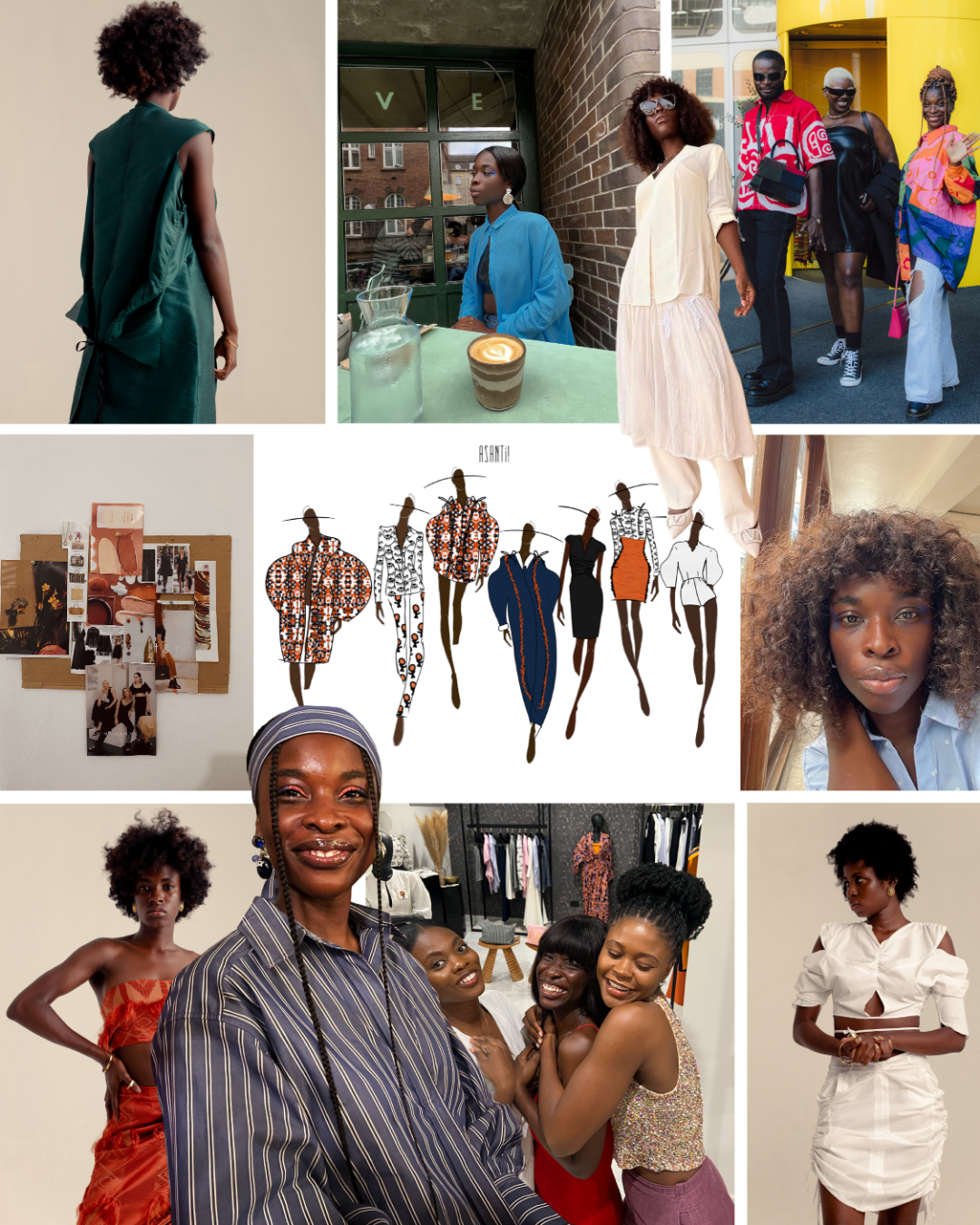
CHLOE ASAAM
“Whether I am consulting as a strategist or designing clothes, I want people to come away inspired to approach things with integrity and care, for design, for people, for the planet.”
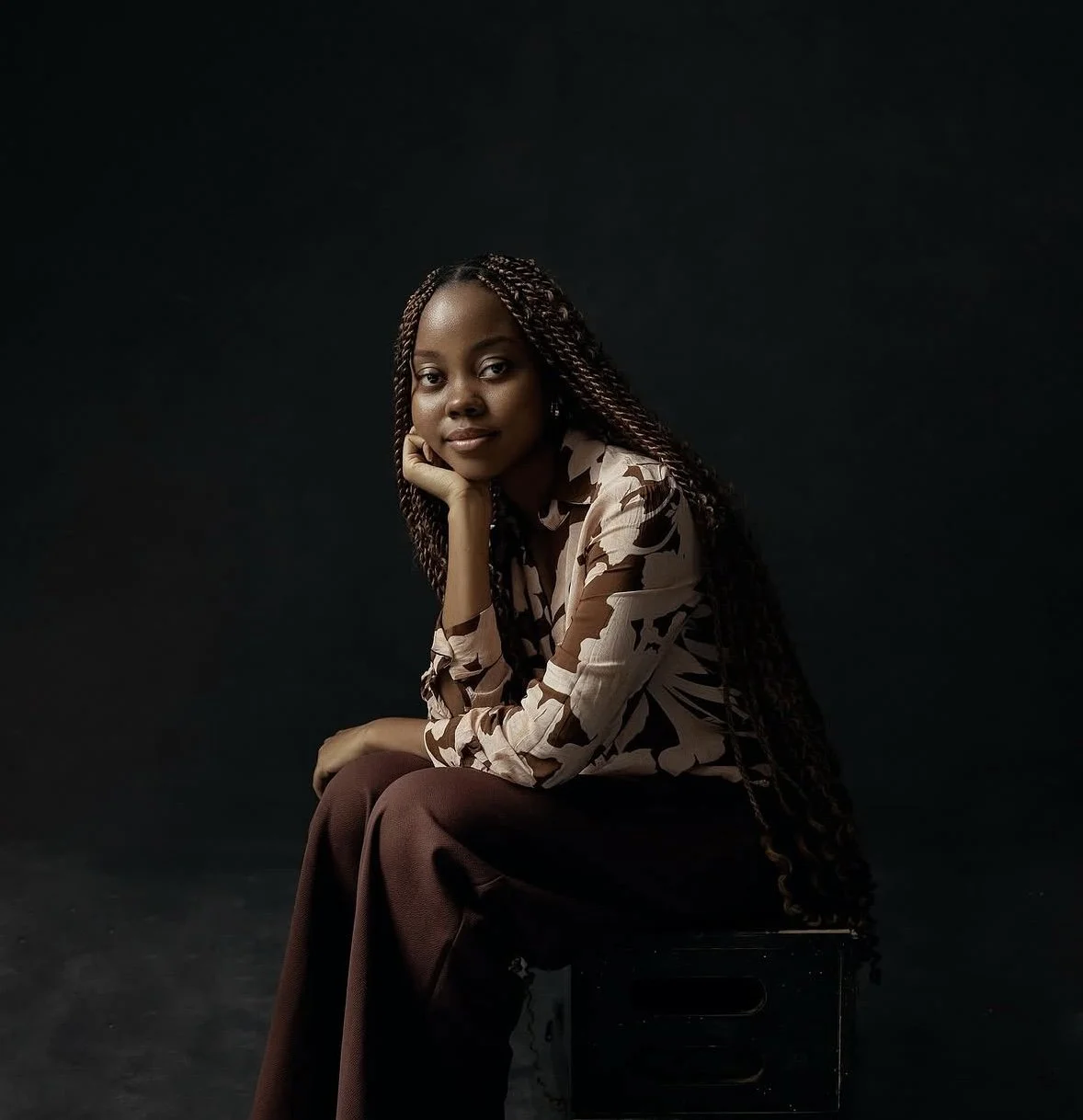
A fashion designer and sustainable growth strategist based in Accra, Chloe Asaam moves between the conceptual and the operational, helping growth-stage solopreneurs and young creatives unlock business value through systems building. Her path was never linear, and she will be the first to tell you that this is her greatest asset. Drawing on years across social impact, environmental justice, and fashion design, she has developed a practice that refuses to separate the work from the values behind it. In this portrait, she talks about the habit she is trying to build, the culture of unpaid labour she refuses to enable, and what it means to grow slowly, sustainably, and on her own terms.
HER CRAFT
Designing clothes, consulting emerging creatives and embracing a non-linear path
Could you tell us what you do and why you are passionate about it?
I design clothes and help growth-stage solopreneurs and young creatives unlock business value through systems building. Consulting has taken me through many different projects, and there was a time I thought I was all over the place, that my focus was too fragmented. Now I see it differently. I feel fortunate that my career has not been straightforward. It gave me a wide range of skills, a unique perspective, and a holistic approach to design.
A lot of what I gained working in social impact and environmental justice has shaped how I engage with work in ways I could not have anticipated. The management and operational skills I developed leading programmes and initiatives turned out to be just as valuable as the design work itself. Being a beautiful mixed bag has positioned me well for the work I do now. What that looks like is different for each client, as long as the vision, the foundations, and the drive for growth centre people, the environment, integrity, and equity. If a client wants to grow at any cost, at the expense of people or the planet, I am simply not the right person for them.
Whether I am consulting as a strategist or designing clothes, I want people to come away inspired to approach things with care, for design, for people, for the planet.
How has your work evolved since you started?
In May 2025, I began an experiment on my Instagram: to demonstrate that basic design and sewing skills transfer beautifully into upcycling, in a way that is clean and considered. It was also a way of getting comfortable showing up on camera and building a personal brand, which does not come naturally to me as an introverted person. The reception has been good. I gained over 600 organic followers, which feels like a real win.
Right now, I am focused on building that personal brand and finding new ways to keep things interesting. What I would really like to invest more energy in is expanding my reach and helping shape the fashion and creative ecosystem on a regional level.
Any recent proud moment?
I recently helped an emerging fashion brand fine-tune its product offering and develop an achievable, sustainable plan around social and environmental impact. I am proud of that one. I got to draw on my full range of experience and bring it home for them. I think most emerging brands and creatives genuinely care about the kind of impact they have. They just do not always know where to begin.
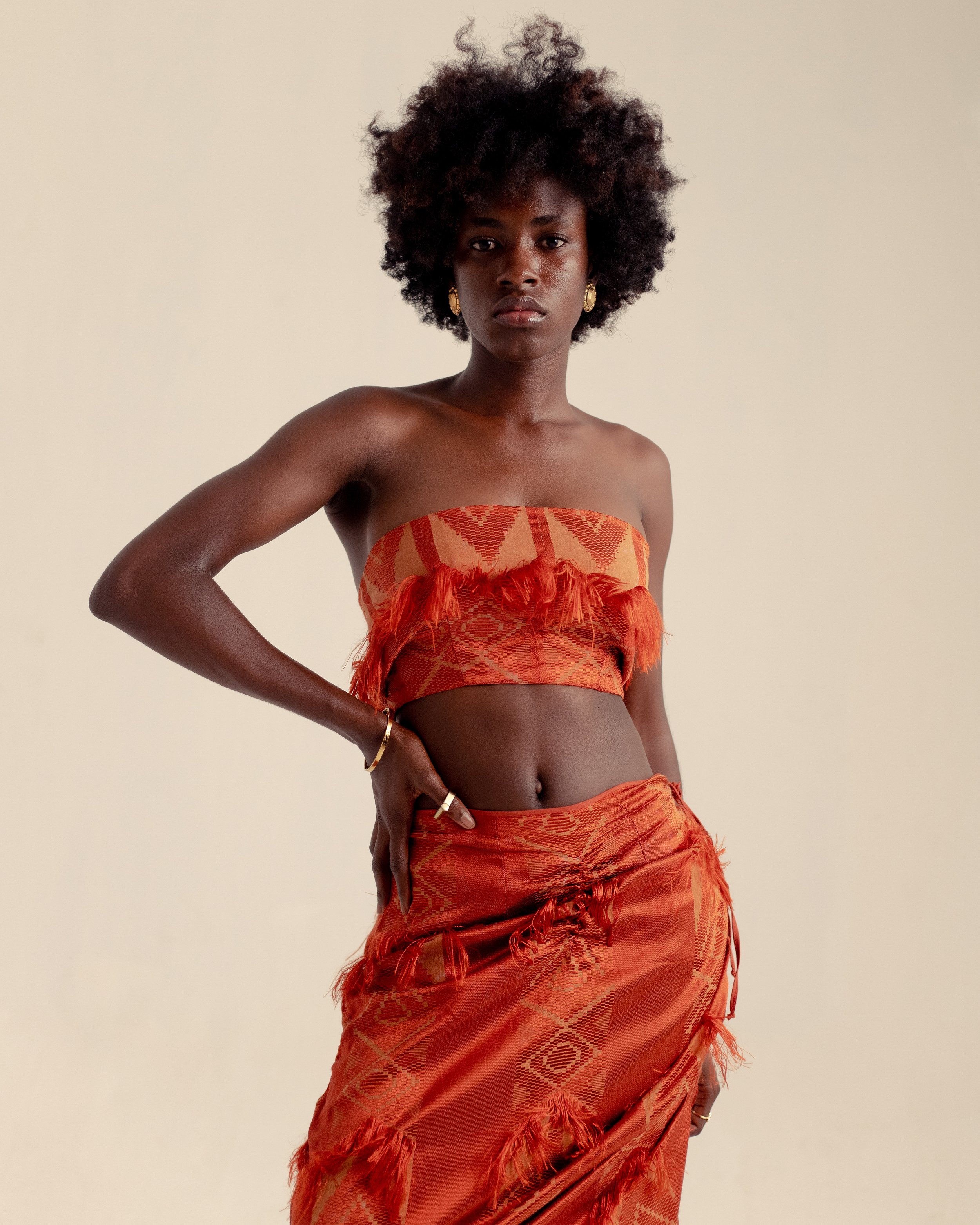
Bold Underlined Amber Set designed by Chloe Asaam, courtesy of Chloe Asaam
HER LESSONS
Sustainable production, the cost of overproduction and the practice of designing with intention
“If I cannot afford to produce it sustainably at my current scale, then it probably does not need to exist yet.
I think many people in the fashion and creative industry have not grasped this yet. Or perhaps they simply refuse to, because doing so would cost them profit, fame, or the pedestal they have built. The result is often exploitation, declining standards, and very little regard for the people behind the labour.”
A habit you're trying to build in your work
Not building a new one so much as maintaining a practice I already have: designing with intention and documenting the process.
HER ENERGY
The design process, creative rituals and what keeps her going
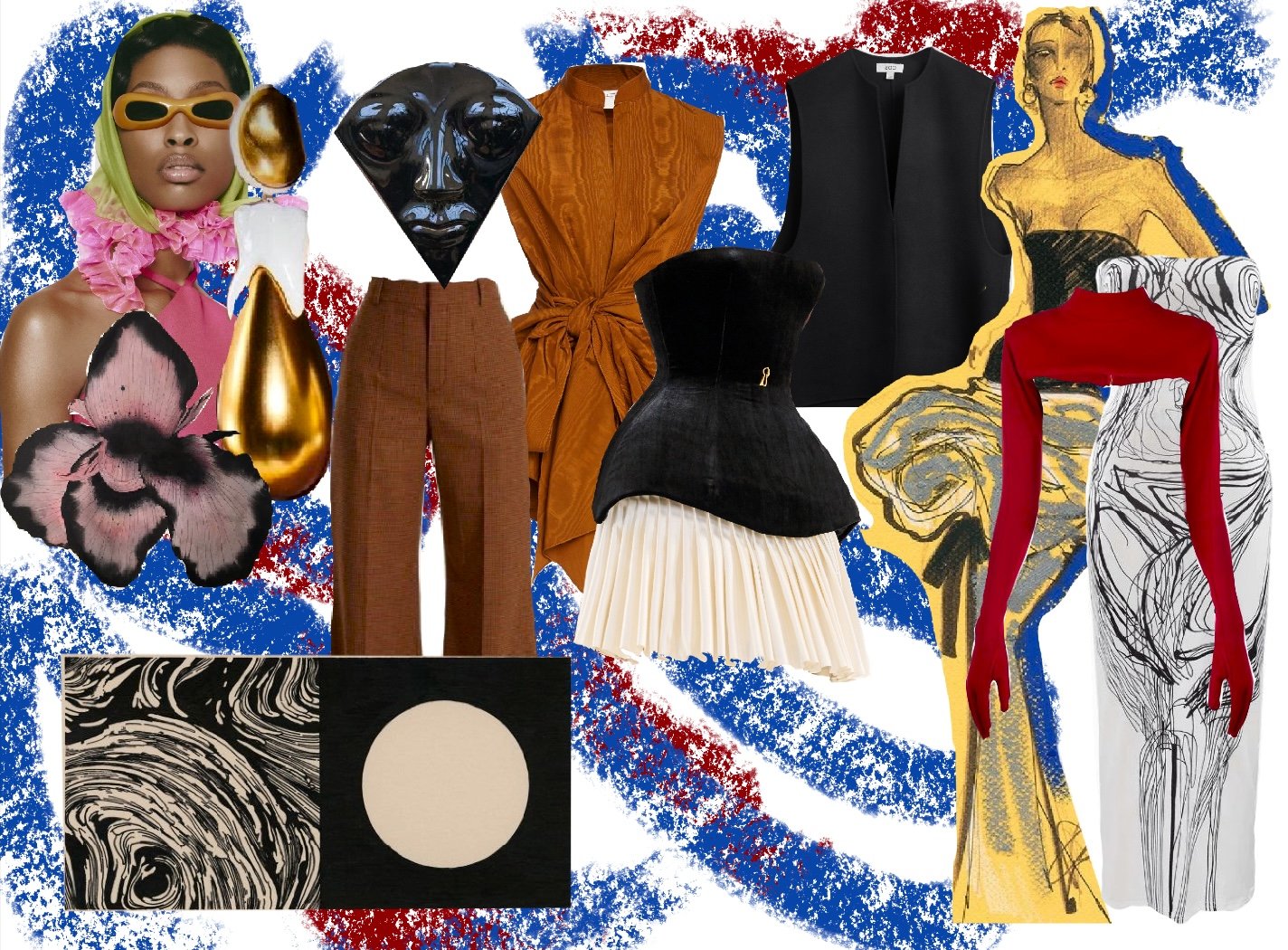
Moodboard for Planet Renaissance by Chloe Asaam, courtesy of Chloe Asaam
What do you enjoy the most in your work?
There are many parts of the design process I love, but the concept development and experimentation stage is my favourite. That is where I get to play and invent. I surprise myself every time, and I get to create something unique and well thought out that I know my clients will feel beautiful and comfortable in.
What keeps you going?
My faith. Knowing that everything will work out for my good. I have several verses and principles from the Bible that I use to push back on negative thinking and narratives that others may try to impose on me. They are a consistent source of fuel, power, and peace. Romans 8:37, Psalm 91.
How do you stay inspired?
I watch a lot of creative and how-it’s-made content, where people walk through the process behind a product or a design. I make a point of collecting boards and following what other creative industries are doing. They can be a genuine source of inspiration. Prayer has also brought me to that place many times. I have come out of a session feeling refreshed and ready to create.
HER COMMUNITY
Belonging, fragmentation and what genuine community looks like in Ghana's creative industry
“Community is support. A give-and-take dynamic, not transactional, but rooted in the genuine desire to see everyone grow, be paid well, and live a wholesome and dignified life.
There are times when our local creative community feels more fragmented than integrated. I would love to see it grow into something more expansive, with a wider range of talents, groups, and perspectives coming together to form a vibrant ecosystem.”
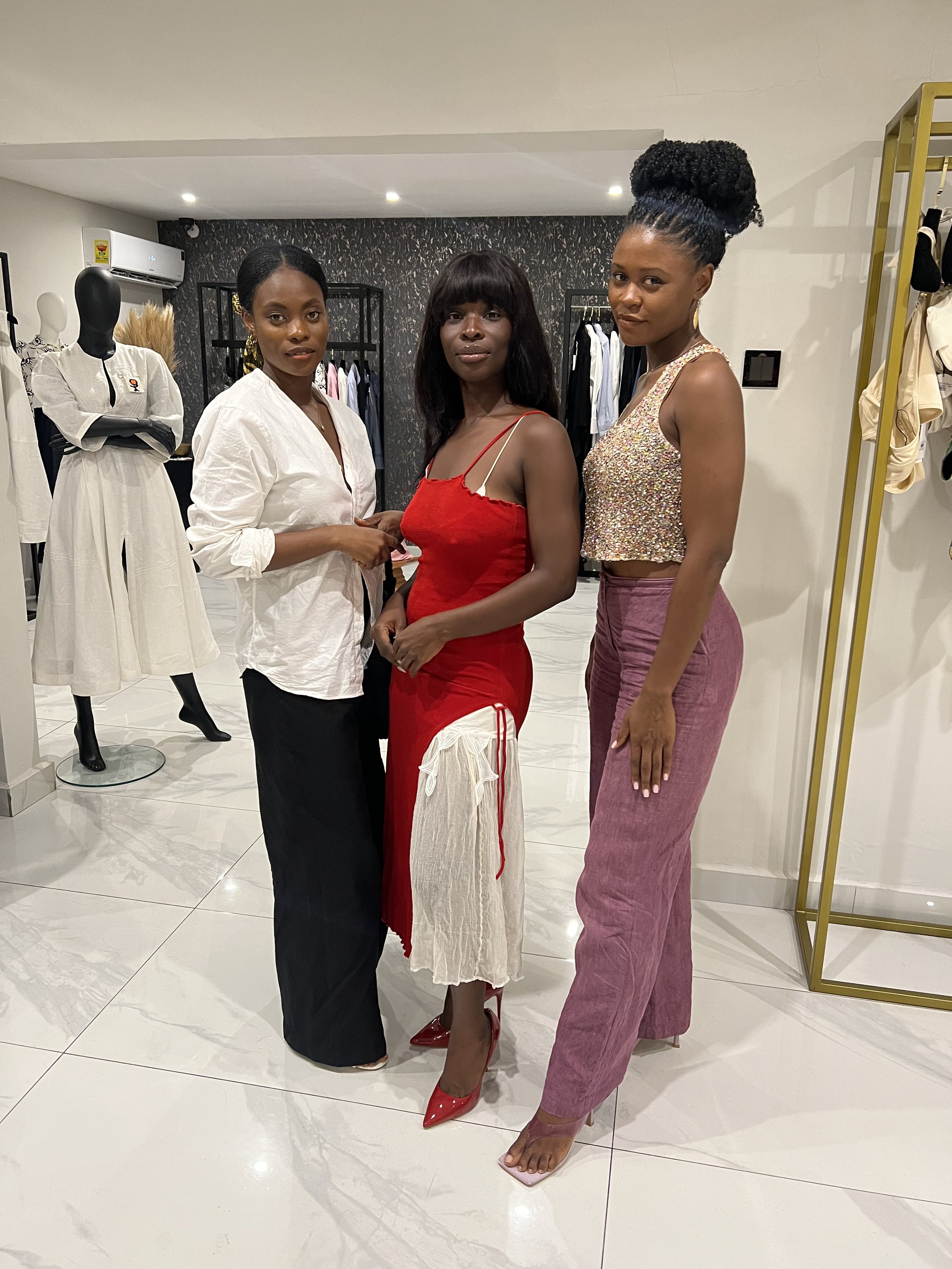
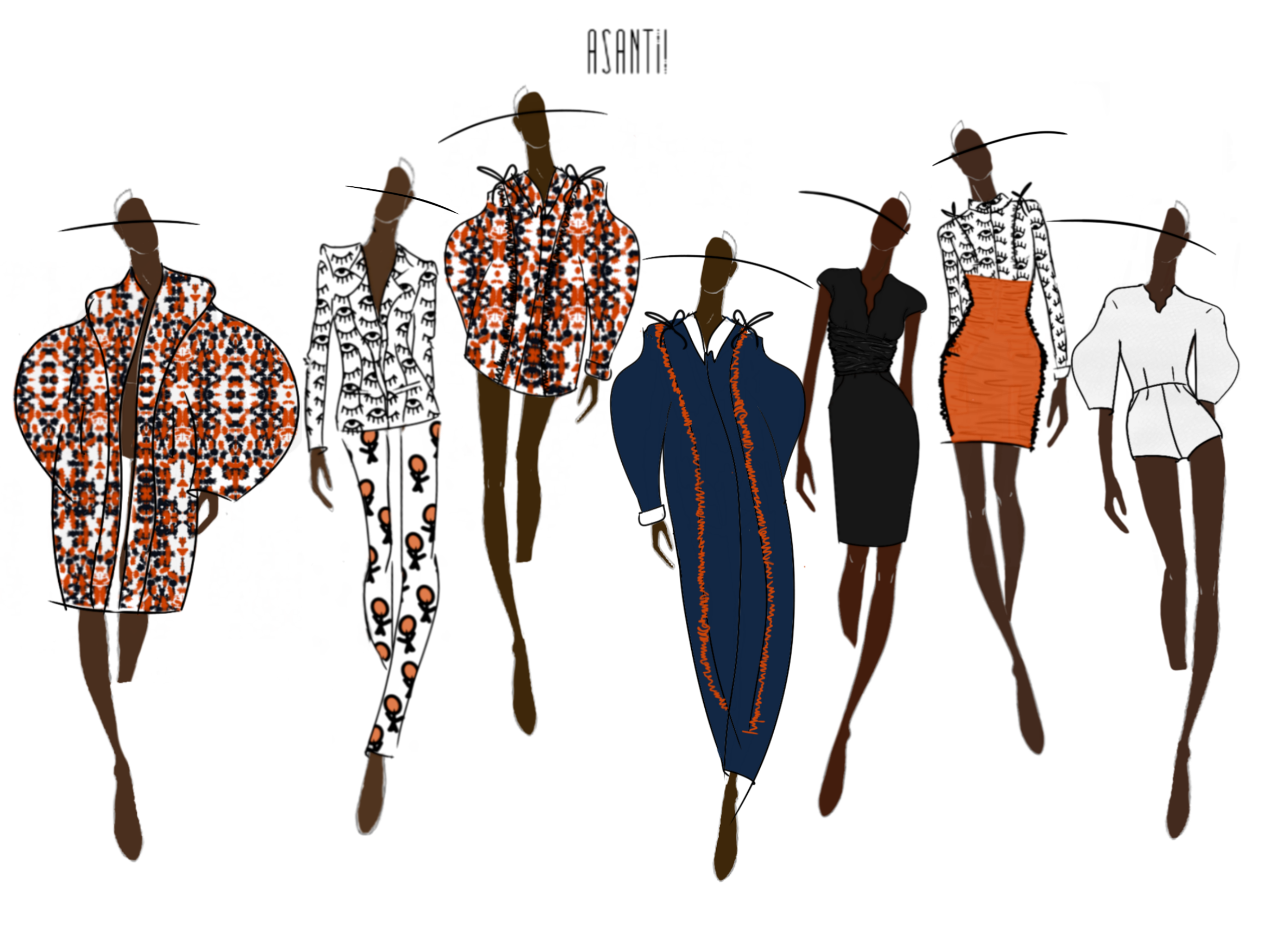
Chloe Asaam and friends during the Asantii label launch in Accra, courtesy of Chloe Asaam
HER PERSPECTIVE
Unpaid labour, fast fashion's impact on the Ghanaian creative ecosystem and the industry worth building
Any specific industry topics you’ve been thinking about lately?
Unpaid labour and exploitation have become deeply embedded in our local ecosystem, and I attribute a lot of that to fast fashion. The culture of treating clothes as disposable, cheap commodities has bled into how labour is valued. People at the helm of brands have become increasingly emboldened to mistreat those who work for them.
I have lost count of how many so-called internship open calls are thinly veiled requests for unpaid labour, or how many stories I have heard of people being grossly underpaid yet expected to show up endlessly committed, grateful for the opportunity. In reality, the work is reduced to grunt labour, with no clear structure, no learning objectives, and no real investment in the growth, dignity, or long-term value of the people sustaining these brands.
What are some current challenges and opportunities you see at the moment in the global African fashion ecosystem?
Africa is broad, bold, and beautiful. Each region has its own advantages and challenges, not to mention its own particular character. And when you zoom in even closer, there are complex issues and nuances that have to be considered.
If we are to build a cohesive fashion ecosystem that transcends borders, one rooted in our shared values of community, that honours young creative minds and holds reverence for the environment, it cannot be a copy-and-paste from the West. Across the board, I am certain we cannot afford to reward tyrannical behaviour that prioritises rapid, high-stakes results over human dignity, employee wellbeing, and the environment. We cannot adopt that kind of business-as-usual mentality and expect a different outcome.
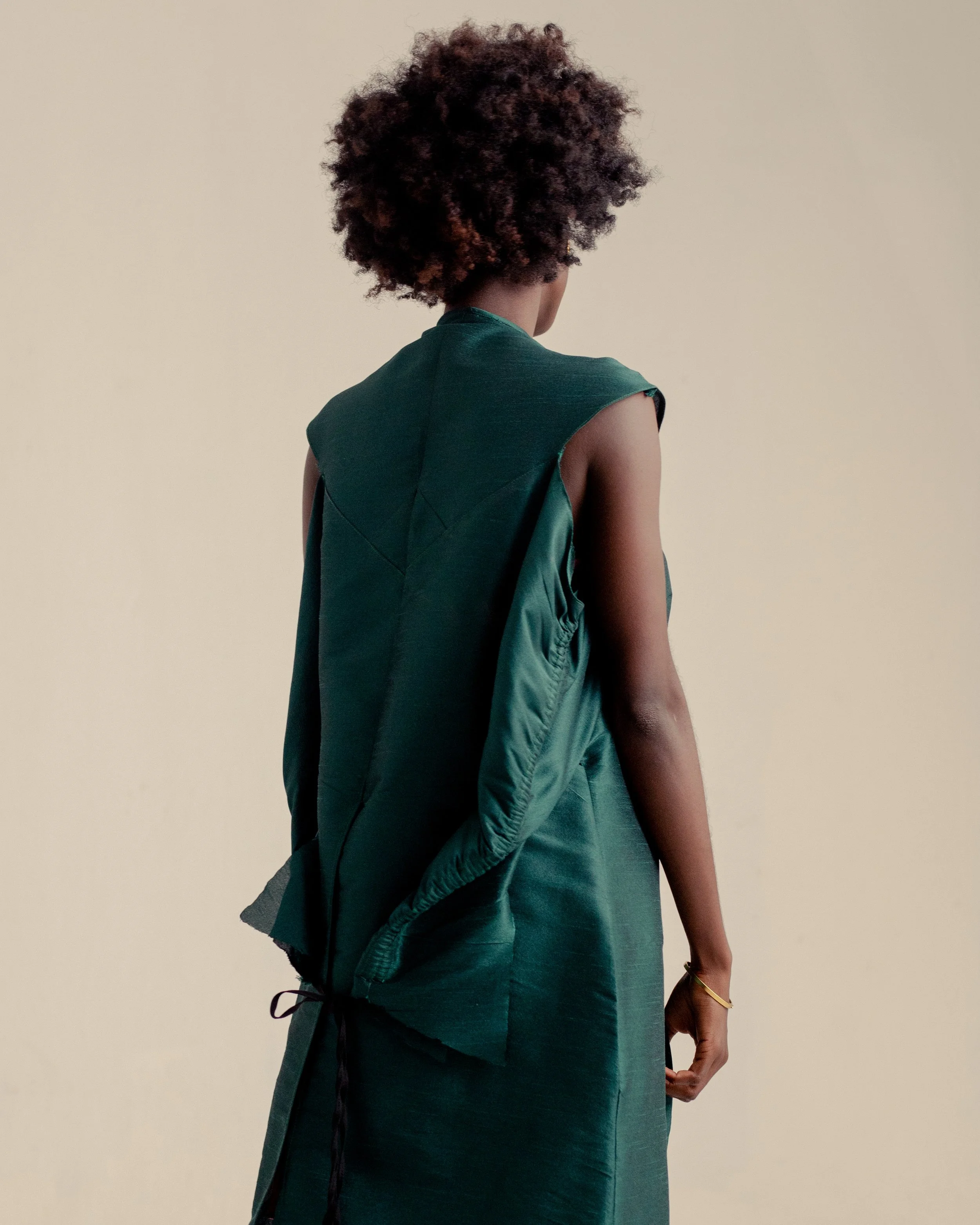
Bold Underlined Wellness Kimono designed by Chloe Asaam, courtesy of Chloe Asaam
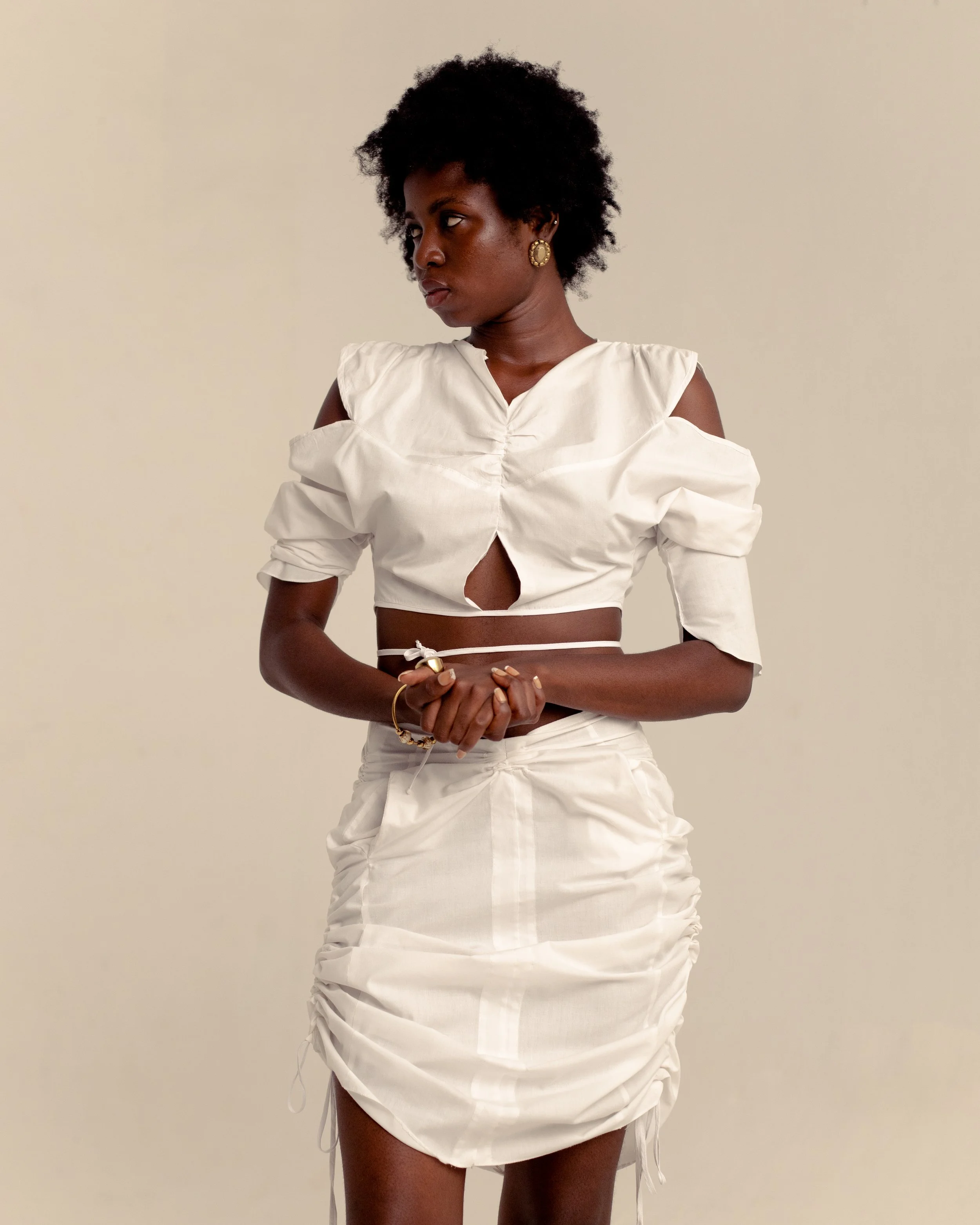
Bold Underlined Iris Skirt and Blouse designed by Chloe Asaam, courtesy of Chloe Asaam
“If we are to build a cohesive fashion ecosystem that transcends borders, one rooted in our shared values of community, that honours young creative minds and holds reverence for the environment, it cannot be a copy-and-paste from the West. Across the board, I am certain we cannot afford to reward tyrannical behaviour that prioritises rapid, high-stakes results over human dignity, employee wellbeing, and the environment.”
ON HER RADAR
Transparency in fashion , the West African creatives she is watching and what the industry owes its workers
What are you curious about at the moment?
I am curious about other fashion creatives in the West African region and their craft. From editors to models, designers, machinists, writers, and producers, I would love to hear how they have navigated their work and the systems they have built to help them scale.
Something I think customers and people in general should pay closer attention to is how clothes are made and how workers are treated. It is one thing to know how a brand treats you as a customer. It is another to see how they treat the people making the clothes.
HER STYLE & INSPIRATION
Ghanaian creatives shaping her thinking right now
Many have inspired me throughout my creative career, and it is always in flux. At the moment, I draw from:
Whitney Chinonye Ernest
She is a brilliant artist. I love how she takes the crowded narrative style to a new level and imbues socio-economic and political issues in her work.
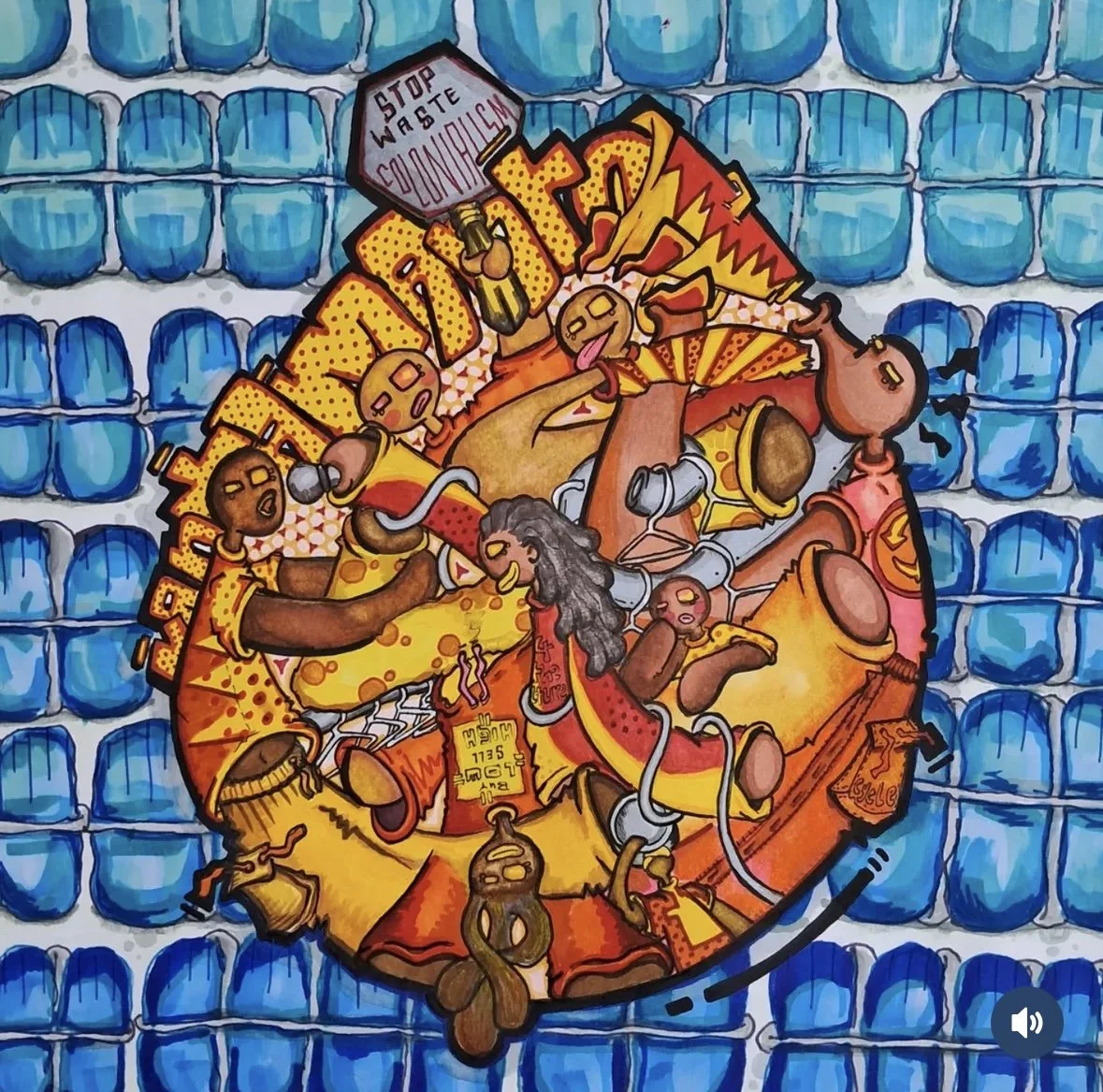
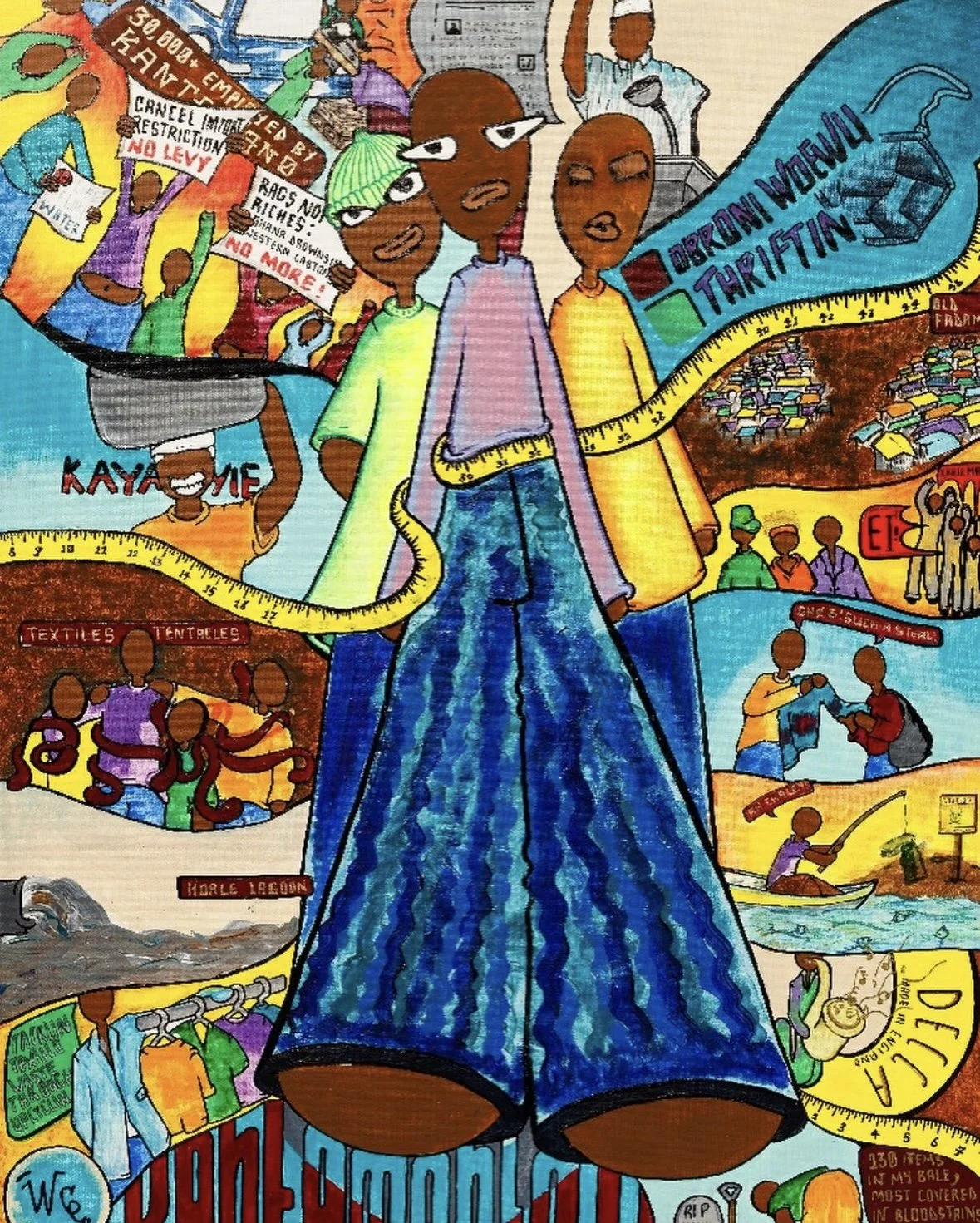
Artist Whitney Chinonye Ernest and some of her work tackling waste colonialism for the OR Foundation
BIIO by Nathaniel Bio
I am forever drawn to his work. It is refreshing, clean, and clearly considered. I have been in the industry long enough to know that some designers design strictly for profit and their bottom line, while others find a balance without having to compromise their creativity and peace. Nathaniel is one of the few.
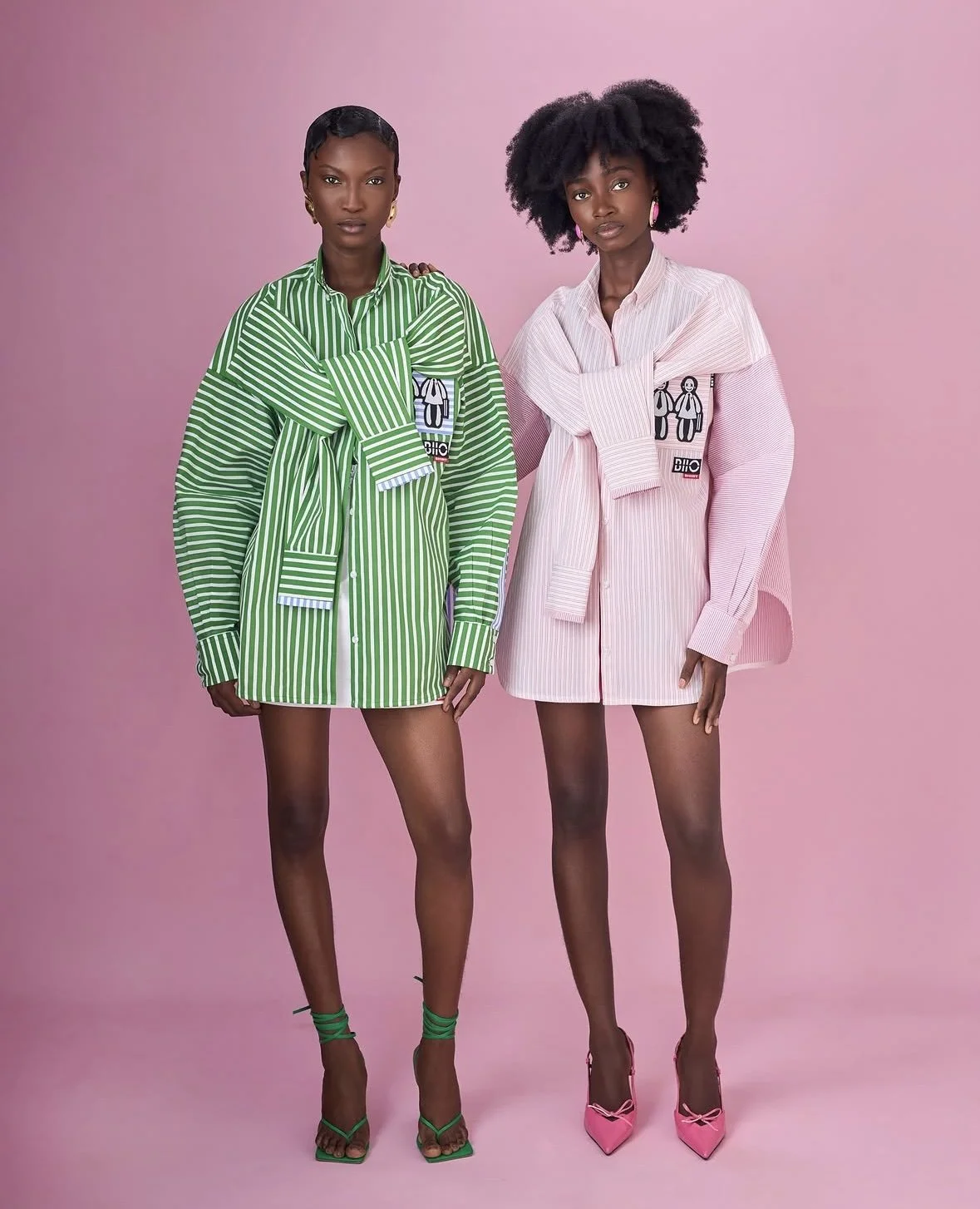
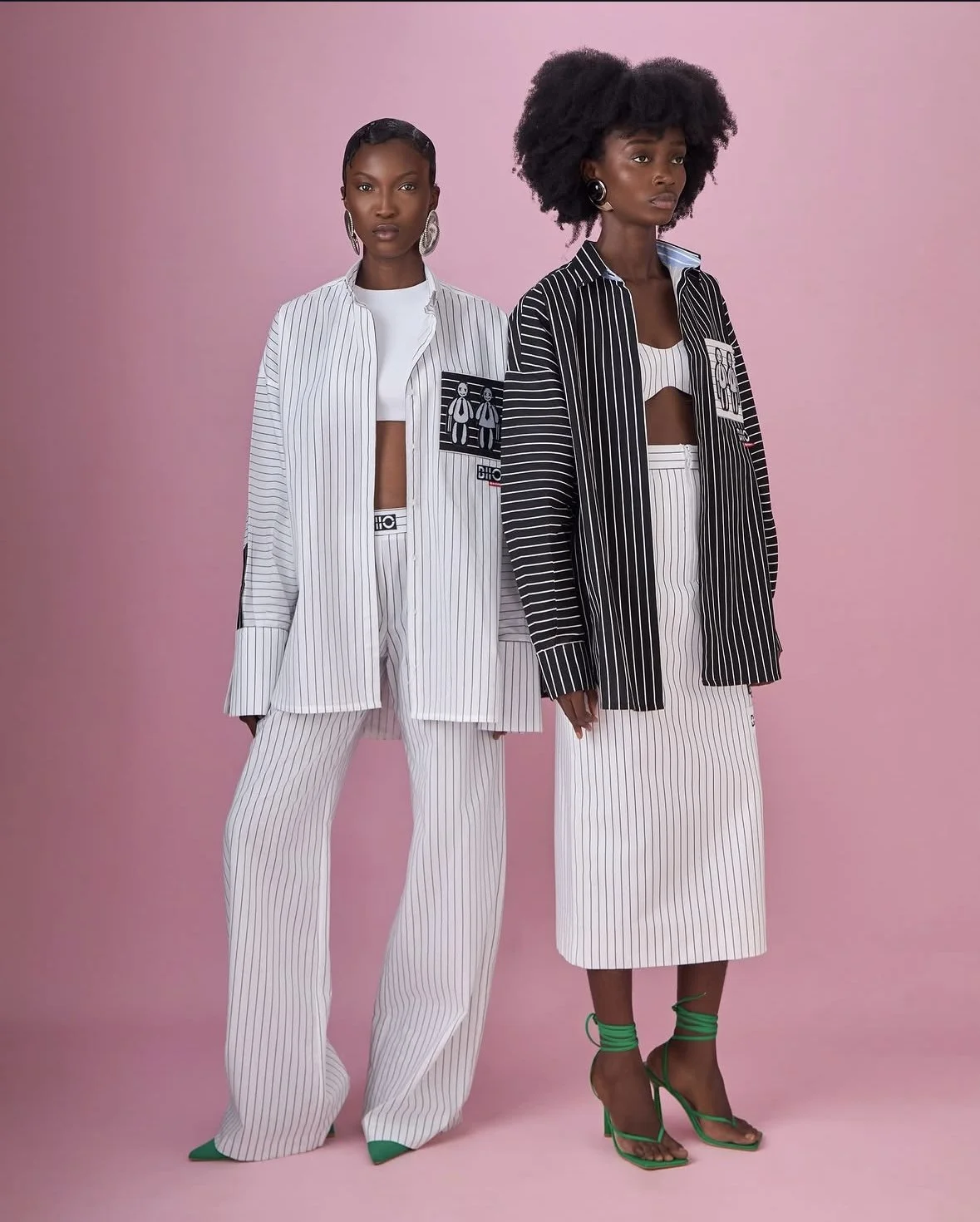
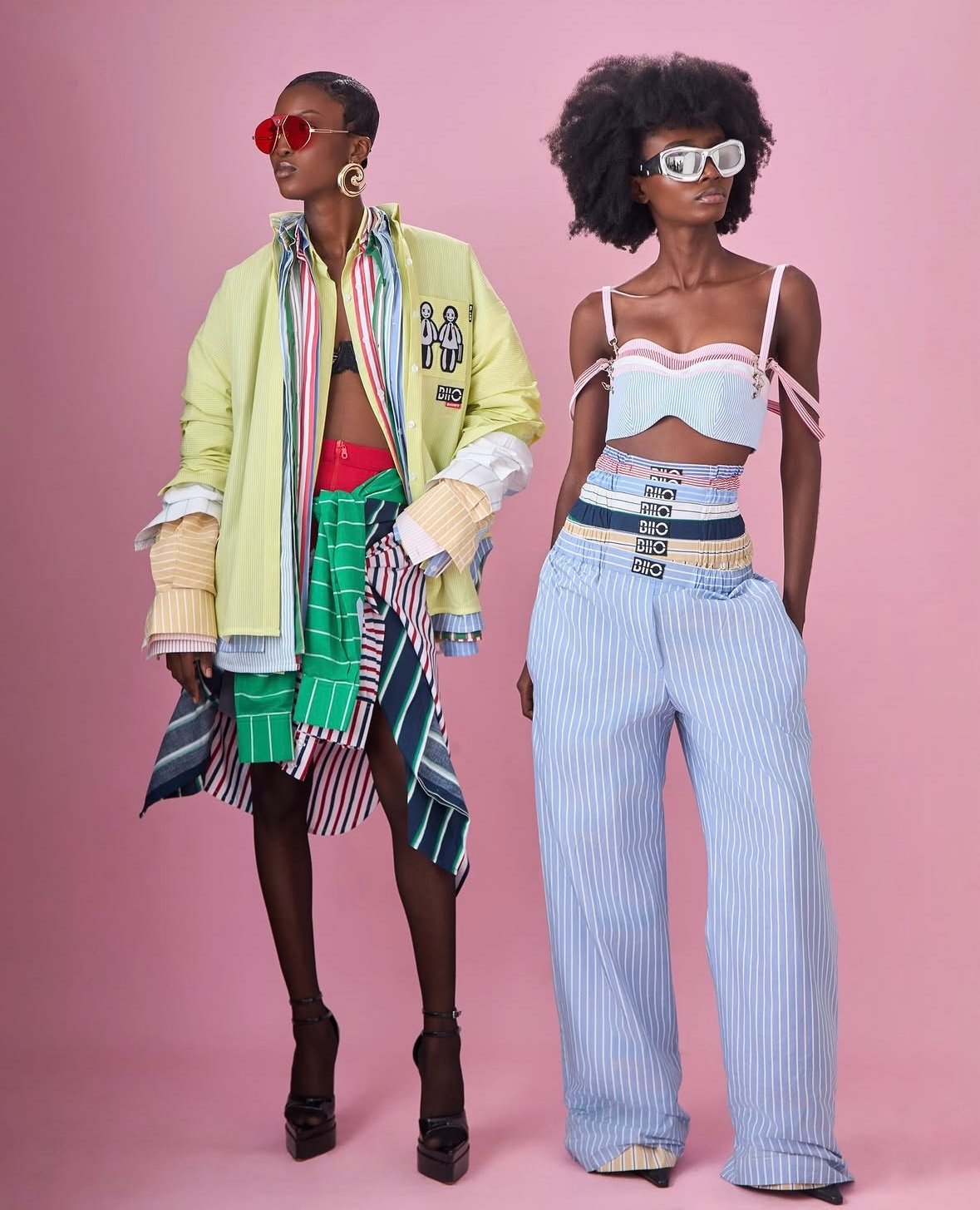
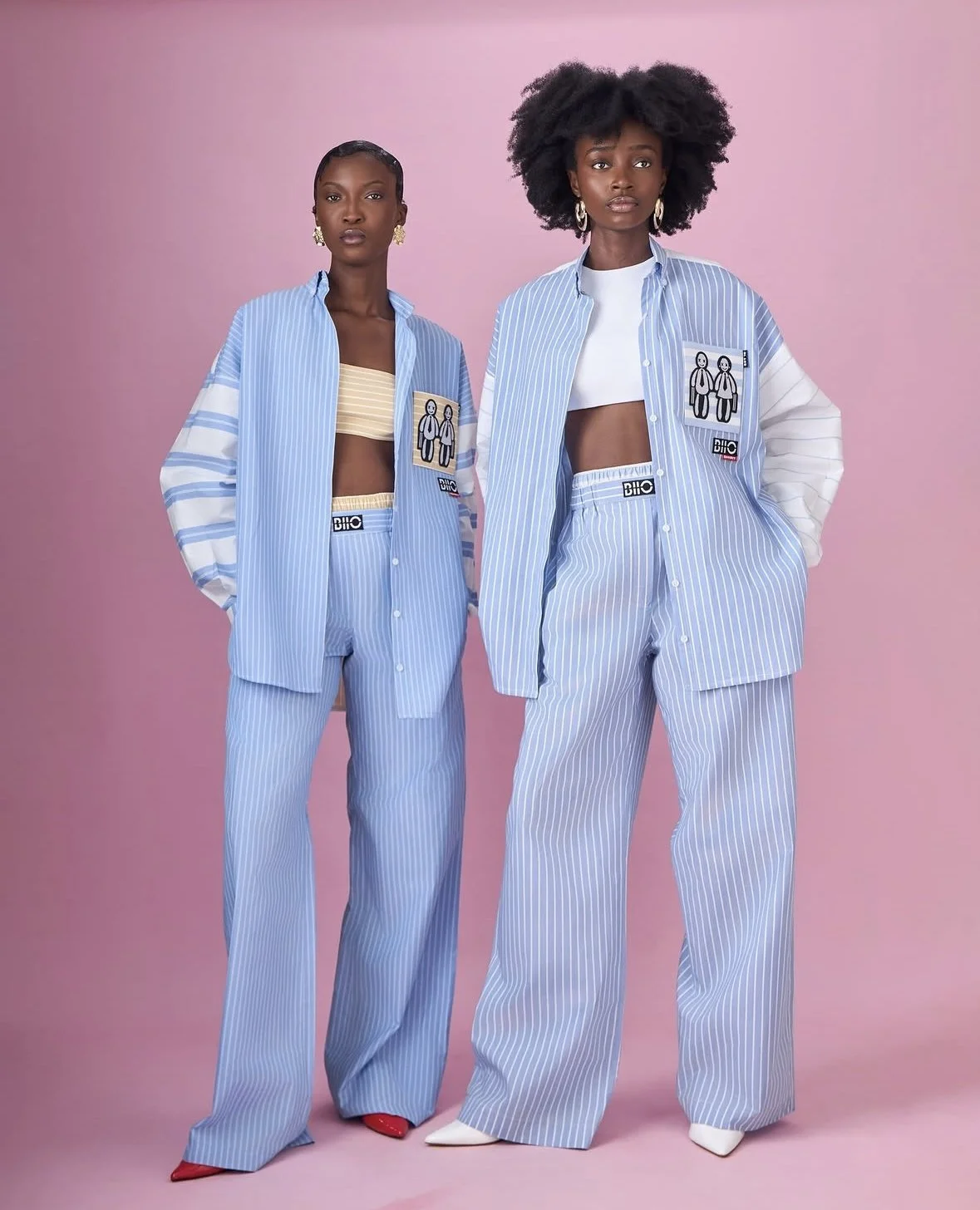
Looks from the BIIO summer SHIRT capsule
AJABENG by Travis Obeng-Casper
He stays consistent and true to the brand. Personally, I think he has helped make simple silhouettes and timeless pieces mainstream again. A reminder that Ghanaian fashion is not a monolith. It is not always bold, and it is not only print-focused.
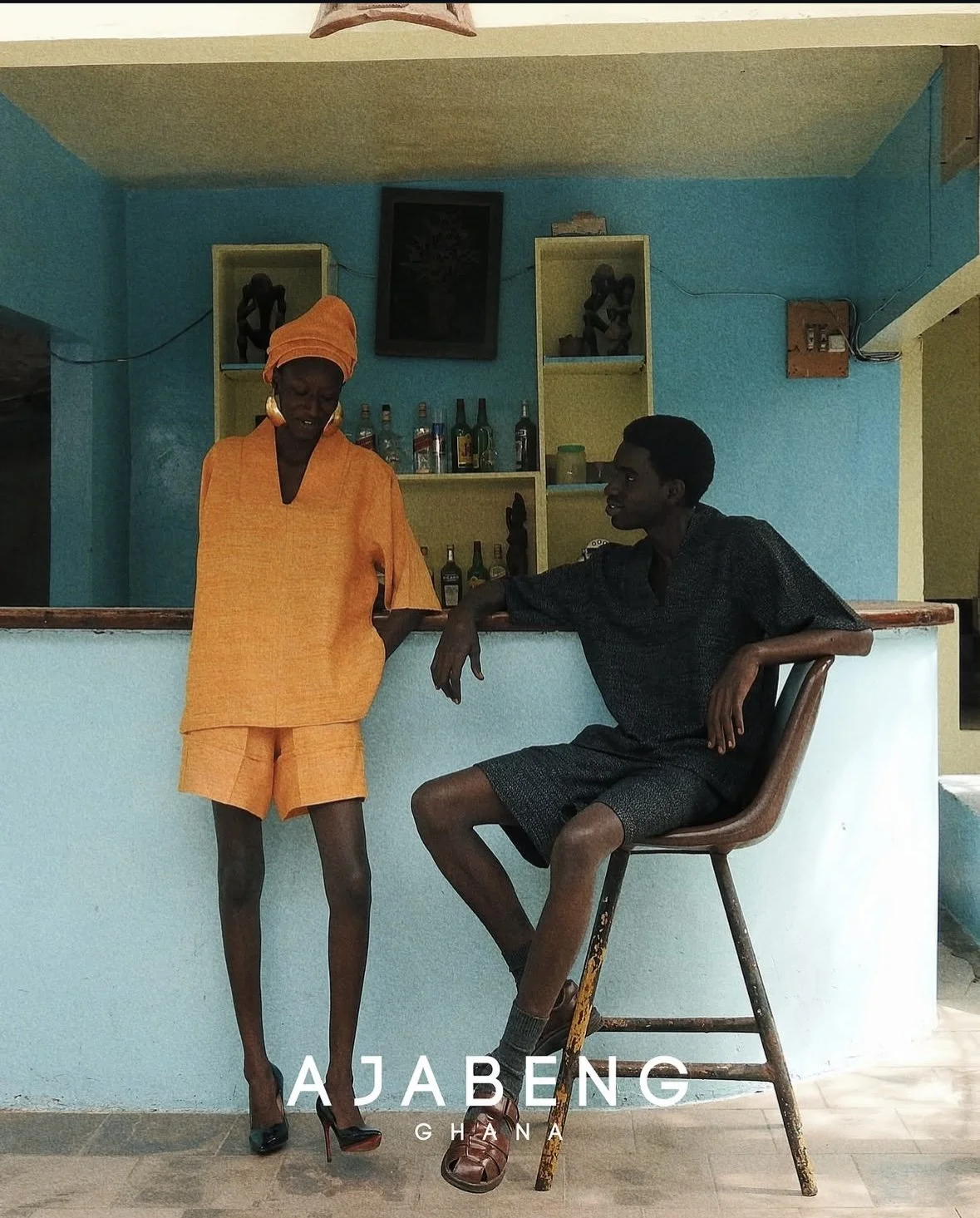
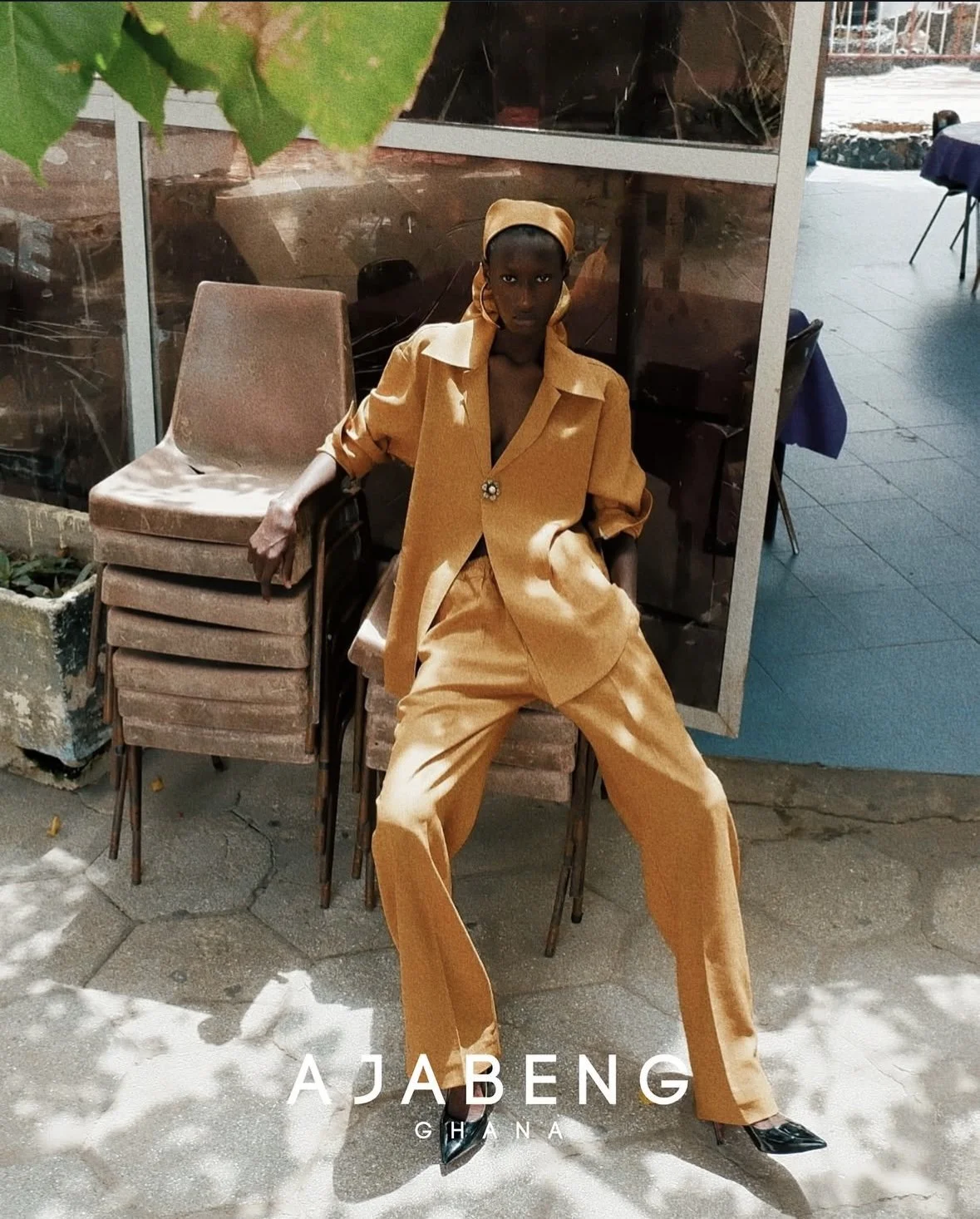
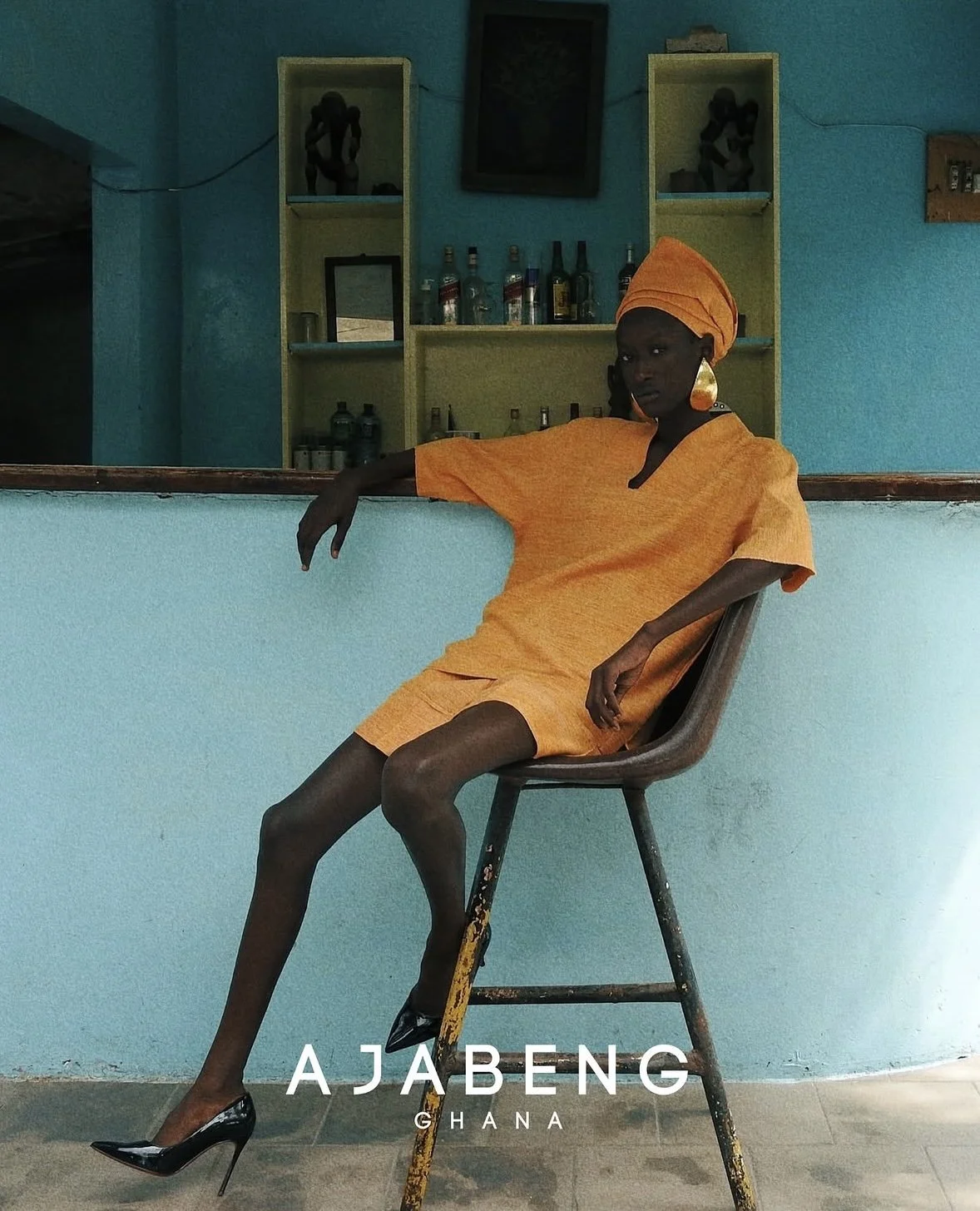
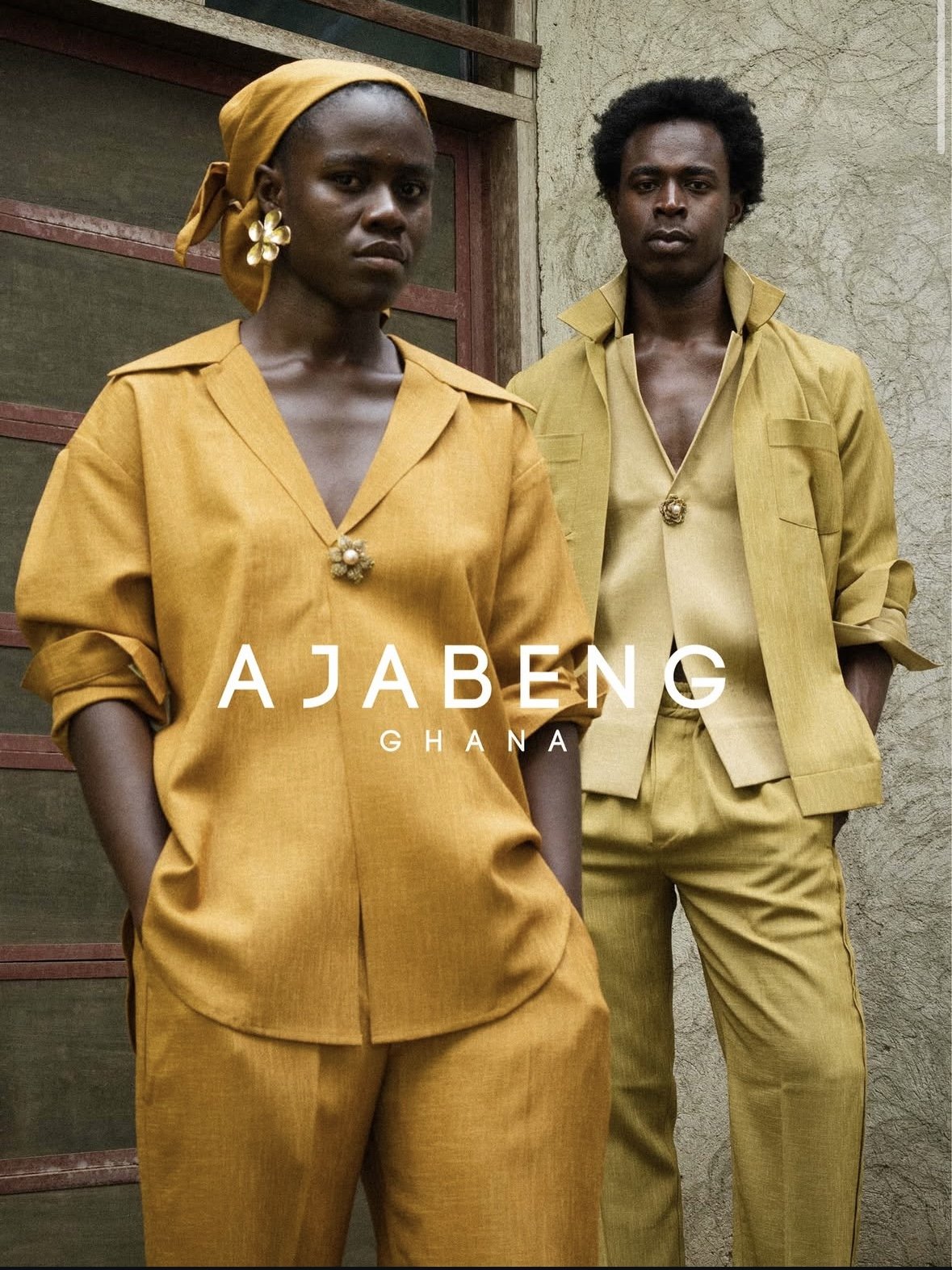
Looks from the AJABENG Post — Drip campaign
At a time when sustainability has become a selling point, Chloe Asaam's position is more precise than most are prepared to be: if you cannot make it well and with dignity at your current scale, then it should not exist yet. Underneath that principle is a simpler concern: the people making the clothes.
Find her on Instagram at @chloe_asaam and follow her label at @bold_underlined. This interview is part of NDAANE CURATORS, a series of honest conversations with the people shaping the future of fashion with Africa in mind. Read the previous portrait with PR consultant Paloma Duran on building visibility with intention and navigating African fashion on a global stage.
Subscribe to the NDAANE newsletter to stay across every conversations in the series.